sticky note template
CN → US| HS编码 | 关税税率 | 原产国 | 目的国 | 文档 |
|---|---|---|---|---|
| 3919905060 | 40.8% | CN | US | 官方文档 |
| 4820104000 | 35.0% | CN | US | 官方文档 |
| 4811412100 | 35.0% | CN | US | 官方文档 |
| 4820102060 | 35.0% | CN | US | 官方文档 |
| 3919102055 | 40.8% | CN | US | 官方文档 |
商品图片

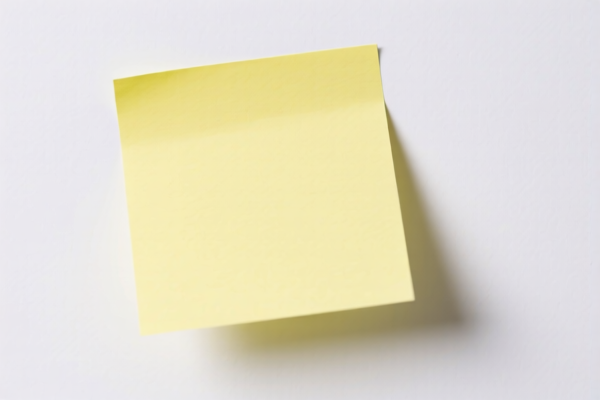
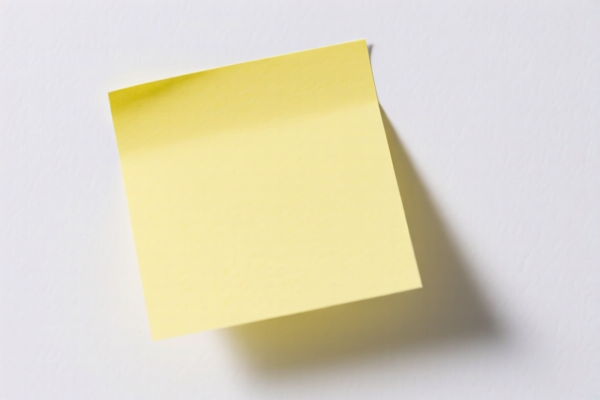

AI分析
📝 Sticky Note Template (Post-it Notes)
🌐 HS Code Reference & Customs Clearance Guide | 2026 Latest Tariff Breakdown | Professional Entry Strategy
📌 1. Product Definition & Classification: Do You Really Understand "Sticky Notes"?
Sticky notes (also known as post-it notes, memo pads, or adhesive notes) are ubiquitous office supplies. In international trade, their classification is not straightforward because they combine two key features: paper substrate and adhesive backing.
Depending on how the product is manufactured and described, customs authorities may classify them under: * Chapter 48: As a paper article (if the adhesive is considered an integral part of the paper processing). * Chapter 39: As a plastic/adhesive product (if the adhesive layer or backing is considered the primary material characteristic).
⚠️ Key Distinction:
- If the product is primarily paper with a light adhesive coating for temporary sticking → Chapter 48 (Lower Base Duty).
- If the product is primarily plastic/coated paper with a strong self-adhesive nature → Chapter 39 (Higher Base Duty).
📦 2. HS Code Classification Details (2026 Latest Tariff Authority Comparison)
| HS Code | Product Description | Applicable Scenario | Material Characteristic |
|---|---|---|---|
4820.10.40.00 |
Memo pads, letter pads, and similar articles (paper) | Standard yellow memo pads, lined pads | ✅ Paper-based |
4820.10.20.60 |
Letter pads and similar articles (paper) | Office stationery, notepads | ✅ Paper-based |
4811.41.21.00 |
Adhesive paper and paperboard (coated/treated) | Self-adhesive paper products | ✅ Coated Paper |
3919.90.50.60 |
Self-adhesive plates, sheets, film, foil, strip, other flat shapes | Plastic-coated or plastic-based sticky notes | ✅ Plastic/Adhesive |
3919.10.20.55 |
Self-adhesive, in rolls or reels, flat shape | Adhesive tapes, plastic sticky note sheets | ✅ Plastic/Adhesive |
🔍 Important Reminder:
- Paper-based codes (48xx.xx) generally have 0% Base Duty.
- Plastic/Adhesive-based codes (39xx.xx) generally have 5.8% Base Duty.
- All these categories are subject to Additional Tariffs (25% + 10%) if imported from China to the US.
💰 3. 2026 Latest Tariff Rate Breakdown (Including Surtaxes & Policy Add-ons)
✅ Applicable Country: United States (US)
✅ Origin: China (CN)
✅ Effective Date: From November 10, 2025 (including subsequent imports)
🎯 1. 4820.10.40.00 / 4820.10.20.60 / 4811.41.21.00 —— Paper-Based Sticky Notes
These codes fall under Chapter 48. The base duty is zero, but the surtaxes make the total cost significant.
| Item | Content |
|---|---|
| Base Duty Rate | 0.0% (ad valorem) |
| USITC Additional Duty (Section 301) | +25.0% |
| IEEPA Additional Duty (Section 122/China-specific) | +10.0% |
| Total Tax Rate | 35.0% |
| Tax Calculation | CIF Value × 35% |
| De Minimis Exemption? | ❌ Not Eligible (deny_de_minimis for these categories under current enforcement) |
| Legal Basis Path | USITC:4820.10.40.00 → FOOTNOTE:301 → IEEPA:10% |
📌 Explanation:
- Although the base duty is 0%, the 25% Section 301 tariff and 10% IEEPA/122 Clause tariff apply.
- Total effective tariff: 35%.
- This is the most favorable option for sticky notes if correctly classified as paper.
🎯 2. 3919.90.50.60 / 3919.10.20.55 —— Plastic/Adhesive-Based Sticky Notes
These codes fall under Chapter 39. The base duty is higher, and surtaxes apply on top.
| Item | Content |
|---|---|
| Base Duty Rate | 5.8% (ad valorem) |
| USITC Additional Duty (Section 301) | +25.0% |
| IEEPA Additional Duty (Section 122/China-specific) | +10.0% |
| Total Tax Rate | 40.8% |
| Tax Calculation | CIF Value × 40.8% |
| De Minimis Exemption? | ❌ Not Eligible |
| Legal Basis Path | USITC:3919.90.50.60 → FOOTNOTE:301 → IEEPA:10% |
📌 Explanation:
- The base duty of 5.8% is added to the surtaxes.
- Total effective tariff: 40.8%.
- This is 5.8% more expensive than the paper classification. Correct classification is critical to avoid overpaying.
🛠️ 4. Customs Clearance Practical Advice (Real-World Pitfall Avoidance)
✅ 1. Required Document Checklist (All Must Be Provided)
| Document | Required? | Description |
|---|---|---|
| ✅ Product Specification Sheet | ✔️ | Must specify: Material (Paper vs. Plastic), Adhesive Type, Size, Quantity |
| ✅ Product Photos (Clear Labeling) | ✔️ | Show the back of the note (adhesive side) and front. Label "Sticky Note" or "Memo Pad" |
| ✅ Commercial Invoice | ✔️ | Use precise description: "Paper Memo Pads, Self-Adhesive, Not Plastic" to support Chapter 48 |
| ✅ Packing List | ✔️ | Detail net weight, gross weight, and number of units |
| ✅ Origin Certificate (CO) | ✔️ | Confirm Chinese origin to trigger correct surtaxes |
| ✅ Adhesive Material Safety Data Sheet (MSDS) | ✔️ | Optional but recommended to prove adhesive type |
✅ 2. Declaration Tips (Key Mantra)
🔥 “Paper is King, Plastic is Costly! Declare Material Clearly!”
| Situation | Correct Declaration | Wrong Practice |
|---|---|---|
| Standard Yellow Memo Pads | 4820.10.40.00 (Paper) |
Declare as "Plastic Adhesive Sheet" → 40.8% |
| Plastic-Coated Sticky Notes | 3919.90.50.60 (Plastic) |
Declare as "Paper" → Potential Penalty for Misclassification |
| Mixed Pack (Paper + Plastic) | Split Declaration | Combine into one line → Risk of audit & penalty |
| "Post-it" Brand Notes | Use Generic Name "Memo Pad" | Avoid Brand Names if not necessary |
✅ 3. Special Case Handling
| Situation | Handling Advice |
|---|---|
| OEM Custom Notes | Provide design files. If substrate is paper, insist on Chapter 48. |
| Plastic Sticky Notes (e.g., for wet surfaces) | Must declare as 3919.xx. No choice. |
| Small Quantity (De Minimis) | ❌ Do NOT rely on $800 de minimis exemption for these HS codes from China. They are explicitly targeted by current tariffs. |
| Re-export from Third Country | If shipped from Vietnam/Malaysia with substantial transformation, may avoid 25%/10%. Verify Rules of Origin. |
🌍 5. Global Market Clearance Comparison (2026 Latest)
| Country/Region | Recommended HS Code | Tariff (CN Origin) | Certification Requirements | Remarks |
|---|---|---|---|---|
| 🇺🇸 USA | 4820.10.40.00 (Paper) |
35.0% | None specific | Highest cost due to 25%+10% |
| 🇨🇳 China | 4820.10.40.00 |
0% - 5% (Domestic) | N/A | Low cost domestically |
| 🇪🇺 EU | 4820.10.40.00 |
0% (Most Favored Nation) | None | No surtaxes |
| 🇬🇧 UK | 4820.10.40.00 |
0% | None | Post-Brexit tariff friendly |
| 🇯🇵 Japan | 4820.10.40.00 |
0% - 6% | JIS Standard | No major surtaxes |
📌 Conclusion:
- The US market is the most challenging due to the combination of Section 301 and IEEPA/122 tariffs.
- Total 35% or 40.8% duty significantly impacts profit margins.
- China, EU, UK, and Japan offer much better tariff environments.
📌 6. Common Mistakes & Pitfalls (Lessons Learned)
❌ Mistake 1: Classifying paper sticky notes as "Plastic Adhesive" (3919)
👉 Consequence: Paying 40.8% instead of 35% → Extra 5.8% cost per shipment.
❌ Mistake 2: Assuming De Minimis ($800) applies to sticky notes from China
👉 Consequence: Shipment held, fines applied, or forced to pay full duty + storage fees.
❌ Mistake 3: Vague description: "Office Supplies"
👉 Consequence: Customs officer assigns worst-case HS code → Delay and potential audit.
❌ Mistake 4: Ignoring the "122 Clause" (IEEPA 10%)
👉 Consequence: Underestimating total landed cost. Many brokers forget this layer.
✅ Correct Action:
“Self-adhesive memo pads, paper substrate, 76x76mm, 100 sheets per pad, HS Code 4820.10.40.00”
🎯 7. Conclusion: Professional Declaration Saves Money!
🎯 Remember the Mantra:
🔹 “Paper Base = 35% Total, Plastic Base = 40.8% Total.”
🔹 “Don’t Guess the HS Code, Define the Material Clearly.”
🔹 “De Minimis Does Not Apply – Plan Your Landed Cost!”
📌 Pro Tip:
If you are importing large volumes into the US, consider:
1. Pre-ruling: Apply for a Binding Ruling with US CBP to confirm HS Code.
2. Supply Chain Optimization: Check if any component (e.g., adhesive backing) is sourced from non-China countries to potentially qualify for lower tariffs under FTAs (though difficult for final assembly).
3. Price Adjustment: Factor in the 35-40% total duty into your pricing model.
📣 Immediate Action:
📞 Contact your freight forwarder with clear material specifications.
📄 Ensure your Commercial Invoice states “Paper” or “Plastic” explicitly.
🚀 Avoid surprises at customs!
✨ Accurate Classification is the First Step to Profitable Trade!
💼 Every Percent Counts in International Shipping!
用户评价
关于 HS 编码归类
协调制度(HS)是由世界海关组织(WCO)制定的国际贸易商品分类标准。全球 200 多个国家采用 HS 系统作为海关关税、贸易统计和进出口监管的基础。
每个 HS 编码遵循以下层级结构:
- 章(2 位)——商品大类(例如:第 84 章:机器和机械设备)
- 品目(4 位)——章内的更具体分类
- 子目(6 位)——国际通用细分,所有 WCO 成员国统一使用
- 本国细分(8-10 位)——各国自行扩展的细分编码,如美国 HTSUS 10 位编码
正确的 HS 编码归类对于顺利通关、准确缴纳关税和遵守贸易法规至关重要。错误归类可能导致海关延误、多缴关税或罚款。
从CN进口到US时,适用的关税税率可能包括:
- 最惠国(MFN)税率——适用于 WTO 成员国的标准关税税率
- 普通税率——适用于无贸易协定国家
- 贸易救济关税——附加关税,如 301 条款(反倾销)、232 条款(国家安全)或反补贴税
本页内容仅供参考。如需正式归类,请咨询当地海关或持牌报关代理。