styrene butadiene rubber sbr strips
CN → US| HS编码 | 关税税率 | 原产国 | 目的国 | 文档 |
|---|---|---|---|---|
| 4002190015 | 35.0% | CN | US | 官方文档 |
| 4002190016 | 35.0% | CN | US | 官方文档 |
商品图片
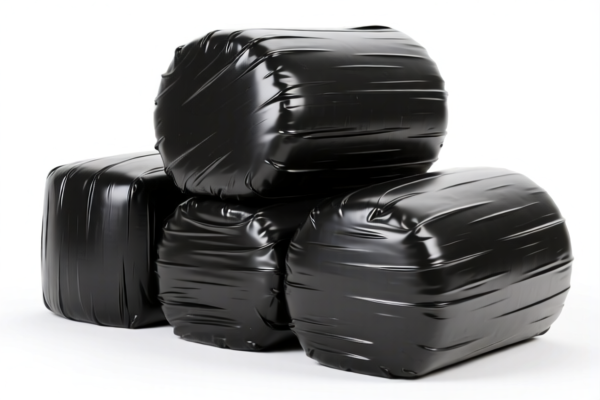
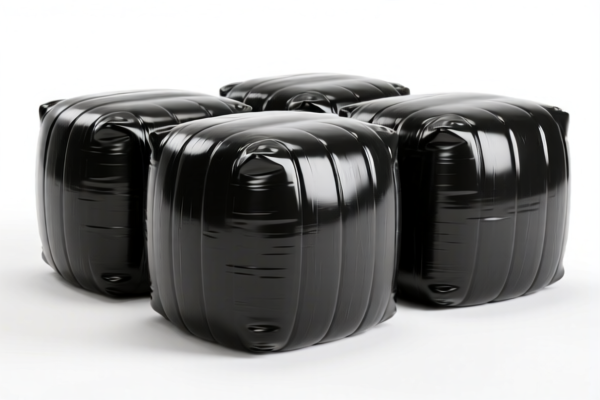
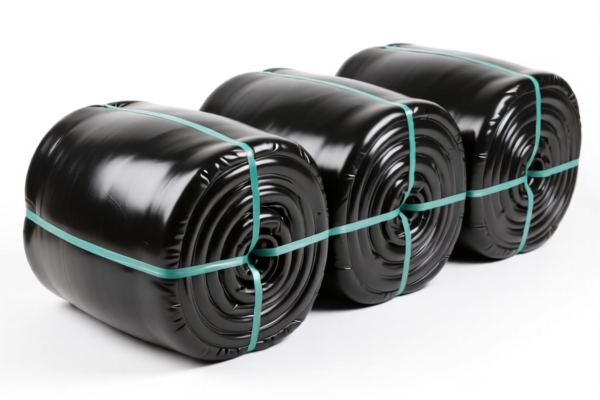
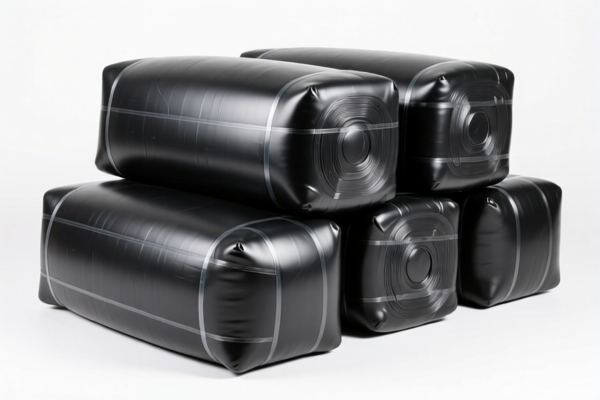
AI分析
🧪 Styrene Butadiene Rubber (SBR) Strips & Bales
🌐 HS Code Reference & Customs Clearance Guide | 2026 Latest Tariff Analysis | Professional Entry Strategy
📌 I. Product Definition: What Exactly is SBR?
Styrene-Butadiene Rubber (SBR) is the most widely used synthetic rubber in the world, derived from petroleum oils. It is a copolymer of styrene and butadiene. In international trade, SBR is primarily classified under Heading 4002.
Crucially, for SBR to be classified under 4002, it must be in "primary forms" or "plates, sheets, or strip".
⚠️ Key Distinction: - If the SBR is in bales (compressed blocks), it falls under specific sub-headings based on the polymerization method. - If it is in primary forms (lumps, powder, granules, liquid latex, etc.), it falls under other 4002 sub-headings (not covered in this specific DATA). - Strip implies a continuous rectangular cross-section, often rolled, distinct from finished goods like tires or belts.
📦 II. HS Code Classification Details (2026 Latest Tariff Authority)
Based strictly on the provided , here are the two specific HS Codes for SBR in bales with ≤50% styrene content by weight of dry polymer.
| HS Code | Product Description | Polymerization Method | Form |
|---|---|---|---|
4002.19.00.15 |
Styrene-butadiene rubber produced by emulsion polymerization | E-SBR | In bales |
4002.19.00.16 |
Styrene-butadiene rubber produced by solution polymerization | S-SBR | In bales |
🔍 Critical Analysis: - Both codes require the rubber to be in bales (compressed). - Both require the styrene content to be ≤50% by weight of the dry polymer. - The sole differentiator is the polymerization process: Emulsion (E-SBR) vs. Solution (S-SBR). - If the product is in strip form (not bales) but meets the chemical criteria, it may still fall under these codes if the tariff structure treats "strip" equivalent to primary forms for this sub-category, but the description explicitly says "in bales". Caution: If your product is strictly "strip" (rolled) and not "bales" (compressed blocks), you must verify if local customs interpret "strip" under these specific sub-codes or if it falls under a broader "Other" category (not provided in ). However, the provided explicitly links these codes to "in bales".
💰 III. 2026 Tariff Rate Breakdown
✅ Applicable Countries: United States (US)
✅ Origin: China (CN) (Assumed based on typical 25% Section 301 context, though not explicitly stated, the tax detail implies US-China trade)
✅ Effective Time: Current (2025-2026)
🎯 1. 4002.19.00.15 — E-SBR in Bales
| Item | Content |
|---|---|
| Base Tariff Rate | 0.0% (Ad Valorem) |
| Section 301 Additional Tariff | +25.0% |
| Total Tariff Rate | 25.0% |
| Tax Calculation | CIF Value × 25% |
| Legal Basis | USHTS 4002.19.00.15 + Section 301 Footnotes |
📌 Explanation: - Base Rate: 0% for many synthetic rubbers under Chapter 40. - Additional Tariff: The 25% is the standard Section 301 duty on Chinese-origin goods under this subheading. - Total Burden: 25% is a significant cost driver for SBR imports.
🎯 2. 4002.19.00.16 — S-SBR in Bales
| Item | Content |
|---|---|
| Base Tariff Rate | 0.0% (Ad Valorem) |
| Section 301 Additional Tariff | +25.0% |
| Total Tariff Rate | 25.0% |
| Tax Calculation | CIF Value × 25% |
| Legal Basis | USHTS 4002.19.00.16 + Section 301 Footnotes |
📌 Explanation: - Identical tax treatment to E-SBR. - The difference lies only in the manufacturing process (Solution vs. Emulsion), which affects the physical properties (e.g., S-SBR often has better wear resistance and lower heat buildup) but not the tariff rate in this dataset.
🛠️ IV. Customs Clearance Practical Advice
✅ 1. Essential Documentation Checklist
| Document | Mandatory? | Purpose |
|---|---|---|
| ✅ Product Specification Sheet | ✔️ | Must explicitly state: 1. Styrene Content (must be ≤50% by dry weight) 2. Polymerization Method (Emulsion/E-SBR vs. Solution/S-SBR) 3. Physical Form (Bales, not loose powder or finished articles) |
| ✅ Certificate of Origin (CO) | ✔️ | To determine eligibility for Section 301 duties. If originating outside China, 25% may not apply. |
| ✅ Commercial Invoice | ✔️ | Must clearly describe: "Styrene-Butadiene Rubber (SBR), [Emulsion/Solution], ≤50% Styrene, in Bales". Avoid vague terms like "Rubber Strips" without specifying form. |
| ✅ Bill of Lading | ✔️ | Check packaging details: Are they shipped in bales? If shipped in bags or drums, customs may question the "in bales" classification. |
| ✅ Test Report (SGS/Intertek) | ✔️ | Recommended to prove Styrene Content and Polymerization Type. Customs may request this if the description is ambiguous. |
✅ 2. Declaration Tips (Key Mnemonic)
🔥 “Form is Bales, Styrene Low, Emulsion or Solution, Tax is Sixty-Five? No, Twenty-Five!”
| Scenario | Correct HS Code | Risk of Misclassification |
|---|---|---|
| SBR in Bales, ≤50% Styrene, Emulsion Process | 4002.19.00.15 |
Low, if specs are clear |
| SBR in Bales, ≤50% Styrene, Solution Process | 4002.19.00.16 |
Low, if specs are clear |
| SBR in Loose Powder/Granules | NOT 4002.19.00.15/16 | ⚠️ High Risk: May fall under broader 4002.19.00.90 or other subheadings. Check if tax differs. |
| SBR Strips (Rolled Sheets) | Verify | The specifies "in bales". If your "strip" is actually a continuous roll and not compressed into bale form, you must consult a customs broker. It might not fit these specific sub-codes. |
| SBR with >50% Styrene | NOT 4002.19.00.15/16 | ⚠️ High Risk: Falls under "Containing more than 50% styrene" (4002.19.00.10 or similar). Tax may differ. |
✅ 3. Special Considerations for "Strips"
The user input mentions "SBR Strips". However, the provided explicitly lists products "in bales".
⚠️ CRITICAL WARNING: - "Strip" in HS terminology can mean a continuous rectangular cross-section, often rolled. - "Bales" mean compressed blocks. - If your product is rolled strips and not bales, it may not qualify for
4002.19.00.15or4002.19.00.16as described. - Action: You must verify if the local customs interpretation of 4002.19.00.15/16 includes "strip" or if "strip" is classified under a different subheading (e.g.,4002.19.00.90or another 10-digit code). - Recommendation: If you are shipping rolls of SBR sheet/strip, provide the manufacturer’s specification sheet indicating whether the final form is considered "primary form" and whether it is packed in "bales" or "rolls". If it’s rolls, you may need a different HS Code. Do not force "Bales" classification if it’s rolled.
🌍 V. Global Market Comparison (2026 Latest)
| Country/Region | Recommended HS Code (for Bales, ≤50% Styrene) | Base Tariff | US Section 301 Impact | Notes |
|---|---|---|---|---|
| 🇺🇸 United States | 4002.19.00.15 (E-SBR) or 4002.19.00.16 (S-SBR) |
0.0% | +25% | Total: 25% |
| 🇨🇳 China | 4002.19 (General) | ~2% - 5% | N/A | Low base rate |
| 🇪🇺 European Union | 4002.19 | 0% - 2.5% | N/A | No Section 301 |
| 🇮🇳 India | 4002.19 | ~5% - 10% | N/A | Check BCD |
📌 Conclusion: - US Imports: Expect a 25% additional duty on top of the 0% base rate. Total 25%. - Non-US Markets: Generally much lower tariffs (0-5%). - Strategic Tip: If sourcing from Vietnam, Thailand, or Malaysia, you may avoid the 25% Section 301 duty. Ensure Substantial Transformation occurs in those countries to get a non-China CO.
📌 VI. Common Errors & Pitfalls (Blood Tears Lessons)
❌ Error 1: Declaring "SBR Strip" as 4002.19.00.15 without confirming it’s in Bales.
👉 Consequence: Customs may reject the classification, delay shipment, or apply a higher tariff if a different subheading is found.
❌ Error 2: Ignoring Styrene Content.
👉 Consequence: If styrene is >50%, it falls under a different subheading (e.g., 4002.19.00.10). Misdeclaration leads to penalties.
❌ Error 3: Confusing E-SBR and S-SBR.
👉 Consequence: While the tax rate is the same (25%), the HS Code differs (...15 vs ...16). Incorrect code can cause administrative fines or audit flags.
❌ Error 4: Assuming all SBR is "Strip".
👉 Consequence: Most industrial SBR is imported in bales (25kg or 30kg blocks). If you declare "Strip" but it’s in bales, it’s fine. But if it’s latex or powder, it’s NOT strip/bale.
✅ Correct Approach:
"Styrene-Butadiene Rubber (SBR), Emulsion Polymerized (E-SBR), Styrene Content ≤50% by weight, in Compressed Bales, Model XYZ, Chinese Origin"
🎯 VII. Conclusion: Precision Matters, Cost Savings Are Possible!
🎯 Key Takeaways:
🔹 HS Code:
4002.19.00.15(E-SBR) or4002.19.00.16(S-SBR)
🔹 Tax Rate: 0% Base + 25% Section 301 = 25% Total
🔹 Critical Check: Is it in Bales? Is Styrene ≤50%? Is it Emulsion or Solution?
🔹 Avoid: Declaring "Strip" if it’s not in bale form. Verify form with supplier.
📌 Pro Tip:
If your SBR is not in bales (e.g., granules, powder, liquid latex), it cannot use these codes. Check 4002.19.00.90 or other subheadings, which may have different tax rates.
📣 Immediate Action:
📞 Contact your customs broker with the Manufacturer’s Spec Sheet highlighting Styrene % and Polymerization Type.
🚀 Confirm Form: Bales vs. Strips vs. Granules.
💡 Cost Saving: Consider sourcing from Non-China origins to avoid the 25% duty.
✨ Professional Customs Clearance Starts with Accurate Classification!
💼 Your 25% duty is real. Plan accordingly.
用户评价
关于 HS 编码归类
协调制度(HS)是由世界海关组织(WCO)制定的国际贸易商品分类标准。全球 200 多个国家采用 HS 系统作为海关关税、贸易统计和进出口监管的基础。
每个 HS 编码遵循以下层级结构:
- 章(2 位)——商品大类(例如:第 84 章:机器和机械设备)
- 品目(4 位)——章内的更具体分类
- 子目(6 位)——国际通用细分,所有 WCO 成员国统一使用
- 本国细分(8-10 位)——各国自行扩展的细分编码,如美国 HTSUS 10 位编码
正确的 HS 编码归类对于顺利通关、准确缴纳关税和遵守贸易法规至关重要。错误归类可能导致海关延误、多缴关税或罚款。
从CN进口到US时,适用的关税税率可能包括:
- 最惠国(MFN)税率——适用于 WTO 成员国的标准关税税率
- 普通税率——适用于无贸易协定国家
- 贸易救济关税——附加关税,如 301 条款(反倾销)、232 条款(国家安全)或反补贴税
本页内容仅供参考。如需正式归类,请咨询当地海关或持牌报关代理。