sulfur fiber support board
CN → US| HS编码 | 关税税率 | 原产国 | 目的国 | 文档 |
|---|---|---|---|---|
| 6815130000 | 35.0% | CN | US | 官方文档 |
| 6815110000 | 35.0% | CN | US | 官方文档 |
商品图片
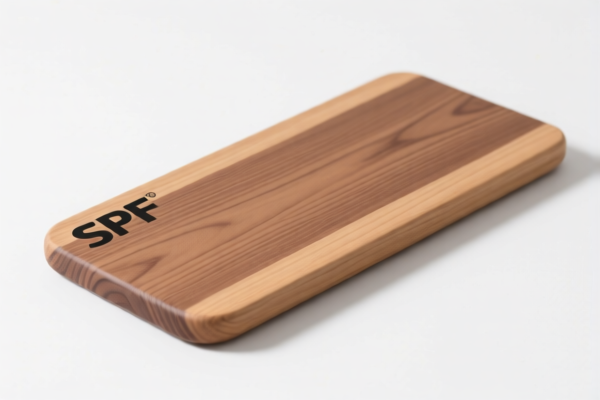
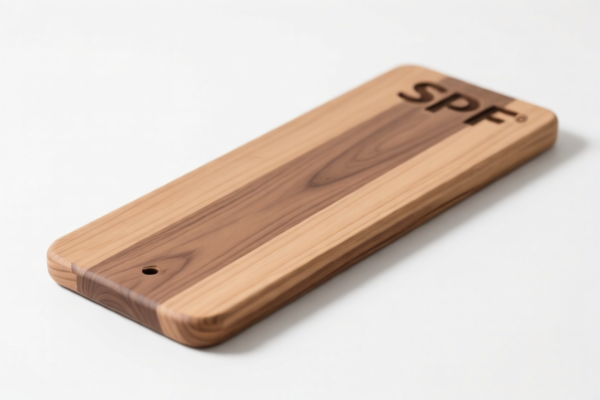
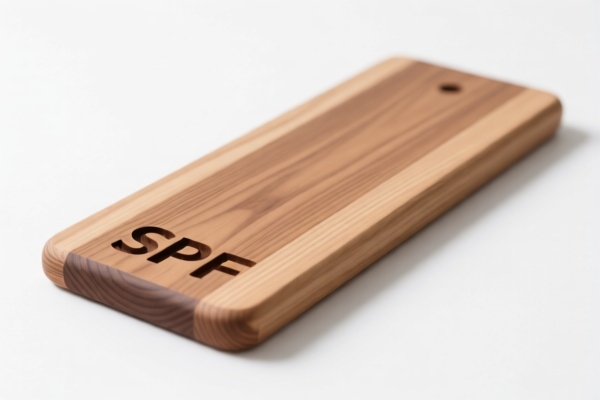
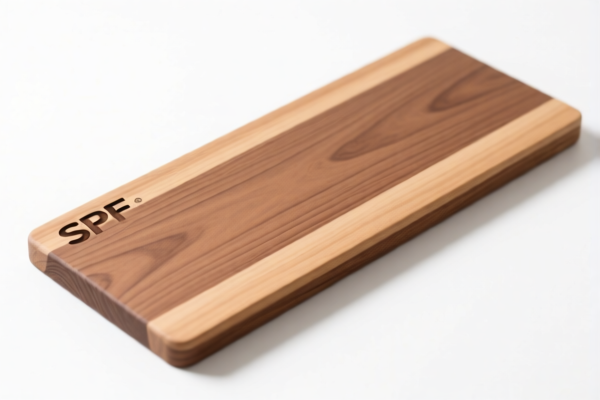
AI分析
⚡ Sulfur Fiber Support Board: The High-Temperature Guardian
🌐 HS Code Reference & Customs Clearance Guide | 2026 Latest Tariff Analysis | Professional Compliance Strategy
📌 1. Product Definition & Classification: What is a "Sulfur Fiber Support Board"?
A Sulfur Fiber Support Board is a specialized industrial material composed primarily of sulfur fibers or carbon-based composites, often used in high-temperature, corrosive, or chemically aggressive environments. While the name suggests "sulfur," in international trade classification (HS Code), materials described as "carbon fibers" or "articles of carbon fibers for non-electrical uses" fall under Chapter 68.
⚠️ Critical Classification Note:
- If the board is made of carbon fibers (or carbonized sulfur-derived carbon) and is not electrical, it falls under HS 6815.1x.
- If it is a raw Carbon Fiber material (uncut, unreinforced resin matrix yet), it may fall under 6815.11.
- If it is a finished article (cut, shaped, molded board) for non-electrical uses, it falls under 6815.13.
- Note: "Sulfur" itself is not the primary classifier here; the final form and material composition (Carbon vs. Raw Fiber) determine the code.
📦 2. HS Code Classification Details (2026 Latest Tariff Authority)
Based on the provided data, the relevant HS Codes are:
| HS Code | Product Description | Application Scenario | Tax Rate (US Import from CN) |
|---|---|---|---|
6815.11.00.00 |
Carbon fibers (Raw/Unprocessed articles of carbon fibers for non-electrical uses) | Raw carbon fiber bundles, uncut mats, pre-preg sheets before molding | 25.0% |
6815.13.00.00 |
Other articles of carbon fibers (Non-electrical uses) | Shaped boards, cut panels, molded supports, refractory linings | 25.0% |
🔍 Key Distinction:
-6815.11.00.00: For raw carbon fiber materials. If your "Sulfur Fiber Support Board" is a raw, uncut mat of fibers, use this.
-6815.13.00.00: For finished articles. If the material is cut, shaped, or molded into a board for support purposes, this is the correct classification. Most "Support Boards" are finished articles.
💰 3. 2026 Latest Tariff Rate Breakdown (Including Additional Duties)
✅ Applicable Country: United States (US)
✅ Origin: China (CN)
✅ Effective Date: 2025 onwards (Subject to Section 301 & IEEPA)
🎯 1. 6815.11.00.00 —— Carbon Fibers (Raw Material)
| Item | Content |
|---|---|
| Base Tariff | 0% (Ad Valorem) |
| Section 301 Additional Duty | +25% |
| Total Tariff | 25.0% |
| De Minimis Exemption | ❌ Not Eligible (Section 301 duties apply to all values) |
| Legal Basis | USITC Footnote 9903.88.01 / Section 301 Tariff List |
📌 Explanation:
- Raw carbon fibers are subject to the 25% Section 301 tariff.
- No base duty, but the additional tariff is significant.
- Total Cost Impact: 25% of CIF value.
🎯 2. 6815.13.00.00 —— Other Articles of Carbon Fibers (Finished Boards)
| Item | Content |
|---|---|
| Base Tariff | 0% (Ad Valorem) |
| Section 301 Additional Duty | +25% |
| Total Tariff | 25.0% |
| De Minimis Exemption | ❌ Not Eligible |
| Legal Basis | USITC Footnote 9903.88.01 / Section 301 Tariff List |
📌 Explanation:
- Finished carbon fiber articles (like support boards) also face the 25% Section 301 tariff.
- Total Cost Impact: 25% of CIF value.⚠️ Important:
- Both codes have the same 25% tariff rate.
- The key is correct classification to avoid penalties for misdeclaration.
- If customs determines the product is not "carbon fiber" but something else, it may be reclassified with different (potentially higher or lower) rates.
🛠️ 4. Customs Clearance Practical Advice
✅ 1. Preparation Checklist (Essential Documents)
| Document | Required? | Purpose |
|---|---|---|
| Product Specification Sheet | ✔️ | Must detail: Material composition (e.g., "Carbonized Sulfur Fiber"), density, tensile strength, thermal resistance. |
| Photos of Product | ✔️ | Show raw fiber vs. finished board. Clearly label "Support Board" or "Raw Carbon Fiber." |
| Commercial Invoice | ✔️ | Must specify: "Carbon Fiber Support Board for Non-Electrical Use" or "Raw Carbon Fibers." |
| Packing List | ✔️ | Detail weight, dimensions, and packaging. |
| Certificate of Origin | ✔️ | To prove origin (China) and apply correct tariffs. |
| Material Safety Data Sheet (MSDS) | ✔️ | Required for chemical materials, especially if sulfur-derived. |
✅ 2. Declaration Tips (Avoid Pitfalls)
| Scenario | Correct Declaration | Incorrect Declaration |
|---|---|---|
| Finished Board | 6815.13.00.00 - "Other articles of carbon fibers for non-electrical uses" |
"Sulfur Board" (vague, may be rejected) |
| Raw Fiber Mat | 6815.11.00.00 - "Carbon fibers" |
"Support Board" (misleading if uncut) |
| Electrical Component | ❌ Not in Scope (These codes are for non-electrical uses) | If electrical, it may fall under Chapter 85 (e.g., 8545) with different rates. |
🔥 Key Keyword for Declaration:
"Carbon Fiber" is the preferred term over "Sulfur Fiber" in HS classification, as sulfur-based fibers are typically carbonized into carbon fibers. Use "Non-Electrical Use" to justify Chapter 68.
✅ 3. Special Cases
| Case | Handling Advice |
|---|---|
| Sulfur-Based but Carbonized | Declare as Carbon Fiber. Provide lab test results showing carbon content >90%. |
| Electrical Insulation Use | If used for electrical insulation, it may not qualify for 6815.1x. Check Chapter 85 or 39. |
| Mixed Materials | If board contains >50% carbon fiber by weight, use 6815.1x. Otherwise, reclassify. |
🌍 5. Global Market Comparison (2026)
| Country/Region | Recommended HS Code | Tariff Rate | Remarks |
|---|---|---|---|
| 🇺🇸 USA | 6815.13.00.00 |
25% | Section 301 additional duty applies. |
| 🇨🇳 China | 6815.13.00.00 |
0-10% | Varies by exact sub-code; no additional duties. |
| 🇪🇺 EU | 6815.19 |
0-5% | Low duty; no Section 301 equivalent. |
| 🇯🇵 Japan | 6815.19 |
0-5% | Favorable trade agreement possible. |
📌 Conclusion:
- USA is the only major market with a 25% additional duty on these carbon fiber articles.
- EU/Japan are more cost-effective for clearance.
- Consider supply chain diversification if exporting to the US to mitigate tariff risks.
📌 6. Common Errors & Pitfalls
❌ Error 1: Declaring as "Sulfur Board" without mentioning carbon content.
👉 Consequence: Customs may reject or reclassify, causing delays.
❌ Error 2: Using 6815.11 for a cut/molded board.
👉 Consequence: Misclassification; may face penalties for under-declaring finished goods.
❌ Error 3: Ignoring "Non-Electrical Use" requirement.
👉 Consequence: If used electrically, the product may fall under Chapter 85, with different tariffs and regulations.
✅ Correct Declaration Example:
"Carbon Fiber Support Board, Non-Electrical Use, Raw Carbonized Fiber, HS Code 6815.13.00.00"
🎯 7. Conclusion: Professional Clearance for High-Performance Materials
🎯 Key Takeaway:
🔹 "Sulfur Fiber" = Carbon Fiber in HS Terms.
🔹 "Support Board" = Finished Article (6815.13).
🔹 "US Import" = 25% Additional Duty.📌 Pro Tip:
- Always provide lab reports confirming carbon content and non-electrical use.
- If possible, apply for Advance Rulings from US Customs to confirm classification.
- Consider third-country transshipment (e.g., Vietnam, Malaysia) if tariffs are prohibitive, but ensure substantial transformation occurs to avoid anti-circumvention laws.
📣 Immediate Action:
📞 Contact a Customs Broker with experience in Chapter 68 products.
🚀 Prepare Detailed Specs and Lab Tests to support your HS Code.
💼 Optimize Supply Chain to mitigate 25% US tariffs.
✨ Precision in Classification Saves Millions!
💼 Your High-Temperature Solution, Cleared Globally!
用户评价
关于 HS 编码归类
协调制度(HS)是由世界海关组织(WCO)制定的国际贸易商品分类标准。全球 200 多个国家采用 HS 系统作为海关关税、贸易统计和进出口监管的基础。
每个 HS 编码遵循以下层级结构:
- 章(2 位)——商品大类(例如:第 84 章:机器和机械设备)
- 品目(4 位)——章内的更具体分类
- 子目(6 位)——国际通用细分,所有 WCO 成员国统一使用
- 本国细分(8-10 位)——各国自行扩展的细分编码,如美国 HTSUS 10 位编码
正确的 HS 编码归类对于顺利通关、准确缴纳关税和遵守贸易法规至关重要。错误归类可能导致海关延误、多缴关税或罚款。
从CN进口到US时,适用的关税税率可能包括:
- 最惠国(MFN)税率——适用于 WTO 成员国的标准关税税率
- 普通税率——适用于无贸易协定国家
- 贸易救济关税——附加关税,如 301 条款(反倾销)、232 条款(国家安全)或反补贴税
本页内容仅供参考。如需正式归类,请咨询当地海关或持牌报关代理。