surface finished plastic rod
CN → US| HS编码 | 关税税率 | 原产国 | 目的国 | 文档 |
|---|---|---|---|---|
| 3916100000 | 40.8% | CN | US | 官方文档 |
| 3916903000 | 41.5% | CN | US | 官方文档 |
商品图片
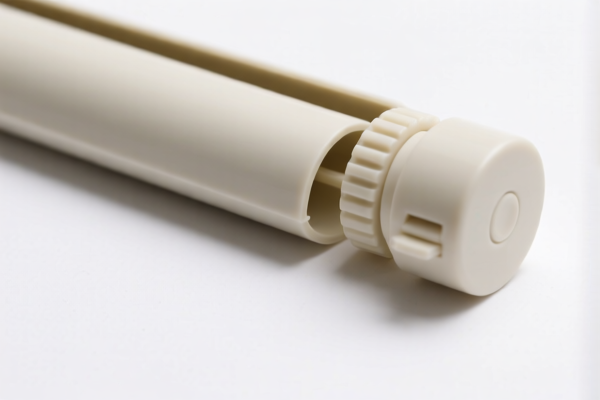
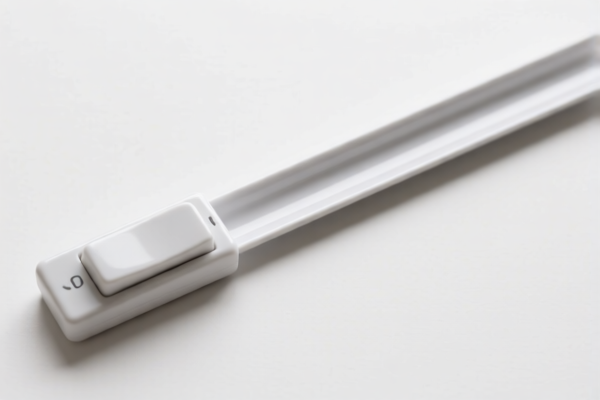
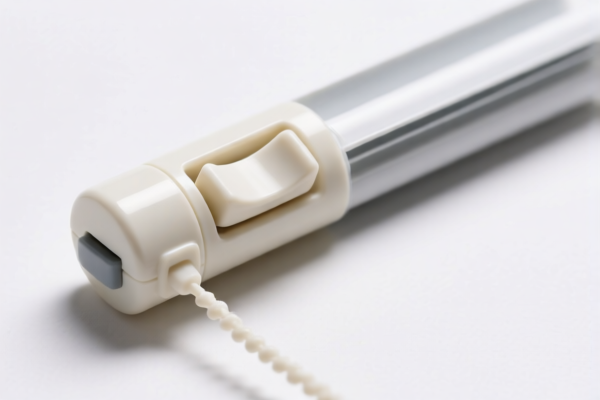
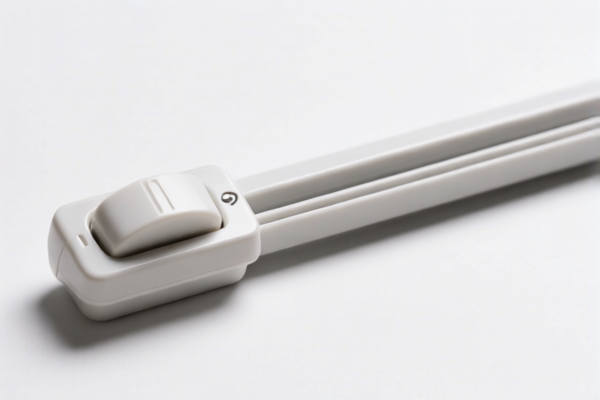
AI分析
🛍️ Surface Finished Plastic Rod (Finished Plastics Profile)
🌐 HS Code Reference & Customs Clearance Guide | 2026 Latest Tariff Analysis | Professional Entry Strategy 📌 1. Product Definition & Classification: What is a "Surface Finished Plastic Rod"?
A Surface Finished Plastic Rod falls under Chapter 39 of the Harmonized System (Plastics and Articles Thereof). The key distinction here is the processing level and cross-sectional dimensions.
The term "Surface Finished" implies that the rod has undergone surface treatments (such as polishing, sanding, or coating) but has not been further worked into a specific manufactured article (like a gear, knob, or screw). It remains in a semi-finished state.
Critical Classification Criteria: 1. Material Type: Is it Polyethylene (PE) or "Other Plastic"? 2. Dimensional Threshold: Does any cross-sectional dimension exceed 1 mm? * ✅ Yes: Classified as Rod/Stick/Profile (Heading 3916). * ❌ No: If ≤ 1mm, it would be "Monofilament" (Heading 3915/3914 depending on form), but standard "rods" almost always exceed 1mm.
📦 2. HS Code Classification Details (2026 Latest Tariff Mapping)
Based on the provided data, there are two primary HS Codes depending on the polymer type. Both fall under Heading 3916: Monofilament of which any cross-sectional dimension exceeds 1 mm, rods, sticks and profile shapes, whether or not surface-worked but not otherwise worked, of plastics.
| HS Code | Product Description | Applicable Scenario | Polymer Type |
|---|---|---|---|
3916.10.00.00 |
Of polymers of ethylene (e.g., PE rods) | High-density polyethylene (HDPE), Low-density polyethylene (LDPE) rods. | Polyethylene (PE) |
3916.90.30.00 |
Of other plastics (General Plastics) | PVC, PP, ABS, PC, Nylon, Acrylic rods. | Non-PE Plastics |
⚠️ Key Distinction: - If your rod is made of Polyethylene (PE) → Use
3916.10.00.00. - If your rod is made of any other plastic (PP, PVC, ABS, etc.) → Use3916.90.30.00.
💰 3. 2026 Latest Tariff Rate Breakdown (US Import from China)
✅ Applicable Country: United States (US)
✅ Origin: China (CN)
✅ Effective Time: Current 2026 Tariff Structure (Section 301 + Base)
🎯 1. 3916.10.00.00 – Rods of Polymers of Ethylene
| Item | Detail |
|---|---|
| Base Tariff | 5.8% |
| Section 301 Additional Tariff | 25.0% |
| Total Effective Tax Rate | 30.8% |
| Tax Calculation | CIF Value × 30.8% |
| De Minimis Eligibility | ❌ Not Eligible (Value > $800 usually triggers formal entry; Section 301 applies regardless of value if formal entry is required) |
| Legal Basis | HTSUS 3916.10.00.00 + USITC Footnote 9903.01.25 |
📌 Interpretation: - Polyethylene is a common plastic. Even though it's "surface finished," it is still considered a semi-finished profile. - The 25% Section 301 tariff applies to all plastics from China under this heading. - Total burden: 30.8%.
🎯 2. 3916.90.30.00 – Rods of Other Plastics (Other)
| Item | Detail |
|---|---|
| Base Tariff | 6.5% |
| Section 301 Additional Tariff | 25.0% |
| Total Effective Tax Rate | 31.5% |
| Tax Calculation | CIF Value × 31.5% |
| De Minimis Eligibility | ❌ Not Eligible |
| Legal Basis | HTSUS 3916.90.30.00 + USITC Footnote 9903.01.25 |
📌 Interpretation: - This code captures all plastics EXCEPT polyethylene (e.g., PVC, PP, ABS, Polycarbonate, Nylon). - The base rate is slightly higher (6.5% vs 5.8%), leading to a 0.7% higher total tax compared to PE rods. - Total burden: 31.5%.
🛠️ 4. Customs Clearance Practical Advice (Avoid Pitfalls)
✅ 1. Required Documentation Checklist
| Document | Required? | Explanation |
|---|---|---|
| Product Specification Sheet | ✔️ | Must clearly state Material Type (PE vs. Other), Diameter/Dimensions, and Surface Finish (e.g., polished, matte). |
| Material Certificate | ✔️ | To prove if it is PE or other plastic. Critical for correct HS Code selection. |
| Commercial Invoice | ✔️ | Must accurately describe item as "Plastic Rod" or "Plastic Profile," NOT "Plastic Part" or "Finished Good." |
| Packing List | ✔️ | Weight and dimensions of packages. |
| Country of Origin Certificate | ✔️ | To determine origin for Section 301 applicability. |
✅ 2. Declaration Tips (Crucial Keywords)
🔥 Golden Rule: "Describe Process, Not Final Use."
| Situation | Correct Declaration | Incorrect Declaration |
|---|---|---|
| Surface Finished PE Rod | "Plastic Rod, Polyethylene, Surface Finished, Not Further Worked" | "PE Pipe Fitting" or "PE Handle" (Implies finished article) |
| Surface Finished PP Rod | "Plastic Rod, Polypropylene, Surface Finished, Not Further Worked" | "Plastic Gear Blank" or "Custom Plastic Part" |
| Mixed Material Rods | List each material separately if possible | "Mixed Plastic Rod" (Ambiguous, leads to audit) |
⚠️ Warning:
- Do NOT declare as "Plastic Parts" or "Plastic Components." If the rod is merely "surface finished" but not cut to specific final shapes (like a knob or tube fitting), it remains a semi-finished profile (3916).
- Misdeclaring as a "part" (e.g., 3926) may seem to offer a lower base rate, but customs will classify it back to 3916 if it’s just a rod, leading to penalties.
✅ 3. Special Handling Scenarios
| Scenario | Advice |
|---|---|
| Rod vs. Monofilament | If the cross-section is > 1mm, it is a Rod (3916). If ≤ 1mm, it might be monofilament/filament, which has different classification. Ensure dimensions are > 1mm. |
| Surface Finish | "Surface Finished" (polished/sanded) does not change the classification from 3916 to a finished article. It remains 3916. |
| Coated Rods | If coated with a thin layer of another plastic, it may still be 3916. If the coating is the primary characteristic, review 3917 or 3926. For standard "surface finished" rods, stick to 3916. |
🌍 5. Global Market Comparison (2026)
| Country/Region | Recommended HS Code | Tariff (China Origin) | Notes |
|---|---|---|---|
| 🇺🇸 USA | 3916.10.00.00 / 3916.90.30.00 |
30.8% - 31.5% | Includes 25% Section 301 surcharge. |
| 🇨🇳 China | 3916.10.00.00 / 3916.90.30.00 |
5.0% - 6.5% | Base import duty. No Section 301. |
| 🇪🇺 EU | 3916.10 / 3916.90 |
6.5% - 6.7% | No additional punitive tariffs. |
| 🇦🇺 Australia | 3916.10 / 3916.90 |
5.0% | FTA benefits may apply depending on origin. |
📌 Conclusion: - The USA is the most expensive market due to the 25% Section 301 tariff. - China Origin plastic rods face a 30.8% - 31.5% total duty in the US. - Ensure accurate material identification (PE vs. Other) to avoid misclassification audits.
📌 6. Common Mistakes & Pitfalls
❌ Mistake 1: Declaring "Plastic Rods" as "Plastic Parts" (e.g., 3926.90) to avoid Section 301. 👉 Consequence: Customs will reclassify to 3916 + 25% Section 301 + Penalties.
❌ Mistake 2: Ignoring the "Surface Finished" aspect. 👉 Consequence: If the rod is further worked (cut, drilled, threaded), it becomes a "part" (3926). If only surface finished, it stays 3916. Misdeclaring leads to classification errors.
❌ Mistake 3: Incorrect Material Identification. 👉 Consequence: Using 3916.90 for PE rods misses the lower base rate (5.8% vs 6.5%). While the 25% surcharge dominates, accuracy is key for compliance.
✅ Correct Approach:
"Plastic Rod, Polyethylene (or Polypropylene), Surface Finished, Cylindrical, Cross-section > 1mm, Not Further Worked"
🎯 7. Conclusion: Precise Classification Saves Money
🎯 Key Takeaway:
🔹 "Surface Finished = Semi-Finished (3916)"
🔹 "PE = Lower Base Rate (5.8%)"
🔹 "Other Plastic = Slightly Higher Base (6.5%)"
🔹 "China to US = +25% Section 301"
🔹 Total Tax: 30.8% (PE) / 31.5% (Other)
📌 Pro Tip:
If your plastic rod is exported to the US, budget for ~31% duty. Consider: 1. Pre-Ruling: Apply for an Advance Ruling from US Customs to confirm HS Code. 2. Supply Chain Review: If possible, source from non-China countries to avoid Section 301 tariffs. 3. Accurate Documentation: Clearly state "Surface Finished" and "Not Further Worked" on invoices to prevent customs delays.
📣 Immediate Action:
📞 Consult a licensed customs broker.
📄 Provide material certifications and dimensional specs.
🚀 Ensure correct HS Code declaration to avoid 30%+ tax shocks.
✨ Professional Customs Clearance Starts with Accurate Classification! 💼 Every Percentage Point of Duty Counts!
用户评价
关于 HS 编码归类
协调制度(HS)是由世界海关组织(WCO)制定的国际贸易商品分类标准。全球 200 多个国家采用 HS 系统作为海关关税、贸易统计和进出口监管的基础。
每个 HS 编码遵循以下层级结构:
- 章(2 位)——商品大类(例如:第 84 章:机器和机械设备)
- 品目(4 位)——章内的更具体分类
- 子目(6 位)——国际通用细分,所有 WCO 成员国统一使用
- 本国细分(8-10 位)——各国自行扩展的细分编码,如美国 HTSUS 10 位编码
正确的 HS 编码归类对于顺利通关、准确缴纳关税和遵守贸易法规至关重要。错误归类可能导致海关延误、多缴关税或罚款。
从CN进口到US时,适用的关税税率可能包括:
- 最惠国(MFN)税率——适用于 WTO 成员国的标准关税税率
- 普通税率——适用于无贸易协定国家
- 贸易救济关税——附加关税,如 301 条款(反倾销)、232 条款(国家安全)或反补贴税
本页内容仅供参考。如需正式归类,请咨询当地海关或持牌报关代理。