synthetic fur fabric
CN → US| HS编码 | 关税税率 | 原产国 | 目的国 | 文档 |
|---|---|---|---|---|
| 4304000000 | 41.5% | CN | US | 官方文档 |
| 6211339054 | 33.5% | CN | US | 官方文档 |
| 6211431076 | 33.5% | CN | US | 官方文档 |
商品图片
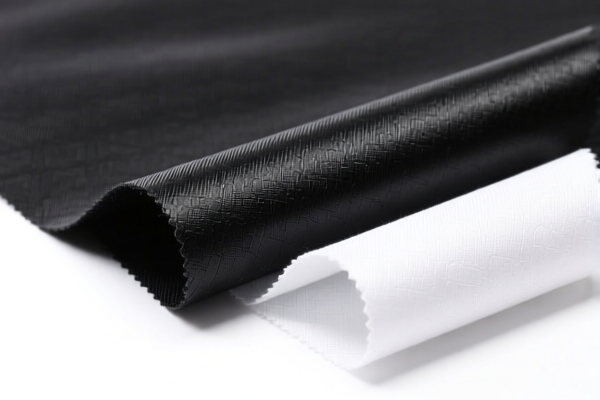
AI分析
🧥 Synthetic Fur Fabric: HS Code Classification & Customs Clearance Strategy (2026)
🌐 HS Code Reference & Clearance Guide | 2026 Latest Tariff Analysis | Professional-Level Strategy
📌 I. Product Definition & Classification: Do You Really Understand "Synthetic Fur Fabric"?
Synthetic fur fabric is a popular material in the global apparel and accessory industry, known for its softness, durability, and affordability. In international trade, its classification depends heavily on its state (fabric vs. finished garment) and material composition.
Key Distinction: * Fabric/Material (Cutting Stock): If the product is still in roll form or cut panels intended for further manufacturing, it is classified under Chapter 43 (Articles of fur skin and artificial fur). * Finished Garment (Article of Clothing): If the product is already sewn into a specific shape, such as a vest, coat, or jacket, and ready for consumption, it is classified under Chapter 62 (Articles of apparel and clothing accessories, not knitted or crocheted).
⚠️ Critical Differentiation:
- If it is raw material (rolls, cut pieces) → Goes to HS 4304.00.00.00
- If it is a finished consumer good (e.g., a vest) → Goes to HS 6211.33.90.54 or 6211.43.10.76
📦 II. HS Code Classification Details (2026 Latest Tariff Authority Comparison)
| HS Code | Product Description | Application Scenario | Material Attribute |
|---|---|---|---|
4304.00.00.00 |
Articles of artificial fur | Raw materials, rolls, cut pieces, or unfinished items made of artificial fur | Artificial fur (material focus) |
6211.33.90.54 |
Synthetic fur vest, finished consumer good | Ready-to-wear vests, shape matches consumer use, material consistent with synthetic fibers | Finished garment (artificial fur) |
6211.43.10.76 |
Synthetic fur vest, shape and purpose consistent | Other finished vests where material is inferred as synthetic fiber-based | Finished garment (artificial fur) |
🔍 Key Reminder:
- HS 4304.00.00.00 is for fabric/raw materials. Do not classify a finished vest here.
- HS 6211.33.90.54 and 6211.43.10.76 are for finished vests. The choice between them depends on precise material specifications (e.g., whether the pile is entirely synthetic or has other fiber blends).
- Do not mix fabric classification with garment classification. Misclassification can lead to significant duty differences and customs penalties.
💰 III. 2026 Latest Tariff Rate Breakdown (Including Additional Taxes, Policy Surcharges)
✅ Applicable Country: United States (US)
✅ Origin: China (CN)
✅ Effective Date: 2025/2026 (Including subsequent imports)
🎯 1. 4304.00.00.00 —— Articles of Artificial Fur (Fabric/Raw Material)
| Item | Details |
|---|---|
| Base Tariff | 6.5% (Ad Valorem) |
| Additional Tariff (Section 301) | +25.0% |
| Section 122 Tariff | +10.0% |
| Total Tariff | 41.5% |
| Tax Calculation | CIF Value × 41.5% |
| De Minimis Eligibility | ❌ Not Eligible (Section 301/122 typically apply regardless of value) |
| Legal Basis Path | USITC:4304.00.00.00 → USITC Footnote: Section 301 → IEEPA: Section 122 |
📌 Explanation:
- "Base Tariff 6.5%": Standard MFN rate for artificial fur articles.
- "Additional Tariff 25%": Under Section 301 of the Trade Act of 1974, targeting Chinese goods.
- "Section 122 Tariff 10%": Additional levy under Section 122 of the Trade Act of 1974 (specific to certain textiles/apparel inputs).
- Total 41.5% is a high tariff rate. Importers must plan accordingly.
🎯 2. 6211.33.90.54 & 6211.43.10.76 —— Synthetic Fur Vests (Finished Garments)
| Item | Details |
|---|---|
| Base Tariff | 16.0% (Ad Valorem) |
| Additional Tariff (Section 301) | +7.5% |
| Section 122 Tariff | +10.0% |
| Total Tariff | 33.5% |
| Tax Calculation | CIF Value × 33.5% |
| De Minimis Eligibility | ❌ Not Eligible (Section 301/122 apply) |
| Legal Basis Path | USITC:6211.33.90.54 / USITC:6211.43.10.76 → USITC Footnote: Section 301 → IEEPA: Section 122 |
📌 Note:
- Base Tariff 16.0%: Higher than the raw material rate (6.5%) because it is a finished apparel item.
- Section 301 Tariff 7.5%: Lower than the 25% rate for raw materials, reflecting different policy tiers for finished goods.
- Section 122 Tariff 10%: Applies to both fabric and garment categories for specific textile/apparel rules.
- Total 33.5% is still significant but 8% lower than the raw material rate. This highlights the importance of accurate classification.
🛠️ IV. Customs Clearance Practical Advice (Real-World Pitfall Avoidance Guide)
✅ 1. Documentation Checklist (Essential Items)
| Document | Required | Explanation |
|---|---|---|
| ✅ Product Specifications | ✔️ | Must clearly state: Material (100% synthetic? Blended?), Pile Height, Weight (GSM), Intended Use (Vest vs. Fabric Roll). |
| ✅ Product Photos | ✔️ | Show the product state: Rolls (fabric) vs. Sewn Vests (garment). Include labels/care tags if available. |
| ✅ Commercial Invoice | ✔️ | Describe accurately: "Artificial Fur Fabric Rolls" vs. "Finished Synthetic Fur Vests." Avoid vague terms like "Fur Material." |
| ✅ Packing List | ✔️ | Detail the number of rolls vs. number of units. Ensure packaging reflects the physical state. |
| ✅ Supply Chain Proof | ✔️ | If claiming non-China origin, provide proof. For China origin, be prepared for higher tariffs. |
✅ 2. Declaration Tips (Key Mnemonics)
🔥 “State Determines Code: Fabric vs. Finished!”
| Scenario | Correct Declaration | Wrong Practice |
|---|---|---|
| Rolls of Synthetic Fur | HS 4304.00.00.00 |
Declare as "Vest" → Higher duty (16% base) + risk of misclassification penalty |
| Finished Vests | HS 6211.33.90.54 or 6211.43.10.76 |
Declare as "Fabric" → Lower duty (6.5% base) but major fraud risk if inspected |
| Cut Panels (Unsewn) | HS 4304.00.00.00 |
Declare as "Garment" → Incorrect if not yet assembled |
| Mixed Shipments | Separate HS Codes for fabric and garments | Combine into one line item → Customs rejection |
✅ 3. Special Case Handling
| Scenario | Handling Advice |
|---|---|
| OEM Custom Vests | Provide design specs. Ensure material is clearly "artificial fur" to qualify for HS 6211, not general apparel. |
| Sample Shipments | Even samples are subject to duties. Declare correctly; do not use "Sample" to evade classification. |
| Returns/Rejections | If goods are returned to China, apply for duty drawback if eligible. Ensure original HS codes are referenced. |
| Material Blend Uncertainty | If the fur has mixed fibers (e.g., polyester/acrylic), provide lab test reports. Misdeclaring 100% synthetic vs. blend can change the HS sub-category. |
🌍 V. Global Market Clearance Comparison (2026 Latest)
| Country/Region | Recommended HS Code | Tariff Rate | Certification Requirements | Notes |
|---|---|---|---|---|
| 🇺🇸 United States | 4304.00.00.00 (Fabric)6211.33.90.54 (Vest) |
41.5% (Fabric) 33.5% (Vest) |
None specific for fur, but general CBP compliance | High tariffs due to Section 301 & 122. Plan cost accordingly. |
| 🇨🇳 China | 4304.00.00.00 / 6211.33.90.54 |
5-10% (Import) | CCC (if applicable) | Lower tariffs for imported synthetic fur goods. |
| 🇪🇺 European Union | 4304.00.00 / 6211.33 |
0-4% (Depending on origin) | CE (if functional), REACH (chemicals) | No Section 301/122 equivalents. Lower duty burden. |
| 🇬🇧 United Kingdom | 4304.00.00 / 6211.33 |
0-4% | UKCA (if applicable) | Post-Brexit tariffs align closely with EU. |
| 🇨🇦 Canada | 4304.00.00 / 6211.33 |
0-5% | CSA (if applicable) | FTA benefits may apply for non-originating goods. |
📌 Conclusion:
- The US market has the highest tariff burden for Chinese-origin synthetic fur products due to Section 301 and Section 122.
- European and North American (non-US) markets offer significantly lower duty rates.
- Cost Optimization Strategy: Consider sourcing from Vietnam or Mexico for final assembly to avoid China-origin surcharges, if feasible.
📌 VI. Common Errors & Pitfall Guide (Lessons Learned)
❌ Error 1: Declaring finished vests as fabric rolls to save 8% in base duty.
👉 Consequence: Customs inspection reveals finished goods → Penalties, seizure, and blacklisting.
❌ Error 2: Not specifying material composition (e.g., "Fur-like material" instead of "100% Polyester Artificial Fur").
👉 Consequence: Customs may misclassify under general apparel (HS 6217) → Higher or lower duty surprises.
❌ Error 3: Ignoring Section 122 Tariffs for textile-related items.
👉 Consequence: Unexpected 10% charge at customs → Profit margin erosion.
✅ Correct Practice:
"Artificial Fur Fabric Rolls, 100% Polyester, 500 GSM, For Garment Manufacturing, Country of Origin: China"
"Finished Synthetic Fur Vest, 100% Artificial Fur, Size M, Ready-to-Wear, Country of Origin: China"
🎯 VII. Conclusion: Professional Declaration, Time-Saving, Cost-Efficient!
🎯 Remember the Mnemonic:
🔹 "Fabric vs. Finished: 4304 for Raw, 6211 for Garments!"
🔹 "US Tariff High: 41.5% Fabric, 33.5% Vest. Plan Ahead!"
🔹 "Section 122 Applies to Both: Don't Forget the 10%!"
📌 Pro Tip:
If your synthetic fur products are originating from Vietnam, Mexico, or Thailand, you may be eligible for IEEPA Exemptions under certain conditions, reducing tariffs to 0-5%.
Recommendation: Apply for an Advance Ruling from CBP if your product classification is complex or if you have large volume shipments.
📣 Immediate Action:
📞 Contact a Professional Customs Broker + Provide Product Photos + Apply for HS Code Advance Ruling
🚀 Ensure Your Synthetic Fur Products Clear Customs Smoothly, Efficiently, and Profitably!
✨ Professional Customs Clearance Starts with Accurate Classification!
💼 Every Cent of Your Cost Deserves to Be Precisely Calculated!
用户评价
关于 HS 编码归类
协调制度(HS)是由世界海关组织(WCO)制定的国际贸易商品分类标准。全球 200 多个国家采用 HS 系统作为海关关税、贸易统计和进出口监管的基础。
每个 HS 编码遵循以下层级结构:
- 章(2 位)——商品大类(例如:第 84 章:机器和机械设备)
- 品目(4 位)——章内的更具体分类
- 子目(6 位)——国际通用细分,所有 WCO 成员国统一使用
- 本国细分(8-10 位)——各国自行扩展的细分编码,如美国 HTSUS 10 位编码
正确的 HS 编码归类对于顺利通关、准确缴纳关税和遵守贸易法规至关重要。错误归类可能导致海关延误、多缴关税或罚款。
从CN进口到US时,适用的关税税率可能包括:
- 最惠国(MFN)税率——适用于 WTO 成员国的标准关税税率
- 普通税率——适用于无贸易协定国家
- 贸易救济关税——附加关税,如 301 条款(反倾销)、232 条款(国家安全)或反补贴税
本页内容仅供参考。如需正式归类,请咨询当地海关或持牌报关代理。