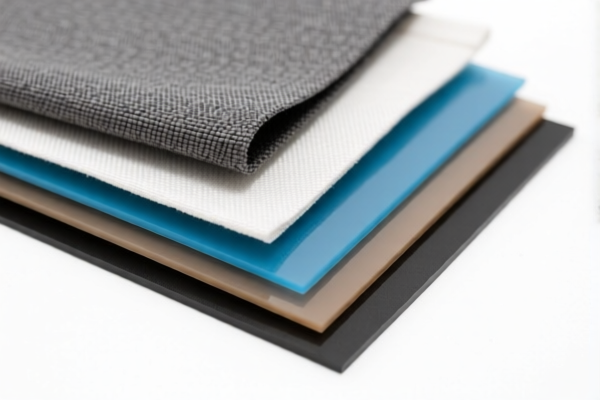
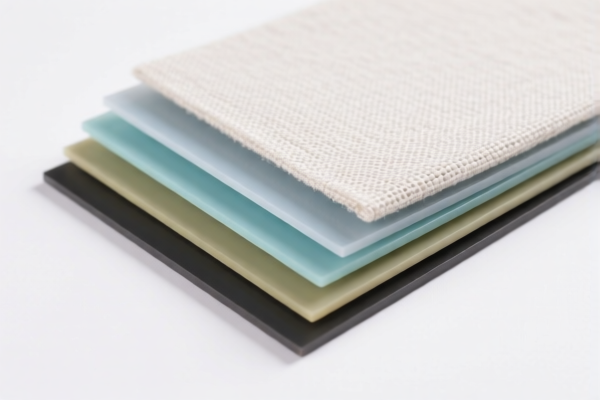
textile composite plastic sheets for packaging
CN → US| HS编码 | 关税税率 | 原产国 | 目的国 | 文档 |
|---|---|---|---|---|
| 3923900080 | 38.0% | CN | US | 官方文档 |
| 6305390000 | 25.9% | CN | US | 官方文档 |
| 3923290000 | 38.0% | CN | US | 官方文档 |
| 3920992000 | 39.2% | CN | US | 官方文档 |
| 3921905050 | 39.8% | CN | US | 官方文档 |
商品图片


AI分析
📦 Textile Composite Plastic Sheets for Packaging
🌐 HS Code Reference & Customs Clearance Guide | 2026 Latest Tariff Analysis | Professional Clearance Strategy
📌 I. Product Definition & Classification: Do You Really Understand "Composite Plastic Sheets"?
"Textile Composite Plastic Sheets for Packaging" refers to materials that combine plastic polymers with textile fabrics (artificial or natural) to create a robust packaging medium. In international trade, the classification hinges on the primary material and the specific form of the composite.
These materials generally fall into two main categories based on US Harmonized Tariff Schedule (HTSUS) logic: 1. Plastic Primary Articles: If the plastic component provides the essential character, especially if it is in the form of plates, sheets, or films used for transport/packaging. 2. Textile Primary Articles: If the textile component is predominant, often categorized under "Sacks and Bags" or other textile goods.
⚠️ Critical Distinction Point:
- If the product is essentially a plastic sheet/board with textile backing for support/lamination → Likely Chapter 39 (Plastics).
- If the product is essentially a textile bag/sack reinforced with plastic coating → Likely Chapter 63 (Other Made-Up Articles) or Chapter 6305 (Sacks/Bags).
- The provided data suggests a mix of interpretations depending on how the "composite" is defined by the customs officer (Plastic Packagings vs. Textile Materials).
📦 II. HS Code Classification Details (Based on Provided Data)
| HS Code | Product Description | Summary of Logic | Total Tax Rate |
|---|---|---|---|
3923.90.00.80 |
Plastic Packagings, Not Elsewhere Specified | Matches Material (Plastic) and Use (Packaging). Fits the category of plastic-made packaging articles. | 38.0% |
6305.39.00.00 |
Sacks and Bags (Plastic/Artificial Textile) | Material matches (Plastic/Artificial Textile) and Use matches (Packaging). Classified under artificial textile materials. | 25.9% |
3923.29.00.00 |
Plastic Articles for Transport/Packaging | Material is Plastic, Form is Packaging Material. Fits plastic transport/packaging goods. | 38.0% |
3920.99.20.00 |
Other Plates, Sheets, Film, Foil, Strip (Plastic) | "Plastic" in name matches material; "Composite Board" matches laminated/supported material form. | 39.2% |
3921.90.50.50 |
Other Plates, Sheets, Film, Foil, Strip (Plastic) | Material is Plastic, Form is Plate/Sheet. Fits plastic plates/sheets/films. | 39.8% |
🔍 Key Insight:
- The tax rate varies significantly from 25.9% to 39.8% depending on whether customs views the product as a textile sack (6305) or a plastic sheet/plate (3920/3921/3923). - Higher Tax Codes (3920/3921/3923): Typically apply if the product is rigid or semi-rigid sheets/plates used for packaging. - Lower Tax Code (6305): Applies if the product is interpreted as flexible sacks/bags made of textile/plastic composite.
💰 III. 2026 Latest Tariff Rate Breakdown (Including Additional Duties)
✅ Applicable Country: United States (US)
✅ Origin: China (CN)
✅ Effective Time: Current rates include Section 301 and IEEPA surcharges.
🎯 1. 3923.90.00.80 & 3923.29.00.00 —— Plastic Packagings
| Item | Content |
|---|---|
| Base Duty | 3.0% (ad valorem) |
| Section 301 Additional Duty | +25.0% (USITC Footnote 9903.39.00) |
| IEEPA Additional Duty | +10.0% (For Chinese/HK products, effective Nov 2025) |
| Total Effective Rate | 38.0% |
| Calculation | CIF Value × 38.0% |
| De Minimis Exemption | ❌ Not Eligible |
| Legal Path | IEEPA:9903.01.25 → USITC:3923.29.00.00 → FOOTNOTE:9903.39.00 |
📌 Explanation:
- These codes classify the product as "Plastic Packagings." - The 38% total rate is high due to the cumulative effect of base duty (3%), Section 301 (25%), and IEEPA (10%). - Misclassification as textile (6305) could save 12.1% in duties, but requires strong justification that the textile aspect is dominant.
🎯 2. 6305.39.00.00 —— Sacks and Bags (Plastic/Textile)
| Item | Content |
|---|---|
| Base Duty | 8.4% (ad valorem) |
| Section 301 Additional Duty | +7.5% (USITC Footnote 9903.63.00 - Note: Lower surcharge for textiles) |
| IEEPA Additional Duty | +10.0% |
| Total Effective Rate | 25.9% |
| Calculation | CIF Value × 25.9% |
| De Minimis Exemption | ❌ Not Eligible |
| Legal Path | IEEPA:9903.01.24 → USITC:6305.39.00.00 → FOOTNOTE:9903.63.00 |
📌 Note:
- This is the lowest tax rate in the provided dataset. - To qualify, the product must be clearly identifiable as a "Sack or Bag" (flexible, used for storage/transport) rather than a rigid "Sheet" or "Plate." - If the composite sheet is folded or used as a bag, this classification is favorable.
🎯 3. 3920.99.20.00 & 3921.90.50.50 —— Plastic Plates/Sheets/Films
| Item | Content |
|---|---|
| Base Duty | 4.2% (3920) / 4.8% (3921) |
| Section 301 Additional Duty | +25.0% |
| IEEPA Additional Duty | +10.0% |
| Total Effective Rate | 39.2% (3920) / 39.8% (3921) |
| Calculation | CIF Value × Rate |
| De Minimis Exemption | ❌ Not Eligible |
| Legal Path | IEEPA:9903.01.25 → USITC:3920.99.20.00 / 3921.90.50.50 |
📌 Warning:
- These are the highest tax rates. - They apply if the product is viewed as a rigid or semi-rigid plastic board/plate, even if used for packaging. - "Composite Board" triggers these codes if the plastic layer is structurally dominant.
🛠️ IV. Customs Clearance Practical Advice (Real-World Pitfall Guide)
✅ 1. Documentation Checklist (Essential)
| Document | Required? | Purpose |
|---|---|---|
| ✅ Product Specification Sheet | ✔️ | Must detail: Plastic type, Textile type, Lamination method, Thickness, Flexibility. |
| ✅ Commercial Invoice | ✔️ | Description should be precise: e.g., "Plastic-Coated Textile Packaging Sheets" vs. "Composite Plastic Board." |
| ✅ Material Composition Statement | ✔️ | Percentage of plastic vs. textile by weight/volume. Critical for Chapter 39 vs. 63. |
| ✅ Product Photos | ✔️ | Show flexibility (if soft) or rigidity (if hard). Show cross-section if laminated. |
| ✅ Certificate of Origin | ✔️ | Required for IEEPA surcharge calculation. |
✅ 2. Classification Strategy (Key Principles)
🔥 "Flexibility Favors Textile, Rigidity Favors Plastic!"
| Scenario | Recommended HS Code | Reasoning |
|---|---|---|
| Soft, Foldable Sheets (like heavy-duty sacks) | 6305.39.00.00 |
Best for lower tax (25.9%). Argue that the textile provides the structure. |
| Rigid/semi-Rigid Boards (for pallet covers/shielding) | 3920.99.20.00 or 3921.90.50.50 |
Plastic dominates. Expect higher tax (39%+). |
| General Packaging Bags | 3923.29.00.00 |
If it's clearly a bag/sack made of plastic or plastic-coated textile. Tax: 38%. |
✅ 3. Special Considerations
| Situation | Advice |
|---|---|
| Lamination Order | If the textile is the outer layer and plastic is inner, argue for 6305. If plastic is outer/coating, argue for 3920/3923. |
| Customs Pre-Ruling | Highly Recommended. Submit samples and specs to CBP for an Advance Ruling. The difference between 25.9% and 39.8% is 13.9%, a significant margin. |
| "Composite" Definition | Ensure the invoice does not use vague terms like "Plastic Composite." Be specific: "Polyethylene-coated Polypropylene Fabric." |
🌍 V. Global Market Comparison (2026)
| Country/Region | Recommended HS Code | Estimated Duty (China Origin) | Notes |
|---|---|---|---|
| 🇺🇸 USA | 6305.39.00.00 (Best Case) |
25.9% | Includes 10% IEEPA + 7.5% Sec 301 + 8.4% Base. |
| 🇺🇸 USA | 3923.90.00.80 (Alternative) |
38.0% | Includes 10% IEEPA + 25% Sec 301 + 3% Base. |
| 🇪🇺 EU | Various (Plastic/Textile) | ~3% - 6% | Generally lower base duties, but strict REACH/RoHS compliance. |
| 🇨🇳 China | Various | ~5% - 10% | Import duties for packaging materials. |
📌 Conclusion:
- USA is the most challenging market due to high additional tariffs (IEEPA + Section 301). - Strategic Goal: Aim for6305.39.00.00to save ~12-14% in duties, provided the product can be legitimately classified as a textile-based packaging sack/bag. - If the product is rigid, accept3920/3921rates and focus on supply chain optimization.
📌 VI. Common Errors & Pitfalls (Lessons Learned)
❌ Error 1: Vague Description "Plastic Sheets" on Invoice
👉 Result: Customs defaults to highest plastic rate (3920/3921) → 39.2-39.8% Tax.
❌ Error 2: Claiming "Textile" for Rigid Plastic Boards
👉 Result: Audit risk, penalties, and forced re-classification → Back Taxes + Interest.
❌ Error 3: Ignoring IEEPA Surcharge
👉 Result: Underpayment of 10% → Seizure or Liquidation Delay.
✅ Correct Action:
"Polyethylene Coated Woven Polypropylene Fabric Sheets, for Industrial Packaging, 50 Micron PE / 40 Micron PP"
(This specificity allows for debate toward6305if flexibility is proven.)
🎯 VII. Conclusion: Professional Classification Saves Money!
🎯 Remember the Rule:
🔹 "Soft & Foldable? Try Textile (
6305) → 25.9%."
🔹 "Rigid & Plate-like? Stick to Plastic (3920/3921) → ~39%."
🔹 "Bags? Plastic Packagings (3923) → 38%."
📌 Pro Tip:
If you are importing large volumes, request a CBP Advance Ruling. The cost of the ruling is negligible compared to the 13.9% duty savings possible by correctly classifying as 6305.39.00.00.
📣 Immediate Action:
📞 Contact your freight forwarder with product photos and material specs.
📝 Ask for a pre-classification opinion before shipping.
🚀 Optimize your tax burden from Day 1!
✨ Professional Customs Clearance Starts with Accurate Classification!
💼 Every Percent Counts in Global Trade!
用户评价
关于 HS 编码归类
协调制度(HS)是由世界海关组织(WCO)制定的国际贸易商品分类标准。全球 200 多个国家采用 HS 系统作为海关关税、贸易统计和进出口监管的基础。
每个 HS 编码遵循以下层级结构:
- 章(2 位)——商品大类(例如:第 84 章:机器和机械设备)
- 品目(4 位)——章内的更具体分类
- 子目(6 位)——国际通用细分,所有 WCO 成员国统一使用
- 本国细分(8-10 位)——各国自行扩展的细分编码,如美国 HTSUS 10 位编码
正确的 HS 编码归类对于顺利通关、准确缴纳关税和遵守贸易法规至关重要。错误归类可能导致海关延误、多缴关税或罚款。
从CN进口到US时,适用的关税税率可能包括:
- 最惠国(MFN)税率——适用于 WTO 成员国的标准关税税率
- 普通税率——适用于无贸易协定国家
- 贸易救济关税——附加关税,如 301 条款(反倾销)、232 条款(国家安全)或反补贴税
本页内容仅供参考。如需正式归类,请咨询当地海关或持牌报关代理。