textile printing and dyeing penetrating agent
CN → US商品图片
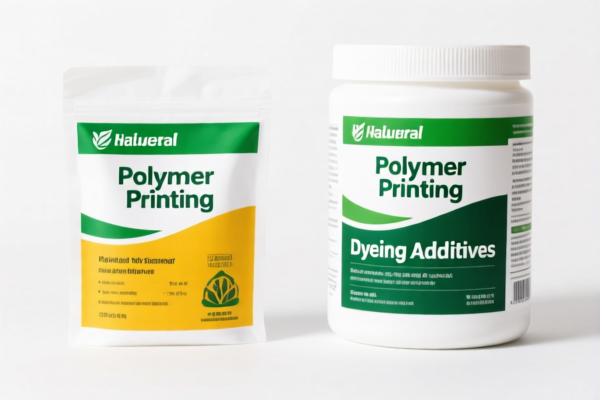
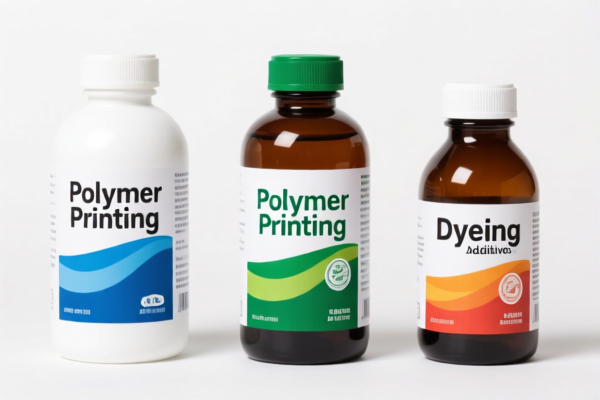
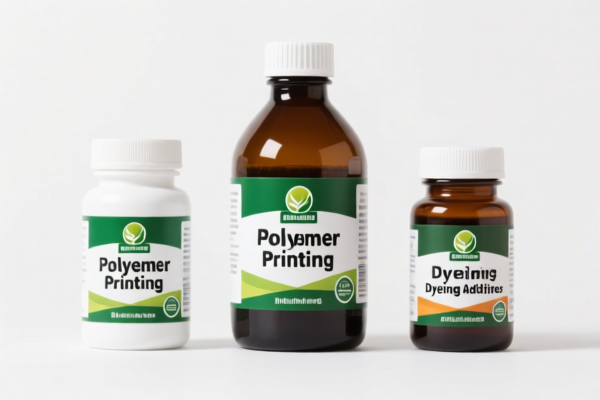
AI分析
🧪 Textile Printing and Dyeing Penetrating Agent (Softening Agent/Leveling Aid)
🌐 HS Code Reference & Customs Clearance Guide | 2026 Latest Tariff Analysis | Professional Clearance Strategy
📌 I. Product Definition & Classification: Do You Really Understand "Penetrating Agents"?
Textile printing and dyeing penetrating agents are critical chemical auxiliaries used in the textile industry. Their primary function is to reduce surface tension, improve the wetting power of dyeing solutions, and accelerate the penetration of dyes into textile fibers (especially synthetic fibers like polyester or dense natural fibers).
In international trade, they are often misclassified due to vague descriptions. They must be distinguished from: * Pure Chemicals: Single-component substances with a specific chemical structure (e.g., pure alcohol ethoxylates). * Mixed Auxiliaries: Complex formulations containing penetrants, stabilizers, emulsifiers, etc. * Detergents/Cleaning Agents: Products primarily used for washing, not dyeing penetration.
⚠️ Key Distinction Point:
- If the product is a single defined chemical substance with a specific CAS number and purity >95% → Likely Chapter 29 (Organic Chemicals).
- If the product is a mixture, preparation, or formulation designed for a specific industrial application (dyeing/penetration) without a single dominant chemical identity → Likely Chapter 38 (Miscellaneous Chemical Products).
- Most commercial "Penetrating Agents" sold to textile mills are mixtures or preparations → HS Code 3809.
📦 II. HS Code Classification Details (2026 Latest Tariff Authority Comparison)
| HS Code | Product Description | Application Scenario | Chemical Nature |
|---|---|---|---|
2905.16.10.00 |
1,2-Propanediol (Propylene Glycol), if pure | Solvent component, if pure chemical | ✅ Single Substance |
3809.10.00.00 |
Finishing agents, prepared dyes, etc., of a kind used in textiles | Most Common: Commercial penetrating agents, leveling agents, wetting agents for textile dyeing/printing | ✅ Mixture/Preparation |
3809.91.00.00 |
Other finishing agents (non-textile) | If used in leather, paper, or wood processing | ❌ Non-Textile |
3402.30.00.00 |
Surface active agents (organics), preparations | If classified as general surfactants (less common for specific "penetrating agent" marketing) | ✅ Surfactant-focused |
3824.99.99.00 |
Other prepared binders, etc. | If no specific textile function can be proven | ❌ Last Resort |
🔍 Crucial Reminder:
- HS 3809.10.00.00 is the standard and most accurate classification for commercial textile penetrants, leveling agents, and softeners that are mixtures/formulations.
- Do NOT classify complex textile auxiliaries under 3402 (Surfactants) unless the primary function is strictly surfactancy and it’s sold as a general industrial cleaner/wetting agent. For textile-specific dyeing aids, 3809 is preferred by customs globally.
- If you sell pure chemical raw materials (e.g., pure alkylphenol ethoxylate), use Chapter 29. But this is rare for end-user "penetrating agents."
💰 III. 2026 Latest Tariff Rate Detailed Explanation (Including Surtaxes, Policy Surcharges)
✅ Applicable Country: United States (US)
✅ Origin: China (CN)
✅ Effective Time: November 10, 2025 onwards (including subsequent imports)
🎯 1. 3809.10.00.00 —— Textile Finishing Agents (Including Penetrating Agents)
| Item | Content |
|---|---|
| Basic Tariff Rate | 4.9% (ad valorem) – General MFN Rate |
| USITC Additional Tariff (Section 301) | +25% (Footnote: 9903.88.03) |
| IEEPA Additional Tariff | +10% (Targeting China/HK products, effective Nov 10, 2025) |
| Total Tariff Rate | 39.9% |
| Tax Calculation | CIF Value × 39.9% |
| De Minimis Exemption Eligible | ❌ No (denied for Section 301 goods under certain thresholds, but generally, chemical auxiliaries from China are subject to full surtaxes) |
| Legal Basis Path | IEEPA:9903.01.25 → IEEPA:9903.01.24 → USITC:3809.10.00.00 → FOOTNOTE:9903.88.03 |
📌 Explanation:
- "USITC Additional Tariff 25%" comes from the U.S. Trade Act Section 301 investigation on Chinese imports.
- "IEEPA 10%" is the new surcharge under the International Emergency Economic Powers Act targeting specific Chinese chemical and textile-related inputs.
- Total: 39.9%. This is a high-cost barrier. Many importers absorb this or shift sourcing to Vietnam/India to avoid these surcharges.
🎯 2. Alternative: If Classified as Pure Chemical (2905.xxxx or similar)
⚠️ Warning: This is rare and risky. If Customs determines it’s a mixture, they will reclassify to 3809.10.00.00 and apply penalties.
If it is a pure chemical (e.g., pure ethoxylated alcohol), the rates might be different, but the 25% + 10% surcharges still apply to most chemical products from China.
🛠️ IV. Customs Clearance Practical Advice (Real-World Pitfall Guide)
✅ 1. Documentation Checklist (None Missing)
| Document | Must Provide | Description |
|---|---|---|
| ✅ Technical Data Sheet (TDS) | ✔️ | Must clearly state: "Textile Dyeing Auxiliary," "Penetrating Agent," CAS numbers of main components. |
| ✅ Formula Composition | ✔️ | Percentages of each chemical ingredient. Essential for proving it’s a "preparation" (3809) vs. pure substance. |
| ✅ Product Photos (Label & Container) | ✔️ | Show warning labels, HS Code if marked, and usage instructions. |
| ✅ Safety Data Sheet (SDS) | ✔️ | OSHA-compliant SDS. Check Section 14 for UN Number and Shipping Name. |
| ✅ Commercial Invoice | ✔️ | Clearly describe as "Textile Penetrating Agent, Chemical Auxiliary, HS 3809.10.00.00". Avoid vague terms like "Chemical Liquid." |
| ✅ Certificate of Origin (CO) | ✔️ | Required for proving origin to apply surtaxes correctly. |
| ✅ Letter of Guarantee | ✔️ | If requested, confirm the product is not used for military purposes. |
✅ 2. Declaration Tips (Key Mantra)
🔥 "Mixture for Textiles = 3809. Pure Chemical = 2909. Don’t Confuse!"
| Situation | Correct Declaration | Wrong Practice |
|---|---|---|
| Commercial Penetrant (Mixture) | 3809.10.00.00 |
Misdeclare as 3402.30.00.00 (Surfactants) → Risk of reclassification & penalties. |
| Pure Chemical Raw Material | 29xx.xx.xx.xx |
Misdeclare as 3809 → Underpayment risk if pure; Overpayment if mixture. |
| Used in Leather Dyeing | 3809.91.00.00 |
Misdeclare as textile → Incorrect tariff rate. |
| Vague Description "Chemical Liquid" | Always Specify Use | Customs will detain and question. |
✅ 3. Special Cases Handling
| Case | Handling Advice |
|---|---|
| OEM Private Label | Provide the original supplier’s TDS. The chemical nature doesn’t change based on branding. |
| Container Transport vs. LCL | Ensure UN Number and Packing Group are correctly declared on the Bill of Lading for hazardous goods (if applicable). |
| Bilingual Packaging | Ensure the English description on the label matches the invoice exactly. Use "Textile Dyeing Auxiliary" as the primary description. |
| Hazardous Goods | Some penetrating agents are flammable or corrosive. Declare UN Number (e.g., UN 1993, UN 3082) accurately to avoid port rejection. |
🌍 V. Global Main Market Customs Clearance Comparison (2026 Latest)
| Country/Region | Recommended HS Code | Tariff | Certification Required | Notes |
|---|---|---|---|---|
| 🇺🇸 USA | 3809.10.00.00 |
39.9% (CN Origin) | EPA Registration (if pesticide claim), TSCA Compliance | High surtaxes. Strict SDS review. |
| 🇨🇳 China | 3809.10.00.00 |
5-7% | GB Standards | No surtaxes. |
| 🇪🇺 EU | 3809.10.00.00 |
4.8% | REACH Registration (ECHA) | REACH compliance is mandatory for chemical imports. |
| 🇮🇳 India | 3809.10.00.00 |
5-10% | BIS Certification (if applicable) | High scrutiny on chemical imports. |
| 🇯🇵 Japan | 3809.10.00.00 |
6.0% | PRTR Law Compliance | Report if volume exceeds thresholds. |
📌 Conclusion:
- USA and EU are the strictest on chemical documentation.
- USA imposes 39.9% total duty on Chinese-origin textile auxiliaries.
- EU requires REACH registration for each substance in the mixture. Non-compliance leads to seizure.
📌 VI. Common Errors & Pitfall Guide (Lessons Learned)
❌ Error 1: Declaring "Textile Penetrating Agent" as 3402.30.00.00 (Surfactants)
👉 Consequence: Customs may reclassify to 3809.10.00.00, leading to higher duties + penalties + delay.
❌ Error 2: Omitting REACH Registration details for EU shipments
👉 Consequence: Shipment held at border until proof of compliance is provided. Delivery delay 2-4 weeks.
❌ Error 3: Vague Invoice Description: "Chemical Dye"
👉 Consequence: Customs requests additional info, delays clearance, may assess highest possible duty rate.
❌ Error 4: Ignoring Hazardous Goods classification
👉 Consequence: If the product is flammable (flash point <60°C) and declared as non-hazardous, shipments will be rejected or fined heavily.
✅ Correct Practice:
"Textile Dyeing Penetrating Agent, Chemical Auxiliary, HS 3809.10.00.00, REACH Compliant, UN 1993, Flash Point 55°C"
🎯 VII. Conclusion: Precise Classification Saves Money!
🎯 Remember the Mantra:
🔹 "Mixture for Textile = 3809, Pure Chemical = 29xx, Don't Guess!"
🔹 "US Tariff is 39.9%, EU Needs REACH, Document Everything!"
🔹 "Vague Description = Customs Audit, Clear Description = Smooth Clearance!"
📌 Pro Tip:
If you are importing large volumes to the US, consider:
1. Applying for a Exclusion under Section 301 (if available for specific chemical auxiliaries).
2. Transshipping through Vietnam/Malaysia (but beware of rules of origin checks).
3. Consulting a Customs Broker for a Binding Ruling if your product is borderline between 29xx and 3809.
📣 Immediate Action:
📞 Contact your freight forwarder + Provide TDS + Verify UN Number + Confirm REACH Status (for EU)
🚀 Ensure your textile penetrants clear customs smoothly, legally, and cost-effectively!
✨ Professional Customs Clearance Starts with Accurate Classification!
💼 Every dollar in duty savings counts!
用户评价
关于 HS 编码归类
协调制度(HS)是由世界海关组织(WCO)制定的国际贸易商品分类标准。全球 200 多个国家采用 HS 系统作为海关关税、贸易统计和进出口监管的基础。
每个 HS 编码遵循以下层级结构:
- 章(2 位)——商品大类(例如:第 84 章:机器和机械设备)
- 品目(4 位)——章内的更具体分类
- 子目(6 位)——国际通用细分,所有 WCO 成员国统一使用
- 本国细分(8-10 位)——各国自行扩展的细分编码,如美国 HTSUS 10 位编码
正确的 HS 编码归类对于顺利通关、准确缴纳关税和遵守贸易法规至关重要。错误归类可能导致海关延误、多缴关税或罚款。
从CN进口到US时,适用的关税税率可能包括:
- 最惠国(MFN)税率——适用于 WTO 成员国的标准关税税率
- 普通税率——适用于无贸易协定国家
- 贸易救济关税——附加关税,如 301 条款(反倾销)、232 条款(国家安全)或反补贴税
本页内容仅供参考。如需正式归类,请咨询当地海关或持牌报关代理。