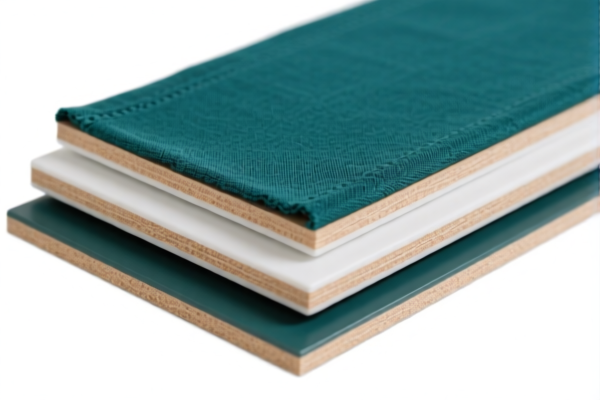
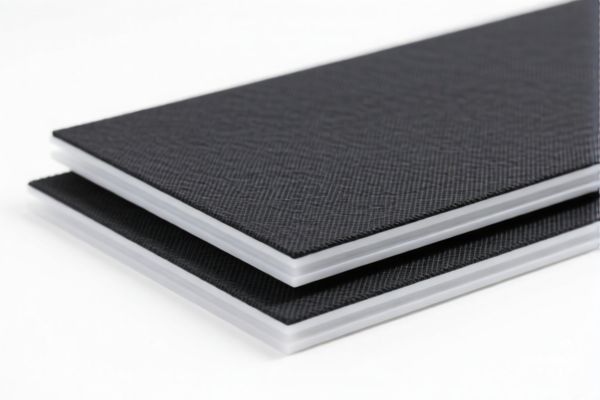
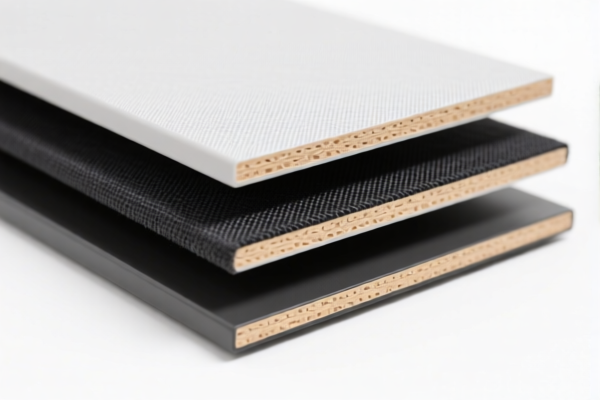
textile reinforced plastic process board
CN → US| HS编码 | 关税税率 | 原产国 | 目的国 | 文档 |
|---|---|---|---|---|
| 6815190000 | 35.0% | CN | US | 官方文档 |
| 3921905010 | 39.8% | CN | US | 官方文档 |
| 3921904010 | 39.2% | CN | US | 官方文档 |
| 3921902510 | 41.5% | CN | US | 官方文档 |
商品图片

AI分析
🏭 Textile Reinforced Plastic Process Board (TRP Board)
🌐 HS Code Classification & Customs Clearance Guide | 2026 Tariff Analysis | Professional Compliance Strategy
📌 I. Product Definition: What is a "Textile Reinforced Plastic Process Board"?
This product is a composite panel constructed primarily from plastic/resin matrices reinforced with textile fibers. It is not a finished consumer good (like clothing) but an intermediate or industrial component ("Process Board"). The key characteristics determining its classification are: 1. Material: Plastic (polymer) + Textile (reinforcement). 2. Form: Board/Plate/Sheet. 3. Use: Industrial processing, structural reinforcement, or decorative lamination.
⚠️ Critical Distinction:
- Is it a "Fabric/Textile" product? → No, because the plastic matrix dominates or binds it into a rigid board.
- Is it a "Pure Plastic" product? → Yes, it falls under Chapter 39 (Plastics and articles thereof), specifically Plates, Sheets, and Films, because the textile serves as a reinforcement within the plastic structure, not as the primary wearable material.
📦 II. HS Code Classification Details (2026 Latest Tariff Schedule)
Based on the provided data, here are the matched HS Codes, their logical basis, and tax implications.
| HS Code | Product Description & Logic | Total Tax Rate | Tax Breakdown (US Imports from China) |
|---|---|---|---|
| 6815.19.00.00 | Non-electrical Carbon Fiber/Composite Boards • Logic: If the "textile" is interpreted as carbon fiber or similar high-performance fibers. • Form: Rigid board. • Category: "Other" composite articles. |
35.0% | • Base Duty: 0.0% • Section 301 (25%): 25.0% • Section 122 (10%): 10.0% |
| 3921.90.50.10 | High-Pressure Paper-Enhanced Decorative Laminates • Logic: "Plastic" matches; "Board" matches; "Textile Reinforced" inferred as a decorative/structural layer. • Usage: Decorative laminates (e.g., HPL). |
39.8% | • Base Duty: 4.8% • Section 301 (25%): 25.0% • Section 122 (10%): 10.0% |
| 3921.90.40.10 | Other Plastic Plates/Sheets/Films • Logic: Plastic board form; "Textile Reinforced" treated as a variant/layer within plastic sheets. • Category: "Other" plastic articles. |
39.2% | • Base Duty: 4.2% • Section 301 (25%): 25.0% • Section 122 (10%): 10.0% |
| 3921.90.25.10 | Plastic Plates with Textile Composition • Logic: "Plastic Board" form; "Textile Reinforced" indicates textile content; High-strength/industrial use implies plastic-dominated composite. |
41.5% | • Base Duty: 6.5% • Section 301 (25%): 25.0% • Section 122 (10%): 10.0% |
🔍 Analysis of Differences:
- Cheapest Option (35.0%):6815.19.00.00assumes the textile is carbon fiber or a high-grade composite fiber. If your board uses glass fiber or standard fabric, this code may be rejected.
- Most Common Options (39.2% - 39.8%):3921.90.xxxxcodes treat it as a standard Plastic Composite Board. This is the safest bet for general fiberglass (GFRP) or textile-reinforced polymer (TRP) boards.
- Highest Option (41.5%):3921.90.25.10has a higher base duty (6.5%) due to specific textile content classification within plastic.
💰 III. 2026 Tariff Structure Explained (USA Imports from China)
✅ Applicable Market: United States (US)
✅ Origin: China (CN)
✅ Effective Date: Post-November 2025 policies
🎯 1. Understanding the "Total Tax" Composition
All listed HS Codes include a triple-layer tax structure:
| Tax Layer | Rate | Legal Basis | Explanation |
|---|---|---|---|
| 1. Base Duty | 0% – 6.5% | HTSUS Section VI | Standard Most-Favored-Nation (MFN) rate for plastic/composite goods. |
| 2. Section 301 | 25.0% | US Trade Act Sec. 301 | Additional tariff on Chinese goods deemed to threaten US IP or economic interests. Applies to most plastic composites. |
| 3. Section 122 | 10.0% | Section 122 (IEEPA/Other) | Additional surcharge imposed in 2025/2026 on specific Chinese imports. |
| TOTAL | 35.0% – 41.5% | Sum of all three layers. |
📌 Key Takeaway:
- No De Minimis Exemption: These are industrial/bulk goods, not small parcels. The full tax amount must be paid upon import.
- No Offset: The 25% and 10% are non-negotiable surcharges on top of the base duty.
🛠️ IV. Customs Clearance Recommendations (Practical Guide)
✅ 1. Documentation Checklist (Mandatory)
| Document | Purpose | Tip |
|---|---|---|
| Product Specification Sheet | Proves material composition | Explicitly state: "Plastic Matrix: [Type]%; Reinforcement: [Textile Type]" |
| Technical Data Sheet (TDS) | Confirms "Board" form & hardness | Show density, tensile strength, and layer structure |
| Material Safety Data Sheet (MSDS) | Required for chemical safety | Especially if resins (epoxy, polyester) are used |
| Commercial Invoice | Value declaration | Itemize as "Plastic Composite Board, Textile Reinforced" |
| Bill of Lading | Transport document | Ensure weight/volume matches invoice |
| Origin Certificate (CO) | Proof of Chinese origin | Required to calculate Section 301/122 taxes |
✅ 2. Classification Strategy: How to Avoid Audits
🎯 Strategy A: If the Reinforcement is Glass Fiber or Standard Fabric
- Recommended Code:
3921.90.40.10(39.2%) or3921.90.50.10(39.8%) - Why: Safest classification for "Plastic Plates, Sheets, and Films, Other."
- Declaration: "Plastic Composite Board, Reinforced with Glass Fiber Fabric, Used for Industrial Lining."
🎯 Strategy B: If the Reinforcement is Carbon Fiber or High-Performance Composite
- Recommended Code:
6815.19.00.00(35.0%) - Why: Lower total tax. Chapter 68 covers "Stone, Plaster, Cement, Asbestos, Mica or Similar Materials... Articles of Stone or Similar Materials." Carbon fiber composites are often classified here if they meet specific non-textile criteria.
- Risk: High audit risk if customs disputes whether it's "textile" or "carbon composite."
- Declaration: "Non-Electrical Carbon Fiber Reinforced Composite Panel."
🎯 Strategy C: If Used for Decorative Lamination (e.g., Furniture Surfaces)
- Recommended Code:
3921.90.50.10(39.8%) - Why: Specifically targets "High-Pressure Laminates" (HPL).
- Declaration: "Decorative High-Pressure Laminate Board, Plastic-Based, Textile-Enhanced."
✅ 3. Common Pitfalls & Avoidance
| Mistake | Consequence | Solution |
|---|---|---|
| Misclassifying as "Textile" (Chapter 50-63) | Wrong chapter → Penalty + Higher Duties | Always prioritize Plastic (Ch. 39) if plastic is the binding matrix. |
| Vague Description "Plastic Board" | Customs Detention → Request for Sample/Proof | Use precise terms: "Fiberglass Reinforced Plastic (FRP) Board" |
| Ignoring Section 122 | Underpayment → Seizure | Ensure invoices clearly show origin as China to apply correct 10% surcharge. |
| Assuming De Minimis Applies | Large Penalty | This is a bulk industrial product. Full duties apply. |
🌍 V. Global Market Comparison (2026)
| Region | Recommended HS Code | Est. Duty Rate | Notes |
|---|---|---|---|
| 🇺🇸 USA | 3921.90.xxxx or 6815.19.00.00 |
35% – 41.5% | High due to 301 + 122 tariffs. |
| 🇪🇺 EU | 3921.90 or 6815.19 |
0% – 4% | No Section 301/122 equivalents. Lower cost. |
| 🇨🇳 China | 3921.90 |
4% – 6.5% | Base duty only. No extra surcharges. |
| 🇬🇧 UK | 3921.90 |
0% – 4% | Post-Brexit tariff regime favors plastics. |
📌 Conclusion:
- The US market is the most expensive due to layered tariffs.
- For non-US markets, the tax burden is significantly lower (often <5%).
- Strategic Tip: If shipping to the US, consider substantial transformation in a third country (e.g., Vietnam, Mexico) if feasible, to avoid Section 301/122 tariffs (consult legal counsel for rules of origin).
📌 VI. Final Checklist for Importers
- Confirm Material: Is it glass fiber, carbon fiber, or fabric? This dictates
3921vs6815. - Calculate Landed Cost: Include CIF Value + 35-41.5% Tax.
- Prepare Docs: MSDS, TDS, and Commercial Invoice are non-negotiable.
- Apply for Pre- Ruling: For large shipments, request an ISD (Import Service Declaration) or Advance Ruling from CBP to confirm the HS Code before shipping.
🎯 Remember:
🔹 "Plastic Matrix = Chapter 39 (Safe)"
🔹 "Carbon/Composite = Chapter 68 (Cheaper but Riskier)"
🔹 "China Origin = 35-41.5% Total Duty"
🔹 "No De Minimis = Pay Full Tax"
📣 Action Item:
📞 Engage a licensed US Customs Broker to file the entry.
📄 Provide detailed material specs to prevent audits.
💼 Optimize for cost: If using glass fiber,3921.90.40.10(39.2%) is likely the most balanced and defensible code.
✨ Smart Classification Saves Money.
💼 Compliance is Your Best Insurance.
用户评价
关于 HS 编码归类
协调制度(HS)是由世界海关组织(WCO)制定的国际贸易商品分类标准。全球 200 多个国家采用 HS 系统作为海关关税、贸易统计和进出口监管的基础。
每个 HS 编码遵循以下层级结构:
- 章(2 位)——商品大类(例如:第 84 章:机器和机械设备)
- 品目(4 位)——章内的更具体分类
- 子目(6 位)——国际通用细分,所有 WCO 成员国统一使用
- 本国细分(8-10 位)——各国自行扩展的细分编码,如美国 HTSUS 10 位编码
正确的 HS 编码归类对于顺利通关、准确缴纳关税和遵守贸易法规至关重要。错误归类可能导致海关延误、多缴关税或罚款。
从CN进口到US时,适用的关税税率可能包括:
- 最惠国(MFN)税率——适用于 WTO 成员国的标准关税税率
- 普通税率——适用于无贸易协定国家
- 贸易救济关税——附加关税,如 301 条款(反倾销)、232 条款(国家安全)或反补贴税
本页内容仅供参考。如需正式归类,请咨询当地海关或持牌报关代理。