textiles and clothing
CN → US| HS编码 | 关税税率 | 原产国 | 目的国 | 文档 |
|---|---|---|---|---|
| 6006901000 | 42.0% | CN | US | 官方文档 |
| 5903102010 | 35.0% | CN | US | 官方文档 |
| 6307909882 | 24.5% | CN | US | 官方文档 |
| 6307909884 | 24.5% | CN | US | 官方文档 |
| 6006909000 | 35.0% | CN | US | 官方文档 |
商品图片
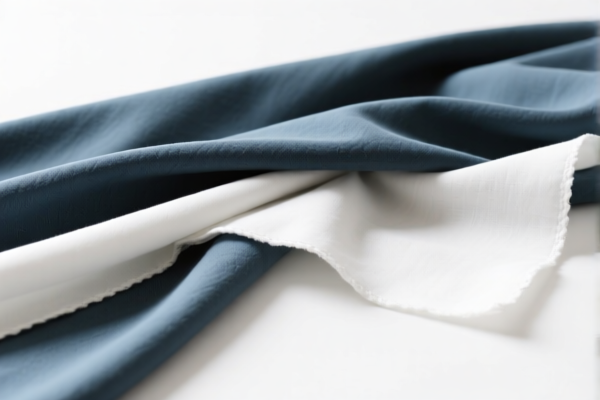
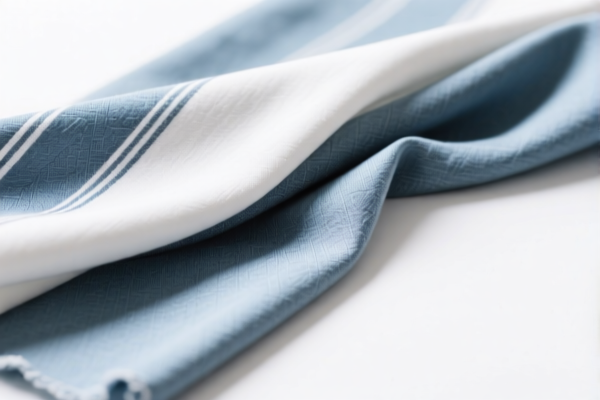
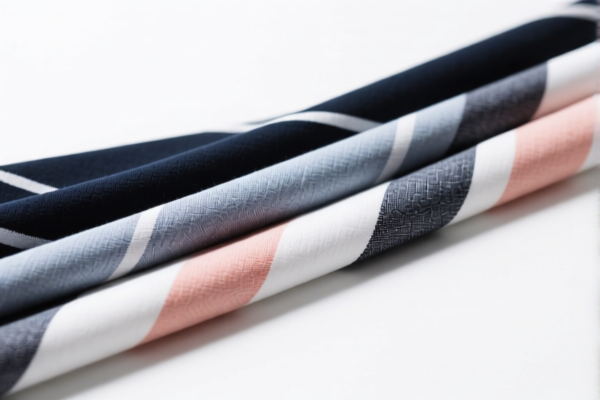
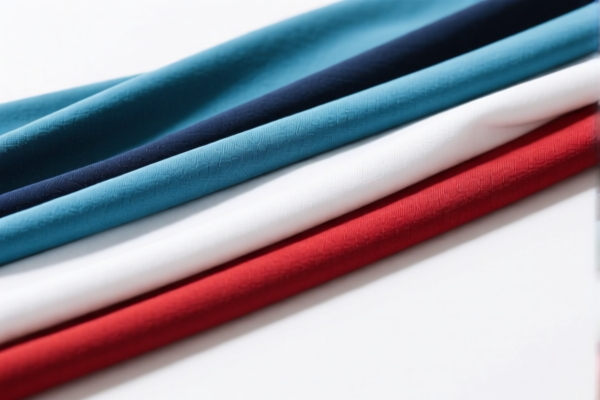
AI分析
🧵 Textiles & Clothing: The Global Classification Matrix
🌐 HS Code Reference & Customs Clearance Guide | 2026 Latest Tariff Analysis | Strategic Trade Compliance
📌 I. Product Definition & Classification: Navigating the Fabric-Finished Goods Spectrum
Textiles and clothing represent one of the most complex categories in international trade due to the distinction between raw materials (fabrics/knits) and finished articles (garments/accessories). The correct classification hinges on two critical factors: 1. Construction Method: Woven vs. Knitted/Hooked. 2. State of Manufacture: Unmade (Fabric) vs. Made-up (Finished Article).
⚠️ Critical Distinction:
- If the item is a loose fabric, yarn, or unfinished textile material → It falls under Chapters 50–60 (Textiles).
- If the item is a cut and sewn garment, accessory, or made-up article → It typically falls under Chapter 63 (Other Made-up Textile Articles) or Chapter 61/62 (Apparel).
- "Other" (兜底/Residual Categories): Items that do not fit specific primary descriptions often fall into residual headings like6006.90,6307.90, etc.
📦 II. HS Code Classification Details (Based on Provided Data)
Based on the internal logic of the provided dataset, here are the four possible HS Codes for this product category, along with their reasoning and tax implications.
| HS Code | Product Description & Logic | Classification Rationale |
|---|---|---|
6006.90.10.00 |
Knitted or Crocheted Fabrics, Other (Silk-dominant/Residual) | Logic: Belongs to knitted/crocheted fabric. Likely contains silk components. Fits the "bottom-up" (residual) category principle for textiles. State: Unmade/Fabric. |
6006.90.90.00 |
Knitted or Crocheted Fabrics, Other (Synthetic/Man-made Fibers) | Logic: Belongs to knitted/crocheted fabric materials. Fits the "Other" residual category. Material matches synthetic/man-made fiber principles. State: Unmade/Fabric. |
5903.10.20.10 |
Textile Fabrics Impregnated, Coated, Covered or Laminated (Plastic) | Logic: Description matches textile fabric form. Based on the "description missing principle," it is preliminarily judged to potentially fit here. Often used for coated textiles or PVC-laminated fabrics. State: Modified Fabric. |
6307.90.98.82 |
Other Made-up Textile Articles (Cotton-dominant) | Logic: Belongs to "Made-up Articles" (Finished goods). Likely contains cotton components. Falls under the residual "Other" category for finished textile articles. State: Finished/Garment/Accessory. |
6307.90.98.84 |
Other Made-up Textile Articles (Artificial Fiber-dominant) | Logic: Belongs to "Made-up Articles" (Finished goods). Consistent with "Other Made-up Articles" form. Likely contains artificial/man-made fibers. State: Finished/Garment/Accessory. |
🔍 Key Insight:
- Codes6006...and5903...are for Fabric/Materials (Raw or Semi-finished).
- Codes6307...are for Finished Articles (Made-up, e.g., bags, rags, specific garments not covered in Ch 61/62).
- The choice between6006.90.10.00and6006.90.90.00depends heavily on the fiber content (Silk vs. Synthetic).
💰 III. 2026 Latest Tariff Rate Breakdown (Including Additional Duties & Policy Surcharges)
✅ Applicable Country: United States (US)
✅ Origin: China (CN)
✅ Effective Date: Post-2025 Tariff Framework (Includes Section 301 & IEEPA Surcharges)
🎯 1. 6006.90.10.00 & 6006.90.90.00 – Knitted/Crocheted Fabrics (Residual)
These codes represent the highest tax burden among the options due to the combination of Section 301 tariffs and IEEPA surcharges.
| Item | Content |
|---|---|
| Base Tariff | 7.0% (for 6006.90.10.00) or 0.0% (for 6006.90.90.00) |
| Section 301 Tariff (Additional) | +25.0% (USITC Footnote related to Chinese imports) |
| IEEPA Surcharge (Section 122/EEA) | +10.0% (Targeted surcharge on Chinese goods) |
| Total Tariff Rate | 42.0% (6006.90.10.00) 35.0% ( 6006.90.90.00) |
| Tax Calculation | CIF Value × Total Rate |
| De Minimis Exemption | ❌ NOT APPLICABLE |
| Legal Basis Path | Base HS → USITC:301 → IEEPA:9903 |
📌 Explanation:
-6006.90.10.00(42%): Higher base tariff (7%) + 25% Section 301 + 10% IEEPA. Likely applies if silk or specific premium fibers are involved, triggering higher base rates.
-6006.90.90.00(35%): Zero base tariff (0%) + 25% Section 301 + 10% IEEPA. Common for generic synthetic knitted fabrics.
- Risk: Both are high-cost categories. Misclassification as a non-apparel "made-up item" to get a lower rate may lead to audits if the product is visibly fabric.
🎯 2. 5903.10.20.10 – Textile Fabrics Impregnated/Coated
This code applies to modified textiles (e.g., PVC-coated canvas, laminated fabrics).
| Item | Content |
|---|---|
| Base Tariff | 0.0% |
| Section 301 Tariff (Additional) | +25.0% |
| IEEPA Surcharge (Section 122/EEA) | +10.0% |
| Total Tariff Rate | 35.0% |
| Tax Calculation | CIF Value × 35% |
| De Minimis Exemption | ❌ NOT APPLICABLE |
| Legal Basis Path | Base HS → USITC:301 → IEEPA:9903 |
📌 Note:
- Even with a 0% base rate, the 35% total duty makes this costly.
- Ensure the product is genuinely impregnated/coated/laminated. If it's just printed fabric, this code is incorrect and may be rejected.
🎯 3. 6307.90.98.82 & 6307.90.98.84 – Other Made-up Textile Articles
These codes offer the lowest total tax burden in the dataset, suitable for finished goods (e.g., textile bags, rags, specific accessories) that don't fit standard garment categories.
| Item | Content |
|---|---|
| Base Tariff | 7.0% |
| Section 301 Tariff (Additional) | +7.5% (Note: Lower Section 301 rate for certain made-up articles compared to raw fabrics) |
| IEEPA Surcharge (Section 122/EEA) | +10.0% |
| Total Tariff Rate | 24.5% |
| Tax Calculation | CIF Value × 24.5% |
| De Minimis Exemption | ❌ NOT APPLICABLE |
| Legal Basis Path | Base HS → USITC:301 (Lower Bracket) → IEEPA:9903 |
📌 Explanation:
-6307.90.98.82(24.5%): For cotton-dominant made-up articles.
-6307.90.98.84(24.5%): For artificial fiber-dominant made-up articles.
- Advantage: The Section 301 tariff is only 7.5% for these "other made-up articles," compared to 25% for fabrics. This is a significant cost saver if the product qualifies as a "made-up article" rather than "fabric."
🛠️ IV. Customs Clearance Practical Advice (Real-World Pitfall Guide)
✅ 1. Material Preparation Checklist (Non-negotiable)
| Document | Required? | Explanation |
|---|---|---|
| ✅ Product Specs | ✔️ | Must specify: Fiber content (e.g., 100% Cotton, Silk blend), Construction (Knitted/Woven), State (Fabric vs. Finished). |
| ✅ Product Photos | ✔️ | Clear images of the item. Is it a roll of fabric or a sewn bag? Visuals determine Ch 60 vs. Ch 63. |
| ✅ Label/Packaging | ✔️ | Shows fiber content and country of origin. |
| ✅ Commercial Invoice | ✔️ | Describe accurately: "Knitted Polyester Fabric, Unmade" vs. "Cotton Tote Bag, Made-up." |
| ✅ Packing List | ✔️ | Detail weight, dimensions, and quantity. |
✅ 2. Declaration Strategy (Key Mantra)
🔥 “Know your state: Fabric or Finished? Choose HS accordingly!”
| Scenario | Correct HS Code Approach | Incorrect Approach | Consequence |
|---|---|---|---|
| Rolls of Fabric (Knitted, Synthetic) | 6006.90.90.00 (35%) |
Declare as "Clothing" or "Bag" | Misclassification: High risk of penalty. |
| Rolls of Fabric (Knitted, Silk) | 6006.90.10.00 (42%) |
Declare as "Cotton Fabric" | Wrong Base Rate: Underpayment, leading to back taxes. |
| Coated/Laminated Fabric | 5903.10.20.10 (35%) |
Declare as plain fabric | Audit Risk:海关 (Customs) may inspect and reject if coating is obvious. |
| Finished Bag/Rag/Accessory (Artificial Fiber) | 6307.90.98.84 (24.5%) |
Declare as "Fabric" | Overpayment: Paying 35% instead of 24.5%. |
| Finished Bag/Rag/Accessory (Cotton) | 6307.90.98.82 (24.5%) |
Declare as "Garment" | Wrong Chapter: Garments go to Ch 61/62, not 63. |
✅ 3. Special Handling Tips
| Situation | Handling Advice |
|---|---|
| OEM Custom Fabric | Provide sample and design. If it's a specific patterned knit, ensure 6006.90 is still the best fit vs. specific patterned headings. |
| Mixed Fiber Content | If >50% Cotton, lean towards 6307.90.98.82 (if made-up) or specific cotton headings. If >50% Synthetic, lean towards 6307.90.98.84 or 6006.90.90.00. |
| "Other" Category Risk | Residual codes (6006.90, 6307.90) are often scrutinized. Ensure no more specific code applies (e.g., is it actually a garment 6109? If so, 6307 is wrong). |
| Cost Optimization | If the product can be classified as a "Made-up Article" (Ch 63) rather than "Fabric" (Ch 60/59), the tax drops from 35-42% to 24.5%. Verify if your product qualifies as "Made-up" (e.g., cut, sewn, assembled). |
🌍 V. Global Market Comparison (2026 Update)
| Market | Recommended HS Code (Example) | Approx. Total Duty (China Origin) | Key Certification |
|---|---|---|---|
| 🇺🇸 USA | 6307.90.98.84 (Made-up) |
24.5% | CPSIA (if for children), General Labeling |
| 🇺🇸 USA | 6006.90.90.00 (Fabric) |
35.0% | Standard Import Compliance |
| 🇨🇳 China | 6006.90.90.00 |
~5-7% | CCC (if applicable), Quality Inspection |
| 🇪🇺 EU | 6006.90.90.00 |
0% (Most FTAs) + 12% MFN | REACH, CE (if textile chemicals) |
| 🇯🇵 Japan | 6006.90.90.00 |
0-10% (FTAs apply) | FMD (Food, Drug, and Medical Device Act if relevant) |
📌 Conclusion:
- The US market imposes heavy tariffs on Chinese textiles, ranging from 24.5% to 42%.
- Classifying as "Made-up Articles" (Ch 63) is strategically advantageous due to the lower Section 301 rate (7.5% vs 25%).
- Never assume a product is just "fabric." If it has form, shape, or is ready for use, it might be a "Made-up Article."
📌 VI. Common Errors & Pitfalls (Blood-Teaching Lessons)
❌ Error 1: Declaring a Sewn Tote Bag as "Knitted Fabric"
👉 Consequence: Incorrect HS Code. Customs may reject and require re-filing, delaying shipment. Worse, if audited, you pay the difference + penalties.
❌ Error 2: Declaring Coated Fabric as "Plain Fabric"
👉 Consequence: Misdeclaration of material state. Can lead to fines for undervaluation or wrong classification.
❌ Error 3: Ignoring Section 301 Rates
👉 Consequence: Budgeting for 7% duty but facing 35-42% at the border. Always add 25-35% additional tariffs for China-origin textiles.
❌ Error 4: Assuming De Minimis ($800) Applies
👉 Consequence: Textiles are NOT exempt from Section 301/IEEPA surcharges under De Minimis in many cases, or they are explicitly excluded. Always check current enforcement.
✅ Correct Approach:
"100% Cotton Canvas Tote Bag, Made-up, With Handles, Brown, 20x20 inches" →
6307.90.98.82
"Polyester Knitted Fabric, 1.5m Width, Unmade, Blue" →6006.90.90.00
🎯 VII. Conclusion: Precision in Textiles Saves Millions!
🎯 Remember the Mantra:
🔹 "Fabric vs. Finished? Check the State!"
🔹 "Made-up (Ch 63) is Cheaper than Fabric (Ch 60/59) in the US!"
🔹 "35% to 24.5% is a 10.5% Saving – Worth the Classification Effort!"
📌 Pro Tip:
If your product is borderline (e.g., semi-finished textile goods), consult a customs broker for an Advance Ruling before shipment. This locks in the HS Code and avoids surprise duties.
📣 Immediate Action:
📞 Classify Accurately: Define Fiber + Construction + State.
🚀 Optimize Tariffs: Explore if "Made-up" classification applies.
💼 Your Profit Margin Depends on This 0.5% Digit!
✨ Professional Customs Clearance Starts with Precise Classification!
💼 Every Dollar Saved on Duty is Pure Profit!
用户评价
关于 HS 编码归类
协调制度(HS)是由世界海关组织(WCO)制定的国际贸易商品分类标准。全球 200 多个国家采用 HS 系统作为海关关税、贸易统计和进出口监管的基础。
每个 HS 编码遵循以下层级结构:
- 章(2 位)——商品大类(例如:第 84 章:机器和机械设备)
- 品目(4 位)——章内的更具体分类
- 子目(6 位)——国际通用细分,所有 WCO 成员国统一使用
- 本国细分(8-10 位)——各国自行扩展的细分编码,如美国 HTSUS 10 位编码
正确的 HS 编码归类对于顺利通关、准确缴纳关税和遵守贸易法规至关重要。错误归类可能导致海关延误、多缴关税或罚款。
从CN进口到US时,适用的关税税率可能包括:
- 最惠国(MFN)税率——适用于 WTO 成员国的标准关税税率
- 普通税率——适用于无贸易协定国家
- 贸易救济关税——附加关税,如 301 条款(反倾销)、232 条款(国家安全)或反补贴税
本页内容仅供参考。如需正式归类,请咨询当地海关或持牌报关代理。