thermometer non liquid
CN → US| HS编码 | 关税税率 | 原产国 | 目的国 | 文档 |
|---|---|---|---|---|
| 9031808085 | 35.0% | CN | US | 官方文档 |
| 9026802000 | 35.0% | CN | US | 官方文档 |
| 9025194000 | 35.0% | CN | US | 官方文档 |
| 9025198085 | 35.0% | CN | US | 官方文档 |
| 9031499000 | 35.0% | CN | US | 官方文档 |
商品图片
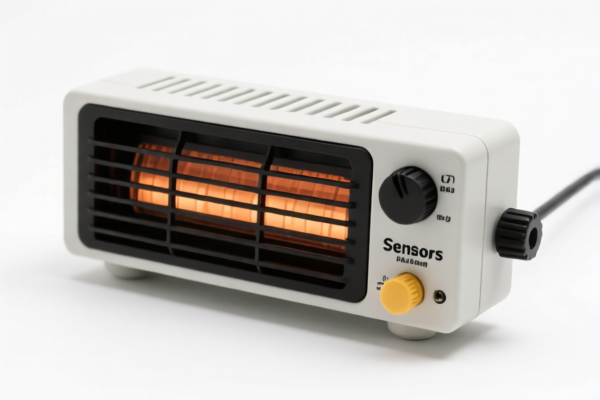
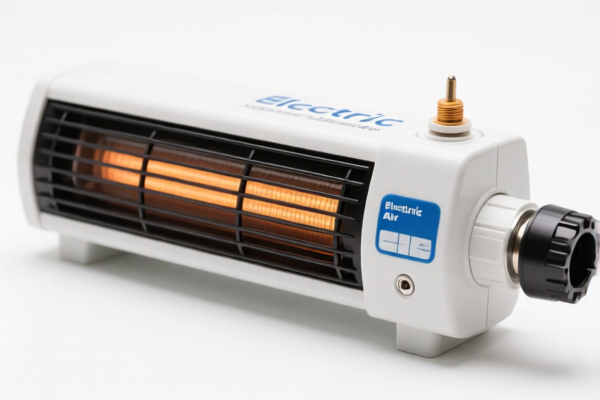
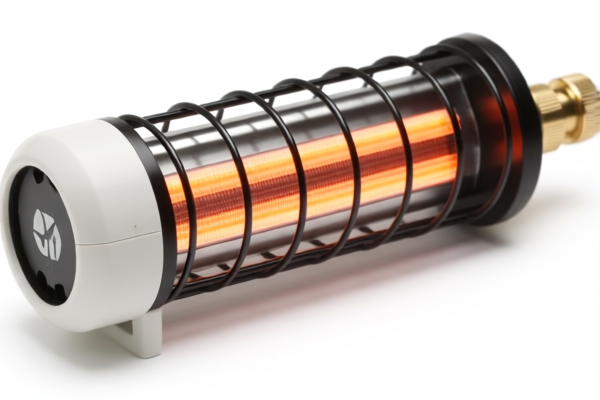
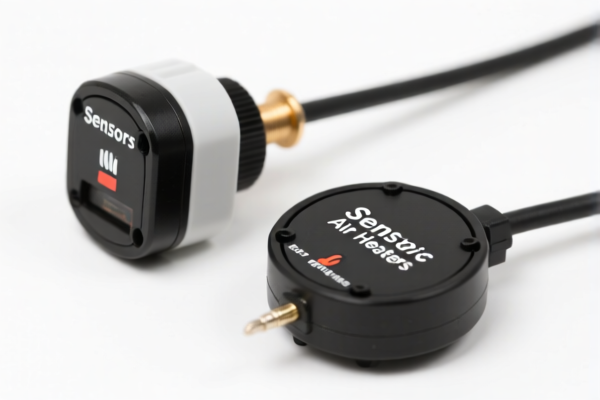
AI分析
🌡️ Thermometer, Non-Liquid (Non-Mercury/Non-Alcohol Digital or Infrared)
🌐 HS Code Reference & Customs Clearance Guide | 2026 Latest Tariff Analysis | Professional-Level Clearance Strategy
📌 I. Product Definition & Classification: What is a "Non-Liquid Thermometer"?
A Non-Liquid Thermometer refers to temperature measurement devices that do not use mercury, alcohol, or other liquid expansives as the sensing medium. These typically include: * Digital Thermometers: Using thermistors or resistance temperature detectors (RTDs). * Infrared (IR) Thermometers: Using pyroelectric sensors for non-contact measurement. * Bimetallic Thermometers: Using mechanical expansion of metals (though less common in high-tech classifications, they often fall under general instruments if not simple dial types).
In international trade, these devices are classified based on their primary function and technical composition: * If they are stand-alone measuring instruments → General Chapter 90 (Optical, Photographic, Cinematographic, Measuring, Checking, Precision, Medical or Surgical Instruments). * If they are integrated into electrical appliances or specific industrial systems → May fall under Chapter 85 or 9026.
⚠️ Critical Distinction:
- If the device is a simple mechanical dial thermometer (bimetallic) → Often classified under 9025.
- If the device is electronic/digital/infrared → Classified under 9025, 9026, or 9031 depending on complexity and application.
- Liquid-in-glass thermometers (mercury/alcohol) are strictly excluded.
📦 II. HS Code Classification Details (2026 Latest Tariff Authority Comparison)
The provided data indicates five potential HS Codes for "Non-Liquid Thermometers." Here is the detailed breakdown:
| HS Code | Product Description | Application Scenario | Key Feature / Summary |
|---|---|---|---|
| 9031.80.80.85 | Other measuring or checking instruments (Not specified elsewhere) | General-purpose electronic thermometers, industrial sensors, complex multi-functional testers. | "Other" category: Fits if the thermometer is a sophisticated instrument not specifically covered by 9025 or 9026. |
| 9026.80.20.00 | Other electrical measuring or checking instruments for voltage, current, power, etc. (Note: Includes Temp in some contexts as "electrical parameter") | Electrical equipment temperature monitoring, industrial process control where temp is an electrical signal. | "Electrical Use": Classified as an electrical measuring device. |
| 9025.19.40.00 | Thermometers and pyrometers, liquid-filled or solid (excluding those of 9025.11) | Digital or electronic thermometers not combined with other instruments. | "Thermometers & Pyrometers": Direct classification for temperature measuring devices. |
| 9025.19.80.85 | Other thermometers and pyrometers | General digital thermometers, medical IR thermometers, industrial IR guns. | "Other Thermometers": The most common catch-all for non-liquid thermometers. |
| 9031.49.90.00 | Other optical measuring or checking instruments (excluding optical devices) | High-precision optical thermometers, laser-based thermal imaging (if classified as optical). | "Optical/Precision": For high-end, precision optical-based temperature measurement tools. |
🔍 Key Takeaway:
- 9025.19.40.00 and 9025.19.80.85 are the most direct classifications for "Thermometers."
- 9031.80.80.85 and 9031.49.90.00 are used for more complex, specialized, or optical-based instruments.
- 9026.80.20.00 is used if the device is primarily an electrical measuring tool that happens to measure temperature.
💰 III. 2026 Latest Tariff Rate Breakdown (Including Surtaxes & Policy Surcharges)
✅ Applicable Country: United States (US)
✅ Origin: China (CN)
✅ Effective Date: Current rates as of 2026
All listed HS Codes share the same tariff structure in the provided data:
🎯 1. Universal Tariff Structure for Non-Liquid Thermometers
| Item | Content |
|---|---|
| Base Tariff | 0.0% (Ad Valorem) |
| Section 301 Surcharge | +25.0% (USITC Footnote 9903.88.01 / 301 Tariffs) |
| Section 122 Surcharge | +10.0% (IEEPA / Section 122 Tariffs) |
| Total Tariff Rate | 35.0% |
| Tax Calculation | CIF Value × 35% |
| De Minimis Exemption | ❌ Not Eligible (deny_de_minimis) |
| Legal Basis Path | USITC:9025.19.40.00 → FOOTNOTE:301 + IEEPA:122 |
📌 Explanation:
- "Base Tariff 0%": Under normal WTO MFN rates, thermometers often enjoy low or zero duties.
- "Section 301 Surcharge 25%": This is the major cost driver. Most Chinese-origin goods in Chapter 90 are subject to this 301 tariff.
- "Section 122 Surcharge 10%": Additional national security/import-related surcharge.
- Total 35%: This is a high effective tariff rate. Importers must budget for this cost.
- No De Minimis: These items cannot be shipped via de minimis (e.g., Section 321) to avoid duties. They must be formally declared.
🛠️ IV. Customs Clearance Practical Advice (Pitfall Avoidance Guide)
✅ 1. Required Documentation Checklist
| Document | Must Provide | Description |
|---|---|---|
| ✅ Product Specification Sheet | ✔️ | Must explicitly state "Non-Liquid" (e.g., "Digital," "IR," "Bimetallic"). Avoid generic "Thermometer." |
| ✅ Operating Principle Description | ✔️ | Explain sensing technology (e.g., "Thermistor," "Pyroelectric Sensor"). Proves it's not liquid-filled. |
| ✅ Product Photos | ✔️ | Show the device clearly. No visible liquid tubes or mercury glass. |
| ✅ Commercial Invoice | ✔️ | Accurate description: "Digital Infrared Thermometer, Non-Liquid, Model XYZ." |
| ✅ Packing List | ✔️ | Detailed contents. Ensure no liquid calibration fluids are included in the same box unless declared separately. |
| ✅ Origin Certificate | ✔️ | Proves country of origin (China). |
| ✅ FCC/CE Certification | ✔️ | If electronic/IR, FCC ID is often required for US customs clearance. |
✅ 2. Declaration Tips (Key Mnemonics)
🔥 "Specify Non-Liquid, Avoid Mercury, HS Code 9025 is King!"
| Scenario | Correct Declaration | Wrong Practice |
|---|---|---|
| Digital/IR Thermometer | HS 9025.19.80.85 or 9025.19.40.00 | Misdeclaring as "Lab Glassware" → Higher risk of inspection |
| Industrial Process Thermometer | HS 9026.80.20.00 or 9031 | Using "Thermometer" without context → Delayed clearance |
| Liquid-in-Glass (Prohibited) | DO NOT IMPORT | Attempting to ship mercury thermometers → Seizure & Fine |
| Combined with Other Instruments | HS 9031.80.80.85 | Forcing 9025 when it's a multi-function gauge → Classification Error |
✅ 3. Special Case Handling
| Scenario | Handling Advice |
|---|---|
| Medical Infrared Thermometers | Clearly mark "Medical Device" if applicable. May require FDA registration in addition to customs clearance. |
| Industrial High-Temp Pyrometers | If it’s a pyrometer (high temp), 9025.19 is still appropriate, but ensure technical specs justify "pyrometer" over "thermometer." |
| Shipped with Calibration Liquid | If the thermometer is non-liquid but comes with a small vial of calibration oil/fluid, separate declaration is recommended. The thermometer itself is 35%, but the fluid may have different duties. |
| OEM/White Label | Provide the OEM’s technical manual to prove the internal mechanism is non-liquid (e.g., digital sensor). |
🌍 V. Global Market Clearance Comparison (2026 Latest)
| Country/Region | Recommended HS Code | Tariff Rate (China Origin) | Certification Requirements | Remarks |
|---|---|---|---|---|
| 🇺🇸 United States | 9025.19.80.85 |
35% (25% 301 + 10% 122) | FCC, FDA (if medical) | High tariff. No de minimis. |
| 🇨🇳 China | 9025.19.80.85 |
0% (Import) | CCC (if electrical) | No surcharges for domestic trade. |
| 🇪🇺 European Union | 9025.19.80.85 |
0% - 2.7% (depending on exact type) | CE, RoHS | No Section 301 equivalent. Low duty. |
| 🇬🇧 United Kingdom | 9025.19.80.85 |
0% - 2.7% | UKCA, CE | Post-Brexit rules apply. |
| 🇯🇵 Japan | 9025.19.80.85 |
0% - 1.5% | PSE (if electrical) | Favorable tariff. |
📌 Conclusion:
- USA is the most expensive market due to 35% effective tariff.
- EU, UK, Japan offer near-zero duty rates for non-liquid thermometers.
- Consider supply chain diversification (e.g., Vietnam, Mexico) if exporting to the US to avoid 301/122 tariffs.
📌 VI. Common Errors & Pitfall Guide (Lessons Learned)
❌ Error 1: Declaring "Thermometer" without specifying "Non-Liquid"
👉 Consequence: Customs may assume it’s a mercury thermometer → Inspection & Rejection.
👉 Fix: Always include "Digital," "IR," or "Non-Liquid" in the description.
❌ Error 2: Using the wrong HS Code for Electronic vs. Mechanical
👉 Consequence: If you declare a digital IR thermometer as 9025.19.40.00 (which might be reserved for specific types) instead of 9025.19.80.85, it may not matter for duty, but could trigger unnecessary scrutiny.
👉 Fix: Use 9025.19.80.85 for general non-liquid thermometers.
❌ Error 3: Ignoring the 35% Total Tariff in Costing
👉 Consequence: Profit margin erosion. Many importers only see "0% base" and forget the 25% + 10% surcharges.
👉 Fix: Always calculate CIF × 35% in your pricing model.
❌ Error 4: Shipping via De Minimis (Section 321)
👉 Consequence: Detained & Audited. Non-liquid thermometers are not eligible for de minimis exemption from Section 301/122 tariffs.
👉 Fix: Use formal entry (Type 01 or 03).
✅ Correct Declaration Example:
"Digital Infrared Thermometer, Non-Liquid, Range -50°C to 500°C, Model XYZ, FCC Certified"
HS Code:9025.19.80.85
Duty: 35% (25% + 10%)
🎯 VII. Conclusion: Precision in Classification, Cost in Clearance
🎯 Remember the Mnemonic:
🔹 "Non-Liquid is Key, Avoid Mercury, 35% Total Duty!"
🔹 "HS 9025 is Standard, 9031 for Complex, 9026 for Electrical!"
📌 Pro Tip:
If your non-liquid thermometer is produced in Vietnam, India, or Mexico, you may qualify for lower or zero 301/122 tariffs.
Recommendation:
- Apply for a Binding Tariff Information (BTI) or Pre-Ruling from US Customs (CBP) if you are unsure.
- Audit your supply chain to ensure no liquid components are mixed in the packaging.
📣 Immediate Action:
📞 Consult a licensed customs broker.
🚀 Provide technical specifications highlighting the non-liquid nature.
💰 Budget for 35% duty in your US import costs.
✨ Professional Customs Clearance Starts with Accurate Classification!
💼 Your Cost Control Depends on Correct HS Codes!
用户评价
关于 HS 编码归类
协调制度(HS)是由世界海关组织(WCO)制定的国际贸易商品分类标准。全球 200 多个国家采用 HS 系统作为海关关税、贸易统计和进出口监管的基础。
每个 HS 编码遵循以下层级结构:
- 章(2 位)——商品大类(例如:第 84 章:机器和机械设备)
- 品目(4 位)——章内的更具体分类
- 子目(6 位)——国际通用细分,所有 WCO 成员国统一使用
- 本国细分(8-10 位)——各国自行扩展的细分编码,如美国 HTSUS 10 位编码
正确的 HS 编码归类对于顺利通关、准确缴纳关税和遵守贸易法规至关重要。错误归类可能导致海关延误、多缴关税或罚款。
从CN进口到US时,适用的关税税率可能包括:
- 最惠国(MFN)税率——适用于 WTO 成员国的标准关税税率
- 普通税率——适用于无贸易协定国家
- 贸易救济关税——附加关税,如 301 条款(反倾销)、232 条款(国家安全)或反补贴税
本页内容仅供参考。如需正式归类,请咨询当地海关或持牌报关代理。