thermosetting petroleum resin
CN → US| HS编码 | 关税税率 | 原产国 | 目的国 | 文档 |
|---|---|---|---|---|
| 3911904500 | 40.8% | CN | US | 官方文档 |
| 3907995050 | 41.5% | CN | US | 官方文档 |
| 3909400000 | 41.5% | CN | US | 官方文档 |
| 3909390000 | 41.5% | CN | US | 官方文档 |
商品图片
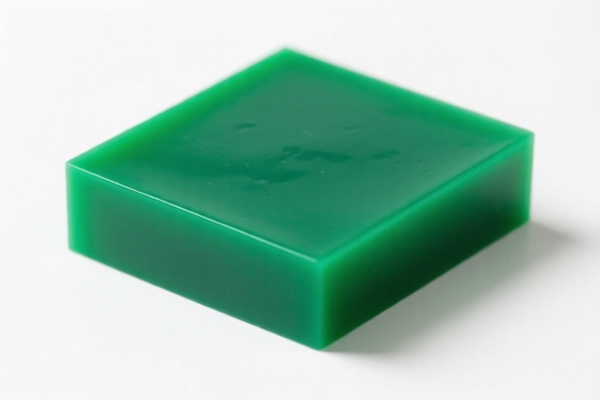


AI分析
🔥 Thermosetting Petroleum Resin (石油树脂热固性模塑材料)
🌐 HS Code Reference & Customs Clearance Guide | 2026 Latest Tariff Analysis | Professional Entry Strategy
📌 I. Product Definition & Classification: Do You Really Understand "Thermosetting Petroleum Resin"?
Thermosetting petroleum resins are synthetic polymers derived from petroleum by-products (such as C5 or C9 fractions). Once cured, they cannot be remelted or reshaped, making them ideal for molding, adhesives, coatings, and rubber modification.
In international trade, the classification depends heavily on two factors: 1. Chemical Composition & Structure: Is it a specific chemical family (e.g., Phenolic, Amino, Polyurethane) or a general "Plastics in Primary Forms"? 2. Physical Form: Is it raw material (primary form) or ready-to-use molding material?
⚠️ Critical Distinction Points: * If classified under 3911 (Resins in Primary Forms), it usually implies a specific chemical identity like Phenolic Resins (which often overlap with petroleum-based thermosetting resins in classification logic). * If classified under 3907 or 3909, it refers to specific plastic types: Polyacetals or Amino Resins/Polyurethanes. * Note: Many "Petroleum Resins" that are thermosetting and in primary form fall under 3907.99 (Other Plastics) if they don't fit specific chemical headings like Phenolics (3907.91) or Polyacetals (3907.60). However, customs often scrutinize whether they fit 3909 (Amino resins) if modified.
📦 II. HS Code Classification Details (2026 Latest Tariff Authority Comparison)
Based on the provided data for "Thermosetting Petroleum Resin Molding Material", here are the four potential classifications and their rationales:
| HS Code | Product Description | Application Scenario | Key Classification Logic |
|---|---|---|---|
3911.90.45.00 |
Petroleum Resin, Thermosetting, Molding Material | Raw molding compounds; primary form petroleum resins | Specifically captures Petroleum Resins not elsewhere specified. "Primary form" is key. |
3907.99.50.50 |
Resin-based, Thermosetting, Primary Form | General resin category; fits "Other Plastics" | If not specifically identified as Phenolic, it falls under "Other" (99.50). Focuses on Resin Class + Primary Form. |
3909.40.00.00 |
Thermosetting Molding Material, Correlated with Phenolics | Resins highly related to Phenolic Resins | If the petroleum resin is chemically modified or behaves like Phenolic Resins, it may be grouped here under "Amino/Phenolic-related" subheadings. |
3909.39.00.00 |
Thermosetting Molding Material, Amino/Polyurethane Related | Resins fitting Amino or Polyurethane categories | If the petroleum resin is an Amino-resin derivative or used in Polyurethane systems, it falls here under "Other Amino Resins". |
🔍 Key Reminder: * 3911.90.45.00 is the most direct fit for "Petroleum Resin" specifically. * 3907/3909 routes are used when customs authorities classify the resin by its chemical family behavior (Phenolic/Amino) rather than its source (Petroleum). * Do not split shipments between these codes unless the materials are chemically distinct.
💰 III. 2026 Latest Tariff Rate Breakdown (Including Surcharges & Policy Add-ons)
✅ Applicable Country: United States (US) ✅ Origin: China (CN) ✅ Effective Date: 2025 November 10 onwards
All four HS Codes listed in the are subject to identical tax structures due to their classification as Chinese-origin plastics/resins under Section 301 and IEEPA.
🎯 1. 3911.90.45.00 —— Petroleum Resin, Primary Form
| Item | Details |
|---|---|
| Base Duty Rate | 5.8% (Standard MFN Rate) |
| Section 301 Surcharge | +25.0% (USITC Footnote 9903.88.01) |
| IEEPA Surcharge | +10.0% (Section 122 Clause, targeting China/China-related) |
| Total Effective Rate | 40.8% |
| Tax Calculation | CIF Value × 40.8% |
| De Minimis Exemption | ❌ NOT Allowed (Denied for Section 301 goods) |
| Legal Basis Path | USITC:3911.90.45.00 → SECTION301:9903.88.01 → IEEPA:9903.01.25 |
📌 Explanation: * The 5.8% is the base tariff for resins. * The 25% is the standard Section 301 tariff for Chinese plastics/resins. * The 10% is an additional surcharge under IEEPA (often referred to as the "122 Clause" in the data). * Total: 40.8%. This is a very high tariff, significantly impacting cost.
🎯 2. 3907.99.50.50 —— Other Plastics (Resin-based, Primary Form)
| Item | Details |
|---|---|
| Base Duty Rate | 6.5% |
| Section 301 Surcharge | +25.0% |
| IEEPA Surcharge | +10.0% |
| Total Effective Rate | 41.5% |
| Tax Calculation | CIF Value × 41.5% |
| De Minimis Exemption | ❌ NOT Allowed |
| Legal Basis Path | USITC:3907.99.50.50 → SECTION301:9903.88.01 → IEEPA:9903.01.24 |
📌 Note: * Slightly higher base rate (6.5% vs 5.8%) than 3911.90.45.00. * Same surcharges apply. * Applicable if the resin is classified as "Other Plastic" rather than specific Petroleum Resin.
🎯 3. 3909.40.00.00 —— Amino/Phenolic-like Resins
| Item | Details |
|---|---|
| Base Duty Rate | 6.5% |
| Section 301 Surcharge | +25.0% |
| IEEPA Surcharge | +10.0% |
| Total Effective Rate | 41.5% |
| Tax Calculation | CIF Value × 41.5% |
| De Minimis Exemption | ❌ NOT Allowed |
| Legal Basis Path | USITC:3909.40.00.00 → SECTION301:9903.88.01 → IEEPA:9903.01.24 |
📌 Note: * Used if the petroleum resin is chemically similar to Phenolic or Amino resins. * Same high tariff burden.
🎯 4. 3909.39.00.00 —— Other Amino Resins
| Item | Details |
|---|---|
| Base Duty Rate | 6.5% |
| Section 301 Surcharge | +25.0% |
| IEEPA Surcharge | +10.0% |
| Total Effective Rate | 41.5% |
| Tax Calculation | CIF Value × 41.5% |
| De Minimis Exemption | ❌ NOT Allowed |
| Legal Basis Path | USITC:3909.39.00.00 → SECTION301:9903.88.01 → IEEPA:9903.01.24 |
📌 Note: * Another branch of Amino Resins. * Same tax structure.
🛠️ IV. Customs Clearance Practical Advice (Real-World Pitfall Guide)
✅ 1. Documentation Checklist (Non-Negotiable)
| Document | Required? | Explanation |
|---|---|---|
| ✅ Product Specification Sheet | ✔️ | Must detail chemical composition (e.g., C5/C9 fractions, molecular weight), curing agent, and physical state. |
| ✅ MSDS / SDS | ✔️ | Required for hazardous materials classification. Petroleum resins may have specific handling requirements. |
| ✅ Certificate of Origin (CO) | ✔️ | Must clearly state Country of Origin as China to trigger the correct 301/IEEPA rates. |
| ✅ Commercial Invoice | ✔️ | Must describe goods accurately: "Thermosetting Petroleum Resin, Primary Form, for Molding" |
| ✅ Packing List | ✔️ | Detail net/gross weight, volume. Ensure no mixing with exempt items. |
| ✅ Form B / IEEPA Declaration | ✔️ | If applicable, declare compliance with IEEPA Section 122. |
✅ 2. Declaration Strategy (Key Rules)
🔥 "Accurate Description, Correct HS, Avoid Splitting!"
| Scenario | Correct Declaration | Wrong Practice | Consequence |
|---|---|---|---|
| Raw Resin Pellets/Granules | 3911.90.45.00 or 3907.99.50.50 |
Declare as "Molding Material" without specifying form | Misclassification → Penalties + Back Taxes |
| Pre-mixed Molding Compound | 3909.40.00.00 or 3909.39.00.00 |
Declare as raw resin | If additives are present, it may shift to 3909. Verify formula. |
| Mixed Shipment (Resin + Additives) | Whole Shipment under Primary HS | Split into Resin + Additive | Each part taxed separately → Higher Total Tax |
| Non-Chinese Origin | Apply for IEEPA Exemption | Declare as China Origin | Incorrect Origin → Seizure + Fines |
✅ 3. Special Cases Handling
| Situation | Recommendation |
|---|---|
| Resin with Fillers (e.g., Carbon Black) | If fillers > certain %, may change HS Code. Verify if still "Primary Form". |
| Liquid vs. Solid | Liquid resins may fall under different subheadings. Confirm physical state in HS Code. |
| Sample Shipments | No De Minimis. Even small samples are subject to 40.8-41.5%. |
| Pre-Ruling Request | Highly Recommended. File an HTSUS Pre-Ruling with CBP to confirm the exact HS Code (3911 vs 3907/3909) before shipment. |
🌍 V. Global Market Comparison (2026 Latest)
| Country/Region | Recommended HS Code | Tariff Rate (China Origin) | Certification Required | Notes |
|---|---|---|---|---|
| 🇺🇸 USA | 3911.90.45.00 |
40.8% | No specific FDA/CE for raw resin, but SDS required | Highest cost market due to 301+IEEPA |
| 🇨🇳 China | 3911.90.45.00 |
5.8% | No import tax for domestic trade | N/A for import |
| 🇪🇺 EU | 3911.90 |
5.3% (approx) | REACH Registration | No Section 301 tariffs |
| 🇦🇺 Australia | 3911.90 |
5% | AICIS Registration | Lower tariff than US |
| 🇯🇵 Japan | 3911.90 |
6.0% | PMCL (if plastic) | Moderate tariff |
📌 Conclusion: * The USA is the most expensive market for Thermosetting Petroleum Resin due to the 40.8% total tariff. * EU, Australia, and Japan offer significantly lower entry costs (5-6%). * Strategy: If selling to the US, consider Cost-Plus Pricing to absorb the 40%+ duty, or explore Supply Chain Diversification (e.g., sourcing from non-China origins if possible) to qualify for IEEPA exemptions.
📌 VI. Common Errors & Pitfalls (Blood & Tears Lessons)
❌ Mistake 1: Declaring "Petroleum Resin" as "Plastic Sheets"
👉 Consequence: Wrong HS Code (3920 or 3921) → Incorrect Duty + Inspection Delay
❌ Mistake 2: Assuming "Small Shipment" = No Tax 👉 Consequence: De Minimis is Denied for Section 301 goods. Even a $50 sample pays $20 in tax.
❌ Mistake 3: Ignoring IEEPA Section 122 👉 Consequence: If the goods are deemed to be from China but routed through a third country without substantial transformation, they still face the 10% IEEPA surcharge.
❌ Mistake 4: Inconsistent Description on Invoice vs. Packing List 👉 Consequence: CBP will hold the shipment for examination → Demurrage Charges + Delays.
✅ Correct Approach:
"Thermosetting Petroleum Resin, Primary Form, C5-C9 Fraction Based, Used for Molding Compounds, HS 3911.90.45.00, Origin: China"
🎯 VII. Conclusion: Professional Declaration Saves Money
🎯 Remember These Key Points:
🔹 "Total Tax is 40.8-41.5% for US Imports from China." 🔹 "HS Code Choice (3911 vs 3907/3909) affects Base Rate (5.8% vs 6.5%)." 🔹 "No De Minimis Exemption. Every dollar is taxed." 🔹 "Get a Pre-Ruling. It’s worth the peace of mind."
📌 Pro Tip:
If your resin is NOT from China (e.g., from Malaysia, Germany, or the US itself), you can avoid the 25% Section 301 and 10% IEEPA surcharges. * Malaysia Origin: Check for FTAA benefits (usually 0-5%). * EU Origin: Check for EU-China trade dynamics (usually 5.3%). Savings can be 35-40%!
📣 Immediate Action:
📞 Contact a licensed customs broker. 📄 Provide MSDS and Detailed Composition. 🚀 Apply for CBP Pre-Ruling to lock in the correct HS Code. 💼 Accurate Classification is the first step to Profitability.
✨ Professional Clearance Starts with Precise Classification! 💼 Every Cent of Cost, Accurately Calculated!
用户评价
关于 HS 编码归类
协调制度(HS)是由世界海关组织(WCO)制定的国际贸易商品分类标准。全球 200 多个国家采用 HS 系统作为海关关税、贸易统计和进出口监管的基础。
每个 HS 编码遵循以下层级结构:
- 章(2 位)——商品大类(例如:第 84 章:机器和机械设备)
- 品目(4 位)——章内的更具体分类
- 子目(6 位)——国际通用细分,所有 WCO 成员国统一使用
- 本国细分(8-10 位)——各国自行扩展的细分编码,如美国 HTSUS 10 位编码
正确的 HS 编码归类对于顺利通关、准确缴纳关税和遵守贸易法规至关重要。错误归类可能导致海关延误、多缴关税或罚款。
从CN进口到US时,适用的关税税率可能包括:
- 最惠国(MFN)税率——适用于 WTO 成员国的标准关税税率
- 普通税率——适用于无贸易协定国家
- 贸易救济关税——附加关税,如 301 条款(反倾销)、232 条款(国家安全)或反补贴税
本页内容仅供参考。如需正式归类,请咨询当地海关或持牌报关代理。