thickened disinfectant wipes
CN → US| HS编码 | 关税税率 | 原产国 | 目的国 | 文档 |
|---|---|---|---|---|
| 3926909950 | 22.8% | CN | US | 官方文档 |
| 3926909989 | 22.8% | CN | US | 官方文档 |
| 3808945095 | 40.0% | CN | US | 官方文档 |
| 3401115000 | 35.0% | CN | US | 官方文档 |
| 3401190000 | 17.5% | CN | US | 官方文档 |
商品图片
AI分析
🧼 Thickened Disinfectant Wipes: HS Code Classification & Tariff Breakdown | US Customs Clearance Guide 2026
🌐 HS Code Reference & Customs Strategy | Latest 2026 Tariff Analysis | Professional Entry Guide
📌 I. Product Definition & Classification: What Exactly Are "Thickened Disinfectant Wipes"?
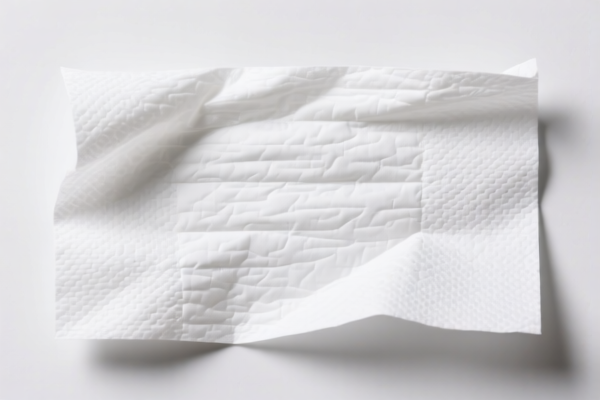
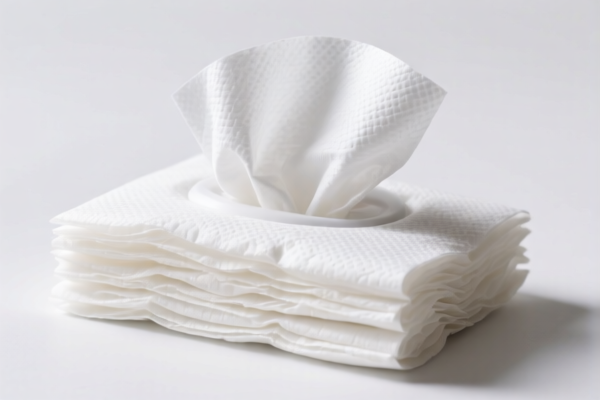
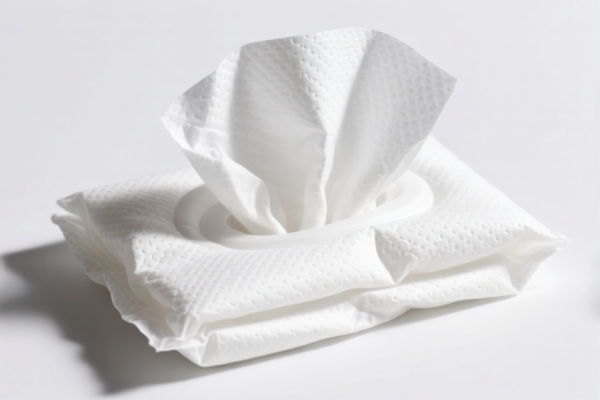
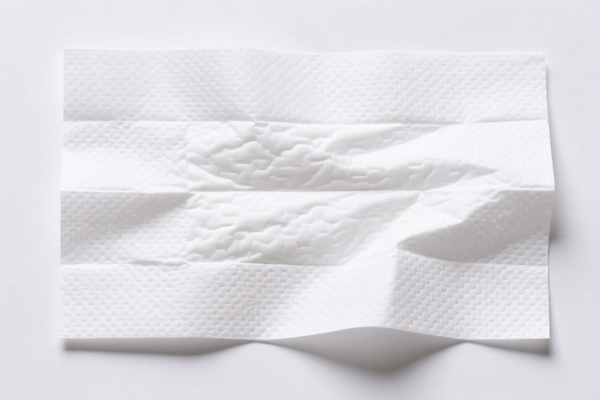
Disinfectant Wipes are pre-moistened non-woven fabric sheets impregnated with cleaning or disinfecting agents (such as quaternary ammonium compounds, alcohol, or bleach). The term "Thickened" refers to the fabric structure (often spunlace non-woven) which provides durability and higher liquid absorption capacity.
In international trade, these items fall into a competitive landscape between Plastic/Synthetic Products, Cleaning Preparations, and Disinfectants. The classification depends heavily on whether Customs views the item primarily as a container/package holding a chemical, or as the chemical product itself.
⚠️ Key Classification Dilemma:
- Is it a Plastic/Non-woven Product (Chapter 39/34) containing a chemical?
- Or is it a Disinfectant/Preparation (Chapter 38/34)?
- Note: US Customs often scrutinizes "wipes" heavily. Misclassification can lead to significant duty surprises due to Section 301 and IEEPA tariffs.
📦 II. HS Code Classification Matrix (2026 Latest Tariff Data)
Based on the provided data, here are the five most likely HS Code classifications for Thickened Disinfectant Wipes, ranked by common customs logic.
| HS Code | Summary & Logic Basis | Total Tax Rate (US from China) | Key Tariff Components |
|---|---|---|---|
| 3926.90.99.50 | Plastic/Non-woven Package Logic: Matches usage (disinfecting wipe) & material (plastic/non-woven packaging/consumer goods). Fits logic of plastic articles. | 22.8% | Base: 5.3% Add'l: 7.5% Sec 301: 10% |
| 3926.90.99.89 | Non-woven Material Logic: Infers main material is non-woven (synthetic fiber/plastic category). Fits "Other articles of plastic and other materials." | 22.8% | Base: 5.3% Add'l: 7.5% Sec 301: 10% |
| 3808.94.50.95 | Disinfectant Logic: Matches usage (disinfection) & form (wet wipes). Classified as "Other Disinfectants" under Chapter 38. | 40.0% | Base: 5.0% Add'l: 25.0% Sec 301: 10% |
| 3401.11.50.00 | Impregnated Non-woven Logic: Matches form (wet wipes) & use ("disinfecting" falls under cleansing/toiletries). "Impregnated non-wovens." | 35.0% | Base: 0.0% Add'l: 25.0% Sec 301: 10% |
| 3401.19.00.00 | Surfactant/Prep Logic: Wipes are non-wovens impregnated with surfactants (disinfectant agents). Fits "Soap, Organic Surface Active Products." | 17.5% | Base: 0.0% Add'l: 7.5% Sec 301: 10% |
🔍 Critical Insight:
- The highest risk classification is 3808.94.50.95 (40.0%) because it attracts the highest Additional Duty (25%).
- The most favorable classification is 3401.19.00.00 (17.5%) or 3926.90.99.xx (22.8%), as they have lower Additional Duties (7.5%).
- 3401.11.50.00 and 3808.94.50.95 suffer from a 25% Additional Duty, likely under USITC Footnotes for certain chemical/wipe categories.
💰 III. Detailed Tariff Analysis (US Origin: China)
✅ Applicable Country: United States (US)
✅ Origin: China (CN)
✅ Effective Time: Includes Section 301 and IEEPA tariffs active in 2026.
🎯 1. The "Plastic Package" Route: 3926.90.99.50 & 3926.90.99.89
Logic: The wipe is viewed as a plastic/non-woven article.
| Item | Detail |
|---|---|
| Base Duty | 5.3% (Ad Valorem) |
| USITC Additional Duty | +7.5% (Specific to subheading 3926.90.99) |
| IEEPA / Sec 301 Tariff | +10% (China-specific add-on) |
| Total Effective Rate | 22.8% |
| Calculation | CIF Value × 22.8% |
| De Minimis Exemption? | ❌ No (Shipments from China are generally subject to full duties, no de minimis for Section 301 goods in many contexts, or thresholds are strict). |
📌 Explanation:
This is a middle-ground strategy. It avoids the 25% "chemical/wipe" surcharge but still incurs a 7.5% additional duty. It is defensible if the wipe's primary value is in the non-woven fabric itself.
🎯 2. The "Disinfectant Chemical" Route: 3808.94.50.95
Logic: The primary function is disinfection; the wipe is merely a delivery mechanism.
| Item | Detail |
|---|---|
| Base Duty | 5.0% |
| USITC Additional Duty | +25.0% (High surcharge for certain disinfectants) |
| IEEPA / Sec 301 Tariff | +10% |
| Total Effective Rate | 40.0% |
| Calculation | CIF Value × 40.0% |
| De Minimis Exemption? | ❌ No |
📌 Explanation:
AVOID IF POSSIBLE. This is the most expensive classification. The 25% additional duty makes it significantly less profitable. Customs may push for this if the disinfectant concentration is high and the wipe is thin.
🎯 3. The "Cleaning/Toiletry" Route: 3401.11.50.00
Logic: Impregnated non-wovens for cleansing/hygiene.
| Item | Detail |
|---|---|
| Base Duty | 0.0% |
| USITC Additional Duty | +25.0% |
| IEEPA / Sec 301 Tariff | +10% |
| Total Effective Rate | 35.0% |
| Calculation | CIF Value × 35.0% |
📌 Explanation:
While the base duty is 0%, the 25% additional duty hurts. This classification is often used for "toilet wipes" or "baby wipes." If your product is marketed as a "surface disinfectant," Customs might argue it doesn't fit "toiletry" well.
🎯 4. The "Surfactant/Soap" Route: 3401.19.00.00
Logic: Non-wovens impregnated with organic surface active products (disinfectants).
| Item | Detail |
|---|---|
| Base Duty | 0.0% |
| USITC Additional Duty | +7.5% |
| IEEPA / Sec 301 Tariff | +10% |
| Total Effective Rate | 17.5% |
| Calculation | CIF Value × 17.5% |
| De Minimis Exemption? | ❌ No |
📌 Explanation:
✅ BEST TARIFF OPTION. This code offers the lowest total tax rate (17.5%). It relies on classifying the disinfectant as a "surface active product" (surfactant) rather than a pure "disinfectant." This is a common and often accepted argument for wet wipes if the active ingredient is a quaternary ammonium compound (a surfactant).
🛠️ IV. Customs Clearance Recommendations (Practical Pitfall Guide)
✅ 1. Documentation Checklist (Essential for Smooth Clearance)
| Document | Requirement | Purpose |
|---|---|---|
| ✅ Product Spec Sheet | Must list: Fabric type (e.g., Spunlace, Viscose), Moisture content %, Active Ingredients (% concentration). | Proves classification logic (e.g., "Surfactant-based" vs "Pure Disinfectant"). |
| ✅ Ingredient Statement | List all chemical components. | Essential for determining if it falls under Ch 38 (Disinfectant) or Ch 34 (Surfactant/Cleaning). |
| ✅ Product Photos | Clear images of packaging, label, and wipe texture. | Helps CBP verify "Thickened" nature and packaging type. |
| ✅ Commercial Invoice | Description: "Thickened Non-woven Wipes Impregnated with [Chemical Name] for Disinfection/Cleaning." | Avoid vague terms like "Cleaning Wipes" without chemical context. |
| ✅ Certificate of Origin | Form A or standard CO. | Required for Section 301 tariff determination. |
| ✅ FDA Registration (if applicable) | If claims are "disinfectant" (kills bacteria/viruses), EPA/FDA may regulate. | Ensure regulatory compliance beyond just HS Code. |
✅ 2. Declaration Strategy (Key Mantra)
🔥 "Focus on the Surfactant, Not Just the Kill Rate!"
| Scenario | Recommended Classification | Risk Level |
|---|---|---|
| High Chemical Content, Strong Disinfectant Claims | 3808.94.50.95 |
⚠️ High Cost (40%) |
| Standard Household Cleaning, Surfactant-based | 3401.19.00.00 |
✅ Lowest Cost (17.5%) |
| Emphasis on Fabric Quality/Non-woven Tech | 3926.90.99.50/89 |
⚖️ Medium Cost (22.8%) |
| Baby/Toiletry Wipes (Mild Cleaning) | 3401.11.50.00 |
⚠️ Medium-High Cost (35%) |
💡 Pro Tip:
If your disinfectant active ingredient is a Quaternary Ammonium Compound (Quat), emphasize its role as a surfactant/cleansing agent in your spec sheet to support classification under 3401.19.00.00. Avoid over-emphasizing "EPA-registered Disinfectant" claims unless necessary, as that pushes CBP toward 3808.
✅ 3. Special Circumstances & Mitigation
| Situation | Advice |
|---|---|
| OEM/Private Label | Ensure the manufacturer's spec sheet matches your declaration. Discrepancies trigger audits. |
| "EPA-Registered" Products | If the product is EPA-registered as a disinfectant, CBP may insist on 3808.94.50.95. In this case, the 40% tax is unavoidable unless you apply for a tariff exclusion (check if any are still valid for 2026). |
| Mixed Shipments | Do NOT mix "Disinfectant Wipes" with "Regular Wet Wipes" (e.g., for eyes/face) in the same HS Code entry if they have different chemical compositions. Declare separately. |
| Plastic Packaging | If the wipes come in a plastic tub/jar, the container is part of the product. Do not try to separate the jar's duty from the wipes' duty. |
🌍 V. Global Market Comparison (2026 Snapshot)
| Region | Preferred HS Code | Approx. Duty | Notes |
|---|---|---|---|
| 🇺🇸 USA | 3401.19.00.00 or 3926.90.99 |
17.5% - 22.8% | Avoid 3808 (40%) if possible. |
| 🇨🇳 China | 3401.19.00 or 3401.11 |
Low/Moderate | No Section 301/IEEPA add-ons. |
| 🇪🇺 EU | 3401.11 or 3401.19 |
0% - 6% | VAT applies separately. |
| 🇬🇧 UK | 3401.11 or 3401.19 |
0% - 6% | Post-Brexit rules similar to EU. |
| 🇨🇦 Canada | 3401.11 or 3401.19 |
0% - 5% | Generally favorable for cleaning wipes. |
📌 Conclusion:
The US market is the most challenging due to the layered tariffs (Base + USITC + IEEPA). Choosing the right HS Code can save you 17-22.5% in duties alone.
📌 VI. Common Errors & Pitfalls (Lessons Learned)
❌ Error 1: Classifying as "General Purpose Wipes" without specifying chemical impregnation.
👉 Result: CBP rejects and reclassifies to the highest duty rate (3808, 40%).
❌ Error 2: Mixing "Disinfectant Wipes" with "Cosmetic Wipes" in one entry.
👉 Result: Audit flag. Different HS codes have different regulatory bodies (EPA vs. FDA).
❌ Error 3: Ignoring the "Thickened" aspect in documentation.
👉 Result: If the fabric is unusually thick, CBP may argue it's a "Textile Product" (Chapter 56/63) instead of Plastic/Chemical, leading to complex classification disputes.
✅ Correct Approach:
"Non-woven Wipes, Thickened, Impregnated with [Specific Surfactant/Quat], for Surface Disinfection/Cleaning. Model: XYZ. EPA Reg. No: [If applicable]."
🎯 VII. Final Recommendation
🎯 Strategic Advice for Importers:
1. Aim for 3401.19.00.00 (17.5%): This is the lowest tax burden. Support this by highlighting the surfactant/cleaning nature of the active ingredient.
2. Fallback to 3926.90.99.50 (22.8%): If the product is more of a "plastic/non-woven consumer good" with mild cleaning properties.
3. Avoid 3808.94.50.95 (40%): Unless the product is a heavy-duty industrial disinfectant where classification as a chemical is unavoidable.
📞 Action Item:
- Request a Pre-Ruling (CBP Ruling Letter) from US Customs before your first shipment.
- Submit your Spec Sheet and Label Artwork to CBP to get a binding determination.
- This single step can save you thousands in potential duty back-payments.
✨ Precision in Classification = Profit in Your Pocket!
💼 Don't let 25% Additional Duties eat your margin. Classify Smart.
用户评价
关于 HS 编码归类
协调制度(HS)是由世界海关组织(WCO)制定的国际贸易商品分类标准。全球 200 多个国家采用 HS 系统作为海关关税、贸易统计和进出口监管的基础。
每个 HS 编码遵循以下层级结构:
- 章(2 位)——商品大类(例如:第 84 章:机器和机械设备)
- 品目(4 位)——章内的更具体分类
- 子目(6 位)——国际通用细分,所有 WCO 成员国统一使用
- 本国细分(8-10 位)——各国自行扩展的细分编码,如美国 HTSUS 10 位编码
正确的 HS 编码归类对于顺利通关、准确缴纳关税和遵守贸易法规至关重要。错误归类可能导致海关延误、多缴关税或罚款。
从CN进口到US时,适用的关税税率可能包括:
- 最惠国(MFN)税率——适用于 WTO 成员国的标准关税税率
- 普通税率——适用于无贸易协定国家
- 贸易救济关税——附加关税,如 301 条款(反倾销)、232 条款(国家安全)或反补贴税
本页内容仅供参考。如需正式归类,请咨询当地海关或持牌报关代理。