transmission device and torque converter
CN → US| HS编码 | 关税税率 | 原产国 | 目的国 | 文档 |
|---|---|---|---|---|
| 8433905045 | 35.0% | CN | US | 官方文档 |
| 8433905025 | 35.0% | CN | US | 官方文档 |
商品图片
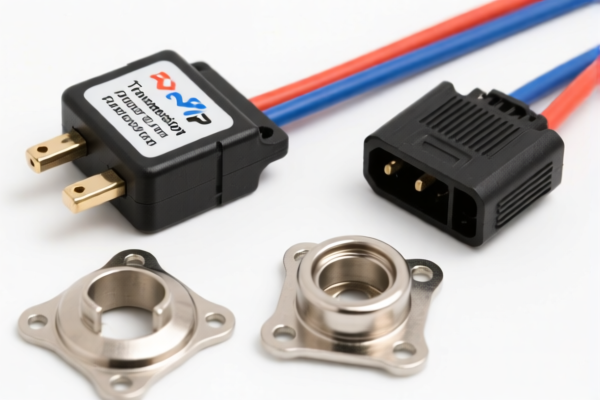
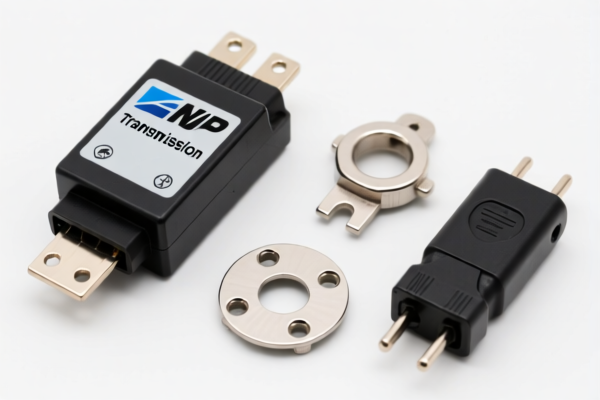
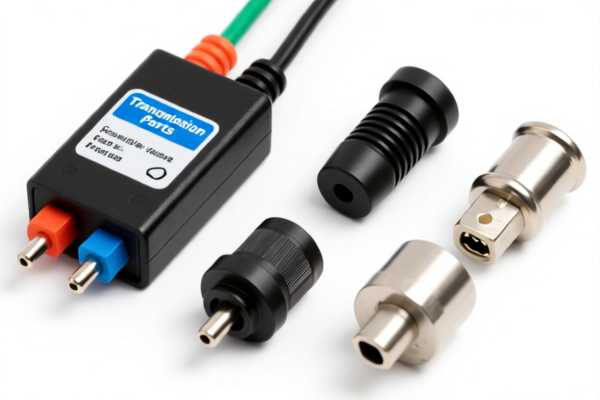
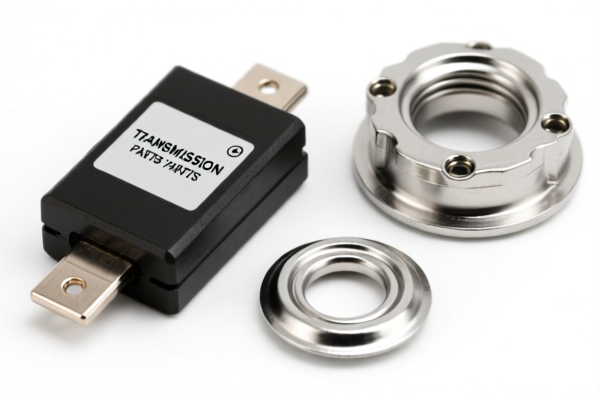
AI分析
⚙️ Transmission Devices and Torque Converters (Agricultural Machinery Parts)
🌐 HS Code Reference & Customs Clearance Guide | 2026 Latest Tariff Analysis | Specialized Clearance Strategy
📌 I. Product Definition & Classification: Are These "Mower Parts"?
Transmission Devices and Torque Converters, in the context of this specific data, are classified as parts for agricultural machinery (specifically mowers, harvesting machines, and threshing machines). They are not considered standalone vehicles or general mechanical transmissions but rather components essential for the operation of hay making and baling equipment.
Key Distinction:
Torque Converters/Transmission Parts: Used to transfer power from the engine to the cutting/baling mechanism.
Applicable Machinery: Specifically designated for "Haying Machines and Balers" (as per HS Code 8433.90.50.25) or "Other Mowers/Harvesters" (as per HS Code 8433.90.50.45).
⚠️ Critical Classification Point:
- If the part is specifically designed for haying machines and balers →归入 8433.90.50.25
- If the part is for other types of mowers, harvesters, or threshing machines → 归入 8433.90.50.45
📦 II. HS Code Classification Details (2026 Tariff Schedule)
| HS Code | Product Description | Applicable Scenario | Specific Machinery Type |
|---|---|---|---|
8433.90.50.25 |
Parts of other mowers, harvesting machines, and threshing machines: Of haying machines and balers | Torque converters, transmission gears, or shafts specifically for hay balers or mowers | ✅ Haying Machines / Balers |
8433.90.50.45 |
Parts of other mowers, harvesting machines, and threshing machines: Other | Transmission components for other agricultural harvesters or non-specified mowers | ✅ Other Agricultural Mowers/Harvesters |
🔍 Key Reminder:
- Both codes fall under Chapter 84 (Nuclear reactors, boilers, machinery, and mechanical appliances; parts thereof).
- These are parts, not whole machines. Do not declare as "Transmission Units" under Chapter 87 (Vehicles) unless they are for road vehicles, which is incorrect for agricultural equipment.
- The distinction between.25and.45depends on the end-use machinery (Hay/Bale vs. Other Harvesters).
💰 III. 2026 Latest Tariff Rate Breakdown (Including Additional Duties)
✅ Applicable Country: United States (US)
✅ Origin: China (CN)
✅ Effective Date: Current trade policy applies
🎯 1. 8433.90.50.25 — Parts for Haying Machines and Balers
| Item | Content |
|---|---|
| Base Tariff | 0.0% (ad valorem) |
| Additional Tariff (Section 301) | +25.0% |
| Total Tax Rate | 25.0% |
| Tax Calculation | CIF Value × 25% |
| De Minimis Exemption | ❌ Not Eligible (Items under 25% additional duty are generally excluded from de minimis if over $800, but check specific IEEPA/Section 301 exclusions; however, standard agricultural parts often face strict scrutiny). |
| Legal Basis | HTSUS: 8433.90.50.25 + USITC Section 301 Footnote |
📌 Explanation:
- Although the base MFN tariff is 0%, the 25% Section 301 tariff applies to most Chinese-made mechanical parts for agricultural machinery.
- No additional IEEPA surcharge is listed in the provided data for this specific code (unlike electronics in the example), so the total is strictly 25%.
🎯 2. 8433.90.50.45 — Other Mower/Harvester Parts
| Item | Content |
|---|---|
| Base Tariff | 0.0% (ad valorem) |
| Additional Tariff (Section 301) | +25.0% |
| Total Tax Rate | 25.0% |
| Tax Calculation | CIF Value × 25% |
| De Minimis Exemption | ❌ Not Eligible |
| Legal Basis | HTSUS: 8433.90.50.45 + USITC Section 301 Footnote |
📌 Note:
- This code captures transmission parts for harvesters or other mowers not covered by.25.
- The tax burden is identical to.25at 25%.
🛠️ IV. Customs Clearance Practical Advice (Pitfall Avoidance Guide)
✅ 1. Required Documentation Checklist
| Document | Mandatory? | Explanation |
|---|---|---|
| ✅ Product Specifications | ✔️ | Must detail the part’s compatibility (e.g., "Torque Converter for John Deere 568 Balers"). |
| ✅ Part Number & OEM Reference | ✔️ | Essential for customs to verify if it’s a specific haying part (.25) or general part (.45). |
| ✅ Commercial Invoice | ✔️ | Must clearly state "Parts for Agricultural Machinery (Haying/Harvesting)". |
| ✅ Proof of End-Use | ✔️ | If claiming .25, provide evidence it’s for hay/bale machinery. If .45, specify other machinery. |
| ✅ Certificate of Origin (CO) | ✔️ | To confirm Chinese origin and apply Section 301 duties. |
✅ 2. Declaration Tips (Key Mantra)
🔥 “Specify End-Use, Don’t Just Say ‘Part’! ‘Haying’ gets .25, ‘Other’ gets .45. Both are 25%.”
| Scenario | Correct Declaration | Wrong Practice |
|---|---|---|
| Part for a Hay Baler | 8433.90.50.25 |
Declaring as .45 (still 25%, but incorrect classification history) |
| Part for a Combine Harvester | 8433.90.50.45 |
Declaring as .25 (Misclassification risk) |
| Standalone Transmission Unit | ❌ Do Not Declare as Part | Must be classified as a whole machine or different chapter if not a part. |
| Vague Description "Transmission Part" | ❌ Avoid | Customs may reclassify or delay for missing details. |
✅ 3. Special Handling
| Situation | Handling Advice |
|---|---|
| OEM Replacement Parts | Provide OEM part number and manufacturer link to prove compatibility. |
| Aftermarket Parts | Clearly label as “Aftermarket Part for [Machine Model]” to avoid IP issues, but ensure HS code is correct. |
| Kit Sales | If sold as a kit (e.g., transmission + bolts), declare the primary function (transmission part) and note accessories. |
🌍 V. Global Market Comparison (2026 Latest)
| Country/Region | Recommended HS Code | Tariff (China Origin) | Notes |
|---|---|---|---|
| 🇺🇸 USA | 8433.90.50.25 / .45 |
25% (Total) | Section 301 applies. No base tariff. |
| 🇨🇳 China | 8433.90.50 |
~0-5% | Depends on specific import regulations. |
| 🇪🇺 EU | 8433.90 |
0-4% | No Section 301 equivalent. Standard MFN rates apply. |
| 🇬🇧 UK | 8433.90 |
0-4% | Post-Brexit tariff schedule similar to EU. |
| 🇦🇺 Australia | 8433.90 |
5% | FTAs may reduce to 0%. |
📌 Conclusion:
- The US market is the highest-cost destination for these parts due to the 25% Section 301 tariff.
- Base tariffs are 0%, so the entire cost comes from the additional duty.
- Proper classification between.25and.45is less about cost (since both are 25%) and more about compliance accuracy.
📌 VI. Common Errors & Pitfalls (Lessons Learned)
❌ Error 1: Declaring as "Machine Parts" without specifying Agricultural or Haying/Harvesting
👉 Consequence: Customs may reclassify under wrong heading, causing delays or audits.
❌ Error 2: Mixing up .25 (Hay/Bale) and .45 (Other)
👉 Consequence: While tax is same, misclassification can lead to data reporting errors and potential penalties for inaccurate records.
❌ Error 3: Ignoring the 25% Additional Tariff
👉 Consequence: Underestimating landed cost by 25%, leading to profit margin collapse.
❌ Error 4: Declaring as "Vehicle Parts" (Chapter 87)
👉 Consequence: Wrong HS Code entirely. Agricultural parts are Chapter 84. Major compliance risk.
✅ Correct Practice:
"Torque Converter, Part #12345, Compatible with [Brand] Hay Baler, HS Code: 8433.90.50.25, Origin: China"
🎯 VII. Conclusion: Precise Classification, Efficient Clearance
🎯 Remember the Mantra:
🔹 "Haying/Bale = .25, Other Harvesters = .45. Both 25%. No Base Tax."
🔹 "Specify End-Use. Agricultural Parts. Chapter 84. Avoid Chapter 87."
📌 Pro Tip:
If your transmission parts are not from China (e.g., Japan, Germany, USA), the 25% Section 301 tariff does NOT apply.
Check origin certificates carefully to benefit from 0% additional duty in non-China scenarios.
For Chinese origin, budget for 25% additional duty from Day 1.
📣 Immediate Action:
📞 Confirm Machinery Type (Hay/Harvester)
📦 Select Correct Sub-Code (.25 vs .45)
🚀 Apply 25% Additional Duty in Costing Model
✨ Precision in Classification is Key to Profitability!
💼 Don’t let a decimal point (.25 vs .45) cost you compliance points!
用户评价
关于 HS 编码归类
协调制度(HS)是由世界海关组织(WCO)制定的国际贸易商品分类标准。全球 200 多个国家采用 HS 系统作为海关关税、贸易统计和进出口监管的基础。
每个 HS 编码遵循以下层级结构:
- 章(2 位)——商品大类(例如:第 84 章:机器和机械设备)
- 品目(4 位)——章内的更具体分类
- 子目(6 位)——国际通用细分,所有 WCO 成员国统一使用
- 本国细分(8-10 位)——各国自行扩展的细分编码,如美国 HTSUS 10 位编码
正确的 HS 编码归类对于顺利通关、准确缴纳关税和遵守贸易法规至关重要。错误归类可能导致海关延误、多缴关税或罚款。
从CN进口到US时,适用的关税税率可能包括:
- 最惠国(MFN)税率——适用于 WTO 成员国的标准关税税率
- 普通税率——适用于无贸易协定国家
- 贸易救济关税——附加关税,如 301 条款(反倾销)、232 条款(国家安全)或反补贴税
本页内容仅供参考。如需正式归类,请咨询当地海关或持牌报关代理。