transparent document sleeve
CN → US| HS编码 | 关税税率 | 原产国 | 目的国 | 文档 |
|---|---|---|---|---|
| 4820300040 | 35.0% | CN | US | 官方文档 |
| 3926904800 | 13.4% | CN | US | 官方文档 |
| 4202329300 | 52.6% | CN | US | 官方文档 |
| 4820900000 | 35.0% | CN | US | 官方文档 |
| 3926908700 | 40.3% | CN | US | 官方文档 |
商品图片
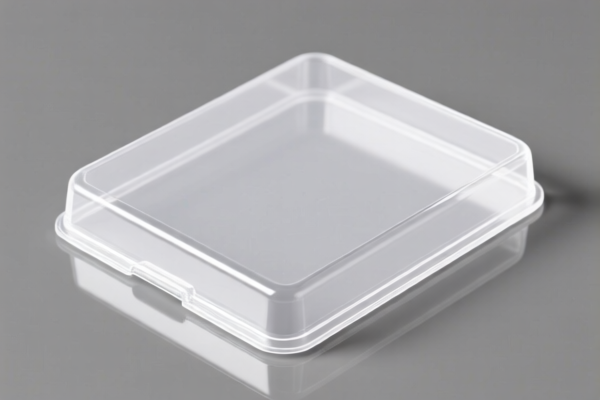
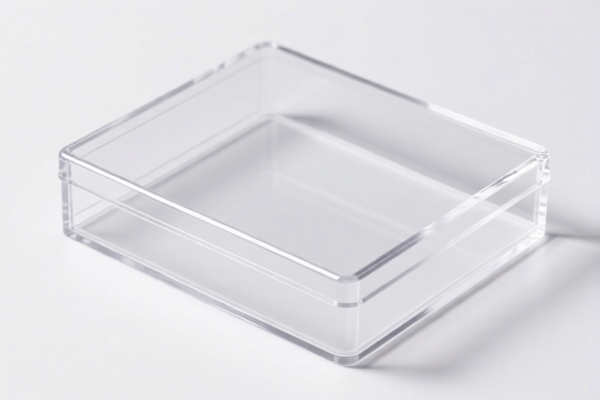
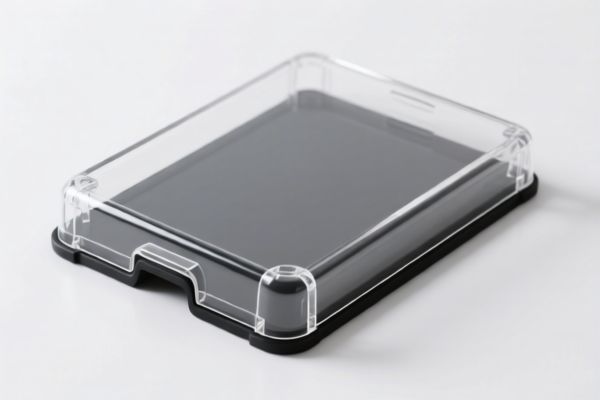
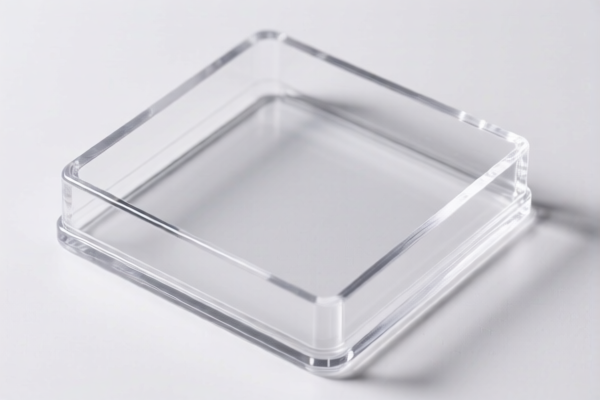
AI分析
📂 Transparent Document Sleeve (Clear File Pockets & Folders)
🌐 HS Code Reference & Customs Clearance Guide | 2026 Latest Tariff Analysis | Professional Clearance Strategy
📌 I. Product Definition & Classification: Do You Really Understand "Document Sleeves"?
A "Transparent Document Sleeve" is a ubiquitous stationery and office supply item used for protecting, organizing, and displaying documents. However, in international trade, its classification depends heavily on material composition and structural form. It is not a single HS code but falls into distinct categories based on whether it is made of plastic, paper, or textile materials.
Key Distinction Points:
- Plastic/PVC Sleeves (Flat/Sheet-like): Typically classified under Chapter 48 (Paper) or Chapter 39 (Plastics) depending on whether they are considered "stationery" or "plastic articles."
- Plastic Bags/Pouches (With Seals/Staples): If they have a specific container structure (like a pouch with a seal), they may fall under Chapter 42 (Articles of Leather/Plastic Textiles).
- Paper/Cardboard Covers: Simple paper folders are strictly under Chapter 48.
⚠️ Critical Warning:
- Misclassifying a plastic sleeve as a paper product (or vice versa) can lead to massive tariff differences (e.g., 13.4% vs. 35%).
- Items with seals, staples, or complex container shapes often shift from "stationery" (Ch. 48/85) to "articles of plastic/textiles" (Ch. 39/42), triggering different surcharges.
📦 II. HS Code Classification Details (2026 Latest Tariff Authority Comparison)
| HS Code | Product Description | Material Inference | Application/Scenario | Key Feature |
|---|---|---|---|---|
4820.30.00.40 |
Transparent File Pockets/Leaves | Plastic/Clear Film | Inner pages of binders, simple transparent sleeves | Classified as stationery accessories (paper-like function) |
3926.90.48.00 |
Transparent Document Sleeves (Plastic) | Plastic (PVC/PE) | Flat storage, file organizers, generic plastic folders | Classified as other plastic articles |
4202.32.93.00 |
Document Bags/Pouches | Plastic Surface (Textile/Plastic Body) | Sealed pouches, zippered sleeves, container-like bags | Classified as articles of leather/plastic/textiles |
4820.90.00.00 |
Document Pouches (Paper/Cardboard) | Paper/Cardboard | Traditional paper file covers, paper-based organizers | Classified as other paper stationery |
3926.90.87.00 |
Document Sleeves (Other Plastic) | Plastic | Generic plastic stationery/organizers not elsewhere specified | Broad category for plastic office supplies |
🔍 Key Insight:
-4820.30.00.40and4820.90.00.00are often grouped as "Stationery" (Chapter 48), but their material is either thin film or paper.
-3926codes are "Plastic Articles" (Chapter 39).
-4202codes are "Containers/Bags" (Chapter 42). This is the highest tariff category, often applied if the item is seen as a "bag" rather than a "sleeve/folder."
💰 III. 2026 Latest Tariff Rate Breakdown (Including Surcharges & Policy Add-ons)
✅ Applicable Country: United States (US)
✅ Origin: China (CN)
✅ Effective Date: From November 10, 2025 (including subsequent imports)
🎯 1. 4820.30.00.40 —— Transparent File Pockets (Stationery Class)
| Item | Details |
|---|---|
| Base Tariff | 0.0% |
| USITC Surcharge | +25.0% (Section 301 Tariffs) |
| IEEPA Surcharge | +10.0% (China-specific IEEPA Tariffs, effective Nov 10, 2025) |
| Total Rate | 35.0% |
| Tax Calculation | CIF Value × 35% |
| De Minimis Exemption | ❌ Not Eligible (deny_de_minimis) |
| Legal Basis Path | IEEPA:9903.01.25 → USITC:4820.30.00.40 → FOOTNOTE:301 |
📌 Explanation:
- Even though the base tariff is 0%, the 25% Section 301 tariff and 10% IEEPA tariff apply.
- This code is often used for thin, flexible plastic sheets used as inner pages, treated similarly to paper stationery.
🎯 2. 3926.90.48.00 —— Transparent Document Sleeves (Plastic Articles)
| Item | Details |
|---|---|
| Base Tariff | 3.4% |
| USITC Surcharge | 0.0% (No Section 301 surcharge for this specific subheading) |
| IEEPA Surcharge | +10.0% (China-specific IEEPA Tariffs, effective Nov 10, 2025) |
| Total Rate | 13.4% |
| Tax Calculation | CIF Value × 13.4% |
| De Minimis Exemption | ❌ Not Eligible (deny_de_minimis) |
| Legal Basis Path | IEEPA:9903.01.24 → USITC:3926.90.48.00 |
📌 Note:
- This is the most cost-effective classification for pure plastic sleeves if they can be classified as "other plastic articles" rather than "stationery" or "bags."
- The base tariff is low (3.4%), and only the 10% IEEPA surcharge applies.
🎯 3. 4202.32.93.00 —— Document Bags/Pouches (Container Class)
| Item | Details |
|---|---|
| Base Tariff | 17.6% |
| USITC Surcharge | +25.0% (Section 301 Tariffs) |
| IEEPA Surcharge | +10.0% (China-specific IEEPA Tariffs, effective Nov 10, 2025) |
| Total Rate | 52.6% |
| Tax Calculation | CIF Value × 52.6% |
| De Minimis Exemption | ❌ Not Eligible (deny_de_minimis) |
| Legal Basis Path | IEEPA:9903.01.25 → USITC:4202.32.93.00 → FOOTNOTE:301 |
📌 Warning:
- This is the highest tax bracket. It applies if the item is considered a "bag" or "pouch" with a sealed edge, stapled spine, or zipper.
- Customs officers may reclassify simple sleeves into this category if they perceive them as "containers" rather than "flat stationery."
🎯 4. 4820.90.00.00 —— Document Pouches (Paper Stationery)
| Item | Details |
|---|---|
| Base Tariff | 0.0% |
| USITC Surcharge | +25.0% (Section 301 Tariffs) |
| IEEPA Surcharge | +10.0% (China-specific IEEPA Tariffs, effective Nov 10, 2025) |
| Total Rate | 35.0% |
| Tax Calculation | CIF Value × 35% |
| De Minimis Exemption | ❌ Not Eligible (deny_de_minimis) |
| Legal Basis Path | IEEPA:9903.01.25 → USITC:4820.90.00.00 |
📌 Note:
- Applies to paper or cardboard document covers.
- Same tax burden as4820.30.00.40due to Section 301 + IEEPA.
🎯 5. 3926.90.87.00 —— Other Plastic Document Sleeves
| Item | Details |
|---|---|
| Base Tariff | 5.3% |
| USITC Surcharge | +25.0% (Section 301 Tariffs) |
| IEEPA Surcharge | +10.0% (China-specific IEEPA Tariffs, effective Nov 10, 2025) |
| Total Rate | 40.3% |
| Tax Calculation | CIF Value × 40.3% |
| De Minimis Exemption | ❌ Not Eligible (deny_de_minimis) |
| Legal Basis Path | IEEPA:9903.01.25 → USITC:3926.90.87.00 → FOOTNOTE:301 |
📌 Note:
- This is a "catch-all" for plastic stationery not specified elsewhere.
- Higher than3926.90.48.00because it incurs the 25% Section 301 surcharge.
🛠️ IV. Customs Clearance Practical Advice (Real-World Pitfall Guide)
✅ 1. Document Checklist (Non-Negotiable)
| Document | Mandatory? | Description |
|---|---|---|
| ✅ Product Specifications | ✔️ | Must specify material (PVC, PP, Paper), dimensions, and whether it has seals/staples. |
| ✅ Product Photos | ✔️ | Clear images showing the edge construction (open, stapled, heat-sealed). |
| ✅ Commercial Invoice | ✔️ | Must clearly describe the item. Avoid generic terms like "Stationery." Use "Transparent Plastic Document Sleeve." |
| ✅ Packing List | ✔️ | Detail the quantity and weight. |
| ✅ Origin Certificate (CO) | ✔️ | Essential for proving Chinese origin (and thus applying/verifying surcharges). |
✅ 2. Declaration Tips (Key Mantra)
🔥 “Material First, Structure Second, Name Specific, Tax Optimization!”
| Scenario | Correct Declaration | Wrong Approach |
|---|---|---|
| Plain Plastic Sleeve (Open edge, no seal) | 3926.90.48.00 (Plastic Article) |
Declare as "Bag" → 4202 (52.6%) |
| Stapled/Sealed Plastic Pouch | 4202.32.93.00 (Article of Plastic/Textile) |
Declare as "Folder" → Risk of reclassification |
| Paper Folder | 4820.90.00.00 (Paper Stationery) |
Declare as "Plastic" → Falsification risk |
| Thin Plastic Inner Leaf | 4820.30.00.40 (Stationery Accessory) |
Declare as "Plastic Sheet" → Risk of 3926.87 (40.3%) |
✅ 3. Special Cases Handling
| Situation | Handling Advice |
|---|---|
| Clear PVC vs. PP Material | Both can fall under 3926.90.48.00 if classified as "plastic articles." Ensure material is stated as "Polypropylene (PP)" or "Polyvinyl Chloride (PVC)." |
| Items with Staples or Holes | If staples are present, Customs may view it as a "fastened assembly" or "container," pushing it towards 4202 or 4820.30. Provide structural diagrams. |
| Combined Shipments | If shipping mixed goods (plastic sleeves + paper notebooks), ensure each item is clearly identified. Do not lump them under one generic HS code. |
| De Minimis (Section 321) | ❌ Do Not Attempt. All listed HS codes for Chinese-origin document sleeves are denied de minimis exemption. Full duties apply. |
🌍 V. Global Market Clearance Comparison (2026 Latest)
| Country/Region | Recommended HS Code | Tariff (China Origin) | Certification Requirements | Notes |
|---|---|---|---|---|
| 🇺🇸 USA | 3926.90.48.00 |
13.4% (Lowest) | None | Avoid 4202 (52.6%) |
| 🇨🇳 China | 4820.90.00.00 |
5% | None | Domestic trade |
| 🇪🇺 EU | 3926.90.88.90 |
4.2% | CE (if electrical, not applicable) | Low base tariff, no US-style surcharges |
| 🇬🇧 UK | 3926.90.88 |
4.2% | UKCA (if applicable) | Post-Brexit tariff alignment with EU |
| 🇯🇵 Japan | 3926.90.98 |
0% - 6% | PSE (not applicable) | Generally low tariffs |
📌 Conclusion:
- The US is the most complex market due to the 25% Section 301 tariff and 10% IEEPA tariff.
- Strategic Advice: For exports to the US, strive to classify plain, open-edge plastic sleeves under3926.90.48.00to benefit from the 13.4% total rate, avoiding the 25% Section 301 surcharge that applies to4820and4202codes.
📌 VI. Common Mistakes & Pitfall Guide (Blood & Tears Lessons)
❌ Mistake 1: Declaring a stapled plastic pouch as a "Plastic Sheet" (3926)
👉 Consequence: Customs reclassifies as "Bag" (4202) → 52.6% Tax instead of 13.4%.
❌ Mistake 2: Declaring a paper folder as "Plastic" (3926)
👉 Consequence: Risk of fraud penalties, incorrect HS code, and potential delay.
❌ Mistake 3: Assuming De Minimis applies to small packages
👉 Consequence: All items from China in these categories are denied de minimis. You will pay duties on every single package, not just those over $800.
✅ Correct Action:
"Transparent Polypropylene (PP) Document Sleeves, 9x12 inches, Open Edge, No Staples, For Office Use"
HS Code: 3926.90.48.00
🎯 VII. Conclusion: Precision Classification Saves Money!
🎯 Remember the Mantra:
🔹 "Plastic Open-Edge = 13.4% (Best Option)"
🔹 "Paper/Stapled/Bag-Like = 35-52.6% (Expensive)"
🔹 "No De Minimis for China → Pay Full Duty!"
📌 Pro Tip:
If you have the option to source non-Chinese origins (e.g., Vietnam, Thailand), you can avoid the 10% IEEPA surcharge and potentially the 25% Section 301 depending on the HS code.
Recommendation: For large volumes, consider Advance Rulings or Supply Chain Diversification to mitigate the 35-52% tax burden on document sleeves.
📣 Immediate Action:
📞 Consult with a licensed customs broker.
📦 Provide exact photos of the product edge (open vs. sealed).
🚀 Optimize your HS Code to3926.90.48.00whenever possible to save 20-40% in taxes!
✨ Professional Clearance Starts with Precise Classification!
💼 Every dollar saved in duty is pure profit!
用户评价
关于 HS 编码归类
协调制度(HS)是由世界海关组织(WCO)制定的国际贸易商品分类标准。全球 200 多个国家采用 HS 系统作为海关关税、贸易统计和进出口监管的基础。
每个 HS 编码遵循以下层级结构:
- 章(2 位)——商品大类(例如:第 84 章:机器和机械设备)
- 品目(4 位)——章内的更具体分类
- 子目(6 位)——国际通用细分,所有 WCO 成员国统一使用
- 本国细分(8-10 位)——各国自行扩展的细分编码,如美国 HTSUS 10 位编码
正确的 HS 编码归类对于顺利通关、准确缴纳关税和遵守贸易法规至关重要。错误归类可能导致海关延误、多缴关税或罚款。
从CN进口到US时,适用的关税税率可能包括:
- 最惠国(MFN)税率——适用于 WTO 成员国的标准关税税率
- 普通税率——适用于无贸易协定国家
- 贸易救济关税——附加关税,如 301 条款(反倾销)、232 条款(国家安全)或反补贴税
本页内容仅供参考。如需正式归类,请咨询当地海关或持牌报关代理。