transparent plastic hoses
CN → US| HS编码 | 关税税率 | 原产国 | 目的国 | 文档 |
|---|---|---|---|---|
| 3917400095 | 40.3% | CN | US | 官方文档 |
| 3926305000 | 22.8% | CN | US | 官方文档 |
| 3917400060 | 40.3% | CN | US | 官方文档 |
| 3926909987 | 22.8% | CN | US | 官方文档 |
| 3917290050 | 38.1% | CN | US | 官方文档 |
商品图片
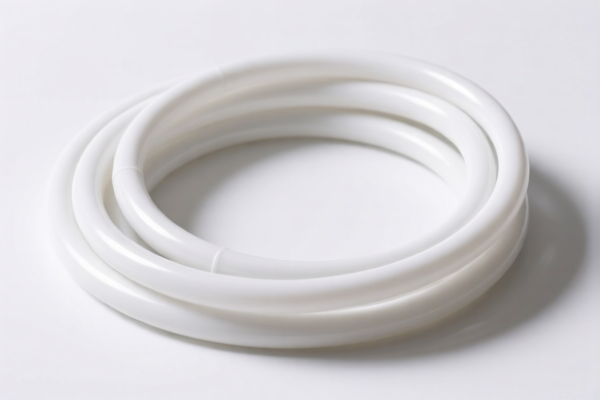


AI分析
🌊 Transparent Plastic Hoses (Clear PVC/PE Tubing)
🌐 HS Code Reference & Customs Clearance Guide | 2026 Latest Tariff Analysis | Professional通关 Strategy
📌 One, Product Definition & Classification: What exactly are "Transparent Plastic Hoses"?
Transparent plastic hoses, widely used in fluid transfer, medical equipment, automotive fluids, and household applications, are classified based on their material nature, stiffness (rigidity), and specific form. In international trade, the distinction between "hoses," "tubes," and "general plastic parts" is critical for correct HS Code assignment and tax liability.
Key Distinctions: * Rigid Pipes/Pipes Accessories (3917): Stiff, non-bendable pipes or fittings that require glue/soldering/jointing. * Flexible Hoses/Tubing (3917.29): Flexible, bendable tubes made of plastics. * General Plastic Articles (3926): Fittings or parts that do not fit strictly into pipe/hose definitions or are considered general-purpose plastic components.
⚠️ Critical Classification Point:
- If the product is a rigid pipe or a fitting (connector/elbow) for pipes, it often falls under Chapter 3917 (Rigid pipes).
- If the product is a flexible hose/tube, it falls under 3917.29 (Flexible tubes).
- If the product is considered a general plastic accessory or the specific pipe/hose description doesn't fit perfectly, it may fall under Chapter 3926 (Other plastic articles).
📦 Two, HS Code Classification Details (Based on Provided Data)
| HS Code | Product Description Summary | Tax Rate Summary | Tax Breakdown (US Import from China) |
|---|---|---|---|
3917.40.00.95 |
Plastic pipe fittings, transparent tube, material: plastic, form: fittings, use: pipe accessories. | 40.3% | Base: 5.3% Section 301: 25.0% Section 122 (9903): 10% |
3926.30.50.00 |
Plastic pipe fittings, transparent tube, material: plastic, classified as plastic articles, no material conflict. | 22.8% | Base: 5.3% Section 301: 7.5% Section 122 (9903): 10% |
3917.40.00.60 |
Plastic pipe fittings, transparent tube, material: plastic, form: fittings/accessories, fits PVC pipe accessory category. | 40.3% | Base: 5.3% Section 301: 25.0% Section 122 (9903): 10% |
3926.90.99.87 |
Plastic pipe fittings, transparent tube, material: plastic, form: fittings/transparent tube, fits description of tubes/hard tubes. | 22.8% | Base: 5.3% Section 301: 7.5% Section 122 (9903): 10% |
3917.29.00.50 |
Plastic rigid flexible hose, material: plastic, form: hard tube, fits plastic pipe and rigid tube attributes. | 38.1% | Base: 3.1% Section 301: 25.0% Section 122 (9903): 10% |
🔍 Key Observation:
- Chapter 3917 (Pipes/Hoses/Fittings) generally carries higher Section 301 tariffs (25%) compared to Chapter 3926 (Other Plastic Articles) which has lower Section 301 tariffs (7.5%).
- The Base Tariff also varies (5.3% vs 3.1%).
- Section 122 Tariff (10%) applies to all listed codes for Chinese origin goods (effective Nov 2024/2025 timeframe).
💰 Three, Detailed Tariff Rate Analysis (2026 Latest)
✅ Applicable Country: United States (US)
✅ Country of Origin: China (CN)
✅ Effective Date: Post-2024 Tariff Adjustments (Section 301 & Section 122)
🎯 1. 3917.40.00.95 & 3917.40.00.60 — Plastic Pipe Fittings (High Tariff Tier)
| Item | Details |
|---|---|
| Base Duty Rate | 5.3% (Ad Valorem) |
| Section 301 Duty | +25.0% (China-origin specific) |
| Section 122 Duty | +10.0% (China-origin specific, 9903.01.05) |
| Total Tariff Rate | 40.3% |
| Tax Calculation | CIF Value × 40.3% |
| De Minimis Exemption | ❌ Not Eligible (Section 301 and Section 122 duties apply regardless of value below $800) |
| Legal Basis Path | HTSUS:3917.40.00 → Section 301: 9903.01.03 → Section 122: 9903.01.05 |
📌 Explanation:
- This classification is for rigid pipe fittings. The 25% Section 301 tariff is standard for most plastic pipe products from China.
- The additional 10% Section 122 tariff further increases the burden.
- High Cost Alert: A $10,000 shipment incurs $4,030 in duties alone.
🎯 2. 3926.30.50.00 & 3926.90.99.87 — General Plastic Articles/Fittings (Lower Tariff Tier)
| Item | Details |
|---|---|
| Base Duty Rate | 5.3% (for 3926.30) / 5.3% (for 3926.90) |
| Section 301 Duty | +7.5% (China-origin specific, reduced rate for certain plastic articles) |
| Section 122 Duty | +10.0% (China-origin specific) |
| Total Tariff Rate | 22.8% |
| Tax Calculation | CIF Value × 22.8% |
| De Minimis Exemption | ❌ Not Eligible |
| Legal Basis Path | HTSUS:3926.30 or 3926.90 → Section 301: 9903.01.03 → Section 122: 9903.01.05 |
📌 Explanation:
- Classification under 3926 (Other Plastic Articles) allows for a lower Section 301 rate (7.5% vs 25%).
- This is a significant savings opportunity if the product can be legitimately classified as a "plastic article" rather than a "pipe fitting."
- Savings Potential: On a $10,000 shipment, duties are only $2,280, saving $1,750 compared to 3917 classification.
🎯 3. 3917.29.00.50 — Plastic Rigid Flexible Hose (Mid-Range Tariff)
| Item | Details |
|---|---|
| Base Duty Rate | 3.1% |
| Section 301 Duty | +25.0% |
| Section 122 Duty | +10.0% |
| Total Tariff Rate | 38.1% |
| Tax Calculation | CIF Value × 38.1% |
| De Minimis Exemption | ❌ Not Eligible |
| Legal Basis Path | HTSUS:3917.29.00 → Section 301: 9903.01.03 → Section 122: 9903.01.05 |
📌 Explanation:
- Although the base rate is lower (3.1%), the 25% Section 301 tariff brings the total to 38.1%.
- This code is for flexible hoses that are considered "hard" or rigid in structure.
- Caution: If the hose is truly flexible, ensure it doesn't fit better under 3917.29 with different sub-classification, but based on provided data, this is the applicable code with its associated costs.
🛠️ Four, Customs Clearance Practical Advice (Avoid Pitfalls)
✅ 1. Documentation Checklist (Essential)
| Document | Required | Notes |
|---|---|---|
| ✅ Product Specification Sheet | ✔️ | Must detail material (e.g., PVC, PE, PU), diameter, wall thickness, flexibility, and usage. |
| ✅ Technical Drawing | ✔️ | Shows cross-section to prove rigidity vs. flexibility. Crucial for 3917 vs. 3926 debate. |
| ✅ Commercial Invoice | ✔️ | Clearly state "Transparent Plastic Hose" or "Plastic Pipe Fitting." Avoid vague terms like "Plastic Parts." |
| ✅ Material Safety Data Sheet (MSDS) | ✔️ | If used for chemicals or food, provide safety data. |
| ✅ Certificate of Origin (CO) | ✔️ | To prove China origin (triggers Section 301 & 122). |
| ✅ Photos | ✔️ | Show product shape, connectors, and transparency. |
✅ 2. Declaration Strategy (Key Mnemonic)
🔥 "Material Defines, Form Dictates, Fitting vs. Pipe Determines the 17.5% Difference!"
| Scenario | Correct HS Code Approach | Incorrect Approach |
|---|---|---|
| Rigid Connector/Elbow | 3917.40 (40.3%) |
Misdeclare as 3926 (22.8%) → Risk of Penalty |
| Flexible Clear Tube | 3917.29 (38.1%) |
Misdeclare as 3926 (22.8%) → Risk of Penalty |
| General Plastic Adapter | 3926.30/90 (22.8%) |
Over-declare as complex pipe fitting → Unnecessary Tax |
| Mixed Shipment | Declare items separately by type | Bundle everything under one code → Audit Risk |
✅ 3. Special Considerations
| Situation | Recommendation |
|---|---|
| Product is "Soft" Tubing | Emphasize flexibility in documentation. If it bends easily without support, argue for 3917.29 (Hose) not 3917.40 (Rigid Fitting). |
| Product is Hard Pipe Fitting | Accept the 40.3% rate. Do not try to classify as 3926 unless it is truly a general plastic part (e.g., a clip or clip-on fitting). |
| Transparency | Transparency does not change HS Code but must be declared accurately. "Clear" does not mean "Glass" (which would be 7019/7013). |
| Section 122 Exemptions | Currently, no exemptions for these codes from the 10% Section 122 duty. Plan cash flow accordingly. |
🌍 Five, Global Market Comparison (2026)
| Country/Region | Recommended HS Code | Estimated Tariff (China Origin) | Notes |
|---|---|---|---|
| 🇺🇸 USA | 3917.40.00.95 / 3926.30.50.00 |
22.8% - 40.3% | Includes Section 301 + Section 122. |
| 🇨🇳 China | 3917.40.00 / 3926.30.50.00 |
5.3% - 6.5% | No Section 301/122. Import duty only. |
| 🇪🇺 EU | 3917.40.00.90 / 3926.90.99 |
6.5% - 9.5% | No anti-dumping duties on most plastic hoses. |
| 🇯🇵 Japan | 3917.40.00 / 3926.30.50 |
5.0% - 7.5% | CPTPP benefits may apply if originating in member countries. |
📌 Conclusion:
- USA is the highest cost market due to dual-layer additional tariffs (Section 301 + 122).
- Classify carefully: Moving from3917(40.3%) to3926(22.8%) saves 17.5%. However, misclassification leads to seizures and fines.
- Transparent plastic hoses are versatile; ensure the physical properties (rigid vs. flexible) match the declared HS Code.
📌 Six, Common Errors & Pitfalls (Blood-Teaching Lessons)
❌ Error 1: Declaring all plastic tubes as 3926.90 to avoid Section 301.
👉 Consequence: CBP audits may reclassify as 3917, leading to 17.5% back-tariff + penalties + interest.
❌ Error 2: Confusing "Fittings" (connectors) with "Hoses" (tubes).
👉 Consequence: Fittings are often rigid (3917.40), hoses are flexible (3917.29). Misclassification changes the Section 301 rate (25% vs 7.5% for 3926).
❌ Error 3: Ignoring Section 122 (10% Additional Duty).
👉 Consequence: Many importers only calculate Section 301 (25% or 7.5%) and forget the 10% Section 122, underpaying duties by 10% of CIF value.
❌ Error 4: Using "Plastic Pipe" as a generic term without specifying rigid/flexible.
👉 Consequence: Customs will ask for clarification, causing customs hold delays (7-14 days).
✅ Correct Action:
"Flexible Transparent PVC Hose, 1/2 inch ID, Bendable, No Rigid Fittings" → Consider
3917.29or3926if applicable.
"Rigid Plastic Pipe Elbow Connector, PVC, Transparent" →3917.40.
🎯 Seven, Conclusion: Professional Declaration, Cost Saving!
🎯 Remember the Golden Rule:
🔹 "Rigid Pipe/Fitting = 3917 (40.3%)"
🔹 "Flexible Tube/Hose = 3917.29 (38.1%)"
🔹 "General Plastic Part = 3926 (22.8%)"
🔹 "Section 122 Adds 10% to All!"
📌 Pro Tip:
If your product is a clear plastic adapter or clip that doesn't function as a primary pipe or hose, investigate if 3926.30.50.00 or 3926.90.99.87 is legally defensible. The 17.5% tax difference is significant for high-volume shipments.
📣 Immediate Action:
📞 Consult a licensed customs broker for an Advance Ruling.
📄 Provide technical drawings proving flexibility/rigidity.
🚀 Optimize classification to legally minimize your 39.1% - 40.3% exposure.
✨ Professional Customs Clearance Starts with Precise Classification!
💼 Every Percentage Point Counts in Cross-Border Trade!
用户评价
关于 HS 编码归类
协调制度(HS)是由世界海关组织(WCO)制定的国际贸易商品分类标准。全球 200 多个国家采用 HS 系统作为海关关税、贸易统计和进出口监管的基础。
每个 HS 编码遵循以下层级结构:
- 章(2 位)——商品大类(例如:第 84 章:机器和机械设备)
- 品目(4 位)——章内的更具体分类
- 子目(6 位)——国际通用细分,所有 WCO 成员国统一使用
- 本国细分(8-10 位)——各国自行扩展的细分编码,如美国 HTSUS 10 位编码
正确的 HS 编码归类对于顺利通关、准确缴纳关税和遵守贸易法规至关重要。错误归类可能导致海关延误、多缴关税或罚款。
从CN进口到US时,适用的关税税率可能包括:
- 最惠国(MFN)税率——适用于 WTO 成员国的标准关税税率
- 普通税率——适用于无贸易协定国家
- 贸易救济关税——附加关税,如 301 条款(反倾销)、232 条款(国家安全)或反补贴税
本页内容仅供参考。如需正式归类,请咨询当地海关或持牌报关代理。