travel supplies
CN → US| HS编码 | 关税税率 | 原产国 | 目的国 | 文档 |
|---|---|---|---|---|
| 9617006000 | 17.2% | CN | US | 官方文档 |
| 9617001000 | 17.2% | CN | US | 官方文档 |
| 4202321000 | 0.0% | CN | US | 官方文档 |
| 4202329300 | 52.6% | CN | US | 官方文档 |
| 4202923120 | 52.6% | CN | US | 官方文档 |
商品图片
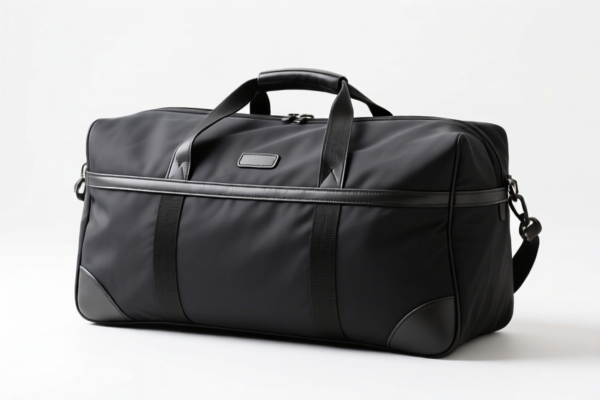
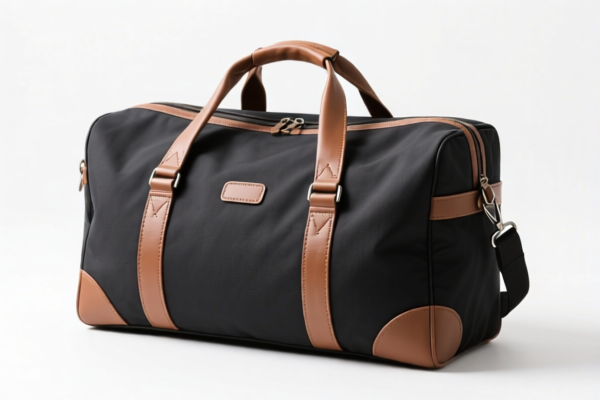
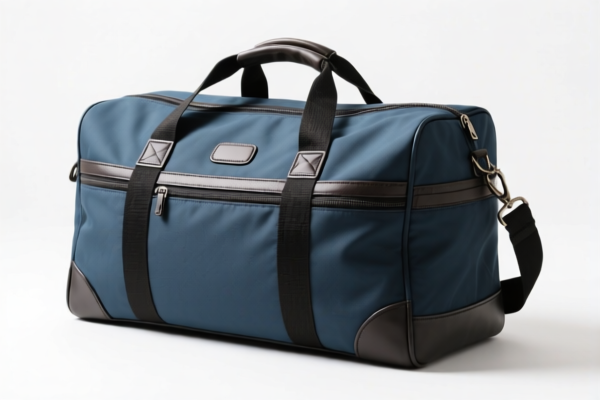
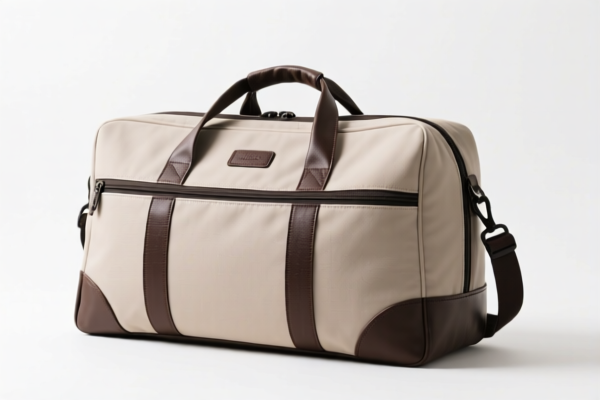
AI分析
🧳 Travel Supplies (Travel Accessories / Luggage & Cases)
🌐 HS Code Reference & Customs Clearance Guide | 2026 Latest Tariff Analysis | Professional Clearance Strategy
📌 I. Product Definition & Classification: Do You Truly Understand "Travel Supplies"?
"Travel Supplies" is a highly ambiguous, usage-based category in international trade. Unlike specific industrial goods, these items are defined by how they are used rather than what they are made of. This ambiguity creates multiple potential HS Code classifications depending on the specific material, form, and function of the item.
In customs valuation, the general rule is: Specific description prevails over generic "other" categories. However, since "Travel Supplies" is not a standard HTSUS term, it falls into two main logical paths: 1. Vacuum/Insulated Containers: If the supply is a thermos, flask, or insulated bottle. 2. Bags/Containers: If the supply is a toiletry bag, cosmetic case, or luggage organizer.
⚠️ Key Distinction Point:
- If it holds liquid and keeps temperature → Chapter 96 (Vacuum Containers) or Chapter 42 (Bag-like containers).
- If it is primarily a storage pouch for accessories → Chapter 42 (Other articles of travel, toilet or cosmetic bags).
- Material Matters: The absence of a specified material (e.g., "plastic," "textile") forces a "fallback" classification, often leading to higher duties under "Other" subheadings.
📦 II. HS Code Classification Details (2026 Latest Tariff Authority Comparison)
Based on the provided data, "Travel Supplies" are mapped to five distinct HS Codes depending on their inferred nature.
| HS Code | Product Description | Application Scenario | Key Classification Logic |
|---|---|---|---|
9617.00.60.00 |
Other vacuum flasks and similar vacuum vessels; parts thereof | Insulated water bottles, vacuum flasks, travel thermoses | Fallback Principle: Classified under "Other" vacuum containers due to lack of specific material conflict. |
9617.00.10.00 |
Vacuum flasks and other vacuum vessels, complete with cases (parts and accessories) | Vacuum flasks with carrying cases | Multi-use/Ambiguous: Treated as a "part/accessory" category due to vague usage description. |
4202.32.10.00 |
Articles of a kind normally carried in pocket or handbag: with outer surface of textile materials, whether or not covered with transparent sheeting | Small cosmetic bags, toiletry kits, fabric pouches | Usage-Based: Inferred as "carry-on" items. Material assumed to be textile due to no conflict. |
4202.32.93.00 |
Articles of a kind normally carried in pocket or handbag: Other, with outer surface of plastic sheeting or of textile materials | Plastic cosmetic cases, mixed-material travel organizers | Default Preference: Classified as "Other" because no specific material conflict was found; defaults to "Accessory" preference. |
4202.92.31.20 |
Other travel, sports, and identical bags: with outer surface of textile materials, whether or not covered with transparent sheeting | Larger travel organizers, fabric storage bags, non-standard pouches | Form Match: Matches the form of "travel bags." Material inferred as textile/plastic film based on common sense. |
🔍 Critical Reminder:
- Ambiguity Costs Money: Because "Travel Supplies" is not a specific legal term, customs will rely on logical inference. If you declare "Travel Supplies" without specifying "Stainless Steel Vacuum Flask" or "Nylon Cosmetic Bag," you risk being assigned the "Other" (higher duty) subheadings. - No Material Conflict: The provided logic notes that no material conflict was found. This means the classifier assumes the most common material (Textile/Plastic/Vacuum metal) but places it in the broadest, most expensive bucket within that chapter.
💰 III. 2026 Latest Tariff Rate Breakdown (Including Surtaxes & Policy Add-ons)
✅ Applicable Country: United States (US)
✅ Origin: China (CN)
✅ Effective Date: November 10, 2025 (including subsequent imports)
🎯 1. 9617.00.60.00 & 9617.00.10.00 —— Vacuum Flasks & Parts
| Item | Content |
|---|---|
| Basic Duty | 7.2% |
| Surtax (Section 301) | 0.0% |
| IEEPA Section 122 Tax | 10.0% |
| Total Effective Rate | 17.2% |
| Tax Calculation | CIF Value × 17.2% |
| De Minimis Eligibility | ❌ Not Applicable (High probability of audit for bulk imports) |
| Legal Basis Path | USITC:9617.00.60.00 → IEEPA:122 |
📌 Explanation:
- Vacuum flasks enjoy lower surtaxes (0%) compared to bags, but still face the 10% IEEPA 122 tax. - This is the most cost-effective classification for insulated items.
🎯 2. 4202.32.10.00 —— Textile Cosmetic/Toiletry Bags
| Item | Content |
|---|---|
| Basic Duty | 12.1¢/kg + 4.6% |
| Surtax (Section 301) | 25.0% |
| IEEPA Section 122 Tax | 10.0% |
| Total Effective Rate | 35.0% (Ad Valorem Equivalent) + Weight-Based Fee |
| Tax Calculation | (Weight × 12.1¢) + (CIF Value × (4.6% + 25% + 10%)) |
| De Minimis Eligibility | ❌ Not Applicable |
| Legal Basis Path | USITC:4202.32.10.00 → FOOTNOTE:301 → IEEPA:122 |
📌 Note:
- This code has a hybrid duty (Specific + Ad Valorem). - The 25% Section 301 surtax is significant. - Total liability is high, but the base is mixed (weight + value).
🎯 3. 4202.32.93.00 & 4202.92.31.20 —— Other Travel/Plastic Bags
| Item | Content |
|---|---|
| Basic Duty | 17.6% |
| Surtax (Section 301) | 25.0% |
| IEEPA Section 122 Tax | 10.0% |
| Total Effective Rate | 52.6% |
| Tax Calculation | CIF Value × 52.6% |
| De Minimis Eligibility | ❌ Not Applicable |
| Legal Basis Path | USITC:4202.32.93.00 / 4202.92.31.20 → FOOTNOTE:301 → IEEPA:122 |
📌 Warning:
- These are the "Other" (兜底) categories. - They attract the highest total duty (52.6%) among the options. - This applies if the item is deemed a "bag" but doesn't fit specific textile/plastic definitions, or if the classifier uses a "fallback" logic due to vague description.
🛠️ IV. Customs Clearance Practical Advice (Real-World Pitfall Avoidance Guide)
✅ 1. Documentation Checklist (Non-negotiable)
| Document | Required | Explanation |
|---|---|---|
| ✅ Detailed Product Description | ✔️ | CRITICAL: Do NOT write "Travel Supplies." Write "Stainless Steel Vacuum Flask, 500ml" or "Nylon Cosmetic Bag, Zipper Closure." |
| ✅ Material Composition Statement | ✔️ | Specify: "Outer: 100% Nylon; Lining: Polyester; Hardware: Zinc Alloy." |
| ✅ Product Photos (Clear) | ✔️ | Show the item empty and full. Prove if it is rigid (vacuum) or soft (bag). |
| ✅ Commercial Invoice | ✔️ | Must match the specific HS Code description exactly. |
| ✅ Packing List | ✔️ | Detail weights to calculate the 12.1¢/kg duty if applicable (4202.32.10.00). |
✅ 2. Declaration Tips (Key Mantras)
🔥 "Be Specific, Avoid 'Other', Declare Material, Save 35%!"
| Scenario | Correct Declaration | Wrong Practice | Consequence |
|---|---|---|---|
| Vacuum Flask | "Stainless Steel Vacuum Flask for Drinks" | "Travel Supply" or "Thermos" | Risk of 9617.00.60.00 (17.2%) vs. correct specific rate. |
| Cosmetic Bag | "Nylon Toiletry Bag with Zipper" | "Travel Accessory" or "Bag" | Risk of 4202.92.31.20 (52.6%) due to "Other" fallback. |
| Mixed Lot | Split Declaration | "Travel Supplies Lot" | Customs may audit entire lot, assign highest rate (52.6%) to all items. |
✅ 3. Special Handling Cases
| Case | Handling Advice |
|---|---|
| Ambiguous "Travel Accessories" | If it’s a small plastic holder, try to prove it’s a "Part of a Vacuum Flask" (9617.00.10.00) for lower tax, OR a "Textile Pouch" if it’s fabric. Never use "Other." |
| Multi-material Bags | If a bag has plastic windows and fabric body, the principal material determines the code. Usually, if it’s >50% textile, go for 4202.32.... |
| OEM/Custom Orders | Provide the Design Blueprint. Customs can verify if it’s truly a "vacuum vessel" or just a "storage case." |
| De Minimis (Section 321) | ❌ High Risk: Items under $800 might enter duty-free, but Section 301 (25%) and IEEPA (10%) taxes often still apply to Chinese origin goods under recent enforcement trends. Do not rely on de minimis for bulk "Travel Supplies." |
🌍 V. Global Market Customs Comparison (2026 Latest)
| Country/Region | Recommended HS Code | Tariff (CN Origin) | Certification Requirements | Notes |
|---|---|---|---|---|
| 🇺🇸 USA | 9617.00.60.00 (Vacuum) 4202.32.10.00 (Bag) |
17.2% (Vacuum) 35%+ (Bag) |
FCC (if electronic), Prop 65 (Plastic) | 52.6% for "Other" bags is punitive. |
| 🇨🇳 China | 9617.00.60.00 4202.32.10.00 |
7.2% (Vacuum) 15%+ (Bag) |
CCC (if applicable) | Lower baseline tariffs, no Section 301. |
| 🇪🇺 EU | 9617.00.60.00 4202.32.10.00 |
~3.7% (Vacuum) ~12% (Bag) |
REACH, CPSR | No retaliatory tariffs. |
| 🇦🇺 Australia | 9617.00.60.00 4202.32.10.00 |
5% (Vacuum) 5% (Bag) |
WELS (for appliances) | FTA benefits may apply. |
📌 Conclusion:
- USA is the most expensive market due to Section 301 (25%) + IEEPA (10%). - "Travel Supplies" is a dangerous term in the US. It triggers "Other" classifications with 52.6% duties. - Recommendation: Always classify as "Vacuum Flask" or "Cosmetic Bag" with specific materials.
📌 VI. Common Errors & Pitfall Guide (Lessons Learned)
❌ Error 1: Using "Travel Supplies" as the product name.
👉 Result: Customs assigns 4202.92.31.20 → 52.6% duty.
✅ Fix: Use "Nylon Cosmetic Bag" or "Stainless Steel Flask."
❌ Error 2: Ignoring the "122 Clause" (IEEPA 10%).
👉 Result: Unexpected cost increase on all items.
✅ Fix: Factor 10% IEEPA into your pricing model immediately.
❌ Error 3: Assuming "Vacuum Flask" is always 9617.00.10.00.
👉 Result: If it doesn't come with a case, it might be 9617.00.60.00.
✅ Fix: Check if the item includes a carrying case.
🎯 VII. Conclusion: Precision Saves Profits!
🎯 Remember the Mantra:
🔹 "Vacuum is Cheap (17.2%), Bags are Expensive (52.6%)."
🔹 "Don't say 'Travel', say 'Material + Form'."
🔹 "IEEPA 10% is always on; Plan for it!"
📌 Pro Tip:
If you are importing large volumes of "Travel Supplies":
1. Request a Pre-Ruling from US Customs (CBP) with specific product samples.
2. Separate Vacuum Flasks (17.2%) from Bags/Pouches (35-52.6%) in your shipping invoice to avoid cross-contamination of duties.
3. Consider Supply Chain Shift: If duties on 4202... are too high, consider sourcing bags from Vietnam/Mexico for FTAA/USMCA benefits (0% surtax).
📣 Immediate Action:
📞 Audit your current HS Codes.
🚀 Replace "Travel Supplies" with specific descriptions.
💼 Your profit margin depends on this 35% difference!
✨ Professional Clearance Starts with Precise Classification!
💼 Every cent saved is pure profit!
用户评价
关于 HS 编码归类
协调制度(HS)是由世界海关组织(WCO)制定的国际贸易商品分类标准。全球 200 多个国家采用 HS 系统作为海关关税、贸易统计和进出口监管的基础。
每个 HS 编码遵循以下层级结构:
- 章(2 位)——商品大类(例如:第 84 章:机器和机械设备)
- 品目(4 位)——章内的更具体分类
- 子目(6 位)——国际通用细分,所有 WCO 成员国统一使用
- 本国细分(8-10 位)——各国自行扩展的细分编码,如美国 HTSUS 10 位编码
正确的 HS 编码归类对于顺利通关、准确缴纳关税和遵守贸易法规至关重要。错误归类可能导致海关延误、多缴关税或罚款。
从CN进口到US时,适用的关税税率可能包括:
- 最惠国(MFN)税率——适用于 WTO 成员国的标准关税税率
- 普通税率——适用于无贸易协定国家
- 贸易救济关税——附加关税,如 301 条款(反倾销)、232 条款(国家安全)或反补贴税
本页内容仅供参考。如需正式归类,请咨询当地海关或持牌报关代理。