ultra high molecular weight polyethylene powder
CN → US| HS编码 | 关税税率 | 原产国 | 目的国 | 文档 |
|---|---|---|---|---|
| 3901101000 | 41.5% | CN | US | 官方文档 |
| 3901201000 | 41.5% | CN | US | 官方文档 |
商品图片
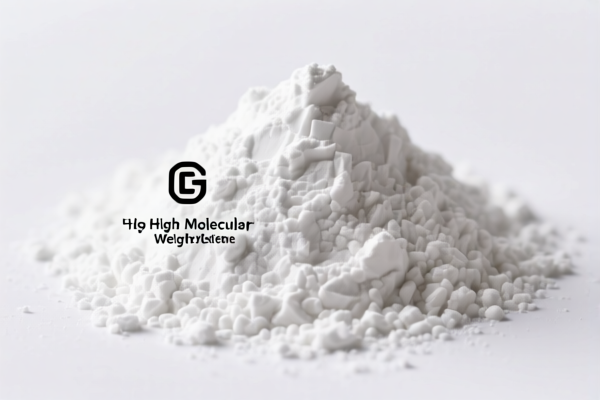
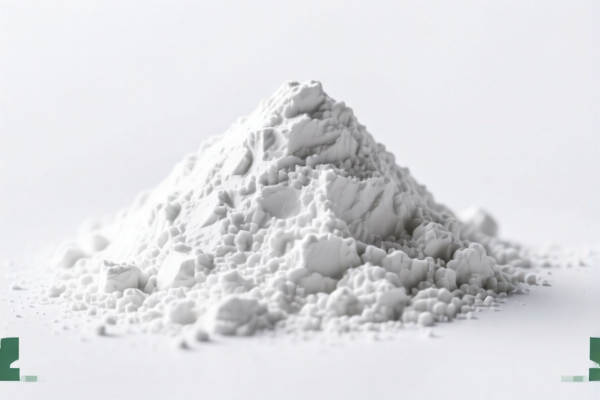
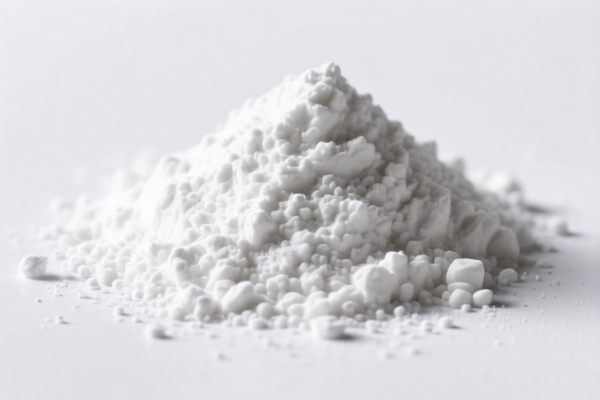

AI分析
🧪 Ultra High Molecular Weight Polyethylene Powder (UHMW-PE)
🌐 HS Code Reference & Customs Clearance Guide | 2026 Latest Tariff Analysis | Specialized Logistics Strategy
📌 I. Product Definition & Classification: What is UHMW-PE Powder?
Ultra High Molecular Weight Polyethylene (UHMW-PE) is a type of polyethylene where the polymer chains have extremely high molecular weights, typically ranging from 1.5 to 6 million atomic mass units. Unlike standard polyethylene (HDPE/LDPE), UHMW-PE is not melt-processable in the traditional sense because it has no true melting point (it degrades before melting). Therefore, it is often supplied in powder form or gel form to facilitate processing into fibers, films, or molded parts (like armor, medical implants, or industrial liners).
In international trade, UHMW-PE falls under Chapter 39: Plastics and Articles Thereof. The specific classification depends on two critical physical properties: 1. Specific Gravity (Density): Is it less than 0.94 or 0.94 or more? 2. Relative Viscosity: Is it 1.44 or more (indicating higher molecular weight/higher quality)?
⚠️ Critical Distinction:
- If the product is Polyethylene with a specific gravity < 0.94 AND relative viscosity ≥ 1.44 → HS Code 3901.10.10.00
- If the product is Polyethylene with a specific gravity ≥ 0.94 AND relative viscosity ≥ 1.44 → HS Code 3901.20.10.00
- Note: Most UHMW-PE powders are high-performance materials with high relative viscosity. Standard commercial PE with low viscosity is NOT UHMW-PE.
📦 II. HS Code Classification Details (2026 Tariff Reference)
Based strictly on the provided data (), here are the applicable HS Codes for UHMW-PE Powder:
| HS Code | Product Description | Key Criteria | Application Scenario |
|---|---|---|---|
3901.10.10.00 |
Polymers of ethylene, in primary forms: Polyethylene having a specific gravity of less than 0.94: Having a relative viscosity of 1.44 or more | Density < 0.94 g/cm³ Viscosity ≥ 1.44 |
High-performance UHMW-PE powder, ultra-high molecular weight fibers prep, advanced medical implants. |
3901.20.10.00 |
Polymers of ethylene, in primary forms: Polyethylene having a specific gravity of 0.94 or more: Having a relative viscosity of 1.44 or more | Density ≥ 0.94 g/cm³ Viscosity ≥ 1.44 |
Dense UHMW-PE powders, specific industrial molding grades where density is higher but still high-viscosity. |
🔍 Key Insight:
- The term "Ultra High Molecular Weight" inherently implies a high relative viscosity (usually ≥ 1.44, often much higher).
- Therefore, both codes above require Relative Viscosity ≥ 1.44.
- The differentiator is purely Specific Gravity (Density). You must test the material to determine if it is < 0.94 or ≥ 0.94.
💰 III. 2026 Tariff Rate Analysis (Zero Duty)
✅ Applicable Country: United States (US)
✅ Origin: China (CN) (Assumed based on typical export context, but rates shown are general US MFN/Section 301 status for these codes)
✅ Effective Date: 2025-2026
🎯 1. 3901.10.10.00 & 3901.20.10.00 – UHMW-PE Powder
| Item | Detail |
|---|---|
| Basic Tariff | 0.0% |
| Additional Tariffs | 0.0% |
| Total Tax Rate | 0.0% |
| Tax Calculation | CIF Value × 0% = $0 |
| De Minimis Eligibility | ❌ N/A (Since tax is 0, de minimis thresholds don't apply for duty reduction, but customs entry still required for large shipments) |
| Legal Basis | HTSUS Chapter 39, Section I/II General Notes |
📌 Explanation:
- Zero Duty: Both HS codes3901.10.10.00and3901.20.10.00currently have a 0% total tax rate.
- No Section 301 Penalty: Unlike many Chinese steel/aluminum or tech products, UHMW-PE powder (as a raw polymer material in primary forms) is not subject to the additional 25% or 10% IEEPA/Section 301 tariffs based on the provided data.
- Cost Advantage: This makes UHMW-PE powder highly competitive for import into the US market.
🛠️ IV. Customs Clearance Practical Advice (Avoiding Pitfalls)
✅ 1. Required Documentation Checklist
| Document | Required? | Why? |
|---|---|---|
| ✅ Commercial Invoice | Yes | Must clearly state "Ultra High Molecular Weight Polyethylene Powder" and HS Code. |
| ✅ Packing List | Yes | Details net/gross weight, packaging type (bags, drums). |
| ✅ Product Specification Sheet | Critical | Must include: 1. Specific Gravity (e.g., 0.935 or 0.95) 2. Relative Viscosity (e.g., 2.0, 5.0, etc.) 3. Molecular Weight (if available) 4. Form (Powder, Pellet, Fluff) |
| ✅ Certificate of Origin (CO) | Yes | To prove origin (China, Germany, USA, etc.) for potential FTA benefits (though rate is 0% here). |
| ✅ MSDS (Safety Data Sheet) | Yes | For safe handling, shipping, and customs safety review. |
| ✅ Lab Test Report | Recommended | Independent verification of Specific Gravity and Viscosity to prevent customs re-classification. |
✅ 2. Declaration Tips (Key Mantra)
🔥 “Density & Viscosity Define the Code! Powder Form is Primary Form!”
| Scenario | Correct Declaration | Wrong Practice |
|---|---|---|
| UHMW-PE Powder, Density 0.93, Viscosity 1.5 | HS 3901.10.10.00 |
Misclassifying as 3901.90 (Other PE) → Risk of penalty. |
| UHMW-PE Powder, Density 0.95, Viscosity 1.6 | HS 3901.20.10.00 |
Assuming all PE is one code. |
| Shipped as "Polyethylene" | ❌ Too Vague | Must specify UHMW-PE and provide Viscosity/Density data. |
| Shipped as "Plastic Pellets" | ❌ Wrong Form | If it's powder, declare Powder. If pellets, declare Pellets. Form affects some subheadings. |
✅ 3. Special Considerations
| Issue | Handling Advice |
|---|---|
| Customs Scrutiny on Viscosity | Customs may question if "Viscosity ≥ 1.44" is accurate. Have lab reports ready. If viscosity is < 1.44, the HS code may change to a different subheading (not in the provided data), potentially with different duties. |
| "Primary Forms" Requirement | HS Code 3901 applies only to primary forms (liquids, powders, pellets, flakes). If UHMW-PE is already molded into a final article (e.g., a helmet, a gear), it moves to Chapter 39 (articles), not 3901. |
| Anti-Dumping/Countervailing Duties (AD/CVD) | While basic duty is 0%, check if specific exporters are subject to AD/CVD orders. Generally, raw UHMW-PE polymer powders have lower AD/CVD exposure than finished articles, but always verify. |
🌍 V. Global Market Comparison (2026)
| Country/Region | Recommended HS Code | Tariff Rate | Notes |
|---|---|---|---|
| 🇺🇸 USA | 3901.10.10.00 or 3901.20.10.00 |
0.0% | Zero duty for primary forms. Highly competitive. |
| 🇪🇺 EU | 3901.10 or 3901.20 |
~0.0% - 1.7% | Check specific CN codes. Often low duty for raw polymers. |
| 🇨🇳 China | 3901.10.10.00 or 3901.20.10.00 |
0.0% | Zero duty for import. |
| 🇯🇵 Japan | 3901.10 / 3901.20 |
~0.0% - 2.0% | Generally low duty for primary plastics. |
📌 Conclusion:
- USA offers the best current tariff advantage (0%) for UHMW-PE powder imports under these specific HS codes.
- Ensure viscosity and density are accurately reported to avoid misclassification penalties.
📌 VI. Common Errors & Pitfalls (Lessons Learned)
❌ Error 1: Declaring UHMW-PE Powder as "Plastic Raw Material" without specifying HS Code.
👉 Consequence: Customs delay, request for additional documents, potential re-classification.
❌ Error 2: Ignoring Relative Viscosity.
👉 Consequence: If viscosity is < 1.44, the product may fall under a different HS code (e.g., 3901.10.90), which might have a non-zero tariff. Misclassification can lead to back-taxes and fines.
❌ Error 3: Confusing UHMW-PE with HDPE or LLDPE.
👉 Consequence: UHMW-PE has unique properties (high wear resistance, low friction). If declared as generic HDPE, and viscosity is low, it might be correct, but if viscosity is high, it must be declared as UHMW-PE under 3901.10.10.00 or 3901.20.10.00.
✅ Correct Practice:
"Ultra High Molecular Weight Polyethylene Powder, Specific Gravity 0.935, Relative Viscosity 2.0, Primary Form, for Use in Manufacturing Armor and Medical Implants."
🎯 VII. Conclusion: Professional Clearance, Zero Duty, Smooth Entry!
🎯 Remember the Mantra:
🔹 "Viscosity ≥ 1.44? Then check Density! < 0.94 goes to .10.10, ≥ 0.94 goes to .20.10. Both are 0% Duty!"
🔹 "Don't Guess Viscosity! Have a Lab Report Ready!"
📌 Pro Tip:
If your UHMW-PE powder has a relative viscosity < 1.44, it does NOT fit into the provided HS codes (3901.10.10.00 / 3901.20.10.00). It would fall under a different subheading (e.g., 3901.10.90.00 or 3901.20.90.00), which may have different tax rates. Always verify viscosity before claiming 0% duty under these specific codes.
📣 Immediate Action:
📞 Contact your customs broker with the Technical Data Sheet (TDS) including Specific Gravity and Relative Viscosity.
🚀 Ensure smooth clearance with 0% duty!
✨ Professional clearance starts with precise classification!
💼 Your zero-duty advantage depends on accurate viscosity and density reporting!
用户评价
关于 HS 编码归类
协调制度(HS)是由世界海关组织(WCO)制定的国际贸易商品分类标准。全球 200 多个国家采用 HS 系统作为海关关税、贸易统计和进出口监管的基础。
每个 HS 编码遵循以下层级结构:
- 章(2 位)——商品大类(例如:第 84 章:机器和机械设备)
- 品目(4 位)——章内的更具体分类
- 子目(6 位)——国际通用细分,所有 WCO 成员国统一使用
- 本国细分(8-10 位)——各国自行扩展的细分编码,如美国 HTSUS 10 位编码
正确的 HS 编码归类对于顺利通关、准确缴纳关税和遵守贸易法规至关重要。错误归类可能导致海关延误、多缴关税或罚款。
从CN进口到US时,适用的关税税率可能包括:
- 最惠国(MFN)税率——适用于 WTO 成员国的标准关税税率
- 普通税率——适用于无贸易协定国家
- 贸易救济关税——附加关税,如 301 条款(反倾销)、232 条款(国家安全)或反补贴税
本页内容仅供参考。如需正式归类,请咨询当地海关或持牌报关代理。