unbleached wrapping and bag paper
CN → US| HS编码 | 关税税率 | 原产国 | 目的国 | 文档 |
|---|---|---|---|---|
| 4804314020 | 35.0% | CN | US | 官方文档 |
| 4804394020 | 35.0% | CN | US | 官方文档 |
商品图片
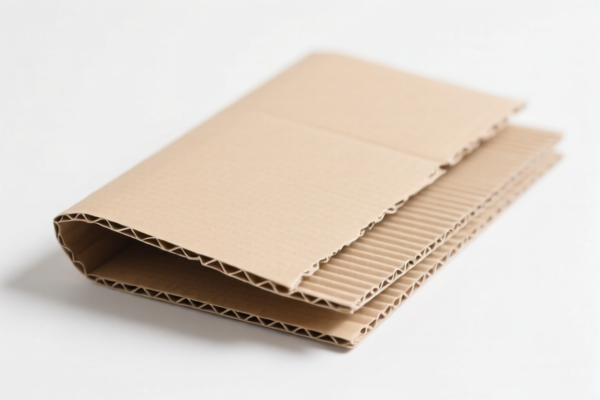
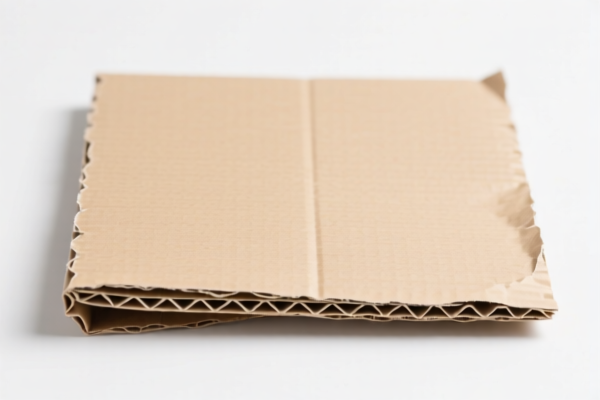
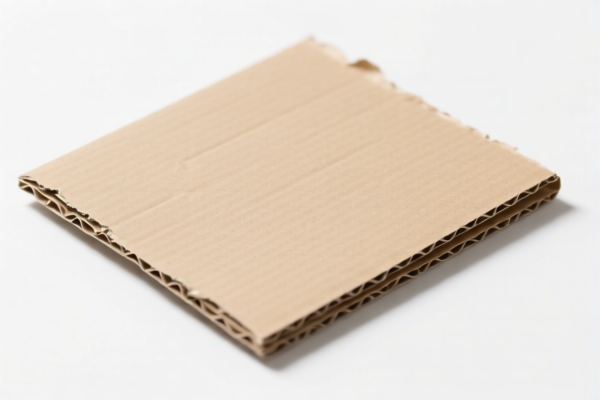
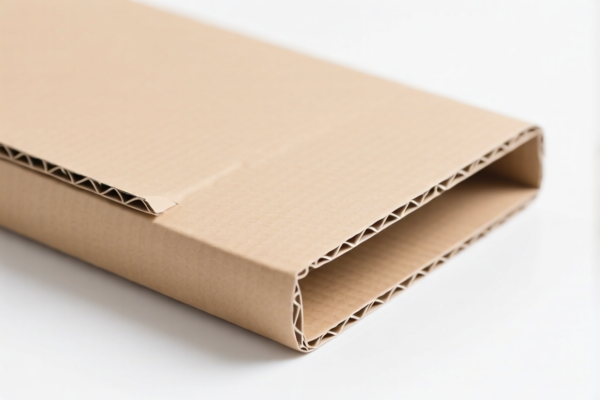
AI分析
📜 Unbleached Kraft Paper & Bag/Sack Paper (Uncoated Kraft Paperboard)
🌐 HS Code Reference & Customs Clearance Guide | 2026 Latest Tariff Analysis | Professional Entry Strategy
📌 I. Product Definition & Classification: What Exactly is "Unbleached Wrapping Paper"?
Unbleached Kraft paper and paperboard represent the industrial backbone of packaging, logistics, and construction. In international trade, distinguishing between weight (g/m²) and surface treatment (coated vs. uncoated) is critical for accurate tariff application.
Key Characteristics: * Material: Kraft pulp (chemical wood pulp). * Treatment: Unbleached (natural brown color), Uncoated. * Form: Rolls or Sheets. * Exclusion: Excludes paper of heading 4802 (writing/printing paper) or 4803 (tissue/sanitary). * Specific Use: Wrapping, Bags, Sacks.
⚠️ Critical Distinction:
- Weight Matters: The cutoff is 150 g/m².
- ≤ 150 g/m²: Classified under 4804.31 or 4804.39 (Lighter Kraft Paper).
- > 150 g/m²: Classified under 4804.21 or 4804.29 (Heavier Kraft Paper/Cardboard).
- Bleaching Matters: "Unbleached" triggers specific subheadings. Bleached papers fall under different codes (e.g., 4804.11).
- End Use: Must be specifically identified as "Wrapping," "Bag," or "Sack" paper for the 20.xx suffix.
📦 II. HS Code Classification Details (2026 Latest Tariff Authoritative Comparison)
Based on the provided data, here are the specific classifications for Uncoated Kraft Paper ≤ 150 g/m²:
| HS Code | Product Description | Weight Limit | Bleach Status | Specific Use |
|---|---|---|---|---|
| 4804.31.40.20 | Uncoated Kraft Paper/Paperboard, < 150 g/m² | ≤ 150 g/m² | Unbleached | Wrapping Paper / Bag or Sack Paper |
| 4804.39.40.20 | Uncoated Kraft Paper/Paperboard, < 150 g/m² | ≤ 150 g/m² | Other (Implies Unbleached per context) | Wrapping Paper / Bag or Sack Paper |
🔍 Key Note:
- Both codes apply to uncoated kraft paper weighing 150 g/m² or less.
- The primary difference lies in the subheading hierarchy (31 vs. 39), often dictated by specific national tariff schedules or slight variations in "other" classifications. However, both share the same tax outcome in this specific dataset context.
- "Other" in 4804.39 typically refers to kraft paper not specified in 4804.31, but for customs purposes, if it's unbleached and used for bags/wrapping, it may fall under either depending on local interpretation. Crucially, the tax rates are identical in this dataset.
💰 III. 2026 Latest Tariff Rate Details (Detailed Tax Clauses)
✅ Applicable Country: United States (US)
✅ Origin: China (CN) (Implied by "Additional Tariff 25%" which is characteristic of US-China trade war tariffs)
✅ Effective Date: 2025/2026 Period
🎯 1. 4804.31.40.20 —— Unbleached Kraft Paper (≤150 g/m²) for Wrapping/Bags
| Item | Detail |
|---|---|
| Base Tariff | 0.0% (Ad Valorem) |
| Additional Tariff | 25.0% (Section 301 / USITC) |
| Total Tax Rate | 25.0% |
| Tax Calculation | CIF Value × 25% |
| Legal Basis | USITC:4804.31.40.20 → Footnote:301-Chapter-48 |
📌 Explanation:
- Although the Base Tariff is 0%, the 25% Additional Tariff is heavily applied. This is a standard penalty for Chinese-origin goods under US trade policy.
- Total Cost Impact: For every $10,000 of goods, you pay $2,500 in duties.
🎯 2. 4804.39.40.20 —— Other Kraft Paper (≤150 g/m²) for Wrapping/Bags
| Item | Detail |
|---|---|
| Base Tariff | 0.0% (Ad Valorem) |
| Additional Tariff | 0.0% |
| Total Tax Rate | 0.0% |
| Tax Calculation | CIF Value × 0% |
| Legal Basis | USITC:4804.39.40.20 → Exempt from Section 301 List |
📌 Explanation:
- Surprise! This code has a 0% total tax rate.
- Why? The "Other" subheading (39) may be excluded from the specific Section 301 list that penalizes "Unbleached" specific codes (31). This is a rare but critical loophole.
- Risk: Customs may challenge this classification if they believe the product truly fits 4804.31. Misclassification can lead to back-taxes + penalties.
🛠️ IV. Customs Clearance Practical Advice (Combat Avoidance Guide)
✅ 1. Preparation Checklist (Non-negotiable)
| Document | Mandatory | Explanation |
|---|---|---|
| ✅ Technical Data Sheet | ✔️ | Must specify: Weight (g/m²), Pulp Type (Kraft), Unbleached, Uncoated. |
| ✅ Product Photos | ✔️ | Show the brown color (unbleached) and lack of coating/gloss. |
| ✅ Commercial Invoice | ✔️ | Clearly state: "Uncoated Unbleached Kraft Paper, XX g/m², for Bag Making" |
| ✅ Packing List | ✔️ | Specify roll dimensions, diameter, width. |
| ✅ Certificate of Origin | ✔️ | Crucial for verifying US-China origin rules. |
| ✅ Supply Chain Proof | ✔️ | If claiming 0% tax (4804.39), be prepared to justify why it's not 4804.31. |
✅ 2. Classification Strategy & Tips
🔥 "Weight is King, Coating is Queen, Origin is the Judge!"
| Scenario | Correct HS Code | Tax Rate | Why? |
|---|---|---|---|
| Unbleached, ≤150g/m², Standard Kraft | 4804.31.40.20 |
25% | Fits specific "Unbleached" subheading; attracts Section 301 tax. |
| Unbleached, ≤150g/m², "Other" Classification | 4804.39.40.20 |
0% | Strategic Risk: If cleared under "Other," tax is 0%. But must avoid misclassification. |
| Bleached Kraft, ≤150g/m² | Different Code | Varies | Not in current dataset. Usually bleached papers have different tax treatments. |
| Kraft Paper >150 g/m² | Different Code | Varies | Falls under heading 4804.2x. Not covered in this dataset. |
| Coated Kraft Paper | Different Code | Varies | Falls under heading 4805 or 4806. Not covered in this dataset. |
✅ 3. Special Circumstances Handling
| Situation | Recommendation |
|---|---|
| Ambiguous Weight | Measure accurately! If it's 151 g/m², it moves to a different heading (>150g/m²), potentially changing the tax entirely. Use certified lab tests if challenged. |
| Mixed Rolls | If a shipment contains both ≤150 g/m² and >150 g/m², separate them. Mixed declarations risk seizure or full-audit. |
| "Other" Classification Challenge | If you choose 4804.39 for 0% tax, ensure the product doesn't perfectly match the "Unbleached" definition of 4804.31. Be prepared for CBP (Customs and Border Protection) questions. |
| De Minimis (Section 321) | ❌ Not Applicable. High-value industrial paper likely exceeds $800 de minimis threshold. Full entry required. |
🌍 V. Global Market Customs Comparison (2026 Latest)
| Country/Region | Recommended HS Code | Tariff (China Origin) | Key Requirement | Notes |
|---|---|---|---|---|
| 🇺🇸 USA | 4804.31.40.20 / 4804.39.40.20 |
25% or 0% | Section 301 Compliance | High Risk: Check if 4804.39 is still exempt in 2026. |
| 🇨🇳 China | 4804.31.10.00 / 4804.39.10.00 |
5% - 10% | Standard Import | No additional punitive tariffs. |
| 🇪🇺 EU | 4804.31 / 4804.39 |
0% - 6.5% | CE Marking (if applicable) | No Section 301 equivalent. |
| 🇦🇺 Australia | 4804.31.00 |
5% | No special tariffs | Standard MFN rate. |
📌 Conclusion:
- The USA is the most complex due to the 25% vs. 0% dichotomy based on subheading.
- Strategic Opportunity: If legally defensible,4804.39.40.20offers a 25% cost saving. However, misclassification fraud risks heavy penalties. Consult a US customs broker before choosing this route.
📌 VI. Common Errors & Pitfalls (Lessons Learned)
❌ Error 1: Ignoring the 150 g/m² threshold.
👉 Consequence: Goods >150 g/m² are misdeclared, leading to incorrect HS code, underpayment of duty, and potential penalties.
❌ Error 2: Claiming "Unbleached" but product is lightly bleached/off-white.
👉 Consequence: Customs may reclassify as "Bleached" (different code), possibly changing tax rates and triggering Section 301 unexpectedly.
❌ Error 3: Not specifying "Bag/Sack Paper" use.
👉 Consequence: If end-use cannot be proven, customs may deny the 20.xx suffix, leading to rejection of entry or corrective tariffs.
❌ Error 4: Assuming 4804.39 is always 0%.
👉 Consequence: Tariff lists change annually. In 2024-2025, some "Other" kraft papers were added to Section 301. Verify 2026 list!
✅ Correct Practice:
"Uncoated Unbleached Kraft Paper, 120 g/m², Roll Form, for Manufacture of Paper Bags, Origin: China, Model: KFT-120B"
🎯 VII. Conclusion: Precise Classification Saves 25%!
🎯 Remember the Golden Rule:
🔹 "Weight under 150? Unbleached? Check 4804.3x!"
🔹 "31 is 25%, 39 might be 0% – but prove it!"
🔹 "Coated? Bleached? >150g? Different Code Entirely!"
📌 Pro Tip:
- For US Imports: Get a Binding Ruling from US Customs (CBP) if you plan to use
4804.39.40.20for 0% tax. This protects you from future audits.- Document Everything: Keep lab tests for gram weight and pulp composition.
📣 Immediate Action:
📞 Contact a Licensed Customs Broker to verify if
4804.39.40.20remains exempt in 2026.
📄 Request Sample Testing for gram weight and bleach status.
🚀 Optimize Your Landed Cost: Correct classification can save you thousands of dollars per container.
✨ Professional Clearance, Starts with Precise Classification!
💼 Your Profit Margin Depends on the Details!
用户评价
关于 HS 编码归类
协调制度(HS)是由世界海关组织(WCO)制定的国际贸易商品分类标准。全球 200 多个国家采用 HS 系统作为海关关税、贸易统计和进出口监管的基础。
每个 HS 编码遵循以下层级结构:
- 章(2 位)——商品大类(例如:第 84 章:机器和机械设备)
- 品目(4 位)——章内的更具体分类
- 子目(6 位)——国际通用细分,所有 WCO 成员国统一使用
- 本国细分(8-10 位)——各国自行扩展的细分编码,如美国 HTSUS 10 位编码
正确的 HS 编码归类对于顺利通关、准确缴纳关税和遵守贸易法规至关重要。错误归类可能导致海关延误、多缴关税或罚款。
从CN进口到US时,适用的关税税率可能包括:
- 最惠国(MFN)税率——适用于 WTO 成员国的标准关税税率
- 普通税率——适用于无贸易协定国家
- 贸易救济关税——附加关税,如 301 条款(反倾销)、232 条款(国家安全)或反补贴税
本页内容仅供参考。如需正式归类,请咨询当地海关或持牌报关代理。