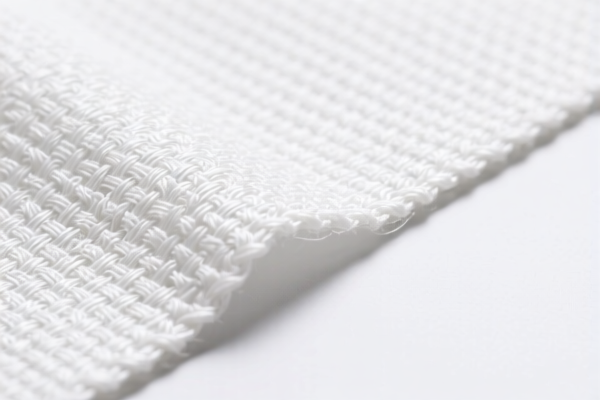
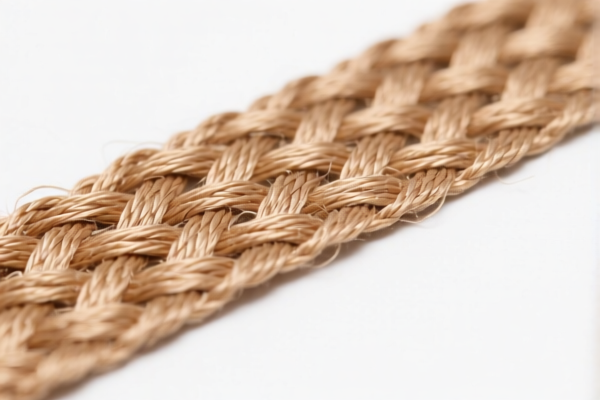
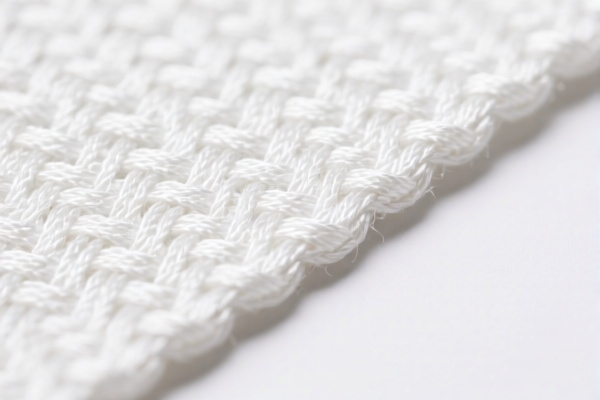
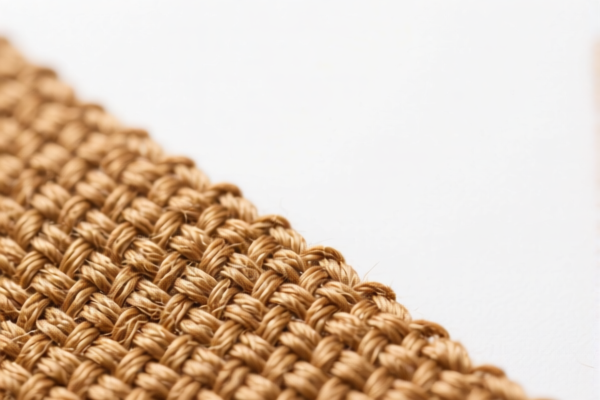
unbleached/bleached machine colored ribbon
CN → US| HS编码 | 关税税率 | 原产国 | 目的国 | 文档 |
|---|---|---|---|---|
| 5407410010 | 48.6% | CN | US | 官方文档 |
| 5407410020 | 48.6% | CN | US | 官方文档 |
| 5806321010 | 41.0% | CN | US | 官方文档 |
| 5806321080 | 41.0% | CN | US | 官方文档 |
| 5407410010 | 48.6% | CN | US | 官方文档 |
商品图片
AI分析
🎗️ Unbleached/Bleached Machine Colored Ribbon (Thermal Printer Ribbons)
🌐 HS Code Reference & Customs Clearance Guide | 2026 Latest Tariff Analysis | Professional Entry Strategy
📌 I. Product Definition & Classification: Do You Really Understand "Machine Ribbons"?
Machine ribbons (often referred to as thermal printer ribbons or thermal transfer ribbons) are consumables used primarily in label printers, barcode scanners, and industrial tagging systems. They transfer ink (wax, wax-resin, or resin) onto paper, polyester, or polypropylene substrates via heat.
In international trade, they are classified based on their substrate material (typically Nylon/Polyamide or Polyester) and form. The key distinction lies in whether the fabric is made of Nylon (Polyamide) or other synthetic fibers like Polyester.
⚠️ Critical Distinction:
- Nylon/Polyamide Base: Falls under Chapter 54 (Man-made filaments). Specifically, 5407.41.
- Polyester/Others Base: Often falls under Chapter 58 (Special woven fabrics) or Chapter 54 depending on structure. Specifically, 5806.32 is often used for ribbons/tapes of synthetic fibers.
- State of Bleaching: The tariff remains the same for both unbleached and bleached variants in these specific subheadings.
📦 II. HS Code Classification Details (2026 Latest Tariff Authority Comparison)
Based on the provided data, there are two primary classification paths depending on the exact fabric composition:
| HS Code | Product Description | Material Basis | Applicable Scenario |
|---|---|---|---|
5407.41.00.10 |
Machine Ribbon, Bleached or Unbleached, Woven Fabric of Polyamide Monofilament | Nylon / Polyamide | Standard thermal ribbons with a nylon base fabric. Most common for high-quality labels. |
5407.41.00.20 |
Machine Ribbon, Bleached or Unbleached, Woven Fabric of Nylon (Polyamide) Monofilament | Nylon / Polyamide | Same as above, distinct sub-code for inventory/tracking purposes. Identical tariff treatment. |
5806.32.10.10 |
Ribbon, for typing machines, etc., Consistent Material Form | Synthetic Fiber (Non-Nylon/Polyamide mix) | Ribbons made from polyester or other synthetic woven tapes, often used in older thermal or dot-matrix applications. |
5806.32.10.80 |
Ribbon, Other Class, Artificial Fiber or Textile Product | Artificial/Synthetic Fiber | General category for other synthetic ribbons not falling under specific nylon monofilament codes. |
🔍 Key Reminder:
- The difference between5407.41.00.10and.20is often administrative or based on specific filament counts, but the tax rate is identical.
- The difference between5407(Nylon) and5806(Other Synthetics) is crucial. If your ribbon is Polyester-based, it likely falls under 5806.32.10. If it is Nylon-based, it falls under 5407.41.00.
💰 III. 2026 Latest Tariff Rate Breakdown (Including Add-Ons & Policy Surcharges)
✅ Applicable Country: United States (US)
✅ Origin: China (CN)
✅ Effective Date: 2025 November 10 onwards (Including subsequent imports)
🎯 1. 5407.41.00.10 & 5407.41.00.20 —— Nylon/Polyamide Machine Ribbons
| Item | Content |
|---|---|
| Base Tariff | 13.6% (Ad valorem) |
| Section 301 Surcharge | +25.0% (From USITC Footnote 9903.88.01) |
| IEEPA Surcharge | +10.0% (For China/HK products, effective Nov 10, 2025) |
| Total Tariff Rate | 48.6% |
| Calculation Method | CIF Value × 48.6% |
| De Minimis Exemption | ❌ Not Eligible (deny_de_minimis) |
| Legal Basis Path | IEEPA:9903.01.25 → IEEPA:9903.01.24 → USITC:5407.41.00.10/20 → FOOTNOTE:9903.88.01 |
📌 Explanation:
- "Base Tariff 13.6%": The standard Most Favored Nation (MFN) rate for woven fabrics of synthetic filaments.
- "Section 301 Surcharge 25%": This is the primary trade war tariff on Chinese textile products.
- "IEEPA 10%": A new/additional levy applied specifically to Chinese origin goods under international emergency powers.
- Total 48.6%: This is an extremely high effective duty. It essentially doubles the cost of the product upon entry.
🎯 2. 5806.32.10.10 & 5806.32.10.80 —— Other Synthetic Ribbons (Polyester/Artificial)
| Item | Content |
|---|---|
| Base Tariff | 6.0% (Ad valorem) |
| Section 301 Surcharge | +25.0% (From USITC Footnote 9903.88.01) |
| IEEPA Surcharge | +10.0% (For China/HK products, effective Nov 10, 2025) |
| Total Tariff Rate | 41.0% |
| Calculation Method | CIF Value × 41.0% |
| De Minimis Exemption | ❌ Not Eligible (deny_de_minimis) |
| Legal Basis Path | IEEPA:9903.01.25 → IEEPA:9903.01.24 → USITC:5806.32.10.10/80 → FOOTNOTE:9903.88.01 |
📌 Explanation:
- "Base Tariff 6.0%": Lower than nylon fabrics, as "woven tapes" often have a lower base rate.
- Still High: Despite the lower base, the 25% + 10% surcharges make the total 41.0%, which is still prohibitive.
🛠️ IV. Customs Clearance Practical Advice (Real-World Pitfall Avoidance Guide)
✅ 1. Essential Documentation Checklist (Missing Any = Delay)
| Document | Required | Explanation |
|---|---|---|
| ✅ Product Specification Sheet | ✔️ | Must detail: Base material (Nylon vs. Polyester), Width, Length, Ink Type (Wax/Wax-Resin/Resin). |
| ✅ HS Code Justification | ✔️ | Explain why it is 5407 (Nylon) vs 5806 (Other). Customs often challenges this. |
| ✅ Commercial Invoice | ✔️ | Must clearly state: "Machine Ribbon for Thermal Printers, Nylon Base, Unbleached." Do NOT just write "Ribbon." |
| ✅ Packing List | ✔️ | Show net/gross weight and dimensions. |
| ✅ Country of Origin Certificate (CO) | ✔️ | Crucial for applying (or defending against) the 25% Section 301 and 10% IEEPA tariffs. |
| ✅ Photo of Product & Label | ✔️ | Clear image showing the spool, ink side, and base fabric texture if possible. |
✅ 2. Declaration Tips (Key Mnemonics)
🔥 "Material Matters, Don't Hide the Base, Name it Precisely, Save the Hassle!"
| Scenario | Correct Declaration Strategy | Wrong Practice |
|---|---|---|
| Nylon-based Ribbon | HS: 5407.41.00.10 Desc: "Nylon Monofilament Woven Fabric Ribbon" |
Declaring as "Textile Waste" or "Fabric" → High risk of audit. |
| Polyester-based Ribbon | HS: 5806.32.10.80 Desc: "Synthetic Fiber Woven Tape for Printers" |
Declaring as "Nylon" → Classification error → Penalties. |
| Mixed Materials | Declare the dominant material by weight/value, or split shipment if possible. | Mixed declaration without breakdown → Customs seizure. |
| Small Samples | Still declare as commercial import if value exceeds de minimis (currently $800, but textiles are often exempt from de minimis relief under Section 301/IEEPA). | Assuming "small value" = no tax → 48.6% still applies! |
✅ 3. Special Circumstances Handling
| Situation | Handling Advice |
|---|---|
| OEM Private Label | Ensure the supplier declares the exact material. If they say "Polyester" but it's "Nylon," you risk classification errors. |
| Pre-Inked vs. Ribbon | If the product is a "thermal print head," it's different. If it's the ribbon, it's textile. Do not confuse the two. |
| Origin Transshipment | Do NOT try to relabel Chinese nylon ribbons as "Vietnam/Malaysia" without substantial transformation. US Customs uses Supply Chain Audits and Container Loads Analysis to catch this. Penalties are severe. |
| Gifts/Samples | Even samples are subject to the 48.6% if they are not eligible for de minimis. Textiles are often excluded from the $800 threshold for Section 301 goods. |
🌍 V. Global Market Comparison (2026 Latest)
| Country/Region | Recommended HS Code | Total Tariff (China Origin) | Certification | Notes |
|---|---|---|---|---|
| 🇺🇸 USA | 5407.41.00.10 / 5806.32.10.80 |
48.6% (Nylon) / 41.0% (Polyester) | None specific, but CO is mandatory | Highest tariff globally. The 10% IEEPA is new and aggressive. |
| 🇨🇳 China | 5407.41.00.10 |
13.6% (Import to China) | CCC (if applicable) | Export market base. |
| 🇪🇺 EU | 5407.41.00 |
12.5% (Standard MFN) | CE (if electrical), REACH | No Section 301 equivalent. Much cheaper than US. |
| 🇬🇧 UK | 5407.41.00 |
12.5% | UKCA | Post-Brexit tariffs mirror EU largely. |
| 🇦🇺 Australia | 5407.41.00 |
5.0% (AUSFTA/ChAFTA may apply if non-CN) | ACMA | Lower rates if from FTA partners. |
📌 Conclusion:
- The US is the most hostile market for Chinese textile ribbons due to the combined 35% surcharge (25% + 10%) on top of base rates.
- Total cost impact: A $10,000 shipment pays $4,100 to $4,860 in duties alone.
- Strategy: Consider sourcing from Vietnam, Thailand, or India if possible, to avoid Section 301/IEEPA tariffs.
📌 VI. Common Mistakes & Pitfall Guide (Lessons Learned the Hard Way)
❌ Mistake 1: Declaring "Ribbon" under HS 6307 (Other Made-up Articles)
👉 Consequence: Wrong classification. Customs will correct it to 5407/5806 + penalize for misdeclaration.
❌ Mistake 2: Ignoring the 10% IEEPA Surcharge
👉 Consequence: Underpayment. Customs will assess 48.6% but you paid only 38.6%. Result: Back taxes + interest + fines.
❌ Mistake 3: Assuming "Unbleached" avoids tax
👉 Consequence: Tax is on the product value, not the dyeing process. No savings.
❌ Mistake 4: Using "Thermal Paper" HS Code (4809) for the Ribbon
👉 Consequence: Severe Penalty. Ribbons are textiles, not paper. Misdeclaration can lead to 100% duty penalty.
✅ Correct Approach:
"Machine Ribbon, Unbleached, Woven Fabric of Nylon Monofilament, for Thermal Transfer Printing, Origin: China, Model: XYZ-100"
🎯 VII. Conclusion: Professional Declaration, Save Costs!
🎯 Remember the Mnemonic:
🔹 "Nylon is 48.6, Polyester is 41.0, Base Rate Matters, Surcharges Kill Profits!"
🔹 "Don't Hide the Material, Be Specific, Or Pay the 10% IEEPA Tax!"
📌 Pro Tip:
If your customers are in the US, consider:
1. Supply Chain Diversification: Move production to non-China countries (Vietnam, India) to avoid the 35% surcharge.
2. Advance Ruling: Apply for a HTSUS Advance Ruling from US CBP to lock in the classification and avoid disputes.
3. Cost-Benefit Analysis: With 48.6% tariffs, is it still profitable to export to the US? Recalculate your margins immediately.
📣 Take Action Now:
📞 Contact a licensed customs broker + Provide Material Specs + Verify Origin
🚀 Ensure your Machine Ribbons clear smoothly, pay the right tax, and protect your margin!
✨ Professional Clearance Starts with Accurate Classification!
💼 Every Cent of Duty is Calculated with Precision!
用户评价
关于 HS 编码归类
协调制度(HS)是由世界海关组织(WCO)制定的国际贸易商品分类标准。全球 200 多个国家采用 HS 系统作为海关关税、贸易统计和进出口监管的基础。
每个 HS 编码遵循以下层级结构:
- 章(2 位)——商品大类(例如:第 84 章:机器和机械设备)
- 品目(4 位)——章内的更具体分类
- 子目(6 位)——国际通用细分,所有 WCO 成员国统一使用
- 本国细分(8-10 位)——各国自行扩展的细分编码,如美国 HTSUS 10 位编码
正确的 HS 编码归类对于顺利通关、准确缴纳关税和遵守贸易法规至关重要。错误归类可能导致海关延误、多缴关税或罚款。
从CN进口到US时,适用的关税税率可能包括:
- 最惠国(MFN)税率——适用于 WTO 成员国的标准关税税率
- 普通税率——适用于无贸易协定国家
- 贸易救济关税——附加关税,如 301 条款(反倾销)、232 条款(国家安全)或反补贴税
本页内容仅供参考。如需正式归类,请咨询当地海关或持牌报关代理。