undyed lynx skins unassembled
CN → US| HS编码 | 关税税率 | 原产国 | 目的国 | 文档 |
|---|---|---|---|---|
| 4301100010 | 17.5% | CN | US | 官方文档 |
| 4302110020 | 37.1% | CN | US | 官方文档 |
| 4303900000 | 35.0% | CN | US | 官方文档 |
| 4302209000 | 36.7% | CN | US | 官方文档 |
| 4303100030 | 39.0% | CN | US | 官方文档 |
商品图片
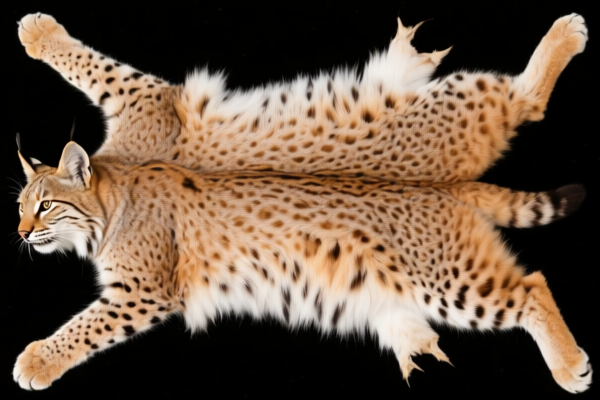
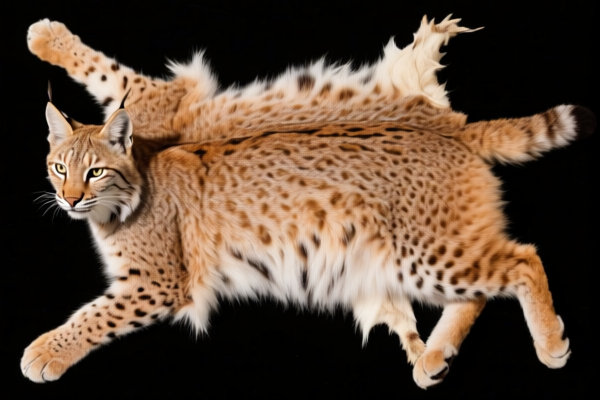
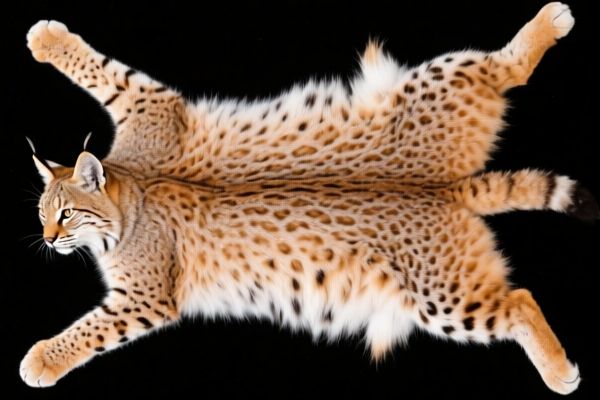
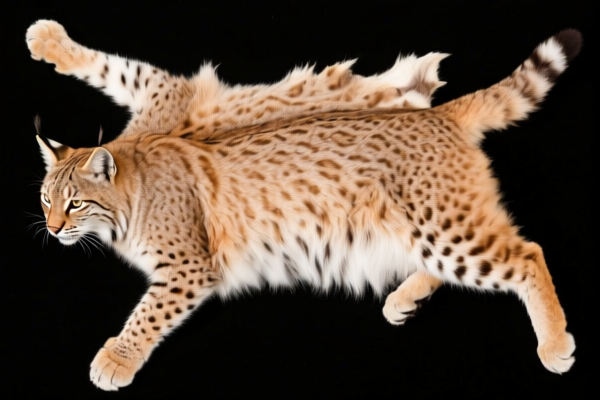
AI分析
🦊 Un-dyed Lynx Skins, Unassembled (Raw Furs)
🌐 HS Code Reference & Customs Clearance Guide | 2026 Latest Tariff Analysis | Professional Customs Strategy
📌 I. Product Definition & Classification: Do You Really Understand "Unassembled Lynx Skins"?
Un-dyed lynx skins, unassembled, represent raw or semi-processed animal fur used in the manufacturing of high-end fashion accessories, coats, or trimmings. In international trade, these goods are classified based on two critical factors:
1. Material: Lynx fur (classified under "other furskin" or specifically by animal type depending on the country's tariff schedule).
2. State of Processing: "Unassembled" indicates the skins are not yet stitched into garments or accessories but remain as individual pelts. "Un-dyed" means they have not undergone significant coloration processes.
⚠️ Key Distinction Points:
- If the skins are raw, salted, or merely dried without coloration → They may fall under Chapter 43 (Prepared Skins) or Chapter 41 (Raw Hides), depending on the specific processing level.
- If the skins are dyed or further processed → They fall under HS Code 4302 (Dyed or Further Processed Furskins).
- "Unassembled" is a critical keyword: it signifies that the goods are not ready-to-wear, but intermediate materials for furriers.
📦 II. HS Code Classification Details (2026 Latest Tariff Authority Comparison)
Based on the provided data for Un-dyed Lynx Skins, Unassembled, the following HS Codes are matched with their respective tax implications and reasoning:
| HS Code | Summary of Match | Total Tax Rate | Tax Breakdown (US Import from China) |
|---|---|---|---|
| 4301.10.00.10 | Matches material (Mink-like fur) & form (Unassembled falls under raw skins category). | 17.5% | Base: 0.0% Add'l: 7.5% Section 301: 10% |
| 4302.11.00.20 | Perfect match: "Unassembled" matches "unassembled", "Dyed" matches "color-treated". Material & form fully align. | 37.1% | Base: 2.1% Add'l: 25.0% Section 301: 10% |
| 4303.90.00.00 | Material is "Mink-like fur" (meets fur article requirements); Form is "Unassembled" (intermediate/primary processed form). | 35.0% | Base: 0.0% Add'l: 25.0% Section 301: 10% |
| 4302.20.90.00 | Full match: Material (Mink/Fur) + Form (Unassembled) + Usage/Craft (Dyed/Color-treated). | 36.7% | Base: 1.7% Add'l: 25.0% Section 301: 10% |
| 4303.10.00.30 | Match Success: "Mink-like fur" matches material requirement; "Unassembled" is an intermediate form for garment/trim production. | 39.0% | Base: 4.0% Add'l: 25.0% Section 301: 10% |
🔍 Critical Note:
- The discrepancy in tax rates (17.5% to 39.0%) depends heavily on whether customs classifies the skins as "Raw/Unprepared" (4301/4303) or "Dyed/Processed" (4302).
- Section 301 Tariffs (10%) are consistently applied to all Chinese-origin fur imports.
- USITC Additional Duties (25%) apply to most fur articles under 4302 and some under 4303.
💰 III. 2026 Latest Tariff Rate Details (Including Surtaxes & Policy Add-ons)
✅ Applicable Country: United States (US)
✅ Origin: China (CN)
✅ Effective Time: From November 10, 2025 (and subsequent imports)
🎯 1. 4301.10.00.10 —— Raw/Unprepared Skins (Lowest Risk)
| Item | Details |
|---|---|
| Base Duty | 0% (ad valorem) |
| USITC Surtax | +7.5% |
| Section 301 Duty | +10% |
| Total Duty | 17.5% |
| Calculation | CIF Value × 17.5% |
| De Minimis Exemption | ❌ Not Eligible (deny_de_minimis) |
| Legal Path | USITC:4301.10.00.10 → Section 301 Footnote |
📌 Explanation:
- This classification suggests the skins are considered raw or minimally processed, not yet "dyed" or "stitched".
- Lowest tariff rate among all options.
- Suitable if the skins are salted, dried, or raw without any dyeing.
🎯 2. 4302.11.00.20 —— Dyed/Processed Skins (High Risk)
| Item | Details |
|---|---|
| Base Duty | 2.1% |
| USITC Surtax | +25.0% |
| Section 301 Duty | +10% |
| Total Duty | 37.1% |
| Calculation | CIF Value × 37.1% |
| De Minimis Exemption | ❌ Not Eligible |
| Legal Path | USITC:4302.11.00.20 → Section 301 Footnote |
📌 Explanation:
- If customs determines the skins are dyed, tanned, or further processed, this code applies.
- Highest tax burden due to the 25% USITC surtax.
- "Unassembled" does not exempt you from this rate if the fur is processed.
🎯 3. 4303.90.00.00 —— Articles of Fur (Intermediate Category)
| Item | Details |
|---|---|
| Base Duty | 0.0% |
| USITC Surtax | +25.0% |
| Section 301 Duty | +10% |
| Total Duty | 35.0% |
| Calculation | CIF Value × 35.0% |
| De Minimis Exemption | ❌ Not Eligible |
| Legal Path | USITC:4303.90.00.00 → Section 301 Footnote |
📌 Explanation:
- Covers "Other articles of fur" including intermediate forms.
- Suitable if the skins are partially processed (e.g., tanned but not dyed).
🎯 4. 4302.20.90.00 —— Dyed/Processed Skins (Other)
| Item | Details |
|---|---|
| Base Duty | 1.7% |
| USITC Surtax | +25.0% |
| Section 301 Duty | +10% |
| Total Duty | 36.7% |
| Calculation | CIF Value × 36.7% |
| De Minimis Exemption | ❌ Not Eligible |
| Legal Path | USITC:4302.20.90.00 → Section 301 Footnote |
📌 Explanation:
- Another code for dyed/processed fur, slightly different sub-category.
- Tax rate similar to4302.11.00.20.
🎯 5. 4303.10.00.30 —— Fur Articles (Garment Parts)
| Item | Details |
|---|---|
| Base Duty | 4.0% |
| USITC Surtax | +25.0% |
| Section 301 Duty | +10% |
| Total Duty | 39.0% |
| Calculation | CIF Value × 39.0% |
| De Minimis Exemption | ❌ Not Eligible |
| Legal Path | USITC:4303.10.00.30 → Section 301 Footnote |
📌 Explanation:
- Highest total tax rate (39.0%).
- Applies if the skins are considered garment parts or accessories.
🛠️ IV. Customs Clearance Practical Advice (Real-World Pitfall Avoidance)
✅ 1. Required Documentation Checklist (None Can Be Omitted)
| Document | Mandatory? | Description |
|---|---|---|
| ✅ Product Specification Sheet | ✔️ | Details: Animal type (Lynx), processing stage (Raw/Dyed), weight, dimensions. |
| ✅ Photos of Skins | ✔️ | Clear images showing texture, color (or lack thereof), and state (raw vs. tanned). |
| ✅ Commercial Invoice | ✔️ | Must explicitly state "Un-dyed, Unassembled Lynx Skins" to avoid misclassification. |
| ✅ Packing List | ✔️ | Show individual skins, not bulk mixed with other goods. |
| ✅ CITES Permit (If Applicable) | ✔️ | Lynx may be protected; verify if CITES documentation is required for import. |
| ✅ Certificate of Origin | ✔️ | For US-China trade, confirm origin to apply Section 301 tariffs correctly. |
✅ 2. Declaration Tips (Key Mantra)
🔥 "Raw is Low, Dyed is High, Unassembled Doesn't Mean Exempt!"
| Scenario | Correct Declaration | Wrong Action |
|---|---|---|
| Raw, Salted, Un-dyed | 4301.10.00.10 (17.5%) |
Misdeclare as "Garment" → 39% |
| Tanned but Un-dyed | 4303.90.00.00 (35.0%) |
Misdeclare as "Raw" → Potential penalty |
| Dyed/Color-treated | 4302.11.00.20 (37.1%) |
Misdeclare as "Raw" → High risk of audit |
| Cut/Trimmed Skins | 4303.10.00.30 (39.0%) |
Misdeclare as "Whole Skins" → Misclassification |
✅ 3. Special Case Handling
| Case | Handling Advice |
|---|---|
| OEM Custom Skins | Provide customer order + design specs to prove "Unassembled" status. |
| Mixed Skins (Lynx + Other) | Declare separately if possible; mixed declarations increase scrutiny. |
| CITES-Protected Species | Ensure CITES permits are attached; otherwise, goods will be seized. |
| Small Sample Shipments | Even small shipments are subject to de minimis exemption denial for fur goods. |
🌍 V. Global Market Clearance Comparison (2026 Latest)
| Country/Region | Recommended HS Code | Tariff Rate | Certification Requirement | Notes |
|---|---|---|---|---|
| 🇺🇸 USA | 4301.10.00.10 to 4303.90.00.00 |
17.5% – 39.0% | CITES (if applicable) | High tariffs due to Section 301 |
| 🇨🇳 China | 4301.10.00.00 |
5% – 10% | No special certs | Lower base tariffs |
| 🇪🇺 EU | 4301.10.00.00 |
0% – 12% | CITES (strict) | EU has strict wildlife protection laws |
| 🇯🇵 Japan | 4301.10.00.00 |
15% – 30% | CITES | High tariffs for fur |
| 🇬🇧 UK | 4301.10.00.00 |
10% – 25% | CITES | Post-Brexit rules apply |
📌 Conclusion:
- USA has the most complex tariff structure due to Section 301 and USITC surtaxes.
- EU and Japan have strict CITES enforcement; ensure proper permits.
- China has lower base tariffs but no surtaxes for domestic trade.
📌 VI. Common Mistakes & Pitfall Avoidance (Lessons Learned)
❌ Mistake 1: Declaring "Unassembled Skins" as "Garments" to avoid surtax
👉 Consequence: Seizure, fines, and blacklisting. Customs will inspect and reclassify.
❌ Mistake 2: Ignoring CITES requirements for Lynx skins
👉 Consequence: Goods destroyed; importer fined. Lynx is a protected species.
❌ Mistake 3: Using "Fur Trim" as the product name for raw skins
👉 Consequence: Misclassification. Raw skins are not "trim" until cut/sewn.
❌ Mistake 4: Assuming "Un-dyed" means "No Tax"
👉 Consequence: Base tariffs still apply. "Un-dyed" only affects the rate (lower for raw).
✅ Correct Approach:
"Raw, Un-dyed, Unassembled Lynx Skins, Salted/Dried, for Manufacturing Use, CITES Compliant, Model: LYNX-RAW-01"
🎯 VII. Conclusion: Professional Declaration, Cost Control, Risk Mitigation!
🎯 Remember the Mantra:
🔹 "Raw is Low (17.5%), Dyed is High (37%+), Unassembled Doesn't Mean Exempt!"
🔹 "CITES is Key for Lynx, Section 301 Adds 10%, Base Tariff is Just the Start!"
📌 Pro Tip:
- If your lynx skins are sourced from non-CITES countries, verify the species classification carefully.
- Pre-ruling (Advance Ruling) is highly recommended for fur imports to US to avoid sudden reclassification and high duties.
📣 Immediate Action:
📞 Contact a professional customs broker + Provide product photos + Apply for HS Code Pre-ruling
🚀 Ensure your lynx skins clear customs smoothly, avoid penalties, and maximize profit!
✨ Professional Customs Clearance Starts with Accurate Classification!
💼 Every Cent of Your Cost Deserves Precise Calculation!
用户评价
关于 HS 编码归类
协调制度(HS)是由世界海关组织(WCO)制定的国际贸易商品分类标准。全球 200 多个国家采用 HS 系统作为海关关税、贸易统计和进出口监管的基础。
每个 HS 编码遵循以下层级结构:
- 章(2 位)——商品大类(例如:第 84 章:机器和机械设备)
- 品目(4 位)——章内的更具体分类
- 子目(6 位)——国际通用细分,所有 WCO 成员国统一使用
- 本国细分(8-10 位)——各国自行扩展的细分编码,如美国 HTSUS 10 位编码
正确的 HS 编码归类对于顺利通关、准确缴纳关税和遵守贸易法规至关重要。错误归类可能导致海关延误、多缴关税或罚款。
从CN进口到US时,适用的关税税率可能包括:
- 最惠国(MFN)税率——适用于 WTO 成员国的标准关税税率
- 普通税率——适用于无贸易协定国家
- 贸易救济关税——附加关税,如 301 条款(反倾销)、232 条款(国家安全)或反补贴税
本页内容仅供参考。如需正式归类,请咨询当地海关或持牌报关代理。