unpeeled coniferous timber 15cm or more
CN → US| HS编码 | 关税税率 | 原产国 | 目的国 | 文档 |
|---|---|---|---|---|
| 4403210130 | 35.0% | CN | US | 官方文档 |
| 4403230135 | 35.0% | CN | US | 官方文档 |
| 4401110000 | 35.0% | CN | US | 官方文档 |
| 4407110052 | 35.0% | CN | US | 官方文档 |
| 4403250164 | 35.0% | CN | US | 官方文档 |
商品图片
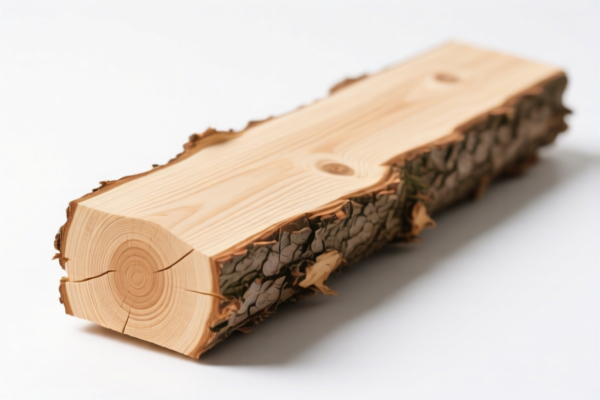
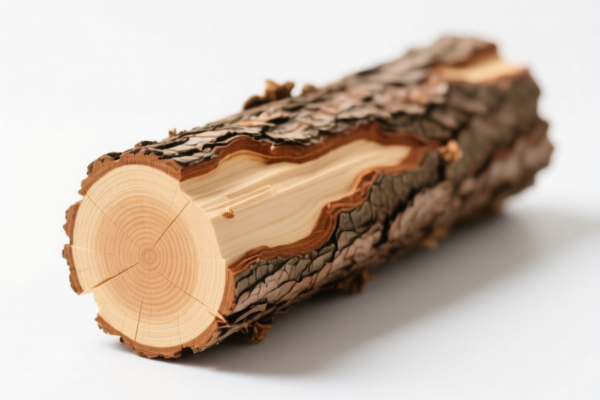
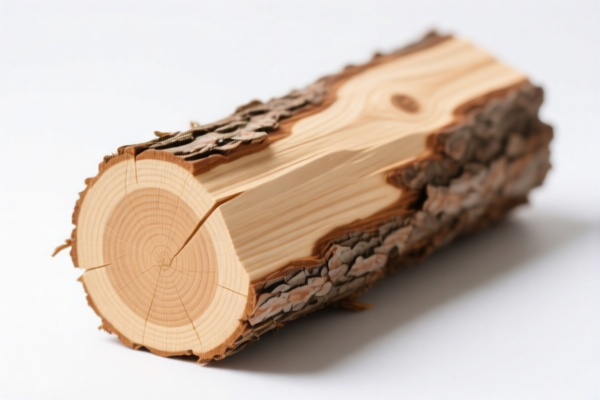
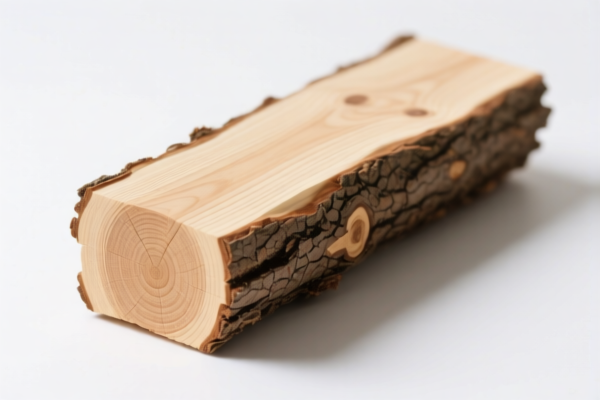
AI分析
🌲 Unpeeled Coniferous Timber (≥ 15cm)
🌐 HS Code Reference & Customs Clearance Guide | 2026 Latest Tariff Analysis | Professional Level Entry Strategy
📌 Part I: Product Definition & Classification: What Exactly is "Unpeeled Coniferous Timber"?
"Unpeeled Coniferous Timber" refers to wood from coniferous trees (such as pine, spruce, fir, cedar) that has not had its bark removed (or has had less than 15% of the bark removed). In international trade, this category is further divided based on processing level and dimensions.
For items 15cm or more in any cross-sectional dimension, the classification depends heavily on whether it is used as fuel, rough construction material, or finished lumber:
Rough Sawlogs/Logs (未剥皮原木/粗制木材):
- Wood that has been felled, debarked slightly (or not at all), but not sawn or planed beyond basic shaping.
- Often used for further processing into lumber or as fuel.
- Key Identifier: Natural shape maintained, minimal processing.
Rough Timber/Lumber (粗方针叶材/粗略方木):
- Wood that has been sawn or chipped to some extent but still retains its rough surface and unpeeled bark.
- Used for construction, packaging, or industrial purposes.
- Key Identifier: Has been cut to specific lengths but not finished.
⚠️ Key Distinction Point:
- If the wood is intact as a log or roughly squared without further refinement → Likely 4403 or 4401 (if for fuel).
- If the wood is sawn but rough and retains bark → Likely 4403 or 4407 depending on exact processing.
- If the wood is intended for burning → Likely 4401.
📦 Part II. HS Code Classification Details (2026 Latest Tariff Authority Comparison)
| HS Code | Product Description | Application Scenario | Bark Status | Processing Level |
|---|---|---|---|---|
4403.21.01.30 |
Unpeeled coniferous timber, ≥ 15cm, meets minimum cross-section requirements | Raw logs, sawlogs, unprocessed wood | ❌ No bark removed | Raw/Unprocessed |
4403.23.01.35 |
Unpeeled coniferous timber, ≥ 15cm, in rough timber form | Rough construction wood, pallet materials | ❌ No bark removed | Roughly shaped |
4401.11.00.00 |
Rough coniferous fuel wood, ≥ 15cm | Biomass fuel, firewood, industrial heating | N/A (Bark irrelevant) | Raw/Fuel-grade |
4407.11.00.52 |
Rough coniferous timber, ≥ 15cm, consistent material & form | Semi-processed lumber, rough planks | ❌ No bark removed | Sawn/Rough |
4403.25.01.64 |
Rough squared coniferous timber, ≥ 15cm, meets cross-section standards | Structural timber, beams | ❌ No bark removed | Squared/Rough |
🔍 Key Reminder:
- All codes listed below carry a total tax rate of 35% due to US trade policies.
- The distinction between4403(Prepared/Unpeeled Timber) and4407(Sawn/Chipped Timber) depends on how much the wood has been processed. If it’s just a log with no bark, it’s4403. If it’s sawn into planks but still rough, it may be4407.
- If the wood is primarily for fuel, it falls under4401, regardless of bark status.
💰 Part III. 2026 Latest Tariff Rate Breakdown (Including Surcharge Tariffs & Policy Add-ons)
✅ Applicable Country: United States (US)
✅ Country of Origin: China (CN)
✅ Effective Date: From November 10, 2025 (including subsequent imports)
🎯 1. 4403.21.01.30 —— Unpeeled Coniferous Timber (Logs/Sawlogs)
| Item | Details |
|---|---|
| Base Tariff | 0.0% (ad valorem) |
| Section 301 Surcharge | +25.0% |
| Section 122 Tariff | +10.0% |
| Total Tax Rate | 35.0% |
| Tax Calculation | CIF Value × 35% |
| De Minimis Exemption | ❌ Not Eligible (deny_de_minimis) |
| Legal Basis Path | Section 301: 8524.11.10.00 Footnote → Section 122: IEEPA:9903.01.24 |
📌 Explanation:
- The 25% surcharge is under the US Trade Act Section 301, targeting Chinese manufactured goods.
- The 10% Section 122 tariff is imposed under the International Emergency Economic Powers Act (IEEPA), specifically targeting timber imports from China.
- Total 35% is a high tariff, requiring pre-planning for cost control.
🎯 2. 4403.23.01.35 —— Unpeeled Coniferous Timber (Rough Timber)
| Item | Details |
|---|---|
| Base Tariff | 0.0% |
| Section 301 Surcharge | +25.0% |
| Section 122 Tariff | +10.0% |
| Total Tax Rate | 35.0% |
| Tax Calculation | CIF × 35% |
| De Minimis Exemption | ❌ Not Eligible |
| Legal Basis Path | Section 301: 8524.91.10.00 Footnote → Section 122: IEEPA:9903.01.24 |
📌 Note:
- Same tariff structure as4403.21.01.30.
- Applies to wood that has been roughly squared or cut but still unpeeled.
- Even if used for construction, if it’s "unpeeled," it’s classified here.
🎯 3. 4401.11.00.00 —— Rough Coniferous Fuel Wood
| Item | Details |
|---|---|
| Base Tariff | 0.0% |
| Section 301 Surcharge | +25.0% |
| Section 122 Tariff | +10.0% |
| Total Tax Rate | 35.0% |
| Tax Calculation | CIF × 35% |
| De Minimis Exemption | ❌ Not Eligible |
| Legal Basis Path | Section 301: 4401.11 Footnote → Section 122: IEEPA:9903.01.24 |
📌 Important:
- This code applies only if the wood is intended for burning (fuel).
- Misclassifying construction timber as fuel wood to avoid higher tariffs can lead to severe penalties.
- Must provide proof of intended use (e.g., biomass power plant contract).
🎯 4. 4407.11.00.52 —— Rough Coniferous Timber (Sawn)
| Item | Details |
|---|---|
| Base Tariff | 0.0% |
| Section 301 Surcharge | +25.0% |
| Section 122 Tariff | +10.0% |
| Total Tax Rate | 35.0% |
| Tax Calculation | CIF × 35% |
| De Minimis Exemption | ❌ Not Eligible |
| Legal Basis Path | Section 301: 4407.11 Footnote → Section 122: IEEPA:9903.01.24 |
📌 Note:
- Applies to wood that has been sawn (e.g., planks, beams) but not planed or finished.
- Still retains bark (unpeeled).
- Often used in construction where finish is not required.
🎯 5. 4403.25.01.64 —— Rough Squared Coniferous Timber
| Item | Details |
|---|---|
| Base Tariff | 0.0% |
| Section 301 Surcharge | +25.0% |
| Section 122 Tariff | +10.0% |
| Total Tax Rate | 35.0% |
| Tax Calculation | CIF × 35% |
| De Minimis Exemption | ❌ Not Eligible |
| Legal Basis Path | Section 301: 4403.25 Footnote → Section 122: IEEPA:9903.01.24 |
📌 Note:
- Specifically for wood that has been squared (cut into rectangular cross-sections) but remains unpeeled.
- Meets minimum cross-sectional size requirements (≥ 15cm).
- Commonly used in structural applications.
🛠️ Part IV. Customs Clearance Practical Advice (Battle-Tested Pitfall Avoidance Guide)
✅ 1. Required Documentation Checklist (None Can Be Missing)
| Document | Required | Notes |
|---|---|---|
| ✅ Product Specification Sheet | ✔️ | Include dimensions, species, moisture content, intended use |
| ✅ Photos of Goods | ✔️ | Clear images showing bark status, cross-section, labels |
| ✅ Bill of Lading/Packing List | ✔️ | Must match commercial invoice exactly |
| ✅ Commercial Invoice | ✔️ | Clearly state "Unpeeled Coniferous Timber" and HS Code |
| ✅ Certificate of Origin (CO) | ✔️ | If not from China, may reduce tariffs |
| ✅ Phytosanitary Certificate | ✔️ | Required for all wood products to prevent pests |
| ✅ Use Declaration | ✔️ | Especially for 4401 (fuel wood) to justify classification |
✅ 2. Declaration Tips (Key Mantras)
🔥 "Bark on, bark off? Check the shape! Fuel or build? State your goal!"
| Scenario | Correct Declaration | Wrong Practice |
|---|---|---|
| Raw logs with no bark removed | 4403.21.01.30 |
Misdeclare as 4407 → 35% vs 35% (same, but risk of audit) |
| Squared timber, unpeeled | 4403.25.01.64 |
Declare as 4407 → Possible penalty if not sawn |
| Wood for burning | 4401.11.00.00 |
Declare as 4403 → Penalties for misclassification |
| Rough planks, unpeeled | 4407.11.00.52 |
Declare as 4403 → Risk of duty adjustment |
✅ 3. Special Cases Handling
| Scenario | Handling Advice |
|---|---|
| Mixed Shipments (some peeled, some unpeeled) | Separate declarations; unpeeled part under 4403/4407, peeled under 4407 or 4409 |
| OEM Custom Sizes | Provide customer order + design specs to avoid "non-standard" flags |
| Used for Furniture | Still 4403/4407 if unpeeled; further processing doesn’t change HS at import |
| Wood for Outdoor Structures | Emphasize "unpeeled" and "rough" in description to justify 4403/4407 |
🌍 Part V. Global Market Comparison (2026 Latest)
| Country/Region | Recommended HS Code | Tariff | Certification | Notes |
|---|---|---|---|---|
| 🇺🇸 USA | 4403.21.01.30 / 4407.11.00.52 |
35% (China origin) | Phytosanitary + CO | High tariff due to Section 301 & 122 |
| 🇨🇳 China | 4403.21.01.30 |
0-5% | None | No surcharges |
| 🇪🇺 EU | 4403.21.00 |
0% (if FSC certified) | FSC/PEFC | No surcharges |
| 🇬🇧 UK | 4403.21.00 |
0% | FSC/PEFC | No surcharges |
| 🇦🇺 Australia | 4403.21.00 |
5% | IPPC | No surcharges |
📌 Conclusion:
- The US is the only major market imposing high surcharges on Chinese timber.
- Chinese-origin unpeeled timber faces a 35% total tariff, making it high-cost for US importers.
- Consider sourcing from non-China origins (e.g., Russia, Canada) if possible to avoid surcharges.
📌 Part VI. Common Errors & Pitfall Guide (Lessons Learned the Hard Way)
❌ Mistake 1: Declaring fuel wood as construction timber
👉 Consequence: Audit, penalties, or seizure if use cannot be proven.
❌ Mistake 2: Not declaring bark status
👉 Consequence: Customs may classify as "peeled," leading to wrong HS code and potential duty adjustment.
❌ Mistake 3: Ignoring Phytosanitary Requirements
👉 Consequence: Goods held at port, destroyed, or returned if pest risk is detected.
❌ Mistake 4: Assuming "Unpeeled" means "No Processing"
👉 Consequence: If wood is sawn, it may fall under 4407, not 4403. Misclassification leads to delays.
✅ Correct Practice:
"Unpeeled Coniferous Timber, Pine Species, 15cm+ Cross-Section, No Bark Removal, Intended for Construction, Phytosanitary Certificate Attached, CO Issued by Chinese Customs"
🎯 Part VII. Conclusion: Precise Classification Saves Time & Money!
🎯 Remember the Mantra:
🔹 "Bark on? Rough? Check the shape! Fuel or build? State your goal! 35% in the US, think twice!"
🔹 "HS Code determines cost, 35% tariff is steep, declare accurately, avoid the heap!"
📌 Pro Tip:
If your timber is originating from Russia, Canada, or New Zealand, you may avoid IEEPA/Section 301 surcharges, reducing the tariff to 0-5%.
Recommend applying for an Advance Ruling before shipment to confirm HS Code and avoid customs delays.
📣 Take Action Now:
📞 Contact a professional customs broker + Provide product photos + Apply for HS Code Advance Ruling
🚀 Ensure your timber clears customs smoothly, efficiently, and profitably!
✨ Professional clearance starts with precise classification!
💼 Every dollar of cost deserves to be calculated accurately!
用户评价
关于 HS 编码归类
协调制度(HS)是由世界海关组织(WCO)制定的国际贸易商品分类标准。全球 200 多个国家采用 HS 系统作为海关关税、贸易统计和进出口监管的基础。
每个 HS 编码遵循以下层级结构:
- 章(2 位)——商品大类(例如:第 84 章:机器和机械设备)
- 品目(4 位)——章内的更具体分类
- 子目(6 位)——国际通用细分,所有 WCO 成员国统一使用
- 本国细分(8-10 位)——各国自行扩展的细分编码,如美国 HTSUS 10 位编码
正确的 HS 编码归类对于顺利通关、准确缴纳关税和遵守贸易法规至关重要。错误归类可能导致海关延误、多缴关税或罚款。
从CN进口到US时,适用的关税税率可能包括:
- 最惠国(MFN)税率——适用于 WTO 成员国的标准关税税率
- 普通税率——适用于无贸易协定国家
- 贸易救济关税——附加关税,如 301 条款(反倾销)、232 条款(国家安全)或反补贴税
本页内容仅供参考。如需正式归类,请咨询当地海关或持牌报关代理。