unsaturated polyester resin translucent
CN → US| HS编码 | 关税税率 | 原产国 | 目的国 | 文档 |
|---|---|---|---|---|
| 3907915000 | 41.5% | CN | US | 官方文档 |
| 3907915000 | 41.5% | CN | US | 官方文档 |
| 3907914000 | 40.8% | CN | US | 官方文档 |
商品图片
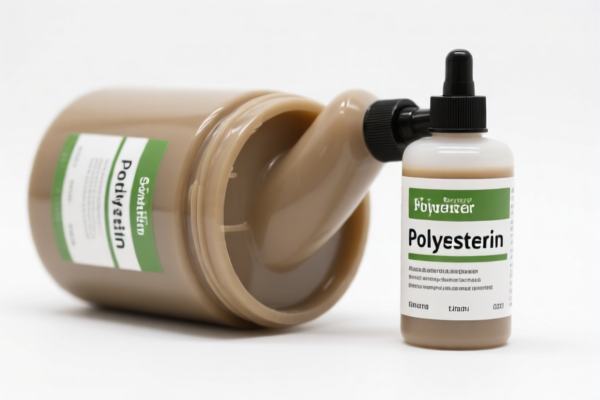
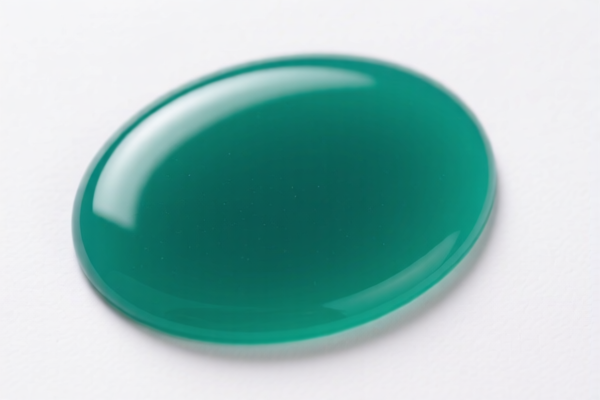
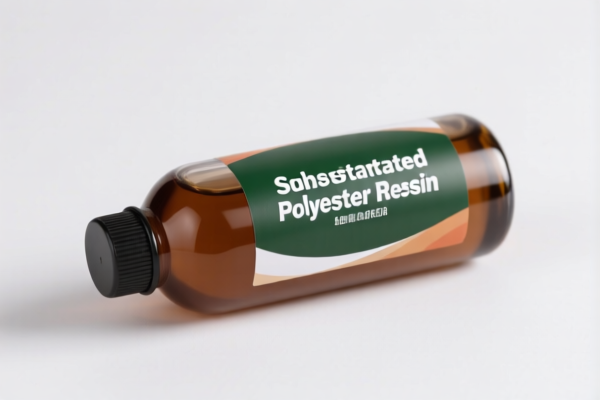
AI分析
🧪 Unsaturated Polyester Resin (Translucent) | HS Code Classification & US Customs Clearance Guide
🌐 HS Code Reference & Customs Clearance Strategy | 2026 Latest Tariff Analysis | Professional Compliance Guide
📌 Part 1: Product Definition & Classification – Do You Truly Understand "Unsaturated Polyester Resin"?
Unsaturated Polyester Resin (UPR) is a thermosetting polymer widely used in fiberglass reinforcement, marine industries, automotive parts, and construction materials. In international trade, it is strictly classified based on its physical form and chemical composition.
Key Distinction:
- Primary Forms (Resin Raw Materials): Liquid or solid resin in bulk, unmixed with fillers or catalysts at the time of import. → Classified under Chapter 39.
- Finished Products/Composite Materials: Pre-impregnated fabrics (prepregs) or cured parts. → Classified under different chapters (e.g., 3917, 3926).
⚠️ Critical Classification Point:
The input product is "Unsaturated Polyester Resin, Translucent", which is a raw resin material in its primary form. It does not contain curing agents, fillers, or reinforce fibers at this stage. Therefore, it falls squarely under HS Code 3907.
📦 Part 2: HS Code Classification Details (Based on Provided Data)
According to the provided data, three specific HS codes are relevant, with subtle differences in tax rates and descriptions.
| HS Code | Product Description | Tax Rate (Total) | Tax Breakdown |
|---|---|---|---|
3907.91.50.00 |
Unsaturated polyester resin (translucent), material matches UPR category, form is resin raw material. | 41.5% | Base Tariff: 6.5% Section 301 Tariff: 25.0% Section 122 Tariff: 10% |
3907.91.50.00 |
Unsaturated polyester resin (translucent), material and code requirements match completely, form is primary shape resin. | 41.5% | Base Tariff: 6.5% Section 301 Tariff: 25.0% Section 122 Tariff: 10% |
3907.91.40.00 |
Unsaturated polyester resin (translucent), material matches classification, form is "other" (catch-all category), no conflict. | 40.8% | Base Tariff: 5.8% Section 301 Tariff: 25.0% Section 122 Tariff: 10% |
🔍 Key Insight:
- Codes3907.91.50.00and3907.91.40.00are both under heading 3907 (Polyacetals, other polyethers, and epoxy resins; polycarbonizers, alkyd resins, polyallyl esters, and other polyesters).
- The difference lies in the sub-heading specificity:
-.50.00: Likely refers to a specific category of unsaturated polyesters (e.g., certain physical states or applications).
-.40.00: Referenced as a "catch-all" for other forms not specified in.50, with a slightly lower base tariff (5.8% vs. 6.5%).
- Both codes incur the same Section 301 (25%) and Section 122 (10%) tariffs, leading to total duties of 41.5% and 40.8% respectively.
💰 Part 3: 2026 US Tariff Rate Detailed Explanation
✅ Applicable Country: United States (US)
✅ Origin: China (CN) (Implied by Section 301 & 122 tariffs)
✅ Effective Date: Current applicable rates (Section 301 and 122 are active)
🎯 1. 3907.91.50.00 — Unsaturated Polyester Resin (Primary Form)
| Item | Content |
|---|---|
| Base Tariff Rate | 6.5% (ad valorem) |
| Section 301 Tariff | +25.0% (Targeting Chinese imports under US Trade Act Section 301) |
| Section 122 Tariff | +10.0% (Additional duty on specific Chinese goods) |
| Total Tariff Rate | 41.5% |
| Tax Calculation | CIF Value × 41.5% |
| De Minimis Exemption | ❌ Not Eligible (Deny de minimis; Section 301 and 122 tariffs apply even to small shipments) |
| Legal Authority Path | HTSUS:3907.91.50.00 → USITC Footnote 9903.88.01 (Section 301) → Section 122 Authority |
📌 Explanation:
- The 6.5% base rate is the standard Most Favored Nation (MFN) duty for this category.
- The 25% Section 301 tariff is a significant penalty on Chinese-made polyester resins, reflecting ongoing trade tensions.
- The 10% Section 122 tariff adds an additional layer of cost.
- Total 41.5% is a high-cost item. Importers must factor this into their landed cost calculations.
🎯 2. 3907.91.40.00 — Unsaturated Polyester Resin (Other/Catch-All)
| Item | Content |
|---|---|
| Base Tariff Rate | 5.8% (ad valorem) |
| Section 301 Tariff | +25.0% |
| Section 122 Tariff | +10.0% |
| Total Tariff Rate | 40.8% |
| Tax Calculation | CIF Value × 40.8% |
| De Minimis Exemption | ❌ Not Eligible |
| Legal Authority Path | HTSUS:3907.91.40.00 → USITC Footnote 9903.88.01 → Section 122 Authority |
📌 Note:
- The 0.7% difference (41.5% vs. 40.8%) comes solely from the base tariff (6.5% vs. 5.8%).
- Despite the lower rate, the Section 301 and 122 tariffs remain unchanged.
- Use3907.91.40.00only if the resin does not fit the specific criteria for.50.00(e.g., different physical form or application scope). Otherwise,.50.00is more precise for "primary shape" resins.
🛠️ Part 4: Customs Clearance Practical Advice (Pitfall Avoidance Guide)
✅ 1. Required Documentation Checklist
| Document | Must Provide | Description |
|---|---|---|
| ✅ Product Specification Sheet | ✔️ | Must clearly state "Unsaturated Polyester Resin," physical form (liquid/solid), color (translucent), and chemical composition. |
| ✅ MSDS (Material Safety Data Sheet) | ✔️ | Critical for hazardous materials classification. UPR often contains styrene (flammable). |
| ✅ Commercial Invoice | ✔️ | Must accurately describe the product as "Raw Resin," not "Finished Plastic" or "Composite." |
| ✅ Packing List | ✔️ | Detail weight, volume, and packaging type (drums, totes). |
| ✅ Certificate of Origin (CO) | ✔️ | Required to determine applicability of Section 301/122 tariffs. |
| ✅ Customs Bond | ✔️ | Surety bond is mandatory for commercial imports. |
✅ 2. Declaration Tips (Key Mantra)
🔥 "Raw Form, Not Finished; Describe Precisely, Avoid Penalty!"
| Scenario | Correct Declaration | Incorrect Declaration |
|---|---|---|
| Pure Resin in Drums | 3907.91.50.00 or 3907.91.40.00 |
"Plastic Pellets" → Wrong chapter, potential penalties |
| Resin Mixed with Catalyst | Still Primary Form? | If mixed, it may be classified differently (e.g., 3907.99). Clarify if catalyst is pre-mixed. |
| Pre-impregnated Fabric | 3917.32 or 3926.90 |
Do not use UPR code for fiberglass mats. |
| Styrene Content High | Declare as Flammable Hazardous Material | Failure to declare hazardous nature → Seizure/Fines |
✅ 3. Special Considerations
| Situation | Handling Advice |
|---|---|
| Styrene Emissions | UPR often contains 30-40% styrene. Ensure proper labeling as Class 3 Flammable Liquid. |
| Pre-mixed vs. Raw | If the product includes curing agents (peroxides) or accelerators at import, it may no longer be "primary form." Consult a customs broker. |
| Origin Verification | Ensure the Country of Origin is clearly stated. If assembled in Vietnam but resin made in China, Section 301 may still apply if substantial transformation didn't occur. |
| Section 301 Exclusion | Check if the specific HS code had previous exclusions. As of 2026, most UPR categories remain subject to 25% tariffs. |
🌍 Part 5: Global Market Comparison (2026 Latest)
| Country/Region | Recommended HS Code | Tariff Rate | Certification Requirements | Notes |
|---|---|---|---|---|
| 🇺🇸 USA | 3907.91.50.00 |
41.5% | None specific for resin, but hazmat rules apply | High tariffs due to Section 301/122 |
| 🇨🇳 China | 3907.91.50.00 |
6.5% | None | No additional Section 301/122 |
| 🇪🇺 EU | 3907.91.50 |
5.3% | REACH Compliance | No Section 301 equivalent |
| 🇯🇵 Japan | 3907.91.50 |
5.0% | JIS Standards | Low base tariff |
📌 Conclusion:
- The USA imposes the highest cost due to the叠加 (stacked) Section 301 and 122 tariffs.
- Importers must calculate the landed cost carefully, as the 41.5% duty significantly impacts profitability.
- Consider supply chain diversification (e.g., sourcing from non-China origins) if eligible for lower base rates without Section 301.
📌 Part 6: Common Errors & Pitfalls (Lessons Learned)
❌ Error 1: Declaring UPR as "Plastic Granules"
👉 Consequence: Wrong HS code, potential seizure, and retroactive duty adjustment.
❌ Error 2: Ignoring Hazardous Material Regulations
👉 Consequence: UPR with styrene is flammable. Failure to declare as hazmat leads to denial of entry or fines.
❌ Error 3: Assuming "Translucent" Changes Classification
👉 Consequence: Physical appearance (translucent vs. opaque) does not change the HS code. Focus on chemical composition and form.
❌ Error 4: Mixing Up Raw Resin with Cured Parts
👉 Consequence: Cured parts fall under 3926.90 (Other plastic articles). Declaring cured parts as raw resin is fraudulent if done intentionally.
✅ Correct Practice:
"Unsaturated Polyester Resin, Translucent, Primary Form, Liquid, 40% Styrene Content, UN1263, Class 3 Flammable Liquid"
🎯 Part 7: Conclusion – Professional Declaration, Cost Control
🎯 Remember the Mantra:
🔹 "Raw Form, Not Finished; Declare Precisely, Avoid Penalty!"
🔹 "HS Code Determines Duty; 41.5% is High, Plan Ahead!"
📌 Tips:
- If your resin is originally from China, expect 41.5% duty.
- If sourced from Vietnam, Thailand, or Malaysia, verify if Section 301 still applies (usually no, if substantial transformation occurred).
- Always pre-classify with a customs broker if the product contains additives.
📣 Immediate Action:
📞 Contact a licensed customs broker + Provide MSDS + Apply for Advance Ruling if unsure.
🚀 Ensure your shipment clears customs smoothly, avoids delays, and manages costs effectively!
✨ Professional customs clearance starts with accurate classification!
💼 Every dollar of duty matters in today’s trade environment!
用户评价
关于 HS 编码归类
协调制度(HS)是由世界海关组织(WCO)制定的国际贸易商品分类标准。全球 200 多个国家采用 HS 系统作为海关关税、贸易统计和进出口监管的基础。
每个 HS 编码遵循以下层级结构:
- 章(2 位)——商品大类(例如:第 84 章:机器和机械设备)
- 品目(4 位)——章内的更具体分类
- 子目(6 位)——国际通用细分,所有 WCO 成员国统一使用
- 本国细分(8-10 位)——各国自行扩展的细分编码,如美国 HTSUS 10 位编码
正确的 HS 编码归类对于顺利通关、准确缴纳关税和遵守贸易法规至关重要。错误归类可能导致海关延误、多缴关税或罚款。
从CN进口到US时,适用的关税税率可能包括:
- 最惠国(MFN)税率——适用于 WTO 成员国的标准关税税率
- 普通税率——适用于无贸易协定国家
- 贸易救济关税——附加关税,如 301 条款(反倾销)、232 条款(国家安全)或反补贴税
本页内容仅供参考。如需正式归类,请咨询当地海关或持牌报关代理。