uv stabilized petroleum resin elastomer
CN → US| HS编码 | 关税税率 | 原产国 | 目的国 | 文档 |
|---|---|---|---|---|
| 3824994900 | 41.5% | CN | US | 官方文档 |
| 3913902090 | 40.8% | CN | US | 官方文档 |
| 3913901000 | 35.0% | CN | US | 官方文档 |
| 3824995500 | 38.7% | CN | US | 官方文档 |
| 3911901000 | 35.0% | CN | US | 官方文档 |
商品图片
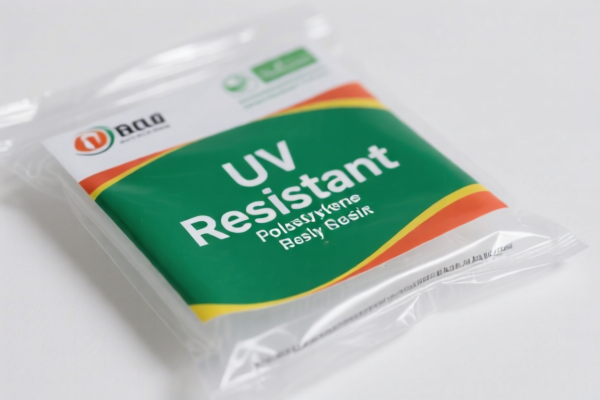
AI分析
🧪 UV Stabilized Petroleum Resin Elastomer (USPRE)
🌐 HS Code Reference & Customs Clearance Guide | 2026 Latest Tariff Analysis | Professional Clearance Strategy
📌 I. Product Definition & Classification: What is "UV Stabilized Petroleum Resin Elastomer"?
UV Stabilized Petroleum Resin Elastomer is a specialized chemical compound used primarily in the rubber, plastic, and adhesive industries. Its core characteristics are: 1. Base Material: Derived from petroleum (hydrocarbon-based). 2. Physical Form: Functions as an elastomer (elastic body) or a resinous additive that modifies elasticity. 3. Additive: Contains UV stabilizers to prevent degradation under sunlight, extending the lifespan of end-products like tires, seals, and outdoor plastics.
In international trade, classification depends heavily on whether the product is viewed as a chemical mixture/resin or as a modified natural polymer/elastomer. The following HS Codes represent the most accurate classifications based on 2026 tariff rules.
📦 II. HS Code Classification Details (2026 Latest Tariff Authority)
| HS Code | Product Description | Key Characteristics | Tax Rate (Total) |
|---|---|---|---|
3824.99.49.00 |
Miscellaneous Chemical Products Low-molecular-weight petroleum resin elastomer, hydrocarbon-based material derived from petroleum. |
✅ Material: Hydrocarbons ✅ Source: Petroleum ✅ Form: Low-molecular-weight resin |
41.5% |
3913.90.20.90 |
Miscellaneous Polymers Low-molecular-weight petroleum resin elastomer, natural polymers or modified derivatives, elastomeric form. |
✅ Material: Natural polymer/Modified derivative ✅ Form: Elastomer ✅ Nature: Chemical derivative |
40.8% |
3913.90.10.00 |
Natural Rubber & Derivatives Low-molecular-weight petroleum resin elastomer, natural rubber or chemical derivatives of polymers, primary form elastomer. |
✅ Material: Natural rubber/Chemical derivative ✅ Form: Primary form elastomer ✅ Nature: Rubber-like |
35.0% |
3824.99.55.00 |
Halogenated Hydrocarbon Mixtures Resin-like chemicals, halogenated hydrocarbon mixtures/other chemical products, chemical preparation/mixture. |
✅ Material: Halogenated hydrocarbon mix ✅ Form: Chemical preparation ✅ Nature: Mixture |
38.7% |
3911.90.10.00 |
Petroleum Resins & Derivatives Petroleum resin elastomer plasticizer, material is petroleum resin, attribute is elastomeric. |
✅ Material: Pure Petroleum Resin ✅ Function: Plasticizer ✅ Attribute: Elastomeric |
35.0% |
🔍 Key Distinction Logic: - If the product is primarily a petroleum-derived hydrocarbon mixture without significant natural rubber content →
3824.99.49.00is the safest general classification. - If it is explicitly a modified natural polymer or acts as a chemical derivative of rubber →3913.90.20.90or3913.90.10.00may apply. - If it is a plasticizer specifically made from petroleum resin →3911.90.10.00offers the lowest base duty but requires proof of "plasticizer" function. - If it contains halogenated compounds for UV stabilization →3824.99.55.00is technically precise for halogenated mixtures.
💰 III. 2026 Latest Tariff Rate Breakdown (Including Surcharges & Policy Add-ons)
✅ Applicable Country: United States (US)
✅ Country of Origin: China (CN)
✅ Effective Date: 2025-11-10 onwards (including subsequent imports)
🎯 1. 3824.99.49.00 —— Miscellaneous Chemical Products (Petroleum Hydrocarbon)
| Item | Detail |
|---|---|
| Base Duty Rate | 6.5% (ad valorem) |
| Section 301 Surcharge | +25.0% (Added Tariff) |
| Section 122 Tariff | +10.0% (Specific 122 Clause Tariff) |
| Total Effective Rate | 41.5% |
| Calculation | CIF Value × 41.5% |
| De Minimis Exemption | ❌ Not Eligible (deny_de_minimis) |
| Legal Basis Path | USITC:3824.99.49.00 → Section 301: +25% → Section 122: +10% |
📌 Explanation: - This is the most common classification for general petroleum-based resins. - The 25% Section 301 tariff applies to most Chinese-origin chemical products. - The 10% Section 122 tariff is a specific additional duty often applied to strategic chemicals. - Total burden: 41.5%.
🎯 2. 3913.90.20.90 —— Polymers (Natural Polymer Derivatives)
| Item | Detail |
|---|---|
| Base Duty Rate | 5.8% (ad valorem) |
| Section 301 Surcharge | +25.0% (Added Tariff) |
| Section 122 Tariff | +10.0% (Specific 122 Clause Tariff) |
| Total Effective Rate | 40.8% |
| Calculation | CIF Value × 40.8% |
| De Minimis Exemption | ❌ Not Eligible |
| Legal Basis Path | USITC:3913.90.20.90 → Section 301: +25% → Section 122: +10% |
📌 Note: - Slightly lower than
3824due to a lower base duty (5.8% vs 6.5%). - Requires strong documentation proving the product is a natural polymer derivative or modified rubber.
🎯 3. 3913.90.10.00 —— Natural Rubber & Derivatives (Primary Form)
| Item | Detail |
|---|---|
| Base Duty Rate | 0.0% (ad valorem) |
| Section 301 Surcharge | +25.0% (Added Tariff) |
| Section 122 Tariff | +10.0% (Specific 122 Clause Tariff) |
| Total Effective Rate | 35.0% |
| Calculation | CIF Value × 35.0% |
| De Minimis Exemption | ❌ Not Eligible |
| Legal Basis Path | USITC:3913.90.10.00 → Section 301: +25% → Section 122: +10% |
📌 Key Advantage: - Lowest Total Tax Rate (35.0%) among all options. - High Risk/High Reward: Requires proving the product is a primary form elastomer derived from natural rubber or its chemical derivatives. If Customs disagrees, you face penalties.
🎯 4. 3824.99.55.00 —— Halogenated Hydrocarbon Mixtures
| Item | Detail |
|---|---|
| Base Duty Rate | 3.7% (ad valorem) |
| Section 301 Surcharge | +25.0% (Added Tariff) |
| Section 122 Tariff | +10.0% (Specific 122 Clause Tariff) |
| Total Effective Rate | 38.7% |
| Calculation | CIF Value × 38.7% |
| De Minimis Exemption | ❌ Not Eligible |
| Legal Basis Path | USITC:3824.99.55.00 → Section 301: +25% → Section 122: +10% |
📌 Note: - Applies if the UV stabilization involves halogenated compounds (e.g., chlorinated or brominated stabilizers). - Intermediate tax rate.
🎯 5. 3911.90.10.00 —— Petroleum Resins & Derivatives
| Item | Detail |
|---|---|
| Base Duty Rate | 0.0% (ad valorem) |
| Section 301 Surcharge | +25.0% (Added Tariff) |
| Section 122 Tariff | +10.0% (Specific 122 Clause Tariff) |
| Total Effective Rate | 35.0% |
| Calculation | CIF Value × 35.0% |
| De Minimis Exemption | ❌ Not Eligible |
| Legal Basis Path | USITC:3911.90.10.00 → Section 301: +25% → Section 122: +10% |
📌 Key Advantage: - Tied for Lowest Rate (35.0%). - Must prove the product is strictly a petroleum resin used as a plasticizer or elastomer modifier. - Avoids the "chemical mixture" classification of
3824, which has higher base duties.
🛠️ IV. Customs Clearance Practical Advice (Avoiding Pitfalls)
✅ 1. Documentation Checklist (All Items Mandatory)
| Document | Required | Explanation |
|---|---|---|
| ✅ Technical Data Sheet (TDS) | ✔️ | Must specify molecular weight, base material (petroleum/natural), and UV stabilizer type. |
| ✅ Certificate of Origin (CO) | ✔️ | Must clearly state "Made in China". |
| ✅ Commercial Invoice | ✔️ | Use precise description: "UV Stabilized Petroleum Resin Elastomer, HS Code XXXX, Not for De Minimis". |
| ✅ Formula/Composition Report | ✔️ | Crucial: To justify HS Code 3911 (0% base) vs 3824 (6.5% base). Show % of petroleum resin vs other chemicals. |
| ✅ MSDS (Safety Data Sheet) | ✔️ | Confirms hazardous nature and chemical composition. |
| ✅ Application Statement | ✔️ | Explain end-use: "Used as a plasticizer in rubber tires, not as a standalone product". |
✅ 2. Classification Strategy (Critical Tips)
🔥 "Material First, Function Second, Document Everything!"
| Scenario | Recommended HS Code | Reason |
|---|---|---|
| General Petroleum Resin | 3824.99.49.00 |
Safest if composition is mixed hydrocarbons. Higher base duty but less scrutiny on "elastomer" definition. |
| Proven Plasticizer | 3911.90.10.00 |
Best for Cost (35%). Must prove it is a petroleum resin used to plasticize. |
| Rubber-Like Elastomer | 3913.90.10.00 |
Best for Cost (35%). Must prove it is a primary form elastomer/derivative. |
| Halogen-Based UV Stabilizer | 3824.99.55.00 |
Use only if UV stabilizer is halogenated. |
⚠️ Warning: - Do NOT declare as "Plastic" or "Rubber" generically. - Do NOT use
9013or8528codes (incorrect). - If you claim3911.90.10.00but Customs finds it is a general chemical mixture, you will face back taxes + penalties.
✅ 3. Special Cases
| Situation | Handling Advice |
|---|---|
| OEM Custom Resin | Provide client contract + formula. Proves it is a "specialty chemical" not a generic commodity. |
| Blended with Natural Rubber | If >50% natural rubber derivative, try 3913.90.10.00. If mostly synthetic, stick to 3911 or 3824. |
| Small Quantity (< $800) | ❌ De Minimis Exemption Denied. Section 301 and 122 tariffs apply regardless of value. |
| Transshipment from Vietnam/Mexico | ✅ Opportunity: If reprocessed to change HS Code or origin, may avoid US tariffs. Requires substantial transformation. |
🌍 V. Global Market Comparison (2026 Update)
| Country/Region | Recommended HS Code | Total Tax (China Origin) | Certification | Notes |
|---|---|---|---|---|
| 🇺🇸 USA | 3911.90.10.00 |
35.0% | TSCA Compliance | Highest burden due to 301+122 tariffs. |
| 🇨🇳 China | 3911.90.10.00 |
0% - 5% | CCC (if applicable) | No additional tariffs. |
| 🇪🇺 EU | 3911.90.10.00 |
0% - 6.5% | REACH + SVHC | No Section 301. Lower risk. |
| 🇬🇧 UK | 3911.90.10.00 |
0% - 6.5% | UKCA | Post-Brexit rules apply. |
| 🇮🇳 India | 3911.90.10.00 |
10% - 15% | BIS Certification | Higher base duties than US. |
📌 Conclusion: - USA is the most expensive market due to叠加 tariffs (301 + 122). - EU/UK offer better duty rates but have strict REACH/SVHC chemical regulations. - Optimization Strategy: If selling to the US, ensure the HS Code is as low as possible (
3911or3913) to save 6.5-16.5% compared to general chemicals.
📌 VI. Common Mistakes & Pitfalls (Lessons Learned)
❌ Mistake 1: Classifying as 3901 (Plastics) instead of 3911 (Resins).
👉 Result: Misclassification. 3901 is for primary plastics, while 3911 is for resins/polymers. Penalty for false declaration.
❌ Mistake 2: Ignoring Section 122 Tariff. 👉 Result: Under-declaration. Customs will assess an additional 10% on top of the 25% Section 301.
❌ Mistake 3: Claiming "De Minimis" Exemption for shipments <$800.
👉 Result: Seizure. Items under HS 3824 and 3911 from China are explicitly excluded from Section 321 de minimis relief.
❌ Mistake 4: Using "Petroleum Resin" without specifying "UV Stabilized". 👉 Result: Ambiguity. Must disclose UV stabilizers if they change the chemical nature (e.g., halogenated).
✅ Correct Practice:
"UV Stabilized Petroleum Resin Elastomer, Primary Form, Used as Plasticizer, TSCA Compliant, HS 3911.90.10.00, Origin: China"
🎯 VII. Conclusion: Professional Declaration, Cost Efficiency
🎯 Remember the Mantra:
🔹 "Petroleum Resin = 3911 (35%), General Chemical = 3824 (41.5%)." 🔹 "Section 301 (25%) + Section 122 (10%) = 35% Minimum Tax." 🔹 "De Minimis is Dead for Chinese Chemicals."
📌 Pro Tip:
If your product can be proven to be a natural rubber derivative, use 3913.90.10.00 (35%). If it is a pure petroleum resin plasticizer, use 3911.90.10.00 (35%). Both are 16.5% cheaper than the general 3824 classification.
📣 Immediate Action Required:
📞 Contact your customs broker immediately. 📄 Provide TDS & Formula. 🚀 Apply for Advance Ruling if importing large volumes to mitigate risk.
✨ Precision in Classification Saves Thousands! 💼 Every Percentage Point Matters in 2026 Trade.
用户评价
关于 HS 编码归类
协调制度(HS)是由世界海关组织(WCO)制定的国际贸易商品分类标准。全球 200 多个国家采用 HS 系统作为海关关税、贸易统计和进出口监管的基础。
每个 HS 编码遵循以下层级结构:
- 章(2 位)——商品大类(例如:第 84 章:机器和机械设备)
- 品目(4 位)——章内的更具体分类
- 子目(6 位)——国际通用细分,所有 WCO 成员国统一使用
- 本国细分(8-10 位)——各国自行扩展的细分编码,如美国 HTSUS 10 位编码
正确的 HS 编码归类对于顺利通关、准确缴纳关税和遵守贸易法规至关重要。错误归类可能导致海关延误、多缴关税或罚款。
从CN进口到US时,适用的关税税率可能包括:
- 最惠国(MFN)税率——适用于 WTO 成员国的标准关税税率
- 普通税率——适用于无贸易协定国家
- 贸易救济关税——附加关税,如 301 条款(反倾销)、232 条款(国家安全)或反补贴税
本页内容仅供参考。如需正式归类,请咨询当地海关或持牌报关代理。