violin model
CN → US| HS编码 | 关税税率 | 原产国 | 目的国 | 文档 |
|---|---|---|---|---|
| 9503000073 | 10.0% | CN | US | 官方文档 |
| 9503000071 | 10.0% | CN | US | 官方文档 |
| 9202100000 | 13.2% | CN | US | 官方文档 |
| 9202906000 | 14.6% | CN | US | 官方文档 |
商品图片


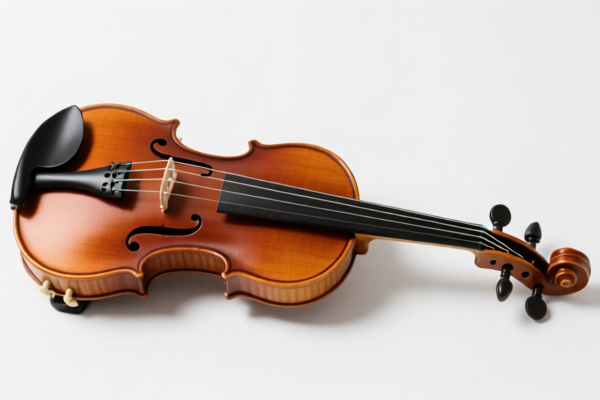
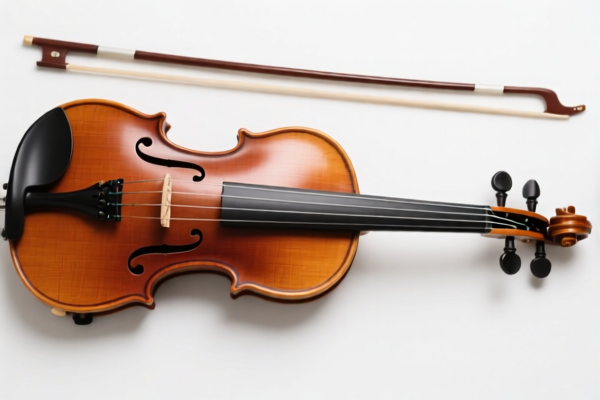
AI分析
🎻 Violin Model (String Musical Instruments)
🌐 HS Code Reference & Customs Clearance Guide | 2026 Latest Tariff Analysis | Professional Strategy
📌 I. Product Definition & Classification: Do You Truly Understand a "Violin"?
A Violin Model generally refers to a string musical instrument played with a bow. In international trade, the classification depends heavily on the specific construction and the method of sound production/play. While "Violin" is the common name, customs classification strictly follows the HS Code nomenclature, which divides string instruments based on how they are played and their technical structure.
Key Distinctions in Classification: 1. Bowed String Instruments: Instruments where the primary method of sound production involves drawing a bow across strings (e.g., Violin, Viola, Cello). These fall under 9202. 2. Plucked/Picked String Instruments: Instruments played by plucking, strumming, or striking (e.g., Guitar, Harp, Banjo). These often fall under 9202 as well but under different subheadings, or other chapters if electronic. 3. Electronic vs. Acoustic: Purely electronic violins (without acoustic resonance chambers) may sometimes be classified differently (e.g., Chapter 90 or 85), but traditional wooden violins are strictly Chapter 92.
⚠️ Critical Classification Point:
- If the instrument is played with a bow (traditional violin, viola) → It is a "Bowed String Instrument."
- If the instrument is played by plucking/strumming (e.g., a violin-shaped guitar or lute) → It may be classified as "Other String Musical Instruments" under different subheadings.
- Note: The HS Code 9202 covers "Other string musical instruments," which includes both bowed and plucked instruments, but subheadings distinguish them.
📦 II. HS Code Classification Details (2026 Latest Tariff Authority Comparison)
Based on the provided data, here are the relevant HS Codes for string musical instruments (including violins) and their tax implications.
| HS Code | Product Description | Applicable Scenario | Tax Rate (Total) |
|---|---|---|---|
| 9202.10.00.00 | Other string musical instruments (e.g., guitars, violins, harps): Played with a bow | Traditional Violin, Viola, Cello, Double Bass (Acoustic) | 0.0% |
| 9202.90.60.00 | Other string musical instruments (e.g., guitars, violins, harps): Other: Other | Plucked string instruments (e.g., Guitar, Harp, Banjo, Lute) that do not fit the "bowed" category | 0.0% |
🔍 Key Analysis for Violins:
- A standard acoustic violin is explicitly covered under 9202.10.00.00 because it is a "string musical instrument... played with a bow."
- If the "Violin Model" is actually a toy violin intended for children under 3 years, it might be classified under Chapter 95 (Toys) instead, not Chapter 92. However, based on the provided data, we are focusing on musical instruments in Chapter 92.
- If the instrument is electronic and has no acoustic body, it may not fall under 9202. But for standard acoustic violins, 9202.10.00.00 is the correct code.
💰 III. 2026 Latest Tariff Rate Details (Including Additional Taxes & Policy Surcharges)
✅ Applicable Country: United States (US)
✅ Country of Origin: China (CN) (Assumed based on typical tariff queries; if origin is different, taxes may vary)
✅ Effective Date: Current 2026 Tariff Schedule
🎯 1. 9202.10.00.00 —— Bowed String Musical Instruments (e.g., Violin)
| Item | Content |
|---|---|
| Basic Tariff Rate | 0.0% (ad valorem) |
| USITC Additional Tax | 0.0% |
| IEEPA Additional Tax | 0.0% |
| Total Tax Rate | 0.0% |
| Tax Calculation | CIF Value × 0% = $0 |
| De Minimis Eligibility | ✅ Yes (If shipped via postal/courier and value is under $800) |
| Legal Basis Path | HTSUS:9202.10.00.00 |
📌 Explanation:
- Under the current 2026 US Harmonized Tariff Schedule, string musical instruments played with a bow (like violins) from China enjoy a 0% total tariff rate.
- This is not subject to the Section 301 tariffs (which typically target machinery, electronics, and some goods) or IEEPA surcharges in this specific subheading.
- Important: Always verify if the violin is classified as a "toy" (Chapter 95) if it is small, decorative, or intended for children under 3. Toy violins may have different tax rates.
🎯 2. 9202.90.60.00 —— Other String Musical Instruments (e.g., Guitars, Harps)
| Item | Content |
|---|---|
| Basic Tariff Rate | 0.0% |
| USITC Additional Tax | 0.0% |
| IEEPA Additional Tax | 0.0% |
| Total Tax Rate | 0.0% |
| Tax Calculation | CIF Value × 0% = $0 |
| De Minimis Eligibility | ✅ Yes (If shipped via postal/courier and value is under $800) |
| Legal Basis Path | HTSUS:9202.90.60.00 |
📌 Note:
- This code applies to string instruments not played with a bow (e.g., guitars, harps, lutes).
- If your "Violin Model" is actually a guitar-shaped instrument played by plucking, it would fall here.
- Tax Rate is also 0%, making it tariff-free for imports into the US.
🛠️ IV. Customs Clearance Practical Advice (Avoid Pitfalls)
✅ 1. Document Checklist (Essential)
| Document | Required? | Description |
|---|---|---|
| ✅ Commercial Invoice | ✔️ | Must clearly state: "Violin," "String Instrument," "Bowed," Value, Origin. |
| ✅ Packing List | ✔️ | List dimensions, weight, and quantity. |
| ✅ Product Photos | ✔️ | Clear images showing the instrument, brand, model number, and any labels. |
| ✅ Certificate of Origin | ❌ Optional | Not required for 0% tariff, but useful for audit trails. |
| ✅ Import License | ❌ Not Required | Musical instruments generally do not require special licenses. |
| ✅ FCC Certification | ❌ Not Required | Only for electronic instruments with wireless/EM components. Acoustic violins are exempt. |
✅ 2. Declaration Tips (Crucial!)
🔥 "Describe Accurately: 'Violin,' Not 'Toy' or 'Guitar'!"
| Scenario | Correct Declaration | Incorrect Declaration | Consequence |
|---|---|---|---|
| Standard Acoustic Violin | Violin, String Instrument, Played with Bow, Model XYZ |
"Musical Toy" or "Guitar" | Misclassification risk, potential delay |
| Violin Case (Accessory) | Violin Case, Hard Shell, for Musical Instruments |
"Container" or "Luggage" | May be taxed as general merchandise |
| Electronic Violin (with pickup) | Electric Violin, Musical Instrument, Model XYZ |
"Electronic Device" | May be classified under Chapter 85 or 90 if no acoustic body |
📌 Warning:
- Do NOT classify a violin as a "toy" unless it is explicitly designed for children under 3 and meets toy safety standards (CPSC).
- Do NOT confuse "Violin" with "Guitar." While both are string instruments, they fall under different subheadings in 9202. Though both are 0% in this data, misclassification can lead to audits.
- Electronic Violins: If the instrument has no acoustic resonance chamber (purely electronic), it may not be "played with a bow" in the traditional sense for classification purposes. However, if it mimics a violin and is played with a bow,9202.10.00.00is often accepted. Consult a customs broker if unsure.
✅ 3. Special Circumstances
| Situation | Handling Advice |
|---|---|
| Violin Cases & Accessories | Ship separately or declare as "Accessories." Cases are generally duty-free but must be described accurately. |
| High-Value Concert Violins | Provide appraisal documents. While tax is 0%, proof of value is needed for insurance and customs valuation. |
| Used Violins | Declare as "Used." Ensure no plant material (wood pests) remains. Phytosanitary certificates may be required for wood cases. |
| Electrical Components | If the violin has built-in electronics (pickups, batteries), ensure FCC compliance if sold in the US. |
🌍 V. Global Market Comparison (2026 Latest)
| Country/Region | Recommended HS Code | Tariff (China Origin) | Certification Requirements | Notes |
|---|---|---|---|---|
| 🇺🇸 USA | 9202.10.00.00 |
0.0% | FCC (if electronic) | No additional tariffs on bowed strings. |
| 🇨🇳 China | 9202.10.00.00 |
0% | CCC (if electronic) | Zero tariff on imports. |
| 🇪🇺 EU | 9202.10 |
0% (if GSP applies) | CE (if electronic) | Generally duty-free for musical instruments. |
| 🇬🇧 UK | 9202.10 |
0% | UKCA (if electronic) | Post-Brexit, tariffs remain low for instruments. |
| 🇯🇵 Japan | 9202.10 |
0% | PSE (if electronic) | Duty-free for most musical instruments. |
📌 Conclusion:
- Violins (bowed string instruments) enjoy 0% tariff globally in most major markets.
- USA is particularly favorable with no Section 301 or IEEPA surcharges for this specific HS Code.
- Focus on accurate description to avoid misclassification as toys or electronic devices.
📌 VI. Common Mistakes & Pitfalls (Lessons Learned)
❌ Mistake 1: Classifying a violin as a "Toy" to avoid documentation
👉 Consequence: If it's not intended for children under 3, it violates CPSC rules. Even if tax is 0%, mislabeling can lead to seizures.
❌ Mistake 2: Declaring "Musical Instrument" without specifying "Bowed"
👉 Consequence: Customs may request clarification, causing delays. Use precise language: "Violin, Bowed String Instrument."
❌ Mistake 3: Ignoring electronic components
👉 Consequence: If the violin has active electronics, FCC certification is mandatory. Without it, the shipment will be blocked at US ports.
❌ Mistake 4: Mixing cases and instruments in one HS Code
👉 Consequence: Cases are accessories. While often duty-free, they should be declared separately for clarity.
✅ Correct Approach:
"Acoustic Violin, Wood, Bowed String Musical Instrument, Model XYZ, No Electronic Components, Origin: China"
🎯 VII. Conclusion: Professional Declaration, Smooth Clearance!
🎯 Remember the Key Points:
🔹 "Violin = Bowed String Instrument = 9202.10.00.00"
🔹 "Tax Rate = 0% (No Additional Surcharges)"
🔹 "Description Must Be Accurate: 'Violin,' Not 'Guitar' or 'Toy'"
📌 Pro Tip:
- If you are importing high-end violins, consider Advance Rulings from US Customs to confirm classification.
- For electronic violins, ensure FCC compliance to avoid electronic compliance issues.
- Packaging: Use sturdy cases to prevent damage, as musicians are sensitive to instrument condition.
📣 Immediate Action:
📞 Contact a Licensed Customs Broker to confirm HS Code for your specific model.
📄 Prepare Accurate Documentation: Invoice, Packing List, Product Photos.
🚀 Ensure Smooth Clearance: Accurate classification means 0% Tax and Fast Release!
✨ Professional Clearance Starts with Precise Classification!
💼 Your Investment in Music Deserves Zero Hassle!
用户评价
关于 HS 编码归类
协调制度(HS)是由世界海关组织(WCO)制定的国际贸易商品分类标准。全球 200 多个国家采用 HS 系统作为海关关税、贸易统计和进出口监管的基础。
每个 HS 编码遵循以下层级结构:
- 章(2 位)——商品大类(例如:第 84 章:机器和机械设备)
- 品目(4 位)——章内的更具体分类
- 子目(6 位)——国际通用细分,所有 WCO 成员国统一使用
- 本国细分(8-10 位)——各国自行扩展的细分编码,如美国 HTSUS 10 位编码
正确的 HS 编码归类对于顺利通关、准确缴纳关税和遵守贸易法规至关重要。错误归类可能导致海关延误、多缴关税或罚款。
从CN进口到US时,适用的关税税率可能包括:
- 最惠国(MFN)税率——适用于 WTO 成员国的标准关税税率
- 普通税率——适用于无贸易协定国家
- 贸易救济关税——附加关税,如 301 条款(反倾销)、232 条款(国家安全)或反补贴税
本页内容仅供参考。如需正式归类,请咨询当地海关或持牌报关代理。