wall penetrating cable
CN → US| HS编码 | 关税税率 | 原产国 | 目的国 | 文档 |
|---|---|---|---|---|
| 3917320010 | 38.1% | CN | US | 官方文档 |
| 8544493080 | 40.3% | CN | US | 官方文档 |
| 8544493040 | 40.3% | CN | US | 官方文档 |
商品图片
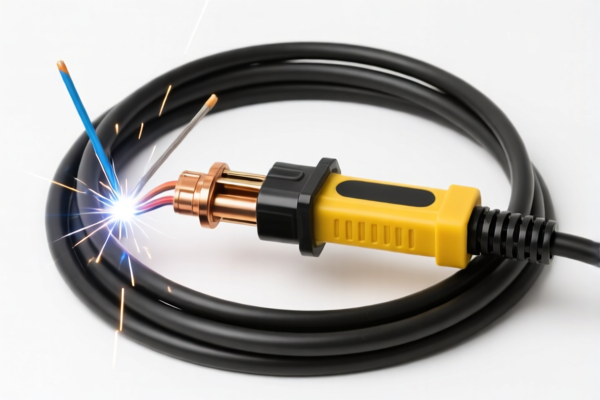
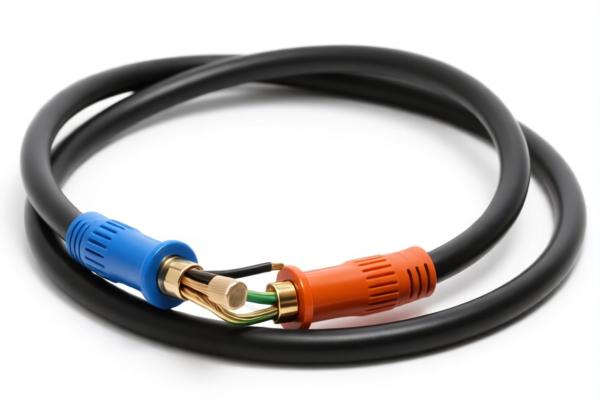
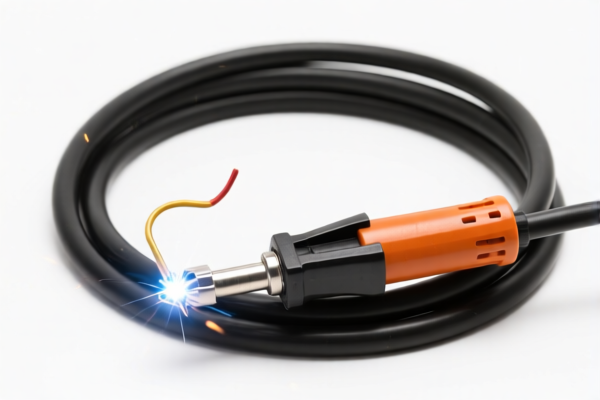
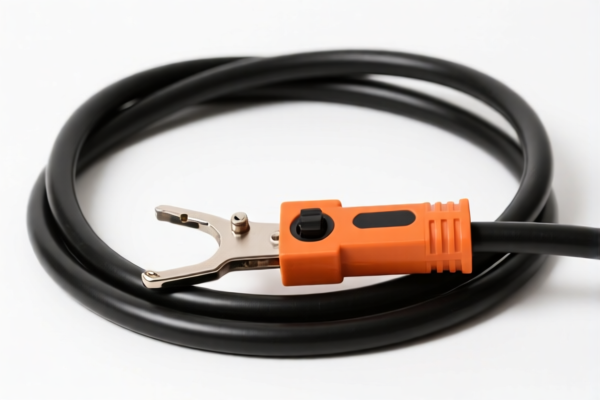
AI分析
🔌 Wall Penetrating Cable (Cable Gland/Conduit Systems)
🌐 HS Code Reference & Customs Clearance Guide | 2026 Latest Tariff Analysis | Professional-Level Strategy
📌 I. Product Definition & Classification: What Exactly is a "Wall Penetrating Cable"?
A "Wall Penetrating Cable" is not a single standardized item but a functional assembly used to seal electrical or data cables where they pass through walls, floors, or bulkheads. In international trade, classification depends strictly on material, structure, and function.
Based on the provided data, these products typically fall into two main categories: 1. Protective Conduits/Tubes (Plastics): If the item is primarily a plastic tube/hose designed to house wires, it is classified under Chapter 39. 2. Insulated Electric Conductors (Cables): If the item is the actual wire/cable assembly (including insulated wires) passing through, it is classified under Chapter 85.
⚠️ Critical Distinction:
- If the product is a flexible plastic tube/hose (conduit) without metal reinforcement → HS Code 3917.32.00.10 (PVC) or 3917.32.00.20 (PE).
- If the product is the insulated wire/cable itself → HS Code 8544.49.30.80 or 8544.49.30.40.
- Note: If the conduit is reinforced with metal, it would fall under 3917.39.00.10, but this is excluded from the provided data. We assume non-reinforced for the closest structural matches.
📦 II. HS Code Classification Details (2026 Latest Tariff Authority Comparison)
| HS Code | Product Description | Applicable Scenario | Material/Type |
|---|---|---|---|
3917.32.00.10 |
Tubes, pipes, hoses of plastics: Other, not reinforced, without fittings: Of polyvinyl chloride (PVC) | Flexible PVC conduits for wall penetration; non-metallic protective sleeves | ✅ PVC Plastic |
3917.32.00.20 |
Tubes, pipes, hoses of plastics: Other, not reinforced, without fittings: Of polyethylene (PE) | Flexible PE tubes/hoses; often used as conduits for cables | ✅ PE Plastic |
8544.49.30.80 |
Insulated electric conductors; for voltage ≤ 1,000 V: Of copper | The actual insulated cable/wire running through the wall | ✅ Copper Wire |
8544.49.30.40 |
Insulated electric conductors; for voltage ≤ 1,000 V: Of copper; For voltage > 600 V | Specialized high-voltage insulated cables (specific sub-category) | ✅ Copper Wire |
🔍 Key Reminder:
- "Wall Penetrating Cable" often implies the cable assembly. However, if you are importing the protective plastic tube that the cable goes through, use the 3917 codes.
- If you are importing the cable itself, use the 8544 codes.
- Do not mix: A "cable gland" (metal/plastic fitting) might be classified differently, but the provided data focuses on tubes and insulated conductors.
💰 III. 2026 Latest Tariff Rate Breakdown (Including Duties & Surcharges)
✅ Applicable Country: United States (US)
✅ Country of Origin: China (CN)
✅ Effective Date: As per current USITC/IEEPA regulations (2026 context)
🎯 1. 3917.32.00.10 & 3917.32.00.20 —— Plastic Tubes/Hoses (PVC/PE)
| Item | Detail |
|---|---|
| Base Tariff | 3.1% (for PVC, 3917.32.00.10) / 3.1% (for PE, 3917.32.00.20) |
| Section 301 Surcharge | +25.0% |
| Total Tax Rate | 28.1% |
| Tax Calculation | CIF Value × 28.1% |
| De Minimis Exemption | ❌ Not Eligible (Section 301 goods typically denied de minimis) |
| Legal Basis | USITC:3917.32.00.10/20 → FOOTNOTE:301-SURCHARGE |
📌 Explanation:
- These plastic conduits are subject to a 28.1% total tariff.
- The 3.1% is the standard Most Favored Nation (MFN) rate.
- The 25% is the additional duty under Section 301 of the Trade Act of 1974 for Chinese-origin plastic articles.
- High Cost Impact: This makes plastic conduits expensive to import. Consider alternative origins or value-engineering.
🎯 2. 8544.49.30.80 —— Insulated Copper Conductors (≤ 1,000 V, Other)
| Item | Detail |
|---|---|
| Base Tariff | 5.3% |
| Section 301 Surcharge | +25.0% |
| Total Tax Rate | 30.3% |
| Tax Calculation | CIF Value × 30.3% |
| De Minimis Exemption | ❌ Not Eligible |
| Legal Basis | USITC:8544.49.30.80 → FOOTNOTE:301-SURCHARGE |
📌 Explanation:
- Standard insulated wires/cables incur a 30.3% total tariff.
- The 5.3% base rate is higher than plastic conduits.
- Critical Note: This applies to "Other" insulated conductors of copper for voltage ≤ 1,000 V.
🎯 3. 8544.49.30.40 —— Insulated Copper Conductors (> 600 V)
| Item | Detail |
|---|---|
| Base Tariff | 0.0% |
| Section 301 Surcharge | 0.0% |
| Total Tax Rate | 0.0% |
| Tax Calculation | CIF Value × 0.0% |
| De Minimis Exemption | ✅ Eligible (if value < $800) |
| Legal Basis | USITC:8544.49.30.40 |
📌 Explanation:
- Zero Tariff! This specific sub-code for insulated conductors > 600 V (but ≤ 1,000 V) has no base tariff and no 301 surcharge in the provided data.
- Strategic Opportunity: If your "wall penetrating cable" can be technically classified as this specific voltage range (and is not simply general low-voltage wiring), the cost advantage is massive.
- Caution: Must strictly meet the voltage specification (> 600 V). Misclassification can lead to severe penalties.
🛠️ IV. Customs Clearance Practical Advice (Real-World Pitfall Avoidance)
✅ 1. Documentation Checklist (Essential)
| Document | Required | Description |
|---|---|---|
| ✅ Product Specification Sheet | ✔️ | Must specify: Material (PVC/PE/Copper), Voltage Rating (>600V or ≤600V), Diameter, Flexibility |
| ✅ Technical Diagrams | ✔️ | Show structure: Is it a hollow tube (conduit) or solid insulated wire (cable)? |
| ✅ Commercial Invoice | ✔️ | Clearly state "Plastic Conduit" OR "Insulated Electric Cable" – Do not use vague terms |
| ✅ Certificate of Origin (CO) | ✔️ | Crucial for proving Chinese origin to apply correct 301 surcharge |
| ✅ Third-Party Test Report | ✔️ | UL, CE, or RoHS certifications to prove material compliance |
✅ 2. Declaration Strategy (Key Mnemonic)
🔥 "Tube is Plastic, Wire is Copper; Voltage Determines Duty!"
| Scenario | Correct HS Code | Duty Rate | Common Mistake |
|---|---|---|---|
| Flexible PVC Tube (no wires) | 3917.32.00.10 |
28.1% | Misdeclare as "cable" → Wrong chapter |
| Flexible PE Tube (no wires) | 3917.32.00.20 |
28.1% | Misdeclare as "pipe" without fitting details |
| Insulated Cable (≤ 600V) | 8544.49.30.80 |
30.3% | Missed 301 surcharge = Penalty |
| Insulated Cable (> 600V) | 8544.49.30.40 |
0.0% | Huge Savings! Ensure voltage spec is clear |
✅ 3. Special Handling Tips
| Situation | Recommendation |
|---|---|
| Conduit + Cable Packaged Together | Separate Declaration! Declare the tube as HS 3917 and the cable as HS 8544. Do not combine into one line item unless they are a pre-assembled kit with a specific HTS. |
| Metal-Reinforced Tube | The provided data excludes this. If reinforced, it likely falls under 3917.39.00.10. Contact a customs broker for this specific code. |
| Voltage Ambiguity | If voltage is between 600V and 1,000V, provide lab test results proving it exceeds 600V to qualify for the 0% rate under 8544.49.30.40. |
| De Minimis Shipment | Only the 0% rate item (8544.49.30.40) is eligible for de minimis ($800). The 28.1% and 30.3% items are not. |
🌍 V. Global Market Clearance Comparison (2026)
| Country/Region | Recommended HS Code | Duty Rate (China Origin) | Certification | Remarks |
|---|---|---|---|---|
| 🇺🇸 USA | 3917.32.00.10 / 8544.49.30.80 |
28.1% - 30.3% | FCC, UL, RoHS | 301 Surcharge applies to most plastics and wires |
| 🇨🇳 China | 3917.32.00.10 / 8544.49.30.80 |
0-5% | CCC, RoHS | No additional surcharges |
| 🇪🇺 EU | 3917.32.00.10 / 8544.49.30.80 |
0-6% | CE, REACH | No Section 301 equivalent |
| 🇬🇧 UK | 3917.32.00.10 / 8544.49.30.80 |
0-6% | UKCA, RoHS | Post-Brexit rules apply |
📌 Conclusion:
- The USA is the highest-cost market due to Section 301 tariffs.
- The 0% duty opportunity for8544.49.30.40is unique and critical for high-voltage applications.
📌 VI. Common Errors & Pitfalls (Lessons Learned)
❌ Error 1: Declaring a PVC Conduit as "Electrical Cable"
👉 Consequence: Wrong HS code, potential penalty, or delayed clearance.
❌ Error 2: Ignoring the Voltage Specification for 8544.49.30.40
👉 Consequence: If voltage is ≤ 600V, you lose the 0% rate and owe 30.3%. Always test and certify voltage.
❌ Error 3: Assuming De Minimis applies to Plastic Conduits
👉 Consequence: Packages under $800 are still taxed at 28.1% if classified under 3917.32.00.10/20. Do not rely on de minimis for plastic tubes.
❌ Error 4: Combining Conduit + Wire into one "Kit" without clear separation
👉 Consequence: CBP may assess the higher duty on the entire value or demand separate line items.
✅ Correct Practice:
"PVC Flexible Conduit, 1/2 inch, Non-Reinforced, Model XYZ, For Indoor Use"
OR
"Insulated Copper Cable, 601V, 2-Conductor, Model ABC, UL Listed"
🎯 VII. Conclusion: Precision Classification, Cost Optimization!
🎯 Remember the Mantra:
🔹 "Plastic Tube = 28.1% (Section 301)"
🔹 "Standard Wire = 30.3% (Section 301)"
🔹 "High Voltage Wire (>600V) = 0.0% (No Surcharge!)"
🔹 "De Minimis Only Applies to the 0% Item!"
📌 Pro Tip:
If your product is a conduit (tube), consider non-Chinese origins (e.g., Vietnam, Mexico) to avoid the 25% Section 301 surcharge.
For cables, ensure your voltage rating is explicitly stated and verified to potentially qualify for the 0% duty under 8544.49.30.40.
📣 Immediate Action:
📞 Consult a Customs Broker + Provide Voltage Test Reports + Pre-classify HS Code
🚀 Optimize your supply chain and maximize profit margins with accurate classification!
✨ Professional Clearance Starts with Precise Classification!
💼 Every Percentage Point of Duty Matters!
用户评价
关于 HS 编码归类
协调制度(HS)是由世界海关组织(WCO)制定的国际贸易商品分类标准。全球 200 多个国家采用 HS 系统作为海关关税、贸易统计和进出口监管的基础。
每个 HS 编码遵循以下层级结构:
- 章(2 位)——商品大类(例如:第 84 章:机器和机械设备)
- 品目(4 位)——章内的更具体分类
- 子目(6 位)——国际通用细分,所有 WCO 成员国统一使用
- 本国细分(8-10 位)——各国自行扩展的细分编码,如美国 HTSUS 10 位编码
正确的 HS 编码归类对于顺利通关、准确缴纳关税和遵守贸易法规至关重要。错误归类可能导致海关延误、多缴关税或罚款。
从CN进口到US时,适用的关税税率可能包括:
- 最惠国(MFN)税率——适用于 WTO 成员国的标准关税税率
- 普通税率——适用于无贸易协定国家
- 贸易救济关税——附加关税,如 301 条款(反倾销)、232 条款(国家安全)或反补贴税
本页内容仅供参考。如需正式归类,请咨询当地海关或持牌报关代理。