waste leather scrap
CN → US| HS编码 | 关税税率 | 原产国 | 目的国 | 文档 |
|---|---|---|---|---|
| 4101907000 | 20.8% | CN | US | 官方文档 |
| 4115200000 | 17.5% | CN | US | 官方文档 |
| 4101901040 | 17.5% | CN | US | 官方文档 |
| 4112003060 | 12.0% | CN | US | 官方文档 |
| 3202905000 | 40.0% | CN | US | 官方文档 |
商品图片
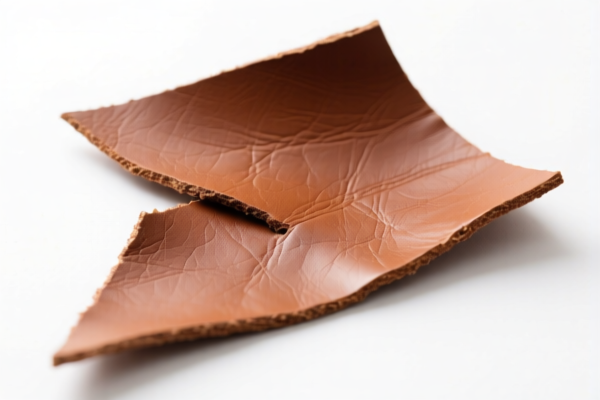
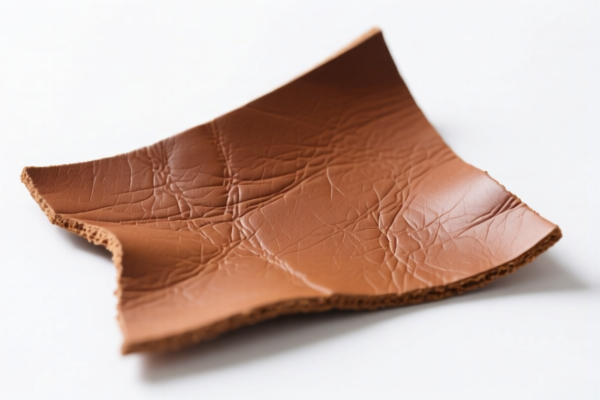
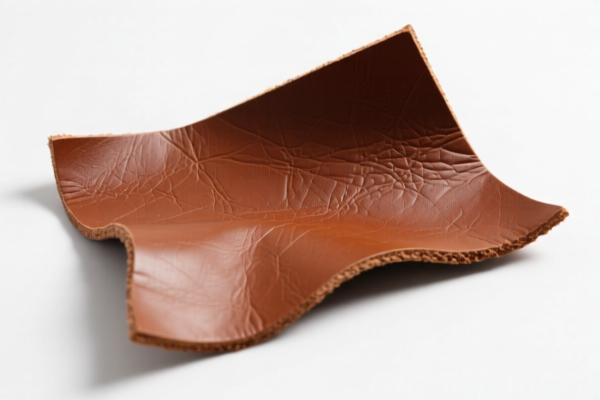

AI分析
🐎 Waste Leather Scrap: HS Code Classification & US Customs Clearance Strategy (2026)
🌐 HS Code Reference & Clearance Guide | 2026 Latest Tariff Analysis | Professional-Level通关 Strategy
📌 I. Product Definition & Classification: What Exactly is "Waste Leather Scrap"?
Waste leather scrap is a broad category in international trade, covering discarded materials from the leather manufacturing process. However, under US Customs regulations (Harmonized Tariff Schedule of the United States - HTSUS), the degree of processing determines the HS Code and the resulting tax burden.
The classification logic hinges on three key distinctions: 1. Raw State vs. Processed State: Is it raw hide (still in biological state) or processed leather? 2. Form Factor: Is it a large piece of waste or finely ground/shredded material? 3. Chemical Composition: Does it include treated liquids or chemical residues?
⚠️ Critical Distinction Point:
- If the material is raw, unprocessed hide from equine animals → Classified under Chapter 41 (Animal Skins).
- If the material is processed leather waste (tanned, finished) → Classified under Chapter 41 (Leather) but different subheading.
- If the material is chemical waste from tanning → Classified under Chapter 32 (Tanning Extracts).
📦 II. HS Code Classification Details (2026 Latest Tariff Authority)
Based on the provided data, here is the authoritative breakdown for US Customs clearance:
| HS Code | Product Description | Applicable Scenario | Processing Level |
|---|---|---|---|
4101.90.70.00 |
Waste of Horsehides | Raw, unprocessed equine skins/waste | ✅ Raw Hide (Unprocessed) |
4115.20.00.00 |
Waste of Leather | Fully processed leather trimmings, off-cuts, shavings | ✅ Processed Leather (Scrap) |
4101.90.10.40 |
Waste of Equine Skins | Unprocessed equine waste, specific subtype | ✅ Raw Hide (Unprocessed) |
4112.00.30.60 |
Metallized Leather Scrap | Waste from metallized/treated leather surfaces | ✅ Processed (Intermediate/Secondary) |
3202.90.50.00 |
Waste Leather Treatment Liquids | Chemical liquids/sludge from tanning or treating | ✅ Chemical Waste |
🔍 Key Reminder:
- "Waste of Leather" (4115.20.00.00) is the most common classification for finished leather scraps. It attracts lower base tariffs but still faces significant US附加税.
- "Raw Hide Waste" (4101.90.x.x) includes unprocessed skins. The tariff structure differs because it is considered a raw agricultural/industrial input.
- "Chemical Waste" (3202.90.50.00) is taxed as a chemical product, not a material, leading to higher base rates.
💰 III. 2026 Latest Tariff Rate Breakdown (Including Surtaxes)
✅ Applicable Country: United States (US)
✅ Origin: China (CN)
✅ Effective Date: From November 10, 2025 (for subsequent imports)
🎯 1. 4101.90.70.00 & 4115.20.00.00 / 4101.90.10.40 —— Raw or Processed Leather Scrap
There is a slight variation in base tariffs between raw and processed waste, but the surtaxes remain consistent due to trade policies.
| Item | Content |
|---|---|
Scenario A: 4101.90.70.00 (Raw Horsehide Waste) |
|
| Base Tariff | 3.3% (ad valorem) |
| Section 301 Surcharge (Additional Tax) | +7.5% |
| Section 122 Tariff | +10% |
| Total Tax Rate | 20.8% |
| Tax Calculation | CIF Value × 20.8% |
| De Minimis Exemption | ❌ Not Applicable (High tax rate disqualifies from $800 exemption) |
| Legal Basis | HTSUS 4101.90.70 → USITC Footnotes → IEEPA 10% |
| Item | Content |
|---|---|
Scenario B: 4115.20.00.00 (Processed Leather Waste) |
|
| Base Tariff | 0.0% |
| Section 301 Surcharge (Additional Tax) | +7.5% |
| Section 122 Tariff | +10% |
| Total Tax Rate | 17.5% |
| Tax Calculation | CIF Value × 17.5% |
| De Minimis Exemption | ❌ Not Applicable |
| Legal Basis | HTSUS 4115.20 → USITC Footnotes → IEEPA 10% |
| Item | Content |
|---|---|
Scenario C: 4101.90.10.40 (Other Equine Skin Waste) |
|
| Base Tariff | 0.0% |
| Section 301 Surcharge (Additional Tax) | +7.5% |
| Section 122 Tariff | +10% |
| Total Tax Rate | 17.5% |
| Tax Calculation | CIF Value × 17.5% |
| De Minimis Exemption | ❌ Not Applicable |
| Legal Basis | HTSUS 4101.90.10 → USITC Footnotes → IEEPA 10% |
📌 Explanation:
- Section 301 (7.5%): Additional duty imposed on certain Chinese goods under US Trade Law Section 301.
- Section 122 (10%): A specific tariff provision (often linked to national security or emergency powers under the Trade Expansion Act) applied to these categories.
- Base Tariff Variation: Raw hides (4101.90.70) have a small base duty (3.3%), while processed leather waste (4115.20) has a 0% base duty. However, processed leather waste is slightly cheaper (17.5%) than raw hide waste (20.8%) when surtaxes are applied.
🎯 2. 4112.00.30.60 —— Metallized Leather Scrap
| Item | Content |
|---|---|
| Base Tariff | 2.0% |
| Section 301 Surcharge | 0.0% (Exempted from this specific surcharge) |
| Section 122 Tariff | +10% |
| Total Tax Rate | 12.0% |
| Tax Calculation | CIF Value × 12.0% |
| De Minimis Exemption | ❌ Not Applicable |
| Legal Basis | HTSUS 4112.00.30 → IEEPA 10% |
📌 Note:
- This category benefits from no Section 301 surcharge, making it the lowest tax rate among the scrap categories (12.0%).
- This applies specifically to metallized leather waste. If the metallization is considered a chemical treatment, it might be reclassified, but under current definitions, it falls here.
🎯 3. 3202.90.50.00 —— Waste Leather Treatment Liquids
| Item | Content |
|---|---|
| Base Tariff | 5.0% |
| Section 301 Surcharge | +25.0% |
| Section 122 Tariff | +10% |
| Total Tax Rate | 40.0% |
| Tax Calculation | CIF Value × 40.0% |
| De Minimis Exemption | ❌ Not Applicable |
| Legal Basis | HTSUS 3202.90 → USITC Footnote 9903.88.01 → IEEPA 10% |
📌 Warning:
- This is a high-risk category. Chemical waste is heavily scrutinized for environmental compliance.
- The 25% Section 301 surcharge is standard for many chemical products from China.
- Total 40% makes this extremely expensive for bulk import. Exporters should verify if "waste liquid" can be treated as a by-product with different classification or if recycling facilities handle disposal locally.
🛠️ IV. Customs Clearance Practical Advice (Avoiding Pitfalls)
✅ 1. Documentation Checklist (Mandatory)
| Document | Required | Description |
|---|---|---|
| ✅ Product Specification Sheet | ✔️ | Must clearly state: Material type (Horse/Bovine), Processing Level (Raw/Tanned/Metallized), Form (Shreds/Slices/Liquids). |
| ✅ Commercial Invoice | ✔️ | Must match HS Code exactly. Use precise terms like "Waste of Tanned Leather" vs "Raw Horsehide Waste." |
| ✅ Certificate of Origin (CO) | ✔️ | Essential for verifying Chinese origin to apply correct surtaxes. |
| ✅ Material Safety Data Sheet (MSDS) | ✔️ | Critical for 3202.90.50.00 (Liquids). Required by CBP and EPA. |
| ✅ Photo Evidence | ✔️ | Show the actual waste state (e.g., piles of shreds vs. raw hides) to prove classification. |
| ✅ Bill of Lading | ✔️ | Ensure weight and quantity match the invoice. |
✅ 2. Declaration Tips (Key Mnemonics)
🔥 "Classify by State: Raw, Tanned, or Chemical? Get it Wrong, Pay More!"
| Scenario | Correct Declaration | Incorrect Practice |
|---|---|---|
| Raw Horsehide Scraps | 4101.90.70.00 |
Misdeclare as "Leather Scrap" (4115.20) → Potential penalty for misclassification. |
| Tanned Leather Off-cuts | 4115.20.00.00 |
Misdeclare as "Raw Hide" → Discrepancy in base tax (3.3% vs 0%). |
| Metallized Scrap | 4112.00.30.60 |
Misdeclare as generic leather waste → Overpaying by 5.5% (17.5% vs 12.0%). |
| Tanning Liquids | 3202.90.50.00 |
Misdeclare as "solid waste" → EPA violations + severe fines. |
✅ 3. Special Handling Cases
| Case | Handling Advice |
|---|---|
| Mixed Shipments | If a container has both raw hides and tanned scraps, split the declaration. Do not lump them into one HS Code. CBP will reject mixed descriptions. |
| Metallized vs. Tanned | Ensure the "metallized" process is clearly documented. If it's just a surface coating without structural change, it may still be 4115.20. Consult with a customs broker. |
| Chemical Waste Export | Ensure compliance with EPA regulations. Waste liquids may require special hazardous waste manifests even for export. |
🌍 V. Global Market Comparison (2026 Update)
| Country/Region | Recommended HS Code | Tariff (China Origin) | Key Certification | Notes |
|---|---|---|---|---|
| 🇺🇸 USA | 4115.20.00.00 (Processed) |
17.5% (incl. 301 + 122) | None specific | High scrutiny on waste origin. |
| 🇺🇸 USA | 4101.90.70.00 (Raw) |
20.8% (incl. 301 + 122) | None specific | Raw hides have higher base duty. |
| 🇺🇸 USA | 3202.90.50.00 (Liquid) |
40.0% (incl. 301 + 122) | EPA Compliance | Highest risk/cost. |
| 🇪🇺 EU | 4115.20.00.00 |
0% (Likely) | REACH Compliance | EU may have different waste definitions. |
| 🇨🇳 China | 4115.20.00.00 |
5% | None | Re-importing waste leather may have restrictions. |
📌 Conclusion:
- USA is the most costly market for leather scrap due to the combination of Section 301 and Section 122 tariffs.
- Processed leather scrap (4115.20) is the most tax-efficient option (17.5%) compared to raw hide (20.8%) or chemicals (40%).
- Metallized scrap (4112) offers the lowest US duty at 12.0%, but must be strictly proven to be metallized.
📌 VI. Common Errors & Pitfalls (Lessons Learned)
❌ Error 1: Labeling all "Leather Waste" as 4115.20.00.00
👉 Consequence: If the goods are raw horsehides, CBP may assess higher duties and penalties for misclassification.
👉 Fix: Separate raw vs. tanned waste in documentation.
❌ Error 2: Ignoring Section 122 Tariff
👉 Consequence: Underestimating total cost by 10%. Many brokers only calculate Section 301.
👉 Fix: Always add 10% for Section 122 on Chapter 41/32 goods from China.
❌ Error 3: Declaring Chemical Liquids as "Solid Waste"
👉 Consequence: EPA fines, shipment rejection, and potential legal action.
👉 Fix: Use correct HS Code 3202.90.50.00 and provide MSDS.
❌ Error 4: Missing "Metallized" Description
👉 Consequence: Paying 17.5% instead of 12.0% (loss of 5.5% savings).
👉 Fix: Explicitly state "Metallized Leather Scrap" in the product description.
✅ Correct Approach:
"Processed Leather Scrap (Tanned, Trimmed), HS Code 4115.20.00.00, CIF Value $10,000, Total Duty $1,750 (incl. 7.5% Sec 301 + 10% Sec 122)"
🎯 VII. Conclusion: Professional Declaration for Cost Efficiency
🎯 Remember Mnemonics:
🔹 "Raw Hide: 20.8%, Tanned Scrap: 17.5%, Metallized: 12.0%, Chemical: 40.0%."
🔹 "Classify by Process, Not by Name. Misclassification Costs More Than Duty."
🔹 "Section 122 is Always 10% for These Categories. Don't Forget It!"
📌 Pro Tip:
If your leather scrap is sourced from non-Chinese countries (e.g., Vietnam, India, Italy), you may avoid Section 301 tariffs, reducing the total duty to 0%~10% (depending on FTAs).
Recommend Advance Ruling for metallized scrap to confirm eligibility for the 12.0% rate.
📣 Immediate Action:
📞 Contact your Customs Broker + Provide Product Photos + Verify Origin
🚀 Ensure Smooth Customs Clearance, Avoid Surprises, Maximize Margins!
✨ Professional Clearance Starts with Accurate Classification!
💼 Every Percent Saved is Profit Gained!
用户评价
关于 HS 编码归类
协调制度(HS)是由世界海关组织(WCO)制定的国际贸易商品分类标准。全球 200 多个国家采用 HS 系统作为海关关税、贸易统计和进出口监管的基础。
每个 HS 编码遵循以下层级结构:
- 章(2 位)——商品大类(例如:第 84 章:机器和机械设备)
- 品目(4 位)——章内的更具体分类
- 子目(6 位)——国际通用细分,所有 WCO 成员国统一使用
- 本国细分(8-10 位)——各国自行扩展的细分编码,如美国 HTSUS 10 位编码
正确的 HS 编码归类对于顺利通关、准确缴纳关税和遵守贸易法规至关重要。错误归类可能导致海关延误、多缴关税或罚款。
从CN进口到US时,适用的关税税率可能包括:
- 最惠国(MFN)税率——适用于 WTO 成员国的标准关税税率
- 普通税率——适用于无贸易协定国家
- 贸易救济关税——附加关税,如 301 条款(反倾销)、232 条款(国家安全)或反补贴税
本页内容仅供参考。如需正式归类,请咨询当地海关或持牌报关代理。