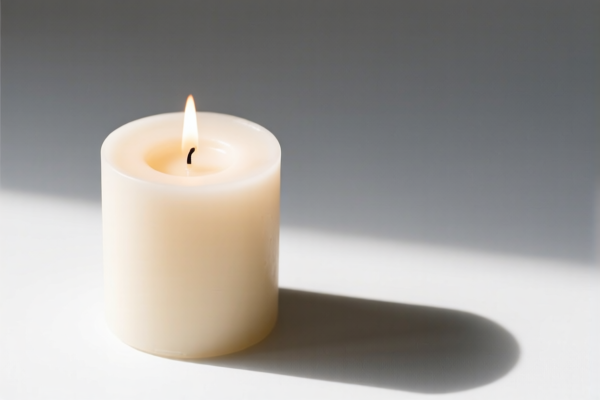
wax pellets
CN → US| HS编码 | 关税税率 | 原产国 | 目的国 | 文档 |
|---|---|---|---|---|
| 2712902000 | 35.0% | CN | US | 官方文档 |
| 2712200000 | 17.5% | CN | US | 官方文档 |
| 3404905110 | 35.0% | CN | US | 官方文档 |
| 3404905150 | 35.0% | CN | US | 官方文档 |
商品图片



AI分析
🕯️ Wax Pellets / Wax Blocks (Paraffin, Microcrystalline, & Synthetic Waxes)
🌐 HS Code Reference & Customs Clearance Guide | 2026 Latest Tariff Analysis | Professional Strategy
📌 I. Product Definition & Classification: Do You Really Know "Wax"?
Wax, in international trade, is a complex category often misunderstood. It spans from raw petroleum byproducts to sophisticated artificial compounds. For Wax Pellets/Blocks, classification hinges entirely on the material source and processing level.
In global trade, wax is generally divided into two main buckets:
1. Mineral Waxes (Petroleum-Based):
Derived from crude oil distillation. Includes Paraffin Wax (straight-chain hydrocarbons) and Microcrystalline Wax (branched/complex hydrocarbons). These are primary products of the petroleum industry.
2. Artificial/Synthetic Waxes:
Man-made or chemically modified substances. This includes Montan Wax, Ester Waxes, Polyethylene Waxes, and Mixed/Prepared Waxes that do not fit strictly into the natural mineral categories.
⚠️ Key Distinction Point:
- If the wax is derived directly from petroleum/mineral sources (Paraffin/Microcrystalline) → It falls under Chapter 27.
- If the wax is synthetic, prepared, or "other" (not explicitly paraffin/microcrystalline) → It falls under Chapter 34.
- Physical Form (Pellets/Blocks): The shape does not change the HS Code category, but it confirms it is a "solid/waxy substance" suitable for these codes.
📦 II. HS Code Classification Details (2026 Latest Tariff Authority Comparison)
Based on the provided data for Wax Pellets/Blocks, here are the four critical HS Codes and their rationales. The choice depends on the specific chemical composition.
| HS Code | Product Description | Material Nature | Key Classification Logic |
|---|---|---|---|
2712.90.20.00 |
Mineral Waxes & Similar Products (Block Form) | Mineral/Paraffin-like | "Waxy matter" derived from minerals. Fits the broad category of "Mineral Wax." Often used for Paraffin Wax in block form. |
2712.20.00.00 |
Petroleum Waxes (Microcrystalline/Paraffin) | Petroleum-derived | Specific to Paraffin Wax or Microcrystalline Petroleum Wax. If it is a primary petrochemical product, this is the most accurate code. |
3404.90.51.10 |
Artificial/Prepared Waxes (Block Form) | Synthetic/Prepared | "Other artificial wax and prepared wax." Falls under the "Catch-all" principle for waxes that are neither natural nor standard mineral paraffin. |
3404.90.51.50 |
Artificial/Prepared Waxes (Primary Block Form) | Synthetic/Prepared | Similar to 51.10 but specifically categorized for "Waxy substances" in primary forms. Used for synthetic waxes (e.g., polyethylene wax blocks). |
🔍 Critical Reminder:
- Misclassification Risk: Declaring Synthetic Wax as Paraffin (or vice versa) can lead to customs delays or penalties.
- Material Proof: Customs may require a Certificate of Analysis (COA) to distinguish between Paraffin (C18-C30 alkanes) and Synthetic (Polymers/Esters).
💰 III. 2026 Latest Tariff Rate Breakdown (Including Additional Duties)
✅ Applicable Country: United States (US)
✅ Origin: China (CN)
✅ Effective Date: Post-November 10, 2025 (Subject to Section 301 & IEEPA)
The tax structure for wax from China is significantly higher due to retaliatory tariffs and Section 122 clauses. Below is the detailed breakdown for each code.
🎯 1. 2712.90.20.00 —— Mineral Waxes (Block Form)
| Item | Detail |
|---|---|
| Base Rate | 0.0% (Ad Valorem) |
| Section 301 Additional Tariff | +25.0% (USITC Footnote) |
| Section 122 Tariff | +10.0% (Specific trade remedy clause) |
| Total Tax Rate | 35.0% |
| Tax Calculation | CIF Value × 35% |
| De Minimis Exemption? | ❌ No (Denied for these specific HS codes under current rules) |
| Legal Path | Base 0% → Sec 301: +25% → Sec 122: +10% |
📌 Explanation:
- Although the base rate for mineral wax is low (0%), the Section 301 tariff (+25%) is standard for Chinese petrochemical products.
- The Section 122 tariff (+10%) is an additional punitive measure applied to specific mineral and wax imports.
- Total Impact: You must budget for 35% total duty on CIF value.
🎯 2. 2712.20.00.00 —— Petroleum Waxes (Paraffin/Microcrystalline)
| Item | Detail |
|---|---|
| Base Rate | 0.0% (Ad Valorem) |
| Section 301 Additional Tariff | +7.5% (Note: Lower rate for specific petroleum derivatives in some contexts) |
| Section 122 Tariff | +10.0% |
| Total Tax Rate | 17.5% |
| Tax Calculation | CIF Value × 17.5% |
| De Minimis Exemption? | ❌ No |
| Legal Path | Base 0% → Sec 301: +7.5% → Sec 122: +10% |
📌 Explanation:
- This is the most cost-effective option IF your wax qualifies as standard Paraffin or Microcrystalline Petroleum Wax.
- The Section 301 rate is lower (7.5% vs 25%) for this specific subheading, likely due to different trade policy classifications for refined petroleum products.
- Verification Required: Ensure your product is strictly "Paraffin Wax" or "Microcrystalline Wax" from petroleum. If it contains synthetic additives, this code is invalid.
🎯 3. 3404.90.51.10 —— Artificial/Prepared Waxes (Catch-All)
| Item | Detail |
|---|---|
| Base Rate | 0.0% (Ad Valorem) |
| Section 301 Additional Tariff | +25.0% |
| Section 122 Tariff | +10.0% |
| Total Tax Rate | 35.0% |
| Tax Calculation | CIF Value × 35% |
| De Minimis Exemption? | ❌ No |
| Legal Path | Base 0% → Sec 301: +25% → Sec 122: +10% |
📌 Explanation:
- This code is used for Synthetic Waxes (e.g., Polyethylene Wax, Ester Wax) or Mixed/Prepared Waxes.
- It attracts the maximum penalty rate (35%) because synthetic waxes are often subject to stricter anti-dumping or trade remedy measures.
- High Cost Alert: Do not use this code if you can legally classify under 2712.20.00.00.
🎯 4. 3404.90.51.50 —— Other Artificial/Prepared Waxes (Block Form)
| Item | Detail |
|---|---|
| Base Rate | 0.0% (Ad Valorem) |
| Section 301 Additional Tariff | +25.0% |
| Section 122 Tariff | +10.0% |
| Total Tax Rate | 35.0% |
| Tax Calculation | CIF Value × 35% |
| De Minimis Exemption? | ❌ No |
| Legal Path | Base 0% → Sec 301: +25% → Sec 122: +10% |
📌 Explanation:
- Similar to 51.10, this is a "catch-all" for artificial waxes in primary block forms.
- The tariff burden is identical to 51.10.
- Use this only if the wax does not fit 51.10 specifically but is still not a mineral wax.
🛠️ IV. Customs Clearance Practical Advice (Real-World Pitfall Guide)
✅ 1. Document Checklist (Mandatory)
| Document | Required | Purpose |
|---|---|---|
| ✅ Certificate of Origin (CO) | ✔️ | To confirm CN origin and trigger correct Section 301/122 rates. |
| ✅ Certificate of Analysis (COA) | ✔️ | CRITICAL. Must specify: Melting Point, Oil Content, Viscosity, and Chemical Composition (e.g., % Paraffin vs. Synthetic). |
| ✅ Product Specification Sheet | ✔️ | Describe as "Wax Pellets/Blocks, [Type], [Color], [Melting Point]." |
| ✅ Commercial Invoice | ✔️ | Clearly state "Artificial Wax" or "Paraffin Wax," NOT just "Wax." |
| ✅ Bill of Lading / Packing List | ✔️ | Ensure weight matches COA. |
⚠️ Warning: If the COA is missing or vague, Customs will default to the highest tariff code (likely 35% for synthetic or 25% for mineral) and may hold the shipment for chemical testing.
✅ 2. Declaration Tips (Key Mnemonics)
🔥 “Source Defines Code, Section 122 Hits Hard!”
| Scenario | Correct HS Code | Incorrect HS Code | Consequence |
|---|---|---|---|
| Paraffin Wax from Petroleum | 2712.20.00.00 (17.5%) |
3404.90.51.10 (35%) |
Overpaying 17.5% unnecessarily. |
| Synthetic Wax (PE Wax) | 3404.90.51.10 (35%) |
2712.20.00.00 (17.5%) |
Underpayment: Customs will assess back-taxes + penalties + interest. |
| Mineral Wax (Blocks) | 2712.90.20.00 (35%) |
3404.90.51.50 (35%) |
Same rate, but wrong description may cause inspection delays. |
| Mixed/Prepared Wax | 3404.90.51.10 (35%) |
2712.90.20.00 (35%) |
Risk of classification error if ingredients are unclear. |
💡 Pro Tip:
- If you are exporting Paraffin Wax, strictly use2712.20.00.00to save 17.5% compared to synthetic codes.
- If you are exporting Synthetic Wax, you cannot avoid the 35% rate. Focus on optimizing CIF value and ensuring accurate documentation to avoid delays.
✅ 3. Special Considerations for Section 122
| Issue | Detail |
|---|---|
| What is Section 122? | A special tariff clause applied to certain imports from China, often in addition to Section 301. |
| Impact on Wax | Adds 10% to all wax codes listed above. |
| Compliance | Ensure your HS Code exactly matches the 10-digit code. Any deviation (e.g., using an 8-digit code) may cause the 122 tariff to be missed or incorrectly applied, leading to audits. |
🌍 V. Global Market Comparison (2026 Update)
| Market | Recommended HS Code | Base Duty | Additional (China) | Total Est. Duty | Notes |
|---|---|---|---|---|---|
| 🇺🇸 USA | 2712.20.00.00 |
0% | 7.5% (Sec 301) + 10% (Sec 122) | 17.5% | Best for Paraffin. |
| 🇺🇸 USA | 3404.90.51.10 |
0% | 25% (Sec 301) + 10% (Sec 122) | 35.0% | For Synthetic Waxes. |
| 🇨🇳 China (Import) | 2712.10.00.00 |
5% | None | 5% | Lower duty for imports into China. |
| 🇪🇺 EU | 2712.10.00.00 |
2.5% | None (Most Favored Nation) | 2.5% | No Section 301/122. Much cheaper for EU market. |
| 🇬🇧 UK | 2712.10.00.00 |
2.5% | None | 2.5% | Post-Brexit, still favorable. |
| 🇯🇵 Japan | 2712.10.00.00 |
0% | None | 0% | Excellent for Japan exports. |
📌 Strategic Insight:
- US Market: High barriers. Cost calculation must include 17.5% or 35% total duty.
- EU/Asia Market: Much more competitive. Consider diversifying supply chains if shipping primarily to non-US markets to avoid high US tariffs.
📌 VI. Common Errors & Pitfalls (Lessons Learned)
❌ Error 1: Declaring Synthetic Wax as Paraffin Wax (2712.20.00.00) to save tax.
👉 Result: Customs lab tests, confirms synthetic content. Back-taxes + 25% penalty + legal fees.
❌ Error 2: Using "Wax" as the product name without specifying type.
👉 Result: Customs assigns the highest default duty (often 35%) and delays clearance for classification review.
❌ Error 3: Ignoring Section 122 in the calculation.
👉 Result: Underestimating landed cost by 10%, leading to profit margin erosion.
❌ Error 4: Assuming De Minimis applies to wax shipments.
👉 Result: Denied. Wax is a restricted/subject good. All duties apply regardless of value.
✅ Correct Approach:
"Paraffin Wax, Block Form, Melting Point 58-60°C, Mineral Origin, HS Code 2712.20.00.00, Origin: China"
🎯 VII. Conclusion: Precision in Classification Saves Money!
🎯 Remember This Mantra:
🔹 "Paraffin = 2712.20 (17.5%), Synthetic = 3404.90 (35%)."
🔹 "Section 122 adds 10% to ALL wax codes from China."
🔹 "If it's petroleum, fight for 2712.20. If it's synthetic, accept 35% and optimize logistics."
📌 Pro Tip:
For Paraffin Wax, ensure your supplier provides a detailed COA proving it is derived from petroleum distillation. This is your key to claiming the lower 17.5% rate.
For Synthetic Waxes, consider non-China origins if possible, as other countries may not face Section 301/122 tariffs (check specific FTAs).
📣 Immediate Action:
📞 Verify Chemical Composition with your supplier.
📄 Select the Correct 10-Digit HS Code based on material, not just shape.
🧮 Calculate Landed Cost including 17.5% or 35% duty.
🚀 Clear Customs Smoothly and Protect Your Margins!
✨ Professional Clearance Starts with Accurate Classification!
💼 Your Every Dollar Counts – Don't Overpay on Duties!
用户评价
关于 HS 编码归类
协调制度(HS)是由世界海关组织(WCO)制定的国际贸易商品分类标准。全球 200 多个国家采用 HS 系统作为海关关税、贸易统计和进出口监管的基础。
每个 HS 编码遵循以下层级结构:
- 章(2 位)——商品大类(例如:第 84 章:机器和机械设备)
- 品目(4 位)——章内的更具体分类
- 子目(6 位)——国际通用细分,所有 WCO 成员国统一使用
- 本国细分(8-10 位)——各国自行扩展的细分编码,如美国 HTSUS 10 位编码
正确的 HS 编码归类对于顺利通关、准确缴纳关税和遵守贸易法规至关重要。错误归类可能导致海关延误、多缴关税或罚款。
从CN进口到US时,适用的关税税率可能包括:
- 最惠国(MFN)税率——适用于 WTO 成员国的标准关税税率
- 普通税率——适用于无贸易协定国家
- 贸易救济关税——附加关税,如 301 条款(反倾销)、232 条款(国家安全)或反补贴税
本页内容仅供参考。如需正式归类,请咨询当地海关或持牌报关代理。