western red cedar lumber
CN → US| HS编码 | 关税税率 | 原产国 | 目的国 | 文档 |
|---|---|---|---|---|
| 4409101020 | 35.0% | CN | US | 官方文档 |
| 4409109020 | 35.0% | CN | US | 官方文档 |
| 4407190068 | 35.0% | CN | US | 官方文档 |
| 4407190069 | 35.0% | CN | US | 官方文档 |
商品图片
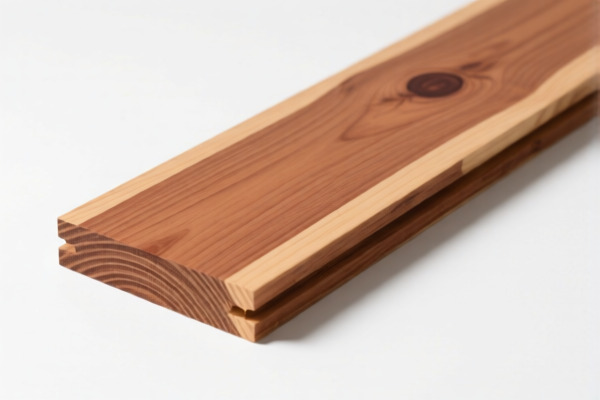
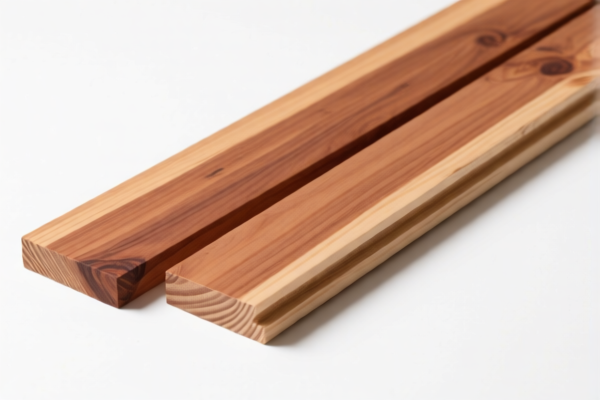
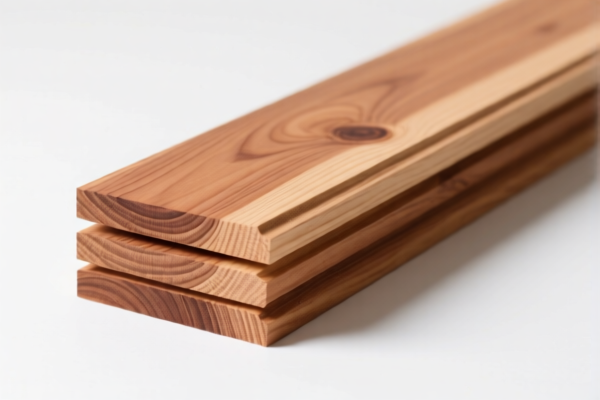
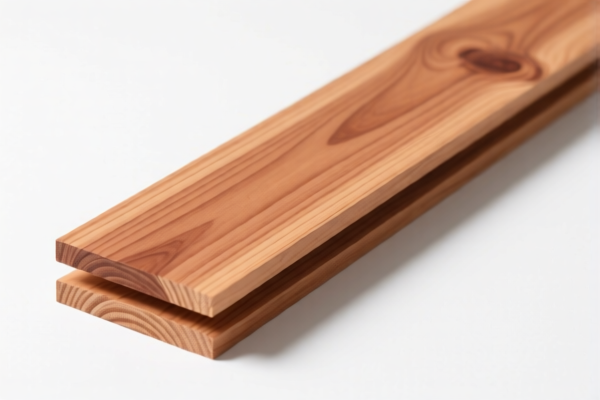
AI分析
🌲 Western Red Cedar Lumber & Shaped Wood Products
🌐 HS Code Reference & Customs Clearance Guide | 2026 Latest Tariff Analysis | Expert Strategy for Western Red Cedar
📌 I. Product Definition & Classification: What Exactly Is "Western Red Cedar"?
Western Red Cedar (Thuja plicata) is a premium coniferous wood native to the Pacific Northwest of North America. In international trade, it is primarily classified under Chapter 44: Wood and articles of wood. The classification depends strictly on the processing level:
Raw/Sawn Lumber (4407): Wood cut lengthwise, sliced, or peeled, with a thickness exceeding 6mm. It can be planed, sanded, or end-jointed but retains its basic cross-section.
Shaped/Tongued & Grooved Wood (4409): Wood that has been continuously shaped along any edge, end, or face (e.g., tongued, grooved, rebated, chamfered, V-jointed, beaded, molded, or rounded). This includes wood siding and resawn bevel siding commonly used for exterior cladding.
⚠️ Key Distinction:
- If the wood is merely sawn, planed, or sanded without specific profile shaping along edges/faces → Classify under 4407.
- If the wood has continuous shaping (e.g., tongue-and-groove siding, bevel siding profiles) → Classify under 4409.
- "Western Red Cedar" is explicitly mentioned in both categories, meaning the species identity is critical for accurate sub-heading classification.
📦 II. HS Code Classification Details (2026 Latest Tariff Authority对照)
Based on the provided data, here are the four specific HS Codes for Western Red Cedar products:
| HS Code | Product Description | Application Scenario | Processing State |
|---|---|---|---|
4407.19.00.68 |
Wood sawn/sliced/peeled, thickness >6mm: Coniferous, Western Red Cedar, Rough | Raw construction beams, rough-cut timber, unfinished structural elements | ❌ Unfinished/Rough |
4407.19.00.69 |
Wood sawn/sliced/peeled, thickness >6mm: Coniferous, Western Red Cedar, Other | Planed, sanded, or end-jointed lumber ready for construction or furniture | ✅ Processed (but not shaped profile) |
4409.10.10.20 |
Wood continuously shaped (tongued, grooved, etc.): Coniferous, Western Red Cedar, Resawn Bevel Siding | Exterior siding products, clapboard, pre-profiled cladding | ✅ Shaped Profile (Siding) |
4409.10.90.20 |
Wood continuously shaped (tongued, grooved, etc.): Coniferous, Western Red Cedar, Other | Shaped molding, trim, V-jointed panels, or other profiled cedar products not classified as siding | ✅ Shaped Profile (Other) |
🔍 Important Reminder:
- "Rough" vs. "Other" (4407):4407.19.00.68is strictly for rough timber. If it is planed or sanded, it must go to4407.19.00.69. Misclassification here can lead to delays.
- "Siding" vs. "Other" (4409):4409.10.10.20is specifically for resawn bevel siding. If the product is shaped but not bevel siding (e.g., tongue-and-groove paneling), it must go to4409.10.90.20.
- Species Confirmation: Customs may require species verification (botanical name Thuja plicata) to confirm "Western Red Cedar" status.
💰 III. 2026 Latest Tariff Rate Breakdown (Including Supplementary Duties)
✅ Applicable Country: United States (US)
✅ Origin: China (CN) (Note: Although Western Red Cedar is native to North America, this analysis assumes import from China or re-export scenarios where Chinese origin is declared, or applies to processed cedar products originating in China. If the wood is directly from Canada/USA, MFN rates may apply, but the provided data shows China-origin rates.)
✅ Effective Time: Current as of 2026
All four HS Codes listed in <DATA> share the exact same tariff structure for Chinese-origin goods:
🎯 1. 4407.19.00.68 & 4407.19.00.69 —— Western Red Cedar Lumber
| Item | Content |
|---|---|
| Basic Tariff (MFN) | 0.0% |
| Section 301 Additional Duty | +25.0% |
| Total Tax Rate | 25.0% |
| Tax Calculation | CIF Value × 25% |
| De Minimis Exemption | ❌ Not Applicable (Section 301 duties generally do not apply to de minimis, but for formal entry, it is 25%) |
| Legal Basis Path | HTSUS: 4407.19.00 → USITC Footnote 9903.88.01 (Section 301) |
📌 Explanation:
- The base duty for Western Red Cedar is 0%, reflecting its high-quality status in the US market.
- However, due to Section 301 tariffs on Chinese goods, an additional 25% is applied.
- Total Effective Rate: 25%. This is a significant cost factor for importers.
🎯 2. 4409.10.10.20 & 4409.10.90.20 —— Shaped Western Red Cedar (Siding/Other)
| Item | Content |
|---|---|
| Basic Tariff (MFN) | 0.0% |
| Section 301 Additional Duty | +25.0% |
| Total Tax Rate | 25.0% |
| Tax Calculation | CIF Value × 25% |
| De Minimis Exemption | ❌ Not Applicable |
| Legal Basis Path | HTSUS: 4409.10 → USITC Footnote 9903.88.01 (Section 301) |
📌 Note:
- Even though these are finished/shaped products, the tariff rate is identical to raw lumber.
- No preferential treatment is shown in the provided data for these sub-headings.
🛠️ IV. Customs Clearance Practical Advice (Real-World Pitfall Guide)
✅ 1. Essential Documentation Checklist
| Document | Required | Explanation |
|---|---|---|
| ✅ Commercial Invoice | ✔️ | Must clearly state "Western Red Cedar" and species (Thuja plicata). |
| ✅ Packing List | ✔️ | Detailed breakdown of rough lumber vs. shaped siding. |
| ✅ Bill of Lading/Air Waybill | ✔️ | Standard shipping docs. |
| ✅ Species Certification | ✔️ | May be required to prove it is Western Red Cedar and not a cheaper substitute (e.g., Eastern Red Cedar, which is not a true cedar and has different duties). |
| ✅ Treatment Certificate | ✔️ | If treated with preservatives, must declare. For untreated wood, state "Not Treated". |
| ✅ Phytosanitary Certificate | ✔️ | Often required to confirm no pests, especially for raw lumber (4407). |
| ✅ Section 301 Exclusion Proof | ✔️ | If eligible for any exclusions, provide documentation. (Note: Most cedar products are not excluded). |
✅ 2. Declaration Tips (Key Mantras)
🔥 "True Cedar, True Species, True Code!"
| Scenario | Correct Declaration | Error to Avoid |
|---|---|---|
| Rough Sawn Lumber | 4407.19.00.68 Western Red Cedar, Rough, Untreated |
Misclassifying as "Other Wood" → Higher base duty or audit risk. |
| Planed/Sanded Lumber | 4407.19.00.69 Western Red Cedar, Planed/Sanded |
Calling it "Rough" when it's smooth → Rejection. |
| Bevel Siding | 4409.10.10.20 Western Red Cedar Resawn Bevel Siding |
Calling it "Lumber" → Wrong HS Code, potential penalty. |
| Tongue & Groove Panels | 4409.10.90.20 Western Red Cedar, Other Shaped |
Misclassifying as Siding if it's not bevel siding → Code mismatch. |
| Mixed Shipment | Separate line items for 4407 and 4409 |
Combining different processing states → Customs delay for reclassification. |
✅ 3. Special Handling & Risk Management
| Situation | Handling Advice |
|---|---|
| Substitute Species | Customs strictly enforces species identity. "Western Red Cedar" from other regions (e.g., Asia) may not qualify. Ensure origin is correct. |
| Moisture Content | Lumber should be dried to appropriate moisture levels. While not a direct HS Code factor, poor quality can lead to rejection for pest reasons. |
| Treatment Status | Explicitly state "Untreated" if applicable. If treated, provide MSDS and treatment details. |
| Value Declaration | Ensure CIF value includes freight and insurance. Tariff is 25% of CIF. Under-declaring value is a major compliance risk. |
| Origin Labeling | Even if processed in China, if the wood is sourced from Canada/US, the Country of Origin may still be Canada/US under US rules of origin (if substantial transformation doesn't occur). Check this carefully to avoid misdeclaring origin as "China" if it's not. If the wood is physically from North America but processed and exported from China, origin might still be North America, potentially allowing MFN rates (0%). However, the provided data assumes China origin rates. Consult a trade attorney for origin determination. |
🌍 V. Global Market Comparison (2026)
| Country/Region | Recommended HS Code | Tariff (China Origin) | Notes |
|---|---|---|---|
| 🇺🇸 USA | 4407.19.00.68/69 / 4409.10.10.20/90.20 |
25% (Total) | High tariff due to Section 301. Base rate is 0%. |
| 🇨🇳 China | 4407 / 4409 |
5-15% (Varies) | Import into China from North America may have different rates. |
| 🇪🇺 EU | 4407 / 4409 |
0-5% | Generally lower duties on raw wood. |
| 🇬🇧 UK | 4407 / 4409 |
0-5% | Post-Brexit rates similar to EU for many woods. |
📌 Conclusion:
- The USA imposes a significant 25% effective tariff on Chinese-origin Western Red Cedar products.
- If you are importing into the US, origin determination is critical. If the wood is sourced from Canada/US and only minimally processed in China, you might argue for North American Origin, which could reduce tariffs to 0%.
- Always verify Country of Origin with a trade compliance expert before shipping.
📌 VI. Common Mistakes & Pitfalls (Lessons Learned)
❌ Mistake 1: Declaring "Wood Siding" generically without specifying Resawn Bevel Siding vs. Other Shaped Wood.
👉 Consequence: Customs may assign the highest available duty or require reclassification.
❌ Mistake 2: Failing to specify "Rough" vs. "Planed/Sanded" in 4407.
👉 Consequence: 4407.19.00.68 is for rough only. If planed, it must be 4407.19.00.69. Misdeclaration leads to penalties.
❌ Mistake 3: Not proving Species Identity.
👉 Consequence: If "Western Red Cedar" cannot be proven, Customs may classify it as "Other Coniferous Wood," which could have different duties or restrictions.
❌ Mistake 4: Ignoring Section 301 Impact.
👉 Consequence: Expecting 0% duty because MFN is 0%, but facing a 25% bill at customs. Always add 25% to your cost calculations for China-origin goods.
✅ Correct Practice:
"Western Red Cedar Lumber, 2x4, Planed, Sanded, Untreated, Origin: USA (if applicable), Model: XYZ"
Ensure the HS Code matches the exact processing state and species.
🎯 VII. Conclusion: Precise Classification Saves Money!
🎯 Remember:
🔹 "Base Rate is 0%, but Section 301 adds 25%!"
🔹 "Rough = .68, Sanded = .69, Bevel Siding = .10.20, Other Shaped = .90.20"
🔹 "Species Verification is Key!"
📌 Pro Tip:
If your Western Red Cedar is originating from Canada or the US, do not automatically assume "China Origin" just because it was processed there. Apply for a Pre-Ruling or verify Substantial Transformation rules to potentially avoid the 25% Section 301 duty.
📣 Immediate Action:
📞 Contact a Customs Broker to verify Species and Origin.
🚀 Provide Detailed Product Photos (end grain for species, edge profile for shaped wood).
💼 Calculate Landed Cost with 25% Tariff to ensure profitability.
✨ Professional Customs Clearance Starts with Accurate Classification!
💼 Your Profit Margin Depends on Your HS Code!
用户评价
关于 HS 编码归类
协调制度(HS)是由世界海关组织(WCO)制定的国际贸易商品分类标准。全球 200 多个国家采用 HS 系统作为海关关税、贸易统计和进出口监管的基础。
每个 HS 编码遵循以下层级结构:
- 章(2 位)——商品大类(例如:第 84 章:机器和机械设备)
- 品目(4 位)——章内的更具体分类
- 子目(6 位)——国际通用细分,所有 WCO 成员国统一使用
- 本国细分(8-10 位)——各国自行扩展的细分编码,如美国 HTSUS 10 位编码
正确的 HS 编码归类对于顺利通关、准确缴纳关税和遵守贸易法规至关重要。错误归类可能导致海关延误、多缴关税或罚款。
从CN进口到US时,适用的关税税率可能包括:
- 最惠国(MFN)税率——适用于 WTO 成员国的标准关税税率
- 普通税率——适用于无贸易协定国家
- 贸易救济关税——附加关税,如 301 条款(反倾销)、232 条款(国家安全)或反补贴税
本页内容仅供参考。如需正式归类,请咨询当地海关或持牌报关代理。