wet salted bovine hide butts and bends
CN → US| HS编码 | 关税税率 | 原产国 | 目的国 | 文档 |
|---|---|---|---|---|
| 4102291090 | 17.5% | CN | US | 官方文档 |
| 4102293000 | 19.5% | CN | US | 官方文档 |
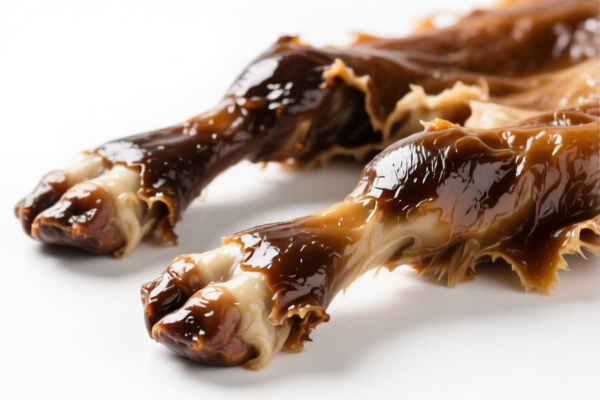
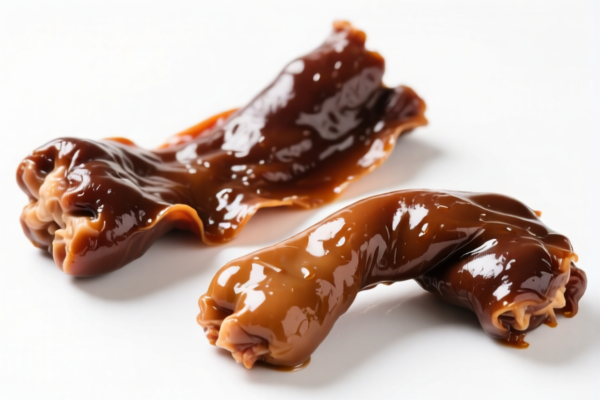
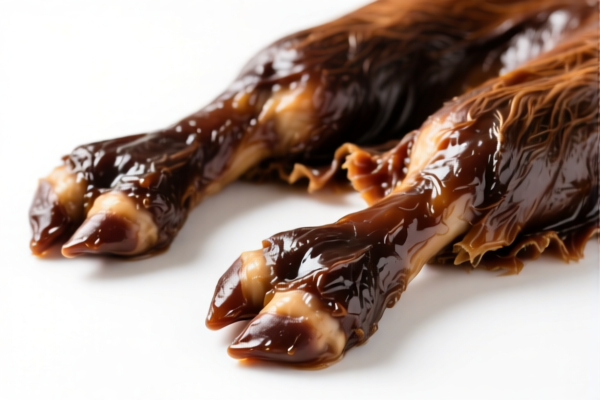
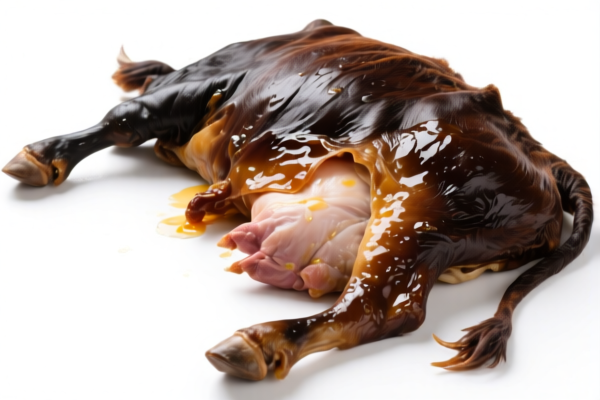
商品图片
AI分析
🐂 Wet Salted Bovine Hide Butts and Bends (Raw Skins)
🌐 HS Code Classification & Clearance Strategy | 2026 Tariff Guide | Expert通关 Roadmap
📌 一、Product Definition & Logic: Why This Specific HS Code?
"Wet Salted Bovine Hide Butts and Bends" refers to the raw, unprocessed leather from cattle (including buffalo), specifically the lower belly and flank portions ("butts and bends").
Key Product Characteristics: * State: Raw (Fresh or Wet-Salted). * Treatment: Preserved (Salted to prevent rotting), but NOT tanned, parchment-dressed, or further prepared. * Source: Bovine animals (Cattle/Buffalo). * Specific Cut: "Butts and Bends" (the lower half of the hide, often containing the belly, known for being thinner and more flexible). * Wool: None (Bovine animals do not have wool).
⚠️ Critical Classification Logic: * If the hide is Whole and Heavy (>16kg), it might fall under
4101.50. * If it is Not Whole (specifically Butts and Bends), or if it is a standard weight part, it falls under "Other, including butts, bends and bellies". * Since it is Bovine and Wet-Salted (Fresh/Wet), it maps strictly to 4101.90.10.10.
📦 二、HS Code Breakdown & Tax Analysis (Based on Provided Data)
Based on the specific description "Raw hides and skins of bovine... Not pretanned... Of bovine animals: Fresh or wet-salted: Butts and bends", the authoritative classification is:
| HS Code | Product Description | Condition | Tax Status |
|---|---|---|---|
4101.90.10.10 |
Raw Bovine Hides (Butts & Bends) Fresh or Wet-Salted; Not Pretanned; Butts/Bellies |
✅ Wet-Salted ✅ Bovine ✅ Butts/Bends |
Total Tax: 7.5% • Base Tariff: 0.0% • Additional Tariff: 7.5% |
🔍 Data Verification: * Code Match:
4101.90.10.10perfectly matches "Not pretanned... Of bovine animals: Fresh or wet-salted: Butts and bends". * Tax Calculation: * Base Tariff: 0.0% (Standard MFN rate for raw hides). * Additional Tariff: 7.5% (Specific surcharge applied). * Total Duty: 7.5% of CIF value.
💰 三、Detailed Tariff Breakdown & Legal Basis
🎯 HS Code: 4101.90.10.10
| Item | Details |
|---|---|
| Product Category | Raw Hides and Skins of Bovine (Chapter 41) |
| Base Tariff Rate | 0.0% (Ad Valorem) |
| Additional Tariff | 7.5% (Specific surcharge) |
| Total Effective Rate | 7.5% |
| Tax Calculation | Duty = CIF Value × 7.5% |
| De Minimis Exemption | ❌ No (Raw hides are generally subject to full duty scrutiny) |
| Legal Path | Chapter 41 (Raw Hides/Skins) → Heading 4101 (Bovine) → Subheading 4101.90 (Other/Not pretanned) → 4101.90.10 (Butts/Bends) |
📌 Interpretation: * The 0% Base Tariff reflects the standard import duty for raw agricultural products. * The 7.5% Additional Tariff is a specific surcharge (likely related to trade measures or specific country-to-country agreements). * Crucial Note: Do NOT confuse this with
4102.29(Sheep/Lamb skins), which has different tax rules. Sheep skins are excluded here. * Condition Check: If the hide was "Fresh" (not salted), the code is the same. If it was "Dried" or "Limed", the code changes completely.
🛠️ 四、Customs Clearance & Practical Strategy (Avoiding Pitfalls)
✅ 1. Essential Documentation Checklist
To clear 4101.90.10.10 smoothly, you must prove the "Raw" and "Wet-Salted" status.
| Document | Requirement | Why It Matters |
|---|---|---|
| ✅ Commercial Invoice | Must state "Wet Salted", "Butts and Bends", and "Bovine" | 海关必须确认品名状态,防止误报为“鞣制皮”。 |
| ✅ Bill of Lading | Clear description of cargo | Ensures physical description matches HS Code. |
| ✅ Packing List | Weight details (Must show net weight) | Critical for duty calculation. |
| ✅ Salt Content Certificate (Optional but recommended) | Proof of salt percentage | Proves it is "Wet Salted" and not "Dried" (which has a different code). |
| ✅ Health/Certificates | Veterinary health certificate | Required for raw animal products to prevent disease entry. |
| ✅ Photos of Goods | Showing salted texture and hide type | Helps customs officers verify it's not "pretanned". |
✅ 2. Declaration Tips (The "Golden Rules")
🔥 Rule #1: "Raw, Salted, and Unprocessed" * Correct Decl. "Raw Bovine Hides, Wet Salted, Butts & Bends, Not Pretanned." * Wrong Decl. "Leather Hides" (Implies tanned → Wrong HS Code!). * Wrong Decl. "Lamb Skins" (Wrong species →
4102→ Wrong Tax!).🔥 Rule #2: "Butts and Bends" is Specific * If you ship Whole Hides (Weight > 16kg), you MUST declare
4101.50.50.00(Tax: 0%). * If you ship Butts/Bends (Cut pieces), you MUST declare4101.90.10.10(Tax: 7.5%). * Risk: Declaring "Butts" as "Whole Hides" to get 0% tax is Customs Fraud.
✅ 3. Special Scenarios & Handling
| Scenario | Action Required |
|---|---|
| Mixed Shipments | If you have Both "Whole Hides" and "Butts/Bends", split the invoice or declare separately. Mixing them causes misclassification. |
| "Fresh" vs. "Wet Salted" | Both fall under 4101.90.10.10. However, if they are Dried, they move to a different subcategory (check 4101.20 or 4101.50 variants). |
| Pretanned? | If the hides have been chemically treated to prepare for tanning (Pretanned), they are NOT 4101.90.10.10. They fall under 4104.19 (High Tax!). |
| Split Skins? | The description says "whether or not split". If split, 4101.90.10.10 still applies. |
🌍 五、Global Market Comparison (2026 Context)
| Country/Region | HS Code (Bovine Butts) | Base Tax | Additional Tax | Total Tax | Notes |
|---|---|---|---|---|---|
| Target (Provided Data) | 4101.90.10.10 |
0.0% | 7.5% | 7.5% | Raw material import |
| 🇨🇳 China | 4101.90.10.10 |
0.0% | 7.5% | 7.5% | Matches provided data |
| 🇺🇸 USA | 4101.90.10 (General) |
0.0% | Varies | Check Section 301 | Often 0% base, but check Section 301 surcharges. |
| 🇪🇺 EU | 4101.90.10 |
0.0% | 0.0% | 0.0% | Generally duty-free for raw hides. |
📌 Conclusion: * The 7.5% tax is the specific burden for this classification in the provided dataset. * Never declare "Leather" for raw hides. * Always specify "Butts and Bends" to avoid being forced into the "Whole Hide" code (which has different rules) or "Tanned Leather" (which has much higher taxes).
📌 六、Common Mistakes & Risk Avoidance
❌ Mistake 1: Calling it "Leather" 👉 Result: Customs may reclassify it as "Tanned Leather" (Chapter 42), where taxes are 10-15% higher. ✅ Fix: Use "Raw Hides" and "Unprocessed" in the description.
❌ Mistake 2: Mixing Whole Hides with Butts 👉 Result: The shipment may be treated as "Whole Hides" (if the average weight > 16kg) or flagged for inspection. ✅ Fix: Declare separate line items.
❌ Mistake 3: Missing "Wet Salted" in Description 👉 Result: Customs assumes "Fresh" (risk of spoilage) or "Dried" (different HS). ✅ Fix: Explicitly state "Wet Salted" in the Commercial Invoice.
🎯 七、Conclusion: Smart Clearance Strategy
🚀 Strategy: 1. Verify Condition: Ensure hides are Wet Salted and Not Pretanned. 2. Verify Cut: Ensure they are "Butts and Bends" (not whole). 3. Apply Code: Use
4101.90.10.10. 4. Prepare Tax: Budget for 7.5% (0% Base + 7.5% Add-on). 5. Documentation: Provide Health Certificates and clear invoices.💡 Final Tip: "Raw hides are agricultural products, not finished leather. Accuracy in the 'State of Preservation' (Wet Salted vs. Dried) is the key to avoiding 100% duty errors!"
✨ Precise Classification = Lower Costs + Faster Clearance! 💼 Don't guess the HS Code; define the condition!
用户评价
关于 HS 编码归类
协调制度(HS)是由世界海关组织(WCO)制定的国际贸易商品分类标准。全球 200 多个国家采用 HS 系统作为海关关税、贸易统计和进出口监管的基础。
每个 HS 编码遵循以下层级结构:
- 章(2 位)——商品大类(例如:第 84 章:机器和机械设备)
- 品目(4 位)——章内的更具体分类
- 子目(6 位)——国际通用细分,所有 WCO 成员国统一使用
- 本国细分(8-10 位)——各国自行扩展的细分编码,如美国 HTSUS 10 位编码
正确的 HS 编码归类对于顺利通关、准确缴纳关税和遵守贸易法规至关重要。错误归类可能导致海关延误、多缴关税或罚款。
从CN进口到US时,适用的关税税率可能包括:
- 最惠国(MFN)税率——适用于 WTO 成员国的标准关税税率
- 普通税率——适用于无贸易协定国家
- 贸易救济关税——附加关税,如 301 条款(反倾销)、232 条款(国家安全)或反补贴税
本页内容仅供参考。如需正式归类,请咨询当地海关或持牌报关代理。