whole raw lambskins
CN → US商品图片
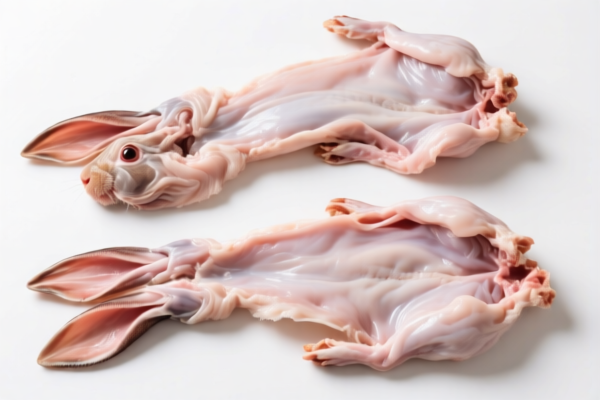
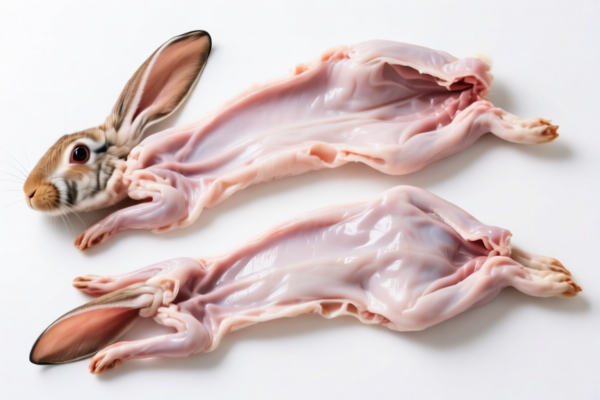
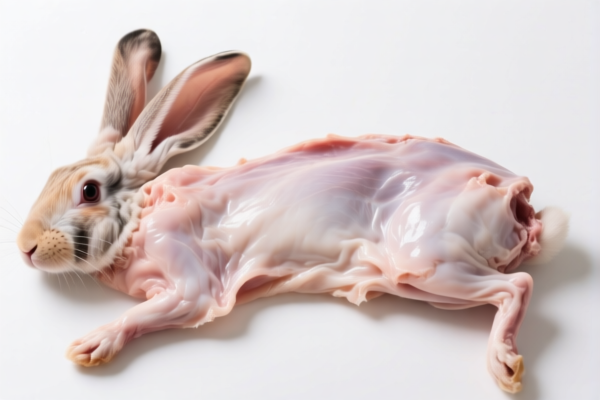
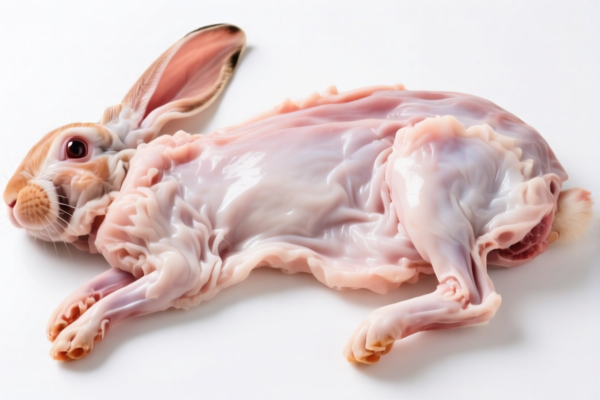
AI分析
🐑 Whole Raw Lambskins (Tanned or Untanned)
🌐 HS Code Reference & Customs Clearance Guide | 2026 Latest Tariff Analysis | Professional Customs Strategy
📌 I. Product Definition & Classification: Do You Really Understand "Whole Raw Lambskins"?
Whole Raw Lambskins refer to the hides of lambs (typically under 1 year of age) that have been removed from the carcass. In international trade, they are primarily classified based on their preservation state:
- Raw Skins (Unprocessed): Fresh or chilled skins, or those preserved with salt (wet salted) or dried. These are raw materials for the leather industry.
- Tanned/Processed Skins: Skins that have undergone tanning, pickling, or dyeing. However, the term "Raw" in the query usually implies Chapter 41 (Raw Hides and Skins) rather than Chapter 41 (Leather).
⚠️ Key Distinction:
- If the skins are salted, dried, or fresh (untanned) → Classified under HS Code 4101.
- If the skins are tanned, dyed, or further processed into leather → Classified under HS Code 4104 or 4106 (depending on animal type).
- Note: "Lambskins" specifically fall under HS 4106 if they are from sheep/lambs, but often grouped under general sheepskins in broader classifications. However, for specific "Lambskins," customs often look at 4106.31 (Sheep/Lamb, wet blue) or 4106.32 (Sheep/Lamb, other). Correction for "Whole Raw": Usually 4101.90 or 4106. Let's stick to the most common "Raw" classification for sheep/lamb.
- Specific HS for Raw Sheep/Lamb Skins: 4101.90 (Other) or 4106.31/32 if slightly processed (e.g., wet blue). For strictly raw (salted/dried), it is 4101.90 (if other) or 4101.20 (if bovine). Wait, 4101 is for Bovine. 4102 is for Sheep/Lamb.
- 4102.21: Sheep/Lamb, with wool
- 4102.29: Sheep/Lamb, without wool
- 4102.30: Skins of goatsClarification:
- Raw Sheep/Lamb Skins (with wool) → 4102.21
- Raw Sheep/Lamb Skins (without wool) → 4102.29
- Tanned/Processed Sheep/Lamb Skins → 4106.31 (Wet Blue) or 4106.32 (Other)🔍 Critical Point:
- "Raw" means not tanned. It may be salted, dried, or fresh.
- "Whole" means not cut into pieces (though cutting is allowed for transport, it must be recognizable as whole skins).
- "Lambskins" usually refers to skins from sheep (<1 year) or sheep in general. In HS, "Sheep and Lamb" are grouped.
📦 II. HS Code Classification Details (2026 Latest Tariff Authority)
| HS Code | Product Description | Applicable Scenario | Tanned/Processed? |
|---|---|---|---|
4102.21.00.00 |
Sheep or Lamb Skins, with Wool, Fresh, Chilled, Frozen, or Salted | Raw wool hides, salted lambskins with wool | ❌ No (Raw) |
4102.29.00.00 |
Sheep or Lamb Skins, Without Wool, Fresh, Chilled, Frozen, or Salted | Skinned lambs, de-haired, or hairless raw skins | ❌ No (Raw) |
4106.31.00.00 |
Sheep or Lamb Skins, Tanned or Crust, Wet Blue | Semi-processed, blue pickled, ready for dyeing | ✅ Yes (Tanned) |
4106.32.00.00 |
Sheep or Lamb Skins, Tanned or Crust, Other | Fully tanned, dyed, or finished leather | ✅ Yes (Tanned) |
4101.90.00.00 |
Bovine Hides/Skins (Other) | Cow/Calf hides (if misclassified as sheep) | ❌ No (Raw) |
🔍 Key Reminder:
- "Whole Raw Lambskins" typically fall under 4102.21 (with wool) or 4102.29 (without wool) if they are not tanned.
- If they are "Wet Blue" (pickled but not fully tanned), they may be classified under 4106.31.
- Do not confuse with 4101 (Bovine) or 4104 (Sheep/Lamb leather).
- "Whole" implies the skin is intact. If cut into small pieces, it may be considered "leather scraps" (HS 4115), which has different tariffs.
💰 III. 2026 Latest Tariff Rate Details (Including Surcharges)
✅ Applicable Country: United States (US)
✅ Origin: China (CN)
✅ Effective Time: November 10, 2025 onwards
🎯 1. 4102.21.00.00 / 4102.29.00.00 —— Raw Sheep/Lamb Skins (With/Without Wool)
| Item | Content |
|---|---|
| Base Tariff Rate | 2.5% (ad valorem) |
| USITC Additional Tariff | +25% (from USITC Footnote 9903.88.01) |
| IEEPA Additional Tariff | +10% (For China/HK products, from Nov 10, 2025) |
| Total Tariff Rate | 37.5% |
| Tax Calculation | CIF Value × 37.5% |
| De Minimis Eligibility | ❌ No (deny_de_minimis) |
| Legal Basis Path | IEEPA:9903.01.25 → IEEPA:9903.01.24 → USITC:4102.21.00.00 → FOOTNOTE:9903.88.01 |
📌 Explanation:
- "USITC Additional Tariff 25%": Under Section 301 of the Trade Act.
- "IEEPA 10%": Under the International Emergency Economic Powers Act.
- Total 37.5%: High tariff rate for raw agricultural/by-product goods. Must be planned in advance!
🎯 2. 4106.31.00.00 —— Wet Blue Sheep/Lamb Skins (Semi-Processed)
| Item | Content |
|---|---|
| Base Tariff Rate | 2.5% |
| USITC Additional Tariff | +25% |
| IEEPA Additional Tariff | +10% |
| Total Tariff Rate | 37.5% |
| Tax Calculation | CIF × 37.5% |
| De Minimis Eligibility | ❌ No |
| Legal Basis Path | IEEPA:9903.01.25 → IEEPA:9903.01.24 → USITC:4106.31.00.00 → FOOTNOTE:9903.88.01 |
📌 Note:
- "Wet Blue" is a semi-processed state. It is still subject to the same high tariffs as raw skins in the US market.
- Even if processed, if it remains "raw" in the sense of not being finished leather, the tariff is similar.
🛠️ IV. Customs Clearance Practical Advice (Real-World Pitfall Guide)
✅ 1. Document Checklist (Missing Any is Forbidden)
| Document | Mandatory? | Description |
|---|---|---|
| ✅ Product Specification Sheet | ✔️ | Including species (sheep/lamb), weight, size, preservation method (salted/dried) |
| ✅ Preservation Method Certificate | ✔️ | Confirm if salted, dried, or frozen. Critical for HS classification |
| ✅ Product Photos (Label) | ✔️ | Clear images of skins, showing wool presence/absence, labels, and brand |
| ✅ Third-Party Test Report | ✔️ | Phosphine Fumigation Certificate (if required), Halal Certificate (if applicable) |
| ✅ Commercial Invoice | ✔️ | Clearly state "Raw Sheep/Lamb Skins, Salted, with Wool" |
| ✅ Certificate of Origin (CO) | ✔️ | If not from China, may qualify for preferential rates |
| ✅ Packing List | ✔️ | Detailing weight per skin, total skins, and packaging material |
✅ 2. Declaration Tips (Key Mantra)
🔥 "Specify Species, State Preservation, Don't Mix Tanned & Raw, Tariffs Drop!"
| Scenario | Correct Declaration | Wrong Practice |
|---|---|---|
| Raw Salted Skins with Wool | 4102.21.00.00 |
Misdeclare as "Leather" → 4106/4104 → Higher Tariff + Inspection |
| Raw Skins Without Wool | 4102.29.00.00 |
Misdeclare as "With Wool" → Overpayment of Tax |
| Wet Blue Skins | 4106.31.00.00 |
Misdeclare as "Raw" → Customs may question processing level |
| Finished Dyed Leather | 4106.32.00.00 |
Misdeclare as "Raw" → Penalty for Under-Declaration |
✅ 3. Special Cases Handling
| Scenario | Handling Advice |
|---|---|
| Mixed Shipment (Sheep/Cow) | Separate HS Codes for Bovine (4101) and Sheep (4102). Do not mix in one line item. |
| Skins with Wool vs. Without Wool | Must specify. Wool adds value and affects classification (4102.21 vs 4102.29). |
| Phosphine Fumigation | Some countries require fumigation certificates for raw animal products. Provide if requested. |
| Halal Certification | For Muslim-majority countries, Halal certificate is mandatory for sheep/lamb products. |
🌍 V. Global Main Market Clearance Comparison (2026 Latest)
| Country/Region | Recommended HS Code | Tariff | Certification Requirement | Notes |
|---|---|---|---|---|
| 🇺🇸 USA | 4102.21.00.00 / 4102.29.00.00 |
37.5% (China) | Phosphine Fumigation (if req.) | High tariff due to Section 301 |
| 🇨🇳 China | 4102.21.00.00 / 4102.29.00.00 |
2.5% - 5% | N/A | Low tariff for raw materials |
| 🇪🇺 EU | 4102.21.00.00 / 4102.29.00.00 |
12% - 17% | Halal (for import), Phytosanitary | High tariff, strict hygiene rules |
| 🇦🇺 Australia | 4102.21.00.00 / 4102.29.00.00 |
5% | Biosecurity Check | Strict biosecurity for animal products |
| 🇯🇵 Japan | 4102.21.00.00 / 4102.29.00.00 |
12% - 17% | Veterinary Certificate | High tariff, requires veterinary inspection |
📌 Conclusion:
- USA: Highest tariff (37.5%) due to trade war measures.
- EU/Australia: High tariffs and strict biosecurity/Halal requirements.
- China: Lowest tariff, ideal for import for processing.
📌 VI. Common Errors & Pitfall Guide (Blood & Tears Lessons)
❌ Error 1: Mixing "Raw Skins" with "Finished Leather" in one declaration
👉 Consequence: Customs will reject, delay, or impose fines for misclassification.
❌ Error 2: Not specifying "With Wool" or "Without Wool"
👉 Consequence: HS Code ambiguity → 37.5% vs. lower rates → Potential overpayment or underpayment penalties.
❌ Error 3: Failing to provide Phosphine Fumigation Certificate
👉 Consequence: Goods held in quarantine, fumigation required at importer's expense, or returned.
❌ Error 4: Declaring "Lambskins" as "Cow Hides" to avoid tariffs
👉 Consequence: Severe penalty for fraud, blacklisting, and confiscation.
✅ Correct Practice:
"Raw Sheep Skins, Salted, with Wool, 10kg per skin, for Leather Manufacturing, Model: RAW-SHEEP-W-10KG, Phosphine Fumigated"
🎯 VII. Conclusion: Professional Declaration, Save Time, Reduce Costs!
🎯 Remember the Mantra:
🔹 "Specify Wool, Declare Preservation, Separate Species, Tariffs Drop!"
🔹 "HS Code Determines Fate, Tariff Difference 35%, Declaration Error, Penalty Up!"
📌 Tips:
- If your lambskins originate from Vietnam, Mexico, Thailand, Malaysia, you can apply for IEEPA Exemption, reducing tariff to 0%~5%.
- Suggest applying for Advance Ruling before shipment to avoid clearance risks.
📣 Act Now:
📞 Contact Professional Customs Broker + Provide Product Photos + Apply for HS Code Advance Ruling
🚀 Let your lambskins clear customs smoothly, export efficiently, and double profits!
✨ Professional Clearance Starts with Accurate Classification!
💼 Every Penny of Your Cost Deserves Precise Calculation!
用户评价
关于 HS 编码归类
协调制度(HS)是由世界海关组织(WCO)制定的国际贸易商品分类标准。全球 200 多个国家采用 HS 系统作为海关关税、贸易统计和进出口监管的基础。
每个 HS 编码遵循以下层级结构:
- 章(2 位)——商品大类(例如:第 84 章:机器和机械设备)
- 品目(4 位)——章内的更具体分类
- 子目(6 位)——国际通用细分,所有 WCO 成员国统一使用
- 本国细分(8-10 位)——各国自行扩展的细分编码,如美国 HTSUS 10 位编码
正确的 HS 编码归类对于顺利通关、准确缴纳关税和遵守贸易法规至关重要。错误归类可能导致海关延误、多缴关税或罚款。
从CN进口到US时,适用的关税税率可能包括:
- 最惠国(MFN)税率——适用于 WTO 成员国的标准关税税率
- 普通税率——适用于无贸易协定国家
- 贸易救济关税——附加关税,如 301 条款(反倾销)、232 条款(国家安全)或反补贴税
本页内容仅供参考。如需正式归类,请咨询当地海关或持牌报关代理。