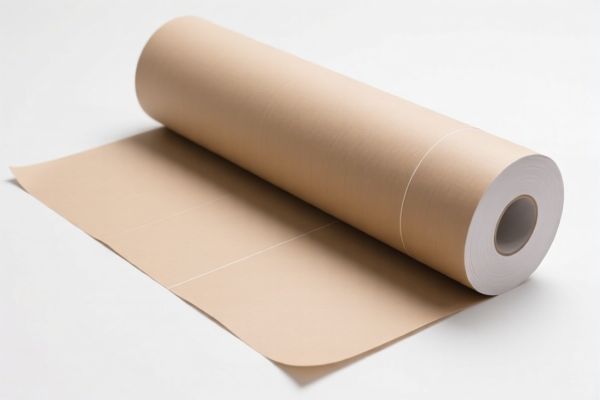
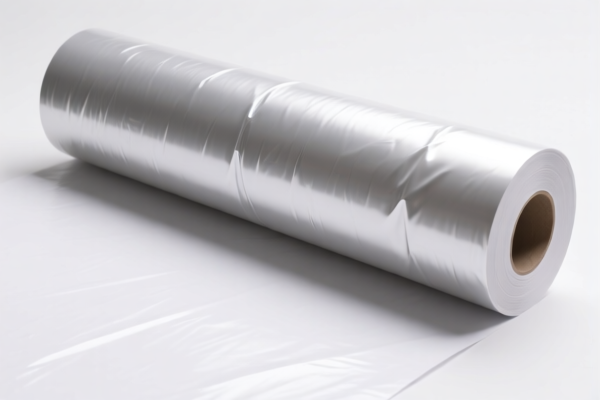
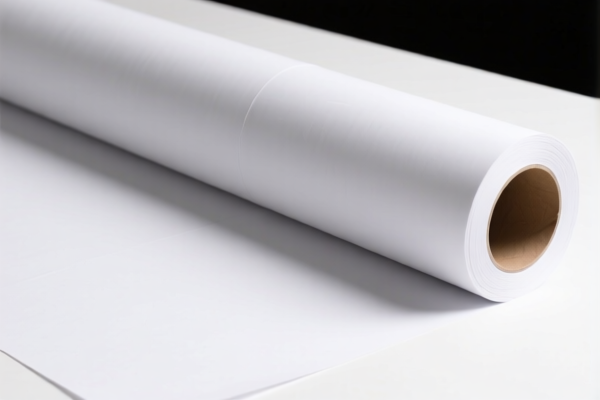
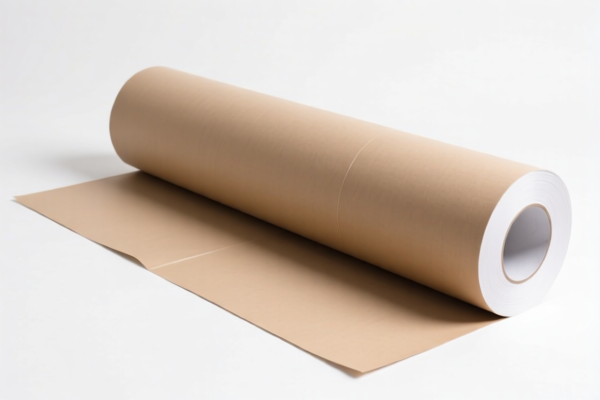
wide film roll non perforated
CN → US| HS编码 | 关税税率 | 原产国 | 目的国 | 文档 |
|---|---|---|---|---|
| 3920200055 | 39.2% | CN | US | 官方文档 |
| 3920100000 | 39.2% | CN | US | 官方文档 |
| 3923400050 | 40.3% | CN | US | 官方文档 |
| 3919905040 | 40.8% | CN | US | 官方文档 |
| 3921905050 | 39.8% | CN | US | 官方文档 |
商品图片
AI分析
📦 Wide Film Rolls (Non-Perforated, Unprocessed)
🌐 HS Code Reference & Customs Clearance Guide | 2024/2025 Tariff Breakdown | Professional Classification Strategy
📌 I. Product Definition & Classification: What Exactly is "Wide Film Roll"?
"Wide film rolls" typically refer to continuous sheets of plastic material wound into rolls. In international trade, the classification depends heavily on the processing state, material composition, and specific function. Since the input specifies "non-perforated" and implies an "unprocessed" or "semi-processed" state (based on the provided data), we are dealing primarily with Plastic Films (Chapter 39).
⚠️ Key Distinction Points:
- Unprocessed/Primary Form: If the film is raw, unprinted, and not yet converted into a specific container (like a bag), it falls under Chapter 39.01–39.21.
- Self-Adhesive: If the film has a backing and adhesive, it moves to 3919.
- Containers/Packaging: If the film is shaped into a specific support structure (like a reel core or specific packaging), it may fall under 3923.
- Material Assumption: The provided data strongly infers Plastic Material.
📊 II. HS Code Classification Details (Based on Provided Data)
| HS Code | Product Description | Key Characteristics | Inferred Material |
|---|---|---|---|
3920.20.00.55 |
Wide film roll (unprocessed), sheet form | Primary shape, raw plastic film, wide format | Plastic |
3920.10.00.00 |
Wide film roll (unprocessed), film form | Non-reinforced, non-laminated, pure film structure | Plastic |
3923.40.00.50 |
Wide film roll (non-perforated) | Matches category for plastic supports/reels; rolled form | Plastic |
3919.90.50.40 |
Wide film (self-adhesive) | Has adhesive backing, thin film structure | Plastic |
3921.90.50.50 |
Wide film (other plastic films) | General category for plastic films not elsewhere specified | Plastic |
🔍 Important Note:
- All these codes assume the material is Plastic. If the material is paper, textile, or rubber, these HS codes are incorrect.
- The term "Unprocessed" in3920suggests the film is in its primary sheet form, not yet cut into bags or boxes.
-3923.40.00.50is distinct because it refers to "Reels, Spools, and Similar Supports," which might apply if the "roll" includes a core or is used as a support structure.
💰 III. Detailed Tariff Rate Breakdown (US Import Scenario)
✅ Applicable Country: United States (US)
✅ Origin: China (CN) (Based on the "Section 301" and "122 Tariff" mentions in the data)
✅ Effective Time: Current (2024/2025)
🎯 1. HS Code 3920.20.00.55 & 3920.10.00.00 (Unprocessed Plastic Films)
| Item | Detail |
|---|---|
| Base Tariff Rate | 4.2% (Standard MFN rate for plastic films) |
| Section 301 Tariff (Trade War) | +25.0% (List 3/4 Items: Many plastic products are subject to this) |
| Section 122 Tariff (Bicameral) | +10.0% (Specific US legislation affecting certain Chinese imports) |
| Total Effective Tax Rate | 39.2% |
| Tax Calculation | CIF Value × 39.2% |
| De Minimis Exemption | ❌ Not Eligible (Value > $800 threshold; Section 301 taxes apply) |
| Legal Basis Path | HTSUS:3920 → USITC Footnote 9903.03.01 (Section 301) → Section 122 Legislation |
📌 Explanation:
- The 4.2% is the standard import duty for plastic films without specific higher duties.
- The +25% is the controversial Section 301 tariff imposed on a wide range of Chinese goods.
- The +10% is an additional levy under Section 122 of the Trade Facilitation and Trade Enforcement Act (or similar recent provisions affecting specific plastic categories).
- Total: 39.2%. This is a high-cost category for Chinese-origin plastic films.
🎯 2. HS Code 3923.40.00.50 (Plastic Supports/Reels)
| Item | Detail |
|---|---|
| Base Tariff Rate | 5.3% |
| Section 301 Tariff | +25.0% |
| Section 122 Tariff | +10.0% |
| Total Effective Tax Rate | 40.3% |
| Tax Calculation | CIF Value × 40.3% |
| De Minimis Exemption | ❌ Not Eligible |
📌 Note:
- This code is slightly more expensive due to a higher base rate (5.3% vs 4.2%).
- It applies if the "roll" is considered a "support" or "spool" rather than just the film itself.
🎯 3. HS Code 3919.90.50.40 (Self-Adhesive Films)
| Item | Detail |
|---|---|
| Base Tariff Rate | 5.8% |
| Section 301 Tariff | +25.0% |
| Section 122 Tariff | +10.0% |
| Total Effective Tax Rate | 40.8% |
| Tax Calculation | CIF Value × 40.8% |
| De Minimis Exemption | ❌ Not Eligible |
📌 Note:
- Self-adhesive films have a higher base tariff (5.8%) because they are considered "finished" adhesive products.
- Highest total rate (40.8%) among the unprocessed options.
🎯 4. HS Code 3921.90.50.50 (Other Plastic Films)
| Item | Detail |
|---|---|
| Base Tariff Rate | 4.8% |
| Section 301 Tariff | +25.0% |
| Section 122 Tariff | +10.0% |
| Total Effective Tax Rate | 39.8% |
| Tax Calculation | CIF Value × 39.8% |
| De Minimis Exemption | ❌ Not Eligible |
📌 Note:
- This is a "catch-all" category for plastic films not specified elsewhere (e.g., reinforced, laminated, or composite films).
- Slightly lower total rate than adhesive films but higher than basic unprocessed films.
🛠️ IV. Customs Clearance Practical Advice
✅ 1. Documentation Checklist (Essential for Clearance)
| Document | Required? | Purpose |
|---|---|---|
| Commercial Invoice | ✅ Yes | Must clearly state "Wide Film Roll, Non-Perforated, Plastic Material." |
| Packing List | ✅ Yes | Detail roll dimensions (width, length, diameter) and weight. |
| Material Declaration | ✅ Yes | Confirm 100% Plastic Composition. Critical for HS Code selection. |
| Product Photos | ✅ Yes | Show the roll, core, and any labeling. Prove "non-perforated" status. |
| Certificate of Origin | ✅ Yes | To confirm Chinese origin (if applicable) and assess Section 301 liability. |
| Technical Data Sheet | ✅ Optional | Specify thickness (microns), polymer type (PE, PP, PET, etc.). |
✅ 2. Classification Strategy & Pitfalls
🔥 "Material First, Form Second, Adhesive Check Third!"
| Scenario | Correct HS Code | Why? |
|---|---|---|
| Raw Plastic Sheet on a Roll | 3920.20.00.55 or 3920.10.00.00 |
Unprocessed, no adhesive, no lamination. Lowest base rate. |
| Plastic Roll with Adhesive Backing | 3919.90.50.40 |
Self-adhesive nature shifts it to Chapter 39.19. Higher base rate. |
| Plastic Film used as a Spool/Reel Core | 3923.40.00.50 |
If the item is structured as a support, not just a sheet. |
| Mixed Material (e.g., Paper+Plastic) | NOT Covered | Data assumes 100% Plastic. If mixed, classification changes completely. |
⚠️ Critical Warning:
- Do NOT use De Minimis ($800) to avoid Section 301 taxes if the value is high. US Customs strictly enforces Section 301 on plastic films from China.
- Do NOT mislabel "Unprocessed" as "Finished Goods" to lower rates. This leads to audits, penalties, and cargo holds.
✅ 3. Special Cases
| Situation | Recommendation |
|---|---|
| Non-Chinese Origin | If produced in Vietnam, Thailand, or Malaysia, Section 301 (25%) and Section 122 (10%) may be waived. Total tax could drop to 4.2–5.8%. |
| Perforated Film | If perforated, it may fall under different subheadings. Ensure "Non-Perforated" is explicitly stated in documentation. |
| Reinforced/Laminated | If the film is layered or reinforced with mesh, it may fall under 3921 or 3920 subcategories with different base rates. |
🌍 V. Global Market Comparison (2024/2025)
| Market | Recommended HS Code | Approx. Total Tax (China Origin) | Key Requirements |
|---|---|---|---|
| 🇺🇸 USA | 3920.20.00.55 |
39.2% | Section 301 + Section 122. High burden. |
| 🇨🇳 China (Import) | 3920.20.00.55 |
~5–10% | Standard import VAT + Duty. No Section 301. |
| 🇪🇺 EU | 3920.20.00.00 |
~6.5% | No Section 301. Standard EU tariff. |
| 🇬🇧 UK | 3920.20.00.00 |
~6.5% | Post-Brexit tariff schedule. |
| 🇦🇺 Australia | 3920.20.00.00 |
~5% | No special anti-dumping on plastics. |
📌 Conclusion:
- USA is the most expensive market for Chinese plastic films due to dual tariffs (Section 301 + 122).
- EU, UK, and Australia offer significantly lower duties (~5–6.5%).
- Strategy: If targeting the US, consider supply chain relocation to Southeast Asia to avoid the 35%+ tariff burden.
📌 VI. Common Mistakes & Pitfalls (Lessons Learned)
❌ Mistake 1: Classifying "Unprocessed Film" as "Finished Packaging Bags"
👉 Result: Incorrect HS Code, potential 0% duty claim, but Customs will reclassify and charge back-taxes + penalties.
❌ Mistake 2: Ignoring "Section 122" Tariff
👉 Result: Unexpected 10% charge at customs, delaying release and increasing storage fees.
❌ Mistake 3: Claiming "De Minimis" for High-Value Shipments
👉 Result: Customs audit, cargo seizure, and blacklisting of the importer.
❌ Mistake 4: Misidentifying Material
👉 Result: If the film is not plastic (e.g., biodegradable PLA or paper-based), HS Code 3920 is invalid. Use appropriate Chapter (e.g., 4811 for paper).
✅ Correct Approach:
"Wide Plastic Film Roll, Non-Perforated, Unprocessed, 100% Polyethylene, China Origin, HS Code 3920.20.00.55"
🎯 VII. Conclusion: Professional Classification Saves Money!
🎯 Remember the Formula:
🔹 Base Rate (4.2%) + Section 301 (25%) + Section 122 (10%) = 39.2%
🔹 HS Code Choice Matters:3920(4.2% base) vs3919(5.8% base) affects total cost.
🔹 Origin is Key: Chinese origin = High Tax. Non-Chinese origin = Low Tax.
📌 Pro Tip:
If your plastic film rolls are high-value, consult a customs broker for an Advance Ruling (Ruling Letter) from US Customs and Border Protection (CBP) to lock in the classification and avoid post-clearance audits.
📣 Immediate Action:
📞 Contact a Licensed Customs Broker
📄 Prepare Detailed Product Specs (Material, Thickness, Width)
🌍 Evaluate Supply Chain: Can you source from Vietnam/Thailand to save ~35%?
✨ Smart Classification, Lower Duties, Faster Clearance!
💼 Your Profit Margin Depends on Precision!
用户评价
关于 HS 编码归类
协调制度(HS)是由世界海关组织(WCO)制定的国际贸易商品分类标准。全球 200 多个国家采用 HS 系统作为海关关税、贸易统计和进出口监管的基础。
每个 HS 编码遵循以下层级结构:
- 章(2 位)——商品大类(例如:第 84 章:机器和机械设备)
- 品目(4 位)——章内的更具体分类
- 子目(6 位)——国际通用细分,所有 WCO 成员国统一使用
- 本国细分(8-10 位)——各国自行扩展的细分编码,如美国 HTSUS 10 位编码
正确的 HS 编码归类对于顺利通关、准确缴纳关税和遵守贸易法规至关重要。错误归类可能导致海关延误、多缴关税或罚款。
从CN进口到US时,适用的关税税率可能包括:
- 最惠国(MFN)税率——适用于 WTO 成员国的标准关税税率
- 普通税率——适用于无贸易协定国家
- 贸易救济关税——附加关税,如 301 条款(反倾销)、232 条款(国家安全)或反补贴税
本页内容仅供参考。如需正式归类,请咨询当地海关或持牌报关代理。