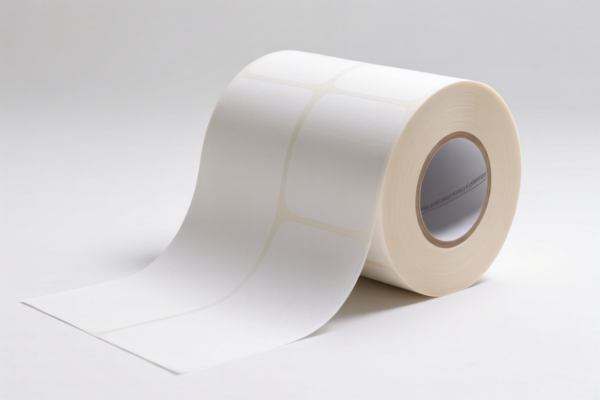
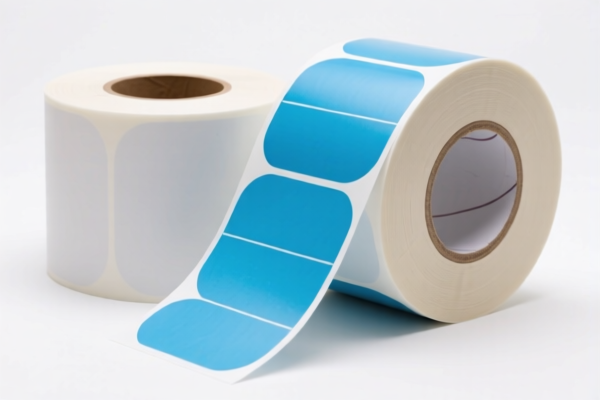
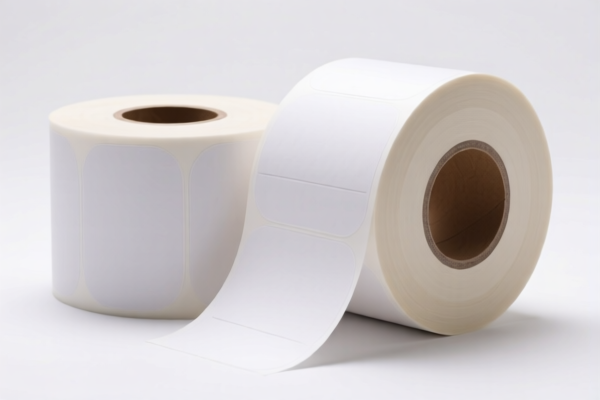
wide format negative film roll
CN → US| HS编码 | 关税税率 | 原产国 | 目的国 | 文档 |
|---|---|---|---|---|
| 3702430100 | 38.7% | CN | US | 官方文档 |
| 3702440160 | 38.7% | CN | US | 官方文档 |
| 3702320160 | 38.7% | CN | US | 官方文档 |
| 3704000000 | 35.0% | CN | US | 官方文档 |
| 3702960000 | 38.7% | CN | US | 官方文档 |
商品图片
AI分析
🎞️ Wide Format Negative Film Roll (宽幅负片胶卷)
🌐 HS Code Reference & Customs Clearance Guide | 2026 Latest Tariff Analysis | Professional Strategy for Photographic Materials
📌 1. Product Definition: What Exactly Is "Wide Format Negative Film"?
In international trade, Negative Film Roll refers to light-sensitive photographic material that has been exposed (or unexposed) but not yet developed. It is characterized by: * Form: Rolls (not sheets or plates). * Material: Typically plastic base (acetate or polyester) coated with silver halide emulsion. Not made of paper, cardboard, or textiles. * State: Can be Unexposed (ready for use) or Exposed/Unprocessed (already used but not developed). * Width: "Wide Format" generally implies a width exceeding standard 35mm formats, often >105mm, used for large-format cameras or industrial inspection.
⚠️ Critical Distinction for Customs: * If the film is Unexposed → It is a "Light-sensitive photographic film." * If the film is Exposed but Unprocessed → It is "Exposure photography material." * Material Check: Must be non-paper/non-textile. If it’s on paper (like photo paper), it goes to a different chapter!
📦 2. HS Code Classification Matrix (Based on Provided Data)
| HS Code | Product Description | State/Condition | Tax Rate (Total) | Tax Details Breakdown |
|---|---|---|---|---|
| 3702.43.01.00 | Wide format negative roll (Roll form). Light-sensitive material. | Exposed, Unprocessed (Feature: Already exposed but not yet developed) |
38.7% | Base: 3.7% Section 301: 25.0% Section 122: 10% |
| 3702.44.01.60 | Wide format negative roll (Roll form). | Unexposed (Width >105mm; Non-paper, non-instant print) |
38.7% | Base: 3.7% Section 301: 25.0% Section 122: 10% |
| 3702.32.01.60 | Black & White Negative Roll | Unexposed (Perforated/Non-perforated film, Silver Halide) |
38.7% | Base: 3.7% Section 301: 25.0% Section 122: 10% |
| 3704.00.00.00 | Black & White Negative Roll | Exposed, Unprocessed (Photographic material, exposed but undeveloped) |
35.0% | Base: 0.0% Section 301: 25.0% Section 122: 10% |
| 3702.96.00.00 | Black & White Negative Roll | Unexposed (Generic light-sensitive film, non-paper/textile) |
38.7% | Base: 3.7% Section 301: 25.0% Section 122: 10% |
🔍 Key Insight: * Most Unexposed wide format films fall under Chapter 3702 (Light-sensitive photographic film), attracting a 38.7% total rate. * Exposed/Unprocessed films may fall under 3704.00.00.00 (Exposure photography materials) or stay in 3702 depending on specific formatting. The provided data shows 3704.00.00.00 has a slightly lower base rate (0%) but the same additional tariffs, resulting in a 35.0% total rate.
💰 3. Detailed Tariff Breakdown (USA Market Context)
✅ Origin: China (CN)
✅ Market: United States (US)
✅ Effective Date: Current policies (Section 301 & IEEPA)
🎯 A. The 38.7% Rate (HS Codes: 3702.43.01.00, 3702.44.01.60, 3702.32.01.60, 3702.96.00.00)
This is the standard rate for light-sensitive photographic film (usually unexposed).
| Item | Rate | Source/Legal Basis |
|---|---|---|
| Most Favored Nation (MFN) Base Rate | 3.7% | Harmonized Tariff Schedule (HTSUS) |
| Section 301 Additional Duty | 25.0% | US Trade Act of 1974, Sec. 301 |
| Section 122 Duty | 10% | Specific provision (likely IEEPA/Executive Order related) |
| TOTAL EFFECTIVE RATE | 38.7% | Ad Valorem |
📌 Explanation: * The 3.7% is the standard baseline for photographic films in the US. * The 25.0% is the notorious "Trump Tariff" or Section 301 duty on Chinese goods. * The 10% is an additional surcharge (Section 122), often applied to strategic or sensitive categories. * Result: A $10,000 shipment incurs $3,870 in duties alone.
🎯 B. The 35.0% Rate (HS Code: 3704.00.00.00)
This applies to exposure photography materials (usually exposed but undeveloped).
| Item | Rate | Source/Legal Basis |
|---|---|---|
| Most Favored Nation (MFN) Base Rate | 0.0% | Many exposure materials are duty-free under MFN |
| Section 301 Additional Duty | 25.0% | US Trade Act of 1974, Sec. 301 |
| Section 122 Duty | 10% | Specific provision |
| TOTAL EFFECTIVE RATE | 35.0% | Ad Valorem |
📌 Advantage: * If your film is already exposed (e.g., professional cinematography rolls sent for scanning), it might qualify for 3704.00.00.00, saving you 3.7% compared to unexposed film. * However, you must prove it is not for sale as raw material but for processing/service.
🛠️ 4. Customs Clearance Practical Advice (Avoiding Pitfalls)
✅ 1. Documentation Checklist (Mandatory)
| Document | Requirement | Reason |
|---|---|---|
| Commercial Invoice | Must specify: "Photographic Film," "Width >105mm," "Material: Polyester/Acetate Base," "Silver Halide Emulsion." | Prevents misclassification as "Paper" or "Plastic Sheet." |
| Product Specification | Confirm if Exposed or Unexposed. | Determines HS Code (3702 vs. 3704). |
| CoA (Certificate of Analysis) | Proof of chemical composition (Silver Halide). | Verifies it is a chemical photographic product, not digital. |
| HS Code Pre-Ruling | Highly Recommended | Given the high tariff (35-38.7%), a pre-ruling can provide legal certainty. |
✅ 2. Classification Strategy (Critical!)
| Scenario | Recommended HS Code | Why? |
|---|---|---|
| New Rolls (Unexposed) | 3702.44.01.60 or 3702.32.01.60 |
Standard light-sensitive film. Width >105mm fits 3702.44. |
| Exposed Rolls (Unprocessed) | 3704.00.00.00 |
"Exposure photography materials." Lower base tax (0%). |
| Paper-Based Negative | WRONG CATEGORY | If on paper, it’s NOT 3702. Check Chapter 3701/3703 or 4813. |
| Digital Negative File | WRONG CATEGORY | Digital files are not physical film. Different classification entirely. |
✅ 3. Common Errors & Consequences
❌ Error 1: Misidentifying Material as "Plastic Sheet"
👉 Consequence: Classified under Chapter 39 (Plastics), leading to incorrect duty rates and potential penalties for misdeclaration.
✅ Fix: Emphasize "Light-sensitive" and "Silver Halide" in description.
❌ Error 2: Ignoring "Width" Specification
👉 Consequence: If width is <105mm, it may fall under different subheadings (e.g., 35mm film).
✅ Fix: Clearly state width in mm in the invoice.
❌ Error 3: Confusing "Exposure" with "Development"
👉 Consequence: Customs may reject the claim for 3704 if the film is still considered "raw material" for commercial photography sales.
✅ Fix: Provide a letter of explanation from the manufacturer stating the film is already exposed and intended for processing.
🌍 5. Global Market Comparison (2026 Outlook)
| Country | HS Code | Base Rate | Additional Duties | Total Est. Rate | Notes |
|---|---|---|---|---|---|
| 🇺🇸 USA | 3702.44.01.60 | 3.7% | 35% (Sec 301 + 122) | 38.7% | High barrier for Chinese origin. |
| 🇪🇺 EU | 3702.44 | 6.5% | 0% | 6.5% | No Section 301 equivalent. |
| 🇨🇳 China | 3702.44 | 6.5% | 0% | 6.5% | Import duty for foreign film. |
| 🇯🇵 Japan | 3702.44 | 6.0% | 0% | 6.0% | No major surcharges. |
📌 Conclusion: The USA market is the most expensive due to layered tariffs (Base + 301 + 122). For US imports, consider: 1. Re-exporting from a third country (subject to rules of origin). 2. Using Exposed Film (
3704.00.00.00) if applicable to save 3.7%. 3. Advance Rulings to ensure correct classification and avoid retroactive penalties.
📌 6. Final Recommendations
- Verify State: Is the film Unexposed or Exposed? This is the single biggest factor in choosing between 3702 (38.7%) and 3704 (35.0%).
- Specify Width: Ensure the invoice explicitly states "Width > 105mm" to justify the "Wide Format" classification under 3702.44.
- Material Confirmation: Confirm the base is non-paper (e.g., Polyester). If it’s paper-based, the classification changes completely.
- Budget for Tariffs: With a total rate of 35-38.7%, factor this into your landed cost calculation immediately.
🎯 Pro Tip:
"Exposed is Cheaper, Unexposed is Standard. Paper is Not Film."
Use precise language in your commercial invoice:
"Large Format Silver Halide Photographic Film, Polyester Base, Width 120mm, Unexposed/Exposed as stated."
✨ Professional clearance starts with precise classification!
💼 Every percentage point matters in high-tariff segments.
用户评价
关于 HS 编码归类
协调制度(HS)是由世界海关组织(WCO)制定的国际贸易商品分类标准。全球 200 多个国家采用 HS 系统作为海关关税、贸易统计和进出口监管的基础。
每个 HS 编码遵循以下层级结构:
- 章(2 位)——商品大类(例如:第 84 章:机器和机械设备)
- 品目(4 位)——章内的更具体分类
- 子目(6 位)——国际通用细分,所有 WCO 成员国统一使用
- 本国细分(8-10 位)——各国自行扩展的细分编码,如美国 HTSUS 10 位编码
正确的 HS 编码归类对于顺利通关、准确缴纳关税和遵守贸易法规至关重要。错误归类可能导致海关延误、多缴关税或罚款。
从CN进口到US时,适用的关税税率可能包括:
- 最惠国(MFN)税率——适用于 WTO 成员国的标准关税税率
- 普通税率——适用于无贸易协定国家
- 贸易救济关税——附加关税,如 301 条款(反倾销)、232 条款(国家安全)或反补贴税
本页内容仅供参考。如需正式归类,请咨询当地海关或持牌报关代理。