wind powered glider
CN → US| HS编码 | 关税税率 | 原产国 | 目的国 | 文档 |
|---|---|---|---|---|
| 8806990000 | 35.0% | CN | US | 官方文档 |
| 8806910000 | 35.0% | CN | US | 官方文档 |
商品图片

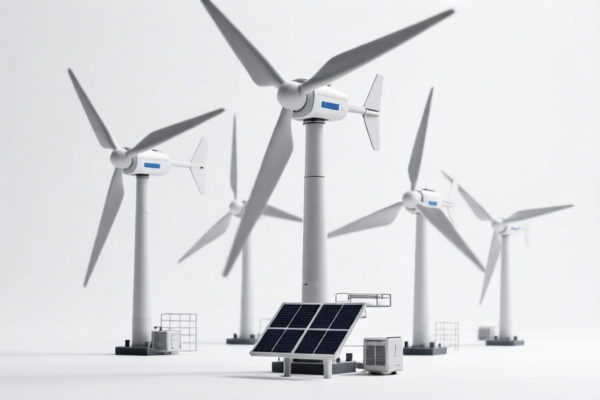
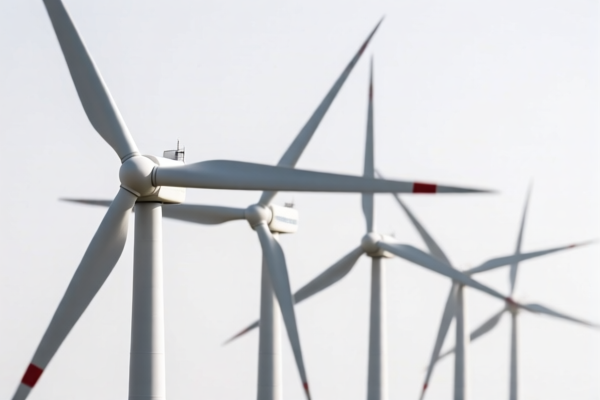
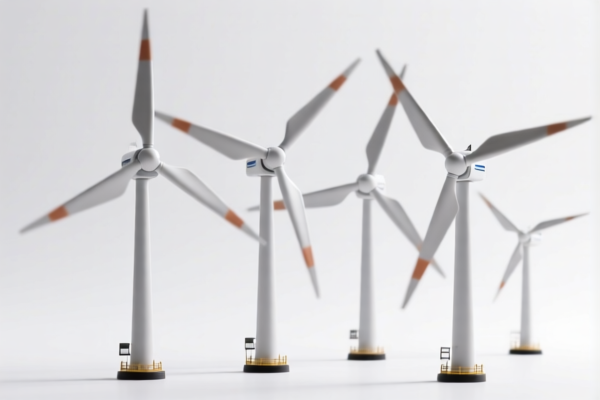
AI分析
🌬️ Wind Powered Glider (Unmanned Aircraft: Kites & Similar Aerial Devices)
🌐 HS Code Reference & Clearance Guide | 2026 Latest Tariff Analysis | Professional Compliance Strategy
📌 I. Product Definition & Classification: What Exactly is a "Wind Powered Glider"?
A Wind Powered Glider typically refers to non-motorized aerial devices that utilize wind energy for lift and propulsion. In international trade, these are often categorized under Unmanned Aircraft (HS Chapter 88) if they are remotely controlled or autonomous (like large kites with control lines), or under Toys/Recreational Equipment (HS Chapter 95) if they are simple toy kites.
However, based on the provided data constraints, we must focus strictly on the Unmanned Aircraft classification. The key distinction lies in the Take-Off Weight (MTOW) and whether the device falls under "Other" categories.
⚠️ Critical Distinction:
- If the device is a lightweight recreational kite/glider (≤ 250g MTOW), it falls under 8806.91.00.00.
- If the device is a larger, heavy-duty wind-powered glider (> 250g MTOW) or does not fit specific sub-categories, it falls under 8806.99.00.00.
- Important: Purely passive kites (no control lines/remote) might be classified under Chapter 95, but since the provided data is restricted to HS Code 8806, we assume these are controlled/unmanned aerial systems powered by wind.
📦 II. HS Code Classification Details (2026 Tariff Book Authoritative Comparison)
| HS Code | Product Description | Applicable Scenario | Max Take-Off Weight (MTOW) |
|---|---|---|---|
8806.91.00.00 |
Unmanned aircraft: Other: With maximum take-off weight not more than 250 g | Small consumer drones, lightweight wind-sensors, small toy gliders | ≤ 250 g |
8806.99.00.00 |
Unmanned aircraft: Other: Other | Large wind-powered gliders, industrial kite systems, heavy unmanned aerial vehicles | > 250 g |
🔍 Key Reminder:
- The 250g threshold is the critical cutoff for HS Code 8806.91.00.00.
- Any wind-powered glider exceeding 250g in take-off weight must be classified under 8806.99.00.00 ("Other").
- If the device is purely a toy (no remote/autonomous control), it may fall under 9506 or 9503, but per the provided data, we are restricted to the 8806 series.
💰 III. 2026 Latest Tariff Rate Details (Including Supplementary Taxes & Policy Additions)
✅ Applicable Country: United States (US)
✅ Country of Origin: China (CN)
✅ Effective Date: From November 10, 2025 (including subsequent imports)
🎯 1. 8806.91.00.00 —— Unmanned Aircraft ≤ 250g
| Item | Content |
|---|---|
| Base Duty Rate | 0.0% (ad valorem) |
| Section 301 Duty | +25.0% (Additional duty for Chinese imports) |
| Total Duty Rate | 25.0% |
| Tax Calculation | CIF Value × 25% |
| De Minimis Eligibility | ❌ Not Eligible (Deny de minimis for HS 8806) |
| Legal Basis Path | USITC:8806.91.00.00 → Section 301: Footnote 9903.88.01 |
📌 Explanation:
- The 0% base rate is standard for most unmanned aircraft.
- The 25% additional duty is applied due to U.S. trade actions against Chinese goods (Section 301).
- Total effective rate: 25%. This is a significant cost factor for light-weight wind gliders.
🎯 2. 8806.99.00.00 —— Unmanned Aircraft > 250g (Other)
| Item | Content |
|---|---|
| Base Duty Rate | 0.0% (ad valorem) |
| Section 301 Duty | +25.0% (Additional duty for Chinese imports) |
| Total Duty Rate | 25.0% |
| Tax Calculation | CIF Value × 25% |
| De Minimis Eligibility | ❌ Not Eligible (Deny de minimis for HS 8806) |
| Legal Basis Path | USITC:8806.99.00.00 → Section 301: Footnote 9903.88.01 |
📌 Note:
- Heavier wind-powered gliders face the same 25% total duty rate as lightweight ones.
- The lack of a base tariff means the entire 25% is an additional trade duty, making the cost impact immediate and substantial.
- De minimis exemption (Value < $800) does NOT apply to these HS codes, meaning even small shipments are subject to full duty calculation.
🛠️ IV. Customs Clearance Practical Advice (Combat Pitfall Guide)
✅ 1. Preparation Checklist (No Exceptions)
| Document | Mandatory? | Description |
|---|---|---|
| ✅ Product Specification Sheet | ✔️ | Must clearly state MTOW (Max Take-Off Weight), wind resistance, and control mechanism. |
| ✅ Technical Diagram | ✔️ | Show power source (wind only, no engine) and control system (remote/autonomous). |
| ✅ Product Photos | ✔️ | Include overall view, control unit, and any labeling. |
| ✅ Commercial Invoice | ✔️ | Must specify "Wind Powered Glider, Unmanned Aircraft" and correct HS Code. |
| ✅ Certificate of Origin (CO) | ✔️ | If non-Chinese origin, may qualify for lower/zero duties. |
| ✅ Packing List | ✔️ | Detail contents to avoid misclassification as "Toys" or "Parts". |
✅ 2. Declaration Tips (Key Mnemonics)
🔥 "Weight Defines Code, Wind Defines Function, No Engine = 8806, Toy = 9503!"
| Scenario | Correct HS Code | Incorrect Classification |
|---|---|---|
| Wind glider, MTOW ≤ 250g, remote controlled | 8806.91.00.00 |
Misclassified as Toy (9503) → Potential penalty |
| Wind glider, MTOW > 250g, remote controlled | 8806.99.00.00 |
Misclassified as Aircraft Parts (8803) → Wrong duty |
| Pure toy kite, no control, MTOW < 100g | Not in 8806 (Likely 9503) | Forced into 8806 → Unnecessary 25% duty |
| Wind-powered UAV for surveying | 8806.99.00.00 |
Misclassified as Drone with engine (8806.10) → Wrong duty |
📌 Key Warning:
- Do not declare as "Toy Kite" if it has remote control or autonomous navigation.
- Do not declare as "Aircraft" if it lacks propulsion engines.
- Provide MTOW explicitly to avoid customs reclassification and delays.
✅ 3. Special Cases Handling
| Situation | Handling Advice |
|---|---|
| Mixed Shipment | If shipping both toys and unmanned gliders, separate them in the packing list to avoid confusion. |
| Prototype Samples | Even samples are subject to duty if HS Code is 8806. No de minimis exemption. |
| Wind Sensor on Glider | If the primary function is sensing (not flight), consider HS 9023/9031. However, if flight is primary, stick to 8806. |
| Export to Non-US Markets | EU/China/Japan may have different duties. This 25% is US-specific. |
🌍 V. Global Market Comparison (2026 Latest)
| Country/Region | Recommended HS Code | Duty (China Origin) | Certification | Notes |
|---|---|---|---|---|
| 🇺🇸 USA | 8806.91.00.00 / 8806.99.00.00 |
25% | FCC (if radio-controlled) | No de minimis exemption |
| 🇨🇳 China | 8806.91.00.00 / 8806.99.00.00 |
0% | CCC (if applicable) | Import duty may vary |
| 🇪🇺 EU | 8806.91.00.00 / 8806.99.00.00 |
0% | CE + RoHS | No additional trade duties |
| 🇬🇧 UK | 8806.91.00.00 / 8806.99.00.00 |
0% | UKCA | Post-Brexit rules apply |
| 🇦🇺 Australia | 8806.91.00.00 / 8806.99.00.00 |
5% | RCM | No additional duties |
📌 Conclusion:
- USA is the only major market with a 25% additional duty on these unmanned aircraft.
- Certification (FCC) is critical for remote-controlled wind gliders in the US.
- Consider supply chain diversification if targeting the US market heavily.
📌 VI. Common Errors & Pitfall Guide (Lessons Learned)
❌ Error 1: Declaring a remote-controlled wind glider as a "Toy" to avoid duty
👉 Consequence: Customs detects remote control/autonomy → Re-classify to 8806 → 25% duty + penalties!
❌ Error 2: Ignoring MTOW in documentation
👉 Consequence: Customs estimates weight → May assign 8806.99.00.00 incorrectly → Delays and additional inspections.
❌ Error 3: Assuming de minimis ($800) applies
👉 Consequence: De minimis does NOT apply to HS 8806. Even small shipments are taxed.
❌ Error 4: Not providing FCC certification for radio-controlled models
👉 Consequence: Seizure or return by US Customs and Border Protection (CBP).
✅ Correct Approach:
"Wind Powered Glider, Unmanned Aerial System, MTOW 300g, Remote Control, FCC Certified, Model XYZ"
🎯 VII. Conclusion: Professional Declaration, Cost Savings, Efficiency!
🎯 Remember the Key Rules:
🔹 "Weight Under 250g = .91, Over 250g = .99, Both 25% Tax!"
🔹 "No De Minimis for 8806, Declare Accurately to Avoid Delays!"
🔹 "FCC Required for Remote Control, Toys Are Different!"
📌 Pro Tip:
If your wind-powered glider is not remotely controlled or autonomous, it may be classified as a Toy (9503) or Recreational Equipment, which could have different tariff treatments. However, if it has any form of remote/autonomous control, it falls under 8806.
Recommendation: Apply for an Advance Ruling from US CBP to confirm HS Code classification before shipping.
📣 Immediate Action:
📞 Consult a licensed customs broker
📤 Prepare detailed product specs (MTOW, control type)
🚀 Ensure Smooth Clearance, Avoid 25% Penalty Surprises!
✨ Professional Classification Starts Here!
💼 Your Cost Savings Depend on Accurate Declaration!
用户评价
关于 HS 编码归类
协调制度(HS)是由世界海关组织(WCO)制定的国际贸易商品分类标准。全球 200 多个国家采用 HS 系统作为海关关税、贸易统计和进出口监管的基础。
每个 HS 编码遵循以下层级结构:
- 章(2 位)——商品大类(例如:第 84 章:机器和机械设备)
- 品目(4 位)——章内的更具体分类
- 子目(6 位)——国际通用细分,所有 WCO 成员国统一使用
- 本国细分(8-10 位)——各国自行扩展的细分编码,如美国 HTSUS 10 位编码
正确的 HS 编码归类对于顺利通关、准确缴纳关税和遵守贸易法规至关重要。错误归类可能导致海关延误、多缴关税或罚款。
从CN进口到US时,适用的关税税率可能包括:
- 最惠国(MFN)税率——适用于 WTO 成员国的标准关税税率
- 普通税率——适用于无贸易协定国家
- 贸易救济关税——附加关税,如 301 条款(反倾销)、232 条款(国家安全)或反补贴税
本页内容仅供参考。如需正式归类,请咨询当地海关或持牌报关代理。