wireless doorbell
CN → US| HS编码 | 关税税率 | 原产国 | 目的国 | 文档 |
|---|---|---|---|---|
| 8531809051 | 17.5% | CN | US | 官方文档 |
| 8517690000 | 35.0% | CN | US | 官方文档 |
| 8517180050 | 10.0% | CN | US | 官方文档 |
| 8531801500 | 11.3% | CN | US | 官方文档 |
| 8531809051 | 17.5% | CN | US | 官方文档 |
商品图片
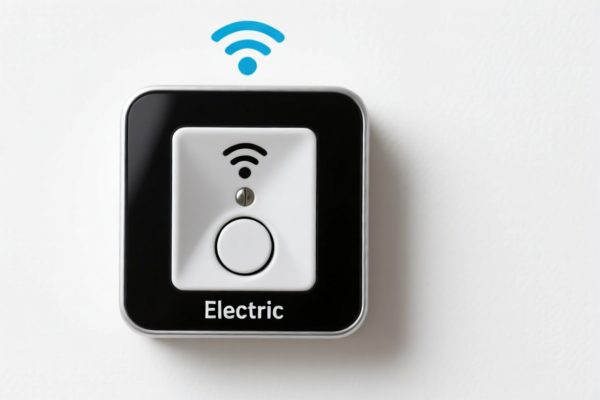
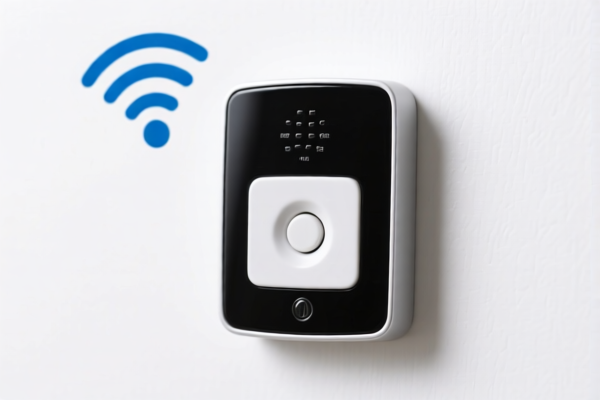
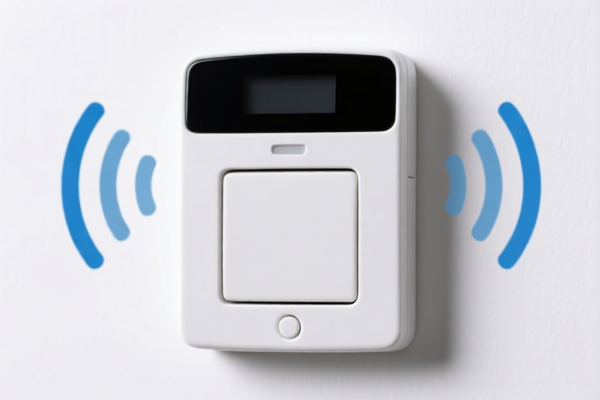
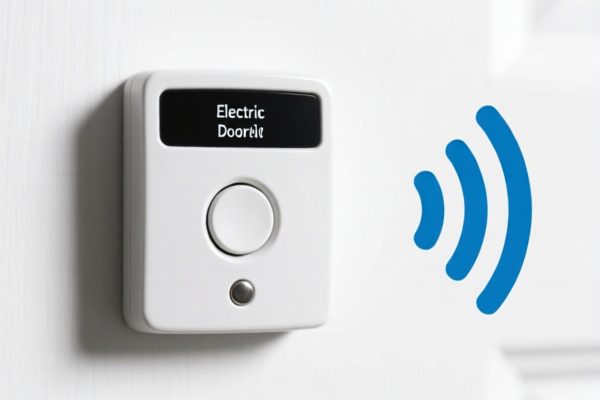
AI分析
🚪 Wireless Doorbell (Wireless Intercom & Signal Devices)
🌐 HS Code Reference & Clearance Guide | 2026 Latest Tariff Analysis | Professional Entry Strategies
📌 I. Product Definition & Classification: Do You Really Understand "Wireless Doorbells"?
The wireless doorbell is a household electronic accessory designed to transmit audio signals from a button (outside) to a receiver (inside) without physical wiring. In international trade, it does not have a single, rigid HS code. Its classification depends entirely on how it functions and what technology it uses.
It is generally categorized into two main logical paths: 1. Electro-acoustic Signal Devices: If it simply triggers a sound (ding-dong) based on a button press. 2. Wireless Communication Equipment: If it uses Wi-Fi, Zigbee, Bluetooth, or radio frequencies for complex data/signal transmission between devices.
⚠️ Key Distinction Point:
- If it is a simple "press button → make noise" system → Likely Chapter 8531 (Electrical sound or visual signaling apparatus).
- If it involves "data transmission," "Wi-Fi," or "networked reception" → Likely Chapter 8517 (Machines for the reception, conversion and transmission or regeneration of voice, images or other data, including repeaters and switching apparatus).
📦 II. HS Code Classification Details (2026 Authoritative Comparison)
Based on the provided data, here are the four distinct classifications for Wireless Doorbells:
| HS Code | Product Description | Applicable Scenario | Key Feature |
|---|---|---|---|
8531.80.90.51 |
Electro-acoustic signal apparatus (Other) | Simple wireless chimes that play a pre-recorded sound upon button press. | Signal Generation: Focuses on the "sound apparatus" aspect. |
8517.69.00.00 |
Wireless receiving apparatus for voice/signal transmission | Doorbells that transmit audio signals or simple control signals via RF/Wi-Fi. | Transmission: Focuses on the "wireless receiving device" aspect. |
8517.18.00.50 |
Wireless communication/network equipment | Smart doorbells connected to a home Wi-Fi network or app ecosystem. | Networking: Focuses on "Wireless Communication" capabilities. |
8531.80.15.00 |
Doorbells, gongs, etc. (Specific sub-category) | Traditional or specialized doorbell systems explicitly categorized as "Signal Equipment." | Specificity: Explicitly mentions "Doorbell/Gong" in the description. |
🔍 Critical Reminder:
-8531Codes are generally for devices whose primary function is signaling (making noise/light).
-8517Codes are for devices whose primary function is communication or signal transmission/reception.
- Misclassification between these chapters can lead to massive tariff discrepancies (from 10% to 35%).
💰 III. 2026 Latest Tariff Rate Breakdown (Including Surtaxes & Policy Add-ons)
✅ Applicable Country: United States (US)
✅ Origin: China (CN)
✅ Effective Date: Current Trade War Tariffs (Section 301 / IEEPA) apply.
🎯 1. 8531.80.90.51 —— Electro-acoustic Signal Apparatus (Other)
| Item | Content |
|---|---|
| Base Tariff | 0.0% |
| Section 301 Surcharge | +7.5% |
| IEEPA Surcharge (122 Clause) | +10.0% |
| Total Effective Rate | 17.5% |
| Tax Calculation | CIF Value × 17.5% |
| De Minimis Eligibility | ❌ No (Section 301 goods generally exempt from $800 de minimis relief if aggregated, though specific enforcement varies, high risk) |
| Legal Basis Path | USITC:8531.80.90.51 → Section 301: Footnote 1 → IEEPA: 122 Clause |
📌 Explanation:
- This classification assumes the doorbell is a simple "sound maker."
- The 7.5% Section 301 tariff applies to specific electro-acoustic goods.
- The 10% IEEPA is the standard surcharge on Chinese goods under current executive orders.
- Total: 17.5%. This is a moderate-high risk category.
🎯 2. 8517.69.00.00 —— Wireless Receiving Apparatus
| Item | Content |
|---|---|
| Base Tariff | 0.0% |
| Section 301 Surcharge | +25.0% |
| IEEPA Surcharge (122 Clause) | +10.0% |
| Total Effective Rate | 35.0% |
| Tax Calculation | CIF Value × 35.0% |
| De Minimis Eligibility | ❌ No |
| Legal Basis Path | USITC:8517.69.00.00 → Section 301: Footnote 9903.88 (Broad Tech Category) → IEEPA |
📌 Explanation:
- If CBP (Customs and Border Protection) views the doorbell as a "wireless communication receiver," it falls under List 4C or similar high-tariff tech categories.
- The 25% Section 301 is the standard rate for many wireless telecommunications equipment.
- Total: 35.0%. This is the highest risk classification. Avoid if possible unless technically necessary.
🎯 3. 8517.18.00.50 —— Wireless Communication/Network Equipment
| Item | Content |
|---|---|
| Base Tariff | 0.0% |
| Section 301 Surcharge | 0.0% |
| IEEPA Surcharge (122 Clause) | +10.0% |
| Total Effective Rate | 10.0% |
| Tax Calculation | CIF Value × 10.0% |
| De Minimis Eligibility | ❌ No (But lower base rate) |
| Legal Basis Path | USITC:8517.18.00.50 → Exclusion List (If applicable) → IEEPA: 10% |
📌 Explanation:
- ⚠️ CRITICAL NOTE: This code offers the lowest total tax (10%).
- However, it classifies the doorbell as "Wireless Communication Equipment" (e.g., Wi-Fi doorbells).
- Why is the surcharge 0%? This may reflect specific exclusions or sub-categories within Chapter 8517 that were negotiated or exempted from the full 25% Section 301, leaving only the IEEPA 10%.
- Strategy: If your product supports Wi-Fi/App control, this is the most cost-effective HS Code, provided you can justify the "Network Equipment" description.
🎯 4. 8531.80.15.00 —— Doorbells, Gongs, etc.
| Item | Content |
|---|---|
| Base Tariff | 1.3% |
| Section 301 Surcharge | 0.0% |
| IEEPA Surcharge (122 Clause) | +10.0% |
| Total Effective Rate | 11.3% |
| Tax Calculation | CIF Value × 11.3% |
| De Minimis Eligibility | ❌ No |
| Legal Basis Path | USITC:8531.80.15.00 → Specific Sub-heading → IEEPA |
📌 Explanation:
- This is a specific sub-category for doorbells.
- The Base Tariff is 1.3% (not 0%).
- Section 301 Surcharge is 0.0% (This is unusual and beneficial).
- Total: 11.3%.
- Strategy: This is the second best option if the device is a pure "signal apparatus" and not classified as general communication gear. It saves you the 7.5% Section 301 surcharge found in8531.80.90.51.
🛠️ IV. Clearance Practical Advice (Combat Pitfalls Guide)
✅ 1. Document Checklist (Non-negotiable)
| Document | Required | Purpose |
|---|---|---|
| ✅ Product Manual | ✔️ | Must explicitly state "Wireless," "Signal Transmission," or "Audio Chime." |
| ✅ Circuit Diagram | ✔️ | To prove if it contains a "modem/transceiver" (8517) or just a "buzzer" (8531). |
| ✅ Photos (Labeled) | ✔️ | Show buttons, receivers, antennas, and power sources. |
| ✅ FCC ID | ✔️ | Mandatory for any wireless device in the US. No FCC ID = Immediate Rejection. |
| ✅ Commercial Invoice | ✔️ | Crucial: Description must match HS Code logic (e.g., "Wi-Fi Smart Doorbell" vs. "RF Wireless Chime"). |
✅ 2. Declaration Tactics (Key Mnemonics)
🔥 "Tech Determines Tax, Description Dictates Code!"
| Scenario | Recommended HS Code | Why? |
|---|---|---|
| Wi-Fi/App Doorbell | 8517.18.00.50 |
Lowest tax (10%). Justify as "Network Device." |
| Simple RF Button/Chime | 8531.80.15.00 |
Low tax (11.3%). Justify as "Specific Signal Device." |
| Generic RF Transceiver | 8531.80.90.51 |
Moderate tax (17.5%). Default for "other signals." |
| Complex Audio Transmitter | 8517.69.00.00 |
AVOID if possible. Highest tax (35%). |
📌 Warning:
- Do NOT describe a Wi-Fi doorbell as a "Simple Chime" to avoid 8517 if it clearly has network capabilities. CBP checks FCC filings. If FCC ID shows Wi-Fi, but HS is 8531, you risk penalties.
- Do NOT describe a simple chime as "Network Equipment" if it lacks data processing. It may be rejected for inaccuracy.
✅ 3. Special Case Handling
| Case | Handling Advice |
|---|---|
| Kit vs. Single Unit | If sold as a Kit (Button + Receiver), declare as a set under the component that gives essential character (usually the receiver or the electronic module). |
| OEM/White Label | Ensure the description is generic enough (e.g., "Wireless Doorbell System") but accurate technically. |
| Battery Operated | Specify battery type. If Lithium, ensure IATA/UN38.3 documentation is ready for air freight. |
| Multiple Receivers | If one button triggers multiple bells, it is still one "system." Do not split into separate lines to avoid scrutiny. |
🌍 V. Global Market Comparison (2026 Update)
| Market | Recommended HS Code | Est. Total Tax (China Origin) | Key Requirement |
|---|---|---|---|
| 🇺🇸 USA | 8517.18.00.50 or 8531.80.15.00 |
10% - 11.3% (Best Cases) | FCC ID is mandatory. |
| 🇪🇺 EU | 8531.80.90 |
~2.5% - 3% | CE Mark, Low Voltage Directive. |
| 🇨🇳 China | 8531.80.90 or 8517.62 |
0% - 5% | CCC Certification (if applicable). |
| 🇬🇧 UK | 8531.80.90 |
~2.5% | UKCA Mark. |
📌 Conclusion:
- The US market is the most complex due to Section 301 and IEEPA tariffs.
- Choosing the right HS Code can save up to 25% in duties (17.5% vs 42.5% if misclassified as higher-tier tech).
- FCC Compliance is non-negotiable in the US.
📌 VI. Common Errors & Pitfalls (Blood & Tears Lessons)
❌ Error 1: Using 8517.69.00.00 for a simple $10 RF Doorbell
👉 Result: You pay 35% tax on a cheap item.
👉 Fix: Use 8531.80.15.00 (11.3%) if it doesn't do complex data transmission.
❌ Error 2: Misleading CBP by calling a Wi-Fi doorbell a "Signal Device" (8531)
👉 Result: Audit, potential fines for misdeclaration, as FCC ID proves network capability.
👉 Fix: Accurately declare as 8517.18.00.50 (10%) which is cheaper than 8517.69 (35%) and accurate for Wi-Fi.
❌ Error 3: Ignoring the IEEPA 10% Surcharge
👉 Result: Under-declaring taxes, leading to penalties and seizure.
👉 Fix: Always add the 10% IEEPA to the calculation for all Chinese-origin goods.
✅ Correct Declaration Example:
"Wireless Wi-Fi Doorbell System, Includes 1 Button Transmitter and 1 Chime Receiver, App Controlled, Model: WB-2026, FCC ID: ABC123WB2026"
HS Code:8517.18.00.50
Tax: 10%
🎯 VII. Conclusion: Precision Saves Profit!
🎯 Mnemonic:
🔹 "Wi-Fi is Network (8517), Simple Sound is Signal (8531)."
🔹 "8517.18 is Gold (10%), 8517.69 is Trap (35%)."
🔹 "8531.15 is Silver (11.3%), 8531.51 is Bronze (17.5%)."
📌 Pro Tip:
If your doorbell supports both Wi-Fi and simple RF modes, argue for the primary function or the one with the lower duty (8517.18.00.50) provided you have strong technical documentation showing network capabilities. Always consult a customs broker to file an Advance Ruling if the volume is high.
📣 Action Item:
📞 Verify FCC ID.
📞 Check if your device has "App/Network" features.
📞 Select8517.18.00.50for Wi-Fi models (10% tax) or8531.80.15.00for simple RF models (11.3% tax).
🚀 Avoid8517.69.00.00(35%) at all costs!
✨ Accurate Classification is the First Step to Profitable Export!
💼 Don't let 25% tariffs eat your margin!
用户评价
关于 HS 编码归类
协调制度(HS)是由世界海关组织(WCO)制定的国际贸易商品分类标准。全球 200 多个国家采用 HS 系统作为海关关税、贸易统计和进出口监管的基础。
每个 HS 编码遵循以下层级结构:
- 章(2 位)——商品大类(例如:第 84 章:机器和机械设备)
- 品目(4 位)——章内的更具体分类
- 子目(6 位)——国际通用细分,所有 WCO 成员国统一使用
- 本国细分(8-10 位)——各国自行扩展的细分编码,如美国 HTSUS 10 位编码
正确的 HS 编码归类对于顺利通关、准确缴纳关税和遵守贸易法规至关重要。错误归类可能导致海关延误、多缴关税或罚款。
从CN进口到US时,适用的关税税率可能包括:
- 最惠国(MFN)税率——适用于 WTO 成员国的标准关税税率
- 普通税率——适用于无贸易协定国家
- 贸易救济关税——附加关税,如 301 条款(反倾销)、232 条款(国家安全)或反补贴税
本页内容仅供参考。如需正式归类,请咨询当地海关或持牌报关代理。