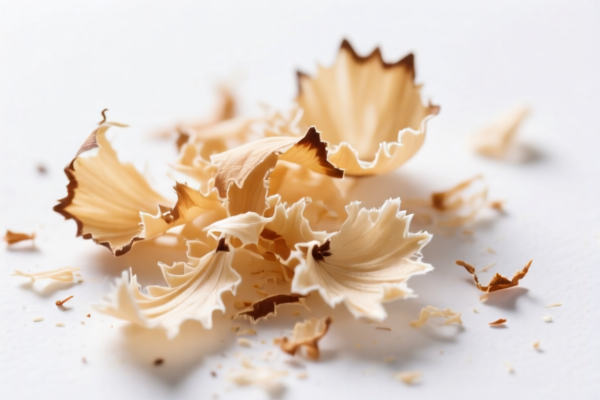
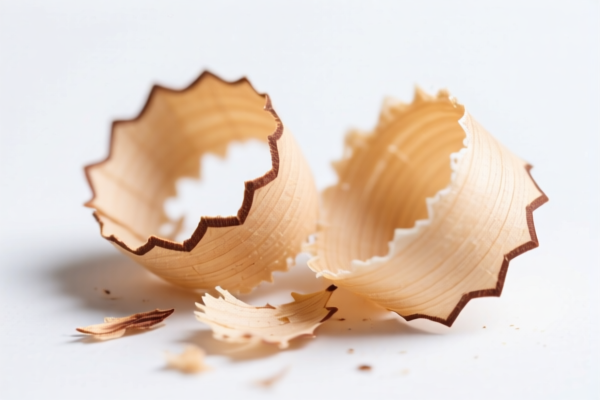
wood chips
CN → US| HS编码 | 关税税率 | 原产国 | 目的国 | 文档 |
|---|---|---|---|---|
| 4401394210 | 35.0% | CN | US | 官方文档 |
| 4401310000 | 35.0% | CN | US | 官方文档 |
| 4405000000 | 38.2% | CN | US | 官方文档 |
| 4401220000 | 35.0% | CN | US | 官方文档 |
| 4401210000 | 35.0% | CN | US | 官方文档 |
商品图片


AI分析
🪵 Wood Chips & Biomass Pellets (Fuel Wood & Sawdust)
🌐 HS Code Reference & Customs Clearance Guide | 2026 Latest Tariff Analysis | Professional Entry Strategy
📌 Part I: Product Definition & Classification: What Exactly Are "Wood Chips"?
Wood chips and wood pellets are primary processed timber products, primarily used as fuel or raw material for biomass energy. In international trade, they are categorized under Chapter 44 (Wood and articles of wood). The critical distinction lies in the physical form (chips, particles, or powder) and end-use (fuel vs. manufacturing).
Key Classification Logic: - Fuel Wood/Pellets (Primary Processing) If the material is wood chips, particles, or sawdust intended for burning, it generally falls under Heading 4401 (Fuel wood, wood chips, particles...). - Wood Flour/Powder (Secondary Processing) If the material is finely ground into "wood flour" or "sawdust" with specific density/texture requirements not fitting standard chip definitions, it may fall under Heading 4405 (Wooden flakes, sawdust, wood flour...).
⚠️ Critical Distinction:
- If it is chunky/pelletized for burning → Go to 4401 series (Lower Base Duty).
- If it is fine powder/flour → Go to 4405.00 (Higher Base Duty).
- Note: The provided data indicates that even "wood flour" in some contexts might be mapped to 4401 if it meets specific material/form definitions, but the highest tax bracket (38.2%) is explicitly linked to HS 4405.00.00.00 in the data.
📦 Part II: HS Code Classification Details (2026 Latest Tariff Authority对照)
Based on the provided , here are the five relevant HS Codes for wood chips/pellets, sorted by tax burden.
| HS Code | Product Description | Key Characteristics | Total Tax Rate |
|---|---|---|---|
4401.21.00.00 |
Fuel wood; chips or particles of wood | Raw wood chips/particles, unprocessed, for fuel. | 35.0% |
4401.22.00.00 |
Fuel wood; chips or particles of wood | Similar to above, specific wood type classification. | 35.0% |
4401.31.00.00 |
Wood pellets (cylindrical fuel) | Compressed wood pellets, strictly for fuel. | 35.0% |
4401.39.42.10 |
Other wood chips/particles (Fuel form) | Waste forms of wood, defined as fuel/pellet material. | 35.0% |
4405.00.00.00 |
Wood flour, sawdust, wood waste & scrap, crushed or granulated | Fine powder/flour format. Highest Tax Bracket. | 38.2% |
🔍 Key Insight:
- 4 Codes share the same 35% total tax rate:4401.21,4401.22,4401.31,4401.39. These are preferred for standard wood chips/pellets. - 1 Code has a higher rate (38.2%)4405.00. This applies if the product is classified as "wood flour" or specific sawdust/waste that doesn't fit the standard "chip/particle" definition under 4401. - Base Duty Difference: The 35% codes have 0% Base Duty, while the 38.2% code has 3.2% Base Duty. The additional tariffs are the same for all.
💰 Part III: 2026 Latest Tariff Rate Breakdown (Including Surtaxes & Policy Surcharges)
✅ Applicable Country: United States (US)
✅ Origin: China (CN)
✅ Effective Time: Includes subsequent imports (based on Section 301 and IEEPA provisions).
All listed HS codes above are subject to the following tax structure:
🎯 1. Standard Wood Chips & Pellets (HS: 4401.21, 4401.22, 4401.31, 4401.39)
Examples: 4401.21.00.00, 4401.22.00.00, 4401.31.00.00, 4401.39.42.10
| Item | Detail |
|---|---|
| Base Tariff | 0.0% (Ad Valorem) |
| Section 301 Surcharge | +25.0% (Added under USITC Footnote 9903.88.01 / Section 301) |
| Section 122 / IEEPA Surcharge | +10.0% (Specific clause mentioned in data, often aligned with IEEPA authorities for China) |
| Total Tariff Rate | 35.0% |
| Tax Calculation | CIF Value × 35% |
| De Minimis Exemption | ❌ Not Applicable (High duty rates typically block Section 321 de minimis benefits) |
| Legal Basis Path | USITC:4401.x.x.x.x → SECTION_301:9903.88.01 → IEEPA:9903.01.24 (or 122 Clause) |
📌 Explanation:
- Despite being raw biomass, wood chips/pellets from China are heavily taxed due to trade policies.
- The 0% base rate is lucky, but the +35% combined surcharge makes it expensive.
- No base duty means only the punitive tariffs apply.
🎯 2. Wood Flour / Fine Sawdust (HS: 4405.00.00.00)
| Item | Detail |
|---|---|
| Base Tariff | 3.2% (Ad Valorem) |
| Section 301 Surcharge | +25.0% |
| Section 122 / IEEPA Surcharge | +10.0% |
| Total Tariff Rate | 38.2% |
| Tax Calculation | CIF Value × 38.2% |
| De Minimis Exemption | ❌ Not Applicable |
| Legal Basis Path | USITC:4405.00.00.00 → SECTION_301 → IEEPA/122 Clause |
📌 Explanation:
- Worse than chips! If your product is too finely ground and classified as "wood flour," you pay an extra 3.2% base duty on top of the surcharges.
- Avoid classifying wood chips as "wood flour" unless technically necessary; it increases cost significantly.
🛠️ Part IV: Customs Clearance Practical Advice (Real-World Pitfall Avoidance)
✅ 1. Essential Documentation Checklist
| Document | Mandatory? | Notes |
|---|---|---|
| ✅ Commercial Invoice | ✔️ | Must clearly state "Wood Chips for Fuel" or "Wood Pellets." |
| ✅ Packing List | ✔️ | Detail weight, volume, and packaging type (e.g., jumbo bags, bulk). |
| ✅ Phytosanitary Certificate | ✔️ | Critical! Must be issued by the exporting country's NPPO. Proves wood is pest-free. |
| ✅ ISPM 15 Compliance | ✔️ | If packaged in wooden pallets/crates, they must be heat-treated/fumigated and marked. |
| ✅ Certificate of Origin (CO) | ✔️ | Required to determine origin-based surcharges. |
| ✅ MSDS (Material Safety Data Sheet) | ✔️ | For safety handling, especially if pellets are dense. |
⚠️ Key Tip:
- Ensure the Moisture Content is declared. High-moisture wood chips may be rejected or require special treatment. - No Soil: Strictly no soil contamination allowed; this leads to immediate rejection or fumigation costs.
✅ 2. Declaration Strategy (Golden Rules)
🔥 "Accurate Form, Correct HS, Avoid 'Flour' Trap!"
| Scenario | Correct HS Code | Wrong Classification Risk |
|---|---|---|
| Standard wood chips/pellets for burning | 4401.21.00.00 or 4401.31.00.00 |
✅ Low Risk (35% Tax) |
| Compressed wood pellets | 4401.31.00.00 |
✅ Low Risk (35% Tax) |
| Fine sawdust/wood flour | 4405.00.00.00 |
❌ High Risk (38.2% Tax) |
| Unclear classification | Risk of Misclassification | → Audit, Penalties, Delays |
📌 Actionable Advice:
- Do NOT use "Wood Flour" as the product name if your product is chip/pellet form. Use "Wood Chips" or "Wood Pellets." - Do NOT split shipments to avoid the 35% tax; CBP will consolidate and assess the correct rate. - Verify Moisture: Declare accurate moisture content to avoid phytosanitary issues.
✅ 3. Special Cases & Handling
| Situation | Handling Advice |
|---|---|
| OEM Custom Pellets | Provide client specs + formula. Ensure description matches HS definition of "pellets" (cylindrical, high density). |
| Mixed Waste Wood | If classified as "waste," ensure it still fits 4401.39. Do not mix with non-wood materials. |
| High Moisture Content | May be treated as "green wood chips." Ensure phytosanitary certificate covers moisture issues. |
| Biomass Energy Use | If used for biofuel, check for additional EPA regulations, but HS classification remains 4401. |
🌍 Part V: Global Market Comparison (2026 Update)
| Country/Region | Recommended HS Code | Estimated Duty (China Origin) | Key Requirements |
|---|---|---|---|
| 🇺🇸 USA | 4401.21.00.00 / 4401.31.00.00 |
35.0% (Total) | Phytosanitary Cert, ISPM 15, IEEPA/301 compliance |
| 🇨🇳 China | 4401.21.00.00 |
Low (~5-8%) | Import License (if applicable), Quality Inspection |
| 🇪🇺 EU | 4401.10 / 4401.21 |
Varies (0-15%) | Fitosanitary Cert, EUTR (EU Timber Regulation) compliance |
| 🇬🇧 UK | 4401.21 |
Varies (0-15%) | Fitosanitary Cert, Post-Brexit import checks |
📌 Conclusion:
- USA has the highest barrier due to the 35% total tariff.
- No preferential duty for China-origin wood chips in the US.
- Phytosanitary compliance is the biggest non-tariff barrier globally.
📌 Part VI: Common Mistakes & Pitfalls (Blood & Tears Lessons)
❌ Mistake 1: Calling wood chips "Wood Flour" to avoid a higher base rate
👉 Reality: It’s the opposite! 4405 (Flour) has 38.2% vs 4401 (Chips) at 35.0%. Plus, misclassification leads to audits.
❌ Mistake 2: Ignoring Phytosanitary Certificate
👉 Consequence: Shipments held at port, returned, or destroyed due to pest risk. Huge delay costs.
❌ Mistake 3: Misdeclaring Moisture Content
👉 Consequence: If moisture is too high, it may be rejected for fuel use or classified differently. Ensure accuracy.
❌ Mistake 4: Using "Biomass" as the sole description
👉 Consequence: Too vague. CBP requires specific form (chips, pellets, granules) to assign the correct HS code.
✅ Correct Declaration Example:
"Wood Pellets for Fuel, Made from Pine, Moisture <10%, HS Code 4401.31.00.00, Origin China"
🎯 Part VII: Conclusion: Professional Classification, Cost Control, Smooth Clearance!
🎯 Remember These Rules:
🔹 "Chips & Pellets = 4401 (35% Tax)
🔹 "Flour = 4405 (38.2% Tax)
🔹 "Phytosanitary Certificate = Mandatory"
🔹 "No Soil, No Pests, No Delays"
📌 Pro Tip:
If you are importing large volumes, consider Advance Ruling (CBP Ruling) to confirm the correct HS code and avoid post-audit penalties.
For Section 301 exclusions, check annually if wood chips are included in any exclusion lists (though currently, most are not).
📣 Immediate Action:
📞 Contact a licensed Customs Broker
📄 Prepare Phytosanitary Certificate + ISPM 15 Proof
📊 Calculate CIF Cost + 35% Duty + Insurance/Freight
🚀 Ensure your wood chips clear customs smoothly and efficiently!
✨ Professional Clearance Starts with Accurate Classification!
💼 Every percent of duty matters in biomass trade!
用户评价
关于 HS 编码归类
协调制度(HS)是由世界海关组织(WCO)制定的国际贸易商品分类标准。全球 200 多个国家采用 HS 系统作为海关关税、贸易统计和进出口监管的基础。
每个 HS 编码遵循以下层级结构:
- 章(2 位)——商品大类(例如:第 84 章:机器和机械设备)
- 品目(4 位)——章内的更具体分类
- 子目(6 位)——国际通用细分,所有 WCO 成员国统一使用
- 本国细分(8-10 位)——各国自行扩展的细分编码,如美国 HTSUS 10 位编码
正确的 HS 编码归类对于顺利通关、准确缴纳关税和遵守贸易法规至关重要。错误归类可能导致海关延误、多缴关税或罚款。
从CN进口到US时,适用的关税税率可能包括:
- 最惠国(MFN)税率——适用于 WTO 成员国的标准关税税率
- 普通税率——适用于无贸易协定国家
- 贸易救济关税——附加关税,如 301 条款(反倾销)、232 条款(国家安全)或反补贴税
本页内容仅供参考。如需正式归类,请咨询当地海关或持牌报关代理。