wood particle board
CN → US| HS编码 | 关税税率 | 原产国 | 目的国 | 文档 |
|---|---|---|---|---|
| 4410110060 | 35.0% | CN | US | 官方文档 |
| 4410110010 | 35.0% | CN | US | 官方文档 |
商品图片
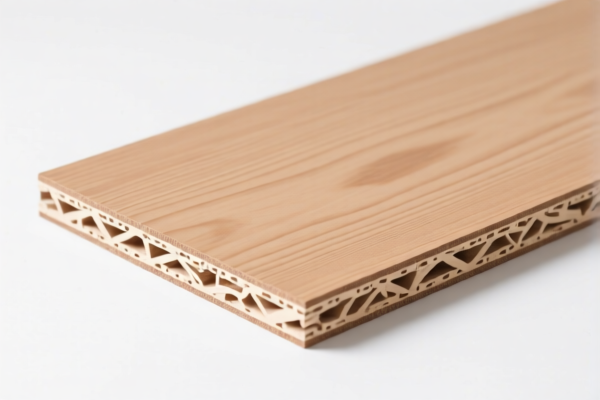
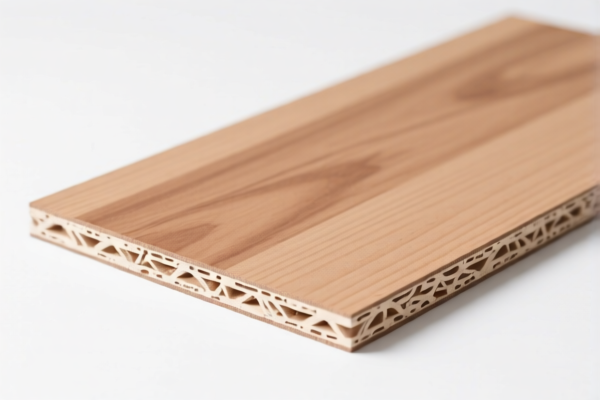
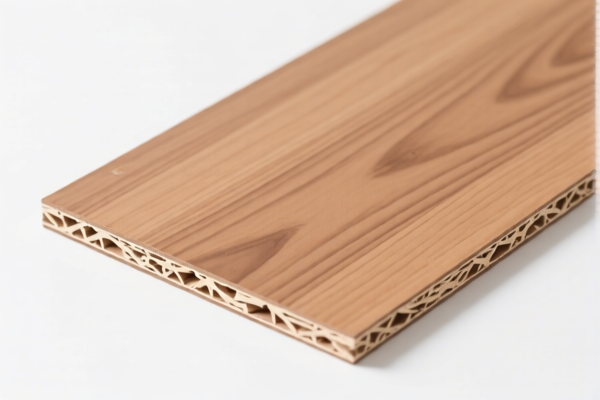
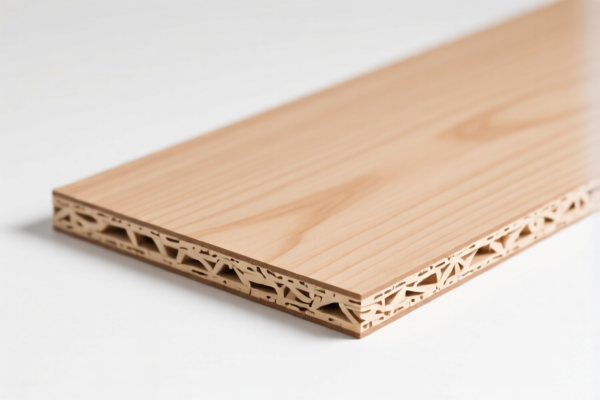
AI分析
🪵 Wood Particle Board (OSB & Similar Boards)
🌐 HS Code Reference & Customs Clearance Guide | 2026 Latest Tariff Analysis | Professional-Level Entry Strategy
📌 I. Product Definition & Classification: Do You Truly Understand "Wood Particle Board"?
Particle board, Oriented Strand Board (OSB), and similar boards (e.g., waferboard) made of wood or other ligneous materials, whether or not agglomerated with resins or other organic binding substances, are foundational materials in construction and furniture manufacturing. In international trade, precise classification hinges on two factors: material composition and processing level.
Solid Wood-Based Boards: The core material must be wood. Boards made from other ligneous materials (e.g., straw, bamboo, if not specified as wood) fall into different subheadings.
Processing State: - Unworked/Sanded: Boards that have only been sanded but not further worked (e.g., laminated, profiled, or machined into specific shapes like doors or shelves). - Other: Boards that have undergone further processing, such as surface lamination, edge banding, drilling for hardware, or shaping into specific structural components.
⚠️ Key Distinction Point:
- If the board is only sanded (smooth surface, no additional layers or mechanical shaping) → Classified under 4410.11.00.10 ("Unworked or not further worked than sanded").
- If the board is further processed (e.g., laminate-faced, machined, or prepared for specific installation) → Classified under 4410.11.00.60 ("Other").
📦 II. HS Code Classification Details (2026 Latest Tariff Authoritative Comparison)
| HS Code | Product Description | Applicable Scenario | Processing Level |
|---|---|---|---|
4410.11.00.10 |
Particle board, unworked or not further worked than sanded | Raw construction panels, basic sanding only, plain surfaces | ✅ Only sanded |
4410.11.00.60 |
Particle board, other | Laminated boards, edge-banded, pre-drilled, or shaped boards | ✅ Further worked |
🔍 Crucial Reminder:
- Sanding alone does not constitute "further work" for the purpose of moving out of4410.11.00.10.
- Lamination, machining, or specific cutting moves the item into4410.11.00.60.
- Ensure the Description of Goods in the Commercial Invoice clearly states whether the boards are "sanded only" or "laminated/machined" to avoid customs valuation disputes.
💰 III. 2026 Latest Tariff Rate Details (Including Additional Taxes)
✅ Applicable Country: United States (US)
✅ Origin: China (CN)
✅ Effective Date: 2025-11-10 onwards (including subsequent imports)
🎯 1. 4410.11.00.10 —— Particle Board, Unworked or Sanded Only
| Item | Content |
|---|---|
| Base Tariff Rate | 0% (ad valorem) |
| Section 301 Additional Tariff | +25.0% |
| Total Tax Rate | 25.0% |
| Tax Calculation | CIF Value × 25.0% |
| De Minimis Exemption Eligibility | ❌ Not Eligible (deny_de_minimis) |
| Legal Basis Path | USITC:4410.11.00.10 → FOOTNOTE:301 |
📌 Explanation:
- The base tariff for wood particle boards is generally 0% under normal trade relations.
- However, due to Section 301 tariffs targeting Chinese-origin goods, an additional 25% is applied.
- Total Effective Rate: 25%. This is a high tariff rate that significantly impacts cost structures.
- De Minimis Exemption (Section 321): Does not apply. All shipments, regardless of value, are subject to this tariff.
🎯 2. 4410.11.00.60 —— Particle Board, Other (Further Worked)
| Item | Content |
|---|---|
| Base Tariff Rate | 0% (ad valorem) |
| Section 301 Additional Tariff | +25.0% |
| Total Tax Rate | 25.0% |
| Tax Calculation | CIF Value × 25.0% |
| De Minimis Exemption Eligibility | ❌ Not Eligible (deny_de_minimis) |
| Legal Basis Path | USITC:4410.11.00.60 → FOOTNOTE:301 |
📌 Note:
- Identical tariff treatment to4410.11.00.10.
- Whether the board is sanded only or further processed (laminated/machined), the tariff rate remains 25% for Chinese-origin goods.
- The distinction in HS code is primarily for statistical and regulatory compliance purposes, not for tariff reduction.
🛠️ IV. Customs Clearance Practical Advice (Battle-Tested Pitfall Avoidance Guide)
✅ 1. Preparation Checklist (All Documents Mandatory)
| Document | Mandatory | Description |
|---|---|---|
| ✅ Commercial Invoice | ✔️ | Must explicitly state "Particle Board" or "OSB," origin (China), and HS Code. |
| ✅ Packing List | ✔️ | Detail dimensions, weight, and number of pieces. |
| ✅ Product Specification | ✔️ | Clarify if boards are "sanded only" (4410.11.00.10) or "further worked" (4410.11.00.60). |
| ✅ Bill of Lading / Air Waybill | ✔️ | Standard shipping documents. |
| ✅ Certificate of Origin | ✔️ | To confirm origin (China) and ensure correct tariff application. |
| ✅ Phytosanitary Certificate | ✔️ (If required) | Some jurisdictions require proof that wood is treated against pests (ISPM 15). |
✅ 2. Declaration Tips (Critical Mantra)
🔥 "Be Precise About Processing: Sanded vs. Worked, Declare Correctly to Avoid Delays!"
| Scenario | Correct Declaration | Wrong Approach |
|---|---|---|
| Plain particle board, only sanded | 4410.11.00.10 |
Misdeclare as 4410.11.00.60 → Unnecessary scrutiny |
| Laminated particle board | 4410.11.00.60 |
Misdeclare as 4410.11.00.10 → Classification Error, Penalty Risk |
| OSB (Oriented Strand Board) | 4410.11.00.xx (Check processing) |
Misdeclare as "Wood Planks" (4407) → Major Error, High Penalty |
| Particle Board with Edge Banding | 4410.11.00.60 |
Treat as "sanded" → Incorrect Classification |
✅ 3. Special Situations Handling
| Situation | Handling Advice |
|---|---|
| Mixed Shipments (Sanded + Laminated) | Split the Declaration: Separate line items for 4410.11.00.10 and 4410.11.00.60. Do not combine, as it may lead to audit flags. |
| OSB vs. Particle Board | Both fall under 4410.11.00.xx if wood-based. Ensure the description specifies "OSB" or "Particle Board" to aid customs officers. |
| Third-Party Transshipment | If goods are transshipped through Vietnam/Mexico but origin is China, the 25% tariff still applies. Provide proof of non-origin if claimed otherwise. |
| Wood Treatment Certification | Ensure ISPM 15 compliance if required by destination customs to prevent quarantine delays. |
🌍 V. Global Main Market Customs Comparison (2026 Latest)
| Country/Region | Recommended HS Code | Tariff (China Origin) | Certification Requirement | Remarks |
|---|---|---|---|---|
| 🇺🇸 USA | 4410.11.00.10 / 4410.11.00.60 |
25% | None specific (except general wood rules) | High Tariff. No de minimis. |
| 🇨🇳 China | 4410.11.00.xx |
0% - 5% (Import) | N/A | Domestic production is low-cost. |
| 🇪🇺 EU | 4410.11.00 |
0% - 5% | FSC Certification (if claimed) | No Section 301 equivalent. |
| 🇨🇦 Canada | 4410.11.00 |
0% (if under CUSMA) | N/A | Check origin rules for duty-free. |
| 🇲🇽 Mexico | 4410.11.00 |
0% - 5% | N/A | Potential USMCA benefits if origin criteria met. |
📌 Conclusion:
- The United States is the only major market imposing the 25% additional tariff on Chinese-origin particle boards.
- All other markets typically apply standard MFN rates (0-5%), making them significantly more cost-effective for Chinese exporters.
- Supply Chain Strategy: Consider sourcing from or processing in non-tariff countries (e.g., Vietnam, Thailand) if applicable, but beware of anti-circumvention investigations.
📌 VI. Common Errors & Pitfall Guide (Lessons Learned)
❌ Mistake 1: Mixing "Sanded" and "Laminated" boards in a single HS Code line item
👉 Consequence: Customs may audit the entire shipment, leading to delays and potential reclassification penalties.
❌ Mistake 2: Misdeclaring OSB as "Plywood" (4412)
👉 Consequence: Classification Error. Plywood has different tariff rates and regulatory requirements. This can trigger fines and shipment holds.
❌ Mistake 3: Ignoring the "De Minimis" Rule
👉 Consequence: Assuming small shipments are tax-free. Incorrect. Section 301 tariffs apply to all values.
❌ Mistake 4: Vague Product Descriptions ("Wood Board")
👉 Consequence: Customs officers may guess the classification, leading to higher estimated duties or requests for additional information.
✅ Correct Approach:
"Particle Board, 18mm, Sanded, E0 Grade, China Origin, HS 4410.11.00.10"
"Laminated Particle Board, 25mm, White Finish, Pre-drilled Holes, China Origin, HS 4410.11.00.60"
🎯 VII. Conclusion: Precise Declaration, Cost Control, Efficient Clearance
🎯 Remember the Mantra:
🔹 "Sanded vs. Worked: Declare Correctly!"
🔹 "25% Tariff Applies to All Chinese Wood Boards to USA!"
🔹 "No De Minimis Exemption: Every Box is Taxed!"
📌 Pro Tip:
- If your particle boards are originating from Vietnam, Mexico, or Thailand (and not merely transshipped from China), you may qualify for lower tariffs (0% - 5%).
- Request a Binding Tariff Ruling (Pre-Ruling) from US CBP if you have mixed shipments or unclear processing states. This provides legal certainty and avoids post-clearance audits.
📣 Immediate Action:
📞 Contact a Licensed Customs Broker + Provide Product Photos/Specs + Apply for HS Code Pre-Ruling
🚀 Ensure Your Particle Boards, Smoothly Cleared, Efficiently Shipped, Profitably Delivered!
✨ Professional Customs Clearance Starts with Accurate Classification!
💼 Every Cent of Tariff is Worth Calculating Precisely!
用户评价
关于 HS 编码归类
协调制度(HS)是由世界海关组织(WCO)制定的国际贸易商品分类标准。全球 200 多个国家采用 HS 系统作为海关关税、贸易统计和进出口监管的基础。
每个 HS 编码遵循以下层级结构:
- 章(2 位)——商品大类(例如:第 84 章:机器和机械设备)
- 品目(4 位)——章内的更具体分类
- 子目(6 位)——国际通用细分,所有 WCO 成员国统一使用
- 本国细分(8-10 位)——各国自行扩展的细分编码,如美国 HTSUS 10 位编码
正确的 HS 编码归类对于顺利通关、准确缴纳关税和遵守贸易法规至关重要。错误归类可能导致海关延误、多缴关税或罚款。
从CN进口到US时,适用的关税税率可能包括:
- 最惠国(MFN)税率——适用于 WTO 成员国的标准关税税率
- 普通税率——适用于无贸易协定国家
- 贸易救济关税——附加关税,如 301 条款(反倾销)、232 条款(国家安全)或反补贴税
本页内容仅供参考。如需正式归类,请咨询当地海关或持牌报关代理。