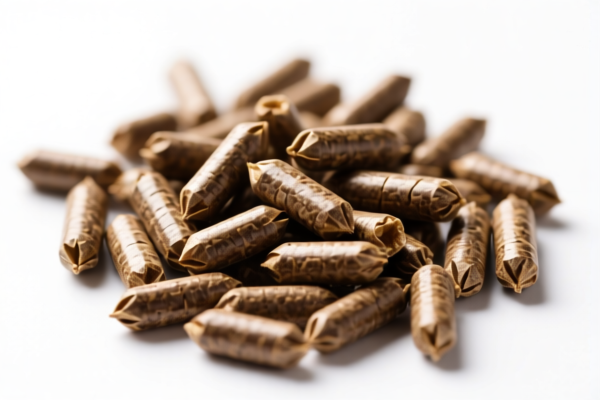
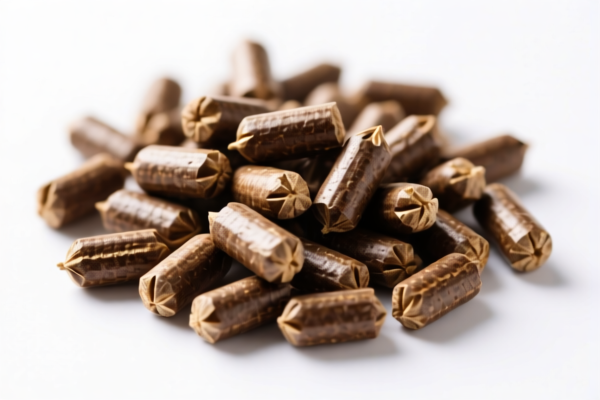
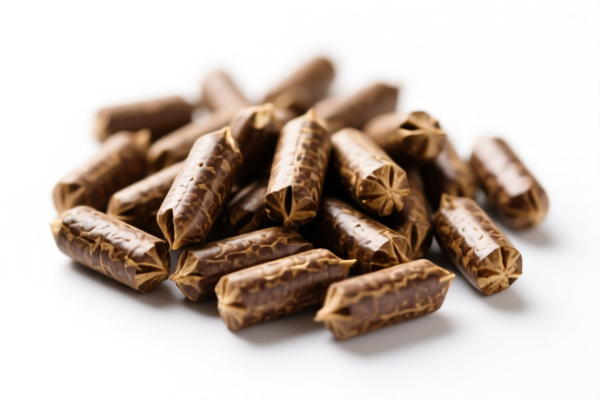
wood pellet fuel
CN → US| HS编码 | 关税税率 | 原产国 | 目的国 | 文档 |
|---|---|---|---|---|
| 4401210000 | 35.0% | CN | US | 官方文档 |
| 4401220000 | 35.0% | CN | US | 官方文档 |
| 4403220108 | 35.0% | CN | US | 官方文档 |
| 4403240104 | 35.0% | CN | US | 官方文档 |
| 4401310000 | 35.0% | CN | US | 官方文档 |
商品图片

AI分析
🔥 Wood Pellet Fuel (Biomass Energy Source)
🌐 HS Code Reference & Customs Clearance Guide | 2026 Latest Tariff Analysis | Strategic Logistics Strategy
📌 I. Product Definition & Classification: Do You Really Understand "Wood Pellets"?
Wood Pellet Fuel, a high-density, low-moisture biomass energy product, is widely used in residential heating, industrial boilers, and power generation. In international trade, it is primarily classified under Chapter 44 (Wood and articles of wood; wood charcoal).
The classification hinges on two critical factors:
1. Form: Is it pellets (4401.31), chips (4401.21), slices (4401.22), or raw logs/bark (4403)?
2. Species: Is it coniferous (pine, spruce, fir) or non-coniferous (hardwood)?
⚠️ Key Distinction Point:
- If it is processed into uniform cylindrical pellets → Classify under 4401.31.00.00.
- If it is chipped wood (small, irregular pieces) → Classify under 4401.21.00.00 (for conifers).
- If it is wood slices (thin, flat cuts) → Classify under 4401.22.00.00.
- If it is raw/primary wood (logs, bark, sawdust not yet shaped into fuel-specific forms) → Classify under 4403.22.01.08 or 4403.24.01.04 (for other coniferous wood).
📦 II. HS Code Classification Details (2026 Latest Tariff Authority Comparison)
| HS Code | Product Description | Application Scenario | Form/State |
|---|---|---|---|
4401.21.00.00 |
Wood, in chips or particles (coniferous) | Industrial boiler fuel, biomass energy pellets/chips | ✅ Chipped/Granular |
4401.22.00.00 |
Wood, in chips or particles (non-coniferous) | General wood fuel, sawdust, light wood chips | ✅ Chipped/Flat |
4401.31.00.00 |
Wood, in pellets or briquettes | Standard wood pellet fuel for heating/stoves | ✅ Pelletized |
4403.22.01.08 |
Wood treated with paint, varnish, etc. (coniferous) | Raw coniferous wood, pine, spruce (primary form) | ❌ Raw/Log |
4403.24.01.04 |
Other wood, treated/impregnated (coniferous) | Pulpwood, raw coniferous原料 | ❌ Raw/Log |
🔍 Key Reminder:
- "Pellets" are distinct from "Chips". Pellets are compressed, uniform, and have higher energy density. Chips are irregular and less processed.
- Coniferous vs. Non-coniferous: Most wood pellets are made from coniferous wood (pine, spruce) due to higher resin content and burn efficiency. Ensure species declaration matches the physical sample.
- Raw Wood vs. Fuel Wood: If the wood is merely cut into logs or bark but not processed into chips/pellets, it falls under Chapter 44.03, not 4401.
💰 III. 2026 Latest Tariff Rate Breakdown (Including Additional Taxes & Policy Surcharges)
✅ Applicable Country: United States (US)
✅ Country of Origin: China (CN)
✅ Effective Date: November 10, 2025 (including subsequent imports)
🎯 1. 4401.21.00.00 – Wood, in chips or particles (coniferous)
| Item | Content |
|---|---|
| Base Tariff | 0% (ad valorem) |
| USITC Additional Tax | +25% (Under USITC Footnote 9903.88.01 / Section 301) |
| IEEPA Additional Tax | +10% (For Chinese/Hong Kong products, effective Nov 10, 2025) |
| Total Tax Rate | 35.0% |
| Tax Calculation | CIF Value × 35% |
| De Minimis Exemption | ❌ Not Eligible (deny_de_minimis) |
| Legal Basis Path | IEEPA:9903.01.25 → IEEPA:9903.01.24 → USITC:4401.21.00.00 → FOOTNOTE:9903.88.01 |
📌 Explanation:
- The 25% USITC tax is from Section 301 of the U.S. Trade Act, targeting Chinese wood products.
- The 10% IEEPA tax is the new surcharge under the International Emergency Economic Powers Act, effective Nov 2025.
- Total 35%, which is significant. Pre-calculation is essential.
🎯 2. 4401.22.00.00 – Wood, in chips or particles (non-coniferous)
| Item | Content |
|---|---|
| Base Tariff | 0% |
| USITC Additional Tax | +25% |
| IEEPA Additional Tax | +10% |
| Total Tax Rate | 35.0% |
| Tax Calculation | CIF × 35% |
| De Minimis Exemption | ❌ Not Eligible |
| Legal Basis Path | IEEPA:9901.25 → IEEPA:9903.01.24 → USITC:4401.22.00.00 → FOOTNOTE:9903.88.01 |
📌 Note:
- Same rate as coniferous chips. Non-coniferous wood (hardwood) is less common for pellets but still subject to same tariffs.
- Ensure "Non-coniferous" is accurately declared; misclassification can lead to audits.
🎯 3. 4401.31.00.00 – Wood, in pellets or briquettes
| Item | Content |
|---|---|
| Base Tariff | 0% |
| USITC Additional Tax | +25% |
| IEEPA Additional Tax | +10% |
| Total Tax Rate | 35.0% |
| Tax Calculation | CIF × 35% |
| De Minimis Exemption | ❌ Not Eligible |
| Legal Basis Path | IEEPA:9903.01.25 → IEEPA:9903.01.24 → USITC:4401.31.00.00 → FOOTNOTE:9903.88.01 |
📌 Critical:
- This is the most common HS code for commercial wood pellets.
- Must declare as "Pellets" with moisture content <10% and diameter 6–8mm.
- If declared as "Chips" but actually pellets, risk of penalty for misdeclaration.
🎯 4. 4403.22.01.08 – Coniferous wood, treated (e.g., pine, spruce)
| Item | Content |
|---|---|
| Base Tariff | 0% |
| USITC Additional Tax | +25% |
| IEEPA Additional Tax | +10% |
| Total Tax Rate | 35.0% |
| Tax Calculation | CIF × 35% |
| De Minimis Exemption | ❌ Not Eligible |
| Legal Basis Path | IEEPA:9903.01.25 → IEEPA:9903.01.24 → USITC:4403.22.01.08 → FOOTNOTE:9903.88.01 |
📌 Note:
- Applies to raw or lightly treated coniferous wood (e.g., logs, bark, sawn timber) not yet processed into chips/pellets.
- If used as fuel, ensure it’s not misclassified as "chips" if it’s still in log form.
🎯 5. 4403.24.01.04 – Other coniferous wood, treated/impregnated
| Item | Content |
|---|---|
| Base Tariff | 0% |
| USITC Additional Tax | +25% |
| IEEPA Additional Tax | +10% |
| Total Tax Rate | 35.0% |
| Tax Calculation | CIF × 35% |
| De Minimis Exemption | ❌ Not Eligible |
| Legal Basis Path | IEEPA:9901.25 → IEEPA:9903.01.24 → USITC:4403.24.01.04 → FOOTNOTE:9903.88.01 |
📌 Note:
- Covers other coniferous wood products (e.g., pulpwood, raw timber) not specifically classified elsewhere in 4403.22.
- Often used as a fallback for raw wood with unclear treatment status.
🛠️ IV. Customs Clearance Practical Advice (Real-World Pitfall Guide)
✅ 1. Required Documentation Checklist (Mandatory)
| Document | Required | Explanation |
|---|---|---|
| ✅ Product Specification Sheet | ✔️ | Includes moisture content (<10%), diameter (6-8mm), density, ash content. |
| ✅ Commercial Invoice | ✔️ | Clearly state "Wood Pellet Fuel" or "Wood Chips," specify species (e.g., Pine, Spruce). |
| ✅ Packing List | ✔️ | Detail weight, volume, and packaging type (bags, bulk). |
| ✅ Certificate of Origin (CO) | ✔️ | If originating from Vietnam/Thailand, may qualify for lower tariffs. |
| ✅ Phytosanitary Certificate | ✔️ | Required by USDA APHIS to prevent pests. Must be issued by country of origin. |
| ✅ ISPM 15 Mark (if wood packaging) | ✔️ | For pallets/crates, must be heat-treated/fumigated and marked. |
| ✅ Bill of Lading/Air Waybill | ✔️ | Must match invoice and packing list details. |
✅ 2. Declaration Tips (Key Mnemonics)
🔥 "Shape Defines HS, Species Defines Duty, Docs Clear the Way!"
| Situation | Correct Declaration | Wrong Practice |
|---|---|---|
| Uniform cylindrical pellets | 4401.31.00.00 |
Misdeclare as "Chips" (4401.21) → Audit risk |
| Irregular wood chips | 4401.21.00.00 (Coniferous) or 4401.22.00.00 (Non-coniferous) |
Misdeclare as "Pellets" → Penalty for false classification |
| Raw logs/bark | 4403.22.01.08 or 4403.24.01.04 |
Misdeclare as "Chips" → Heavy penalties |
| Mixed wood types | Declare dominant species or split shipment | Vague description "Wood Fuel" → Customs seizure |
✅ 3. Special Case Handling
| Situation | Handling Advice |
|---|---|
| OEM Custom Pellets | Provide client order + design specs. Avoid "generic" descriptions. |
| Pellets for Export to Non-US Markets | Check local tariffs (e.g., EU, Japan have lower rates). |
| Wood Packaging in Shipment | Ensure ISPM 15 compliance. Non-compliant packaging → Delays/Quarantine. |
| High Moisture Content (>10%) | May be rejected or reclassified. Ensure strict quality control. |
🌍 V. Global Customs Clearance Comparison (2026 Latest)
| Country/Region | Recommended HS Code | Tariff | Certification Requirement | Notes |
|---|---|---|---|---|
| 🇺🇸 USA | 4401.31.00.00 |
35% (CN origin) | Phytosanitary + ISPM 15 | Highest duty among major markets |
| 🇨🇳 China | 4401.31.00.00 |
5% | None | Low import tariff for fuel wood |
| 🇪🇺 EU | 4401.31.00.00 |
0-5% (if certified sustainable) | FSC/PEFC Certification | Preferential rates for sustainable wood |
| 🇦🇺 Australia | 4401.31.00.00 |
5% | Biosecurity Clearance | Strict quarantine rules |
| 🇯🇵 Japan | 4401.31.00.00 |
0% | None | Free trade agreement benefits may apply |
📌 Conclusion:
- USA is the most challenging market due to 35% combined tariffs.
- EU and Japan offer more favorable conditions if sustainability certifications (FSC/PEFC) are provided.
- Origin Matters: Wood from Vietnam/Thailand may avoid US tariffs via FTAs, but must prove substantial transformation.
📌 VI. Common Mistakes & Pitfall Guide (Lessons Learned)
❌ Mistake 1: Declaring "Wood Chips" when product is "Pellets"
👉 Consequence: Customs may audit for misclassification → Fines + Delay
❌ Mistake 2: Missing Phytosanitary Certificate
👉 Consequence: Quarantine or Return by USDA APHIS
❌ Mistake 3: Vague Description "Wood Fuel"
👉 Consequence: Customs cannot determine HS code → Hold for Inspection
❌ Mistake 4: Ignoring ISPM 15 for Wood Packaging
👉 Consequence: Pest Risk Alert → Entire shipment delayed
✅ Correct Practice:
"Wood Pellets, Coniferous (Pine), Diameter 6mm, Moisture <10%, Ash Content <1%, Bagged, Batch No. XYZ, Phytosanitary Cert #12345"
🎯 VII. Conclusion: Professional Declaration, Smooth Clearance, Cost Efficiency!
🎯 Remember the Mantra:
🔹 "Shape Defines HS, Species Defines Duty, Docs Clear the Way!"
🔹 "HS Code Determines Tax, 35% in USA, Declare Accurately, Save Thousands!"
📌 Pro Tip:
If your wood pellets originate from Vietnam, Thailand, or Malaysia, you may qualify for preferential tariffs under USMCA or ASEAN FTAs.
Apply for Advance Ruling (Pre-classification) to avoid clearance risks.
📣 Immediate Action:
📞 Contact a licensed customs broker + Provide Product Specs + Apply for HS Code Advance Ruling
🚀 Ensure your wood pellet fuel clears customs smoothly, efficiently, and profitably!
✨ Professional clearance starts with accurate classification!
💼 Every dollar saved is a dollar earned!
用户评价
关于 HS 编码归类
协调制度(HS)是由世界海关组织(WCO)制定的国际贸易商品分类标准。全球 200 多个国家采用 HS 系统作为海关关税、贸易统计和进出口监管的基础。
每个 HS 编码遵循以下层级结构:
- 章(2 位)——商品大类(例如:第 84 章:机器和机械设备)
- 品目(4 位)——章内的更具体分类
- 子目(6 位)——国际通用细分,所有 WCO 成员国统一使用
- 本国细分(8-10 位)——各国自行扩展的细分编码,如美国 HTSUS 10 位编码
正确的 HS 编码归类对于顺利通关、准确缴纳关税和遵守贸易法规至关重要。错误归类可能导致海关延误、多缴关税或罚款。
从CN进口到US时,适用的关税税率可能包括:
- 最惠国(MFN)税率——适用于 WTO 成员国的标准关税税率
- 普通税率——适用于无贸易协定国家
- 贸易救济关税——附加关税,如 301 条款(反倾销)、232 条款(国家安全)或反补贴税
本页内容仅供参考。如需正式归类,请咨询当地海关或持牌报关代理。