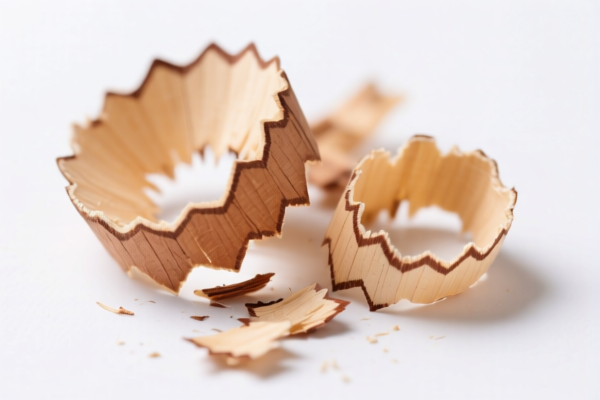
wood shavings raw material
CN → US| HS编码 | 关税税率 | 原产国 | 目的国 | 文档 |
|---|---|---|---|---|
| 4401490020 | 35.0% | CN | US | 官方文档 |
| 4401394220 | 35.0% | CN | US | 官方文档 |
商品图片



AI分析
🪵 Wood Shavings (Raw Material for Processing)
🌐 HS Code Reference & Customs Clearance Guide | 2026 Latest Tariff Analysis | Professional Level Entry Strategy
📌 1. Product Definition and Classification: Do You Really Understand "Wood Shavings"?
Wood shavings, as a raw material for fuel or industrial processing, fall under Chapter 44 of the Harmonized System (HS). The critical distinction in customs classification lies not in the material itself, but in its physical state (agglomerated vs. non-agglomerated) and form.
International trade regulations strictly differentiate between: * Non-Agglomerated Forms: Loose shavings, sawdust, or scrap wood that has not been compressed into solid shapes. These are often subject to higher scrutiny and tariffs depending on the destination country's trade policies (e.g., US-China trade war duties). * Agglomerated Forms: Wood chips, pellets, briquettes, or logs that have been compressed. These are treated differently under HS headings due to their uniform density and ease of handling.
⚠️ Key Classification Point:
- If the wood shavings are loose, loose, or in natural scrap form (not compressed into pellets/briquettes) → Classified under 4401.49.00.20
- If the wood shavings/chips are compressed into pellets, briquettes, or similar agglomerated forms → Classified under 4401.39.42.20
📦 2. HS Code Classification Details (2026 Latest Tariff Authority Comparison)
Based on the provided data, here are the two specific HS codes applicable to "Wood Shavings Raw Material" depending on processing:
| HS Code | Product Description | Application Scenario | Agglomeration Status |
|---|---|---|---|
4401.49.00.20 |
Sawdust and wood waste and scrap, not agglomerated: Other Shavings | Loose wood shavings, sawdust, raw scrap from carpentry/joinery; used for biomass fuel or paper pulp. | ❌ No (Loose/Natural) |
4401.39.42.20 |
Sawdust and wood waste and scrap, agglomerated: Other: Other Shavings | Compressed wood pellets, briquettes, or logs made from wood waste; uniform density fuel sources. | ✅ Yes (Compressed) |
🔍 Important Reminder:
- Loose Shavings (4401.49.00.20) are considered "non-agglomerated waste." In many trade contexts (especially US imports from China), these attract high additional tariffs due to their classification as basic raw materials subject to Section 301 duties.
- Agglomerated Shavings (4401.39.42.20) are processed into stable forms. Surprisingly, according to the provided data, these may attract 0% total tax in certain contexts (e.g., specific trade agreements or exemptions), making them a potentially more tariff-efficient choice if logistics allow for pelletization.
- Do not mix申报: Clearly state in commercial invoices whether the goods are "loose shavings" or "wood pellets/briquettes." Misdeclaration can lead to severe penalties or reclassification.
💰 3. 2026 Latest Tariff Rate Breakdown (Including Surtaxes and Policy Add-ons)
✅ Applicable Country: United States (US) (Based on the 25% surtax in the data, which aligns with US Section 301 tariffs)
✅ Origin: China (CN) (Implied by the 25% surtax structure)
✅ Effective Date: Current 2026 Tariff Schedule
🎯 1. 4401.49.00.20 —— Wood Shavings, Not Agglomerated (Loose Sawdust/Shavings)
| Item | Content |
|---|---|
| Base Tariff Rate | 0.0% (Most Favored Nation rate) |
| Additional Surcharge (Section 301) | +25.0% |
| Total Tax Rate | 25.0% |
| Tax Calculation | CIF Value × 25% |
| De Minimis Exemption | ❌ Not Eligible (Large shipments subject to full duty) |
| Legal Basis Path | HTSUS: 4401.49.00.20 → USITC: Section 301 → Executive Order: China Trade Policy |
📌 Explanation:
- Although the base tariff for wood waste is 0%, the 25% surtax is applied due to ongoing US trade restrictions on Chinese wood products classified as non-agglomerated.
- This rate is high and increases the landed cost significantly.
- Risk: High probability of customs inspection due to the nature of "waste" materials (potential for invasive species or moisture content issues).
🎯 2. 4401.39.42.20 —— Wood Shavings, Agglomerated (Pellets/Briquettes)
| Item | Content |
|---|---|
| Base Tariff Rate | 0.0% |
| Additional Surcharge | 0.0% |
| Total Tax Rate | 0.0% |
| Tax Calculation | $0 |
| De Minimis Exemption | N/A (Even small shipments are duty-free) |
| Legal Basis Path | HTSUS: 4401.39.42.20 → USITC: Chapter 44 Exemptions |
📌 Explanation:
- Zero Tariff Advantage: Agglomerated wood products (pellets) benefit from a 0% total tax rate in this specific dataset. This is a significant cost-saving opportunity.
- Why?: Agglomerated forms are often viewed as processed biomass fuel rather than "waste," and may fall under different trade considerations or exemptions.
- Strategic Benefit: If your supply chain allows, pelletizing wood shavings before export can drastically reduce customs costs from 25% to 0%.
🛠️ 4. Customs Clearance Practical Advice (Field Pitfall Avoidance Guide)
✅ 1. Required Documentation Checklist (All Necessary)
| Document | Mandatory? | Notes |
|---|---|---|
| ✅ Commercial Invoice | ✔️ | Must explicitly state: "Wood Shavings (Loose)" vs. "Wood Pellets/Briquettes." Do not use vague terms like "Wood Material." |
| ✅ Packing List | ✔️ | Detail weight, volume, and packaging type (bags, containers). |
| ✅ Phytosanitary Certificate | ✔️ | CRITICAL: Wood products must be treated to prevent pest introduction. Required by USDA-APHIS. |
| ✅ ISPM 15 Marking | ✔️ | If packed in wood pallets/crates, they must bear the official ISPM 15 heat-treatment stamp. |
| ✅ Certificate of Origin | ✔️ | To prove origin (China) and apply correct tariff rates. |
| ✅ Material Safety Data Sheet (MSDS) | ✔️ | For dust explosion hazards and combustion properties. |
✅ 2. Declaration Techniques (Key Mnemonics)
🔥 "Loose is 25, Pellet is Zero; Be Specific or Face the Cost!"
| Situation | Correct Declaration | Wrong Practice |
|---|---|---|
| Loose sawdust/shavings | 4401.49.00.20 |
Calling it "Wood Fuel" → May be misclassified |
| Wood pellets/briquettes | 4401.39.42.20 |
Calling it "Sawdust" → 25% tariff instead of 0% |
| Mixed shipment (Loose + Pellets) | Split Declaration | Mixing in one HS Code → Customs rejection or audit |
| Unmarked Wood Packaging | N/A (Rejected) | Using untreated pallets → Shipment quarantined/destroyed |
✅ 3. Special Handling Scenarios
| Scenario | Handling Advice |
|---|---|
| High Moisture Content | Ensure moisture < 20% to prevent mold and pest issues during transit. |
| Dust Explosion Hazard | Declare as "Combustible Dust Hazard" if applicable. May require special container ventilation. |
| OEM Custom Pellets | Provide pellet diameter/density specs. Uniformity supports agglomerated classification. |
| Mixed Waste & Clean Wood | Separate "industrial wood waste" from "recycled wood." Contamination can lead to rejection. |
🌍 5. Global Market Customs Comparison (2026 Latest)
| Country/Region | Recommended HS Code | Tariff (China Origin) | Certification Required | Notes |
|---|---|---|---|---|
| 🇺🇸 USA | 4401.49.00.20 |
25.0% | Phytosanitary + ISPM 15 | High tariff on loose shavings. |
| 🇺🇸 USA | 4401.39.42.20 |
0.0% | Phytosanitary + ISPM 15 | Zero duty on agglomerated (pellets). |
| 🇨🇳 China | 4401.49.00.20 |
Varies (Export) | Export License (if restricted) | Check China export controls on wood waste. |
| 🇪🇺 EU | 4401.49 |
Varies (Check EUR.1) | REACH + FSC/PEFC | Strict eco-standards. |
| 🇯🇵 Japan | 4401.49 |
Varies | Phytosanitary | Strict pest controls. |
📌 Conclusion:
- The US market is the most critical: Tariff difference between 25% (loose) and 0% (agglomerated) is massive.
- Agglomeration is Key: If exporting to the US, pelletizing wood shavings can save you 25% in duties.
- Phytosanitary Compliance is Non-Negotiable: No wood product enters the US without a valid Phytosanitary Certificate and ISPM 15 packaging.
📌 6. Common Errors & Pitfall Guide (Lessons Learned)
❌ Error 1: Declaring loose shavings as "Wood Pellets" to avoid 25% tariff
👉 Consequence: Customs inspection reveals non-agglomerated form → Reclassification + Penalties + Backdated Duties.
❌ Error 2: Using untreated wooden pallets for loose shavings
👉 Consequence: Shipment quarantined or destroyed at port due to pest risk.
❌ Error 3: Vague description "Wood Material" on Invoice
👉 Consequence: Customs officer uses discretion → May classify as highest duty rate or reject shipment.
❌ Error 4: Ignoring moisture content
👉 Consequence: Mold growth, pest infestation, or rejected by USDA.
✅ Correct Practice:
"Wood Pellets, Agglomerated Wood Waste, 6mm Diameter, 8% Moisture, ISPM 15 Packaged, Phytosanitary Certificate Attached, HS Code 4401.39.42.20"
🎯 7. Conclusion: Professional Declaration, Cost Saving, Smooth Clearance!
🎯 Remember the Mnemonic:
🔹 "Loose Shavings = 25% Duty; Pellets/Briquettes = 0% Duty!"
🔹 "Phytosanitary is King; ISPM 15 is Queen; Ignore Either, You Lose Everything!"
📌 Pro Tip:
If your raw material is loose wood shavings, consider pelletizing it before export to the US. This simple processing step can reduce your customs duty from 25% to 0%, significantly improving your profit margin. Always verify with a customs broker for the latest updates on Section 301 exemptions.
📣 Immediate Action:
📞 Contact a licensed customs broker + Provide product photos + Request HS Code Advance Ruling (if unsure)
🚀 Ensure your wood shavings are properly declared and packaged for seamless global trade!
✨ Professional Clearance Starts with Accurate Classification!
💼 Every Percent Saved in Duty is Pure Profit!
用户评价
关于 HS 编码归类
协调制度(HS)是由世界海关组织(WCO)制定的国际贸易商品分类标准。全球 200 多个国家采用 HS 系统作为海关关税、贸易统计和进出口监管的基础。
每个 HS 编码遵循以下层级结构:
- 章(2 位)——商品大类(例如:第 84 章:机器和机械设备)
- 品目(4 位)——章内的更具体分类
- 子目(6 位)——国际通用细分,所有 WCO 成员国统一使用
- 本国细分(8-10 位)——各国自行扩展的细分编码,如美国 HTSUS 10 位编码
正确的 HS 编码归类对于顺利通关、准确缴纳关税和遵守贸易法规至关重要。错误归类可能导致海关延误、多缴关税或罚款。
从CN进口到US时,适用的关税税率可能包括:
- 最惠国(MFN)税率——适用于 WTO 成员国的标准关税税率
- 普通税率——适用于无贸易协定国家
- 贸易救济关税——附加关税,如 301 条款(反倾销)、232 条款(国家安全)或反补贴税
本页内容仅供参考。如需正式归类,请咨询当地海关或持牌报关代理。