wood slice
CN → US| HS编码 | 关税税率 | 原产国 | 目的国 | 文档 |
|---|---|---|---|---|
| 4407190066 | 35.0% | CN | US | 官方文档 |
| 4407190092 | 35.0% | CN | US | 官方文档 |
| 4404100090 | 35.0% | CN | US | 官方文档 |
| 4407290296 | 35.0% | CN | US | 官方文档 |
| 4404200090 | 35.0% | CN | US | 官方文档 |
商品图片
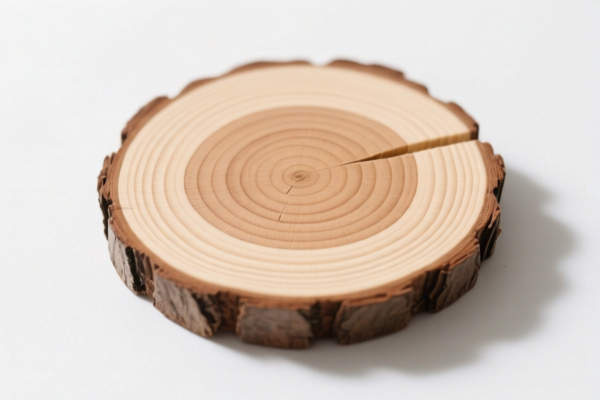
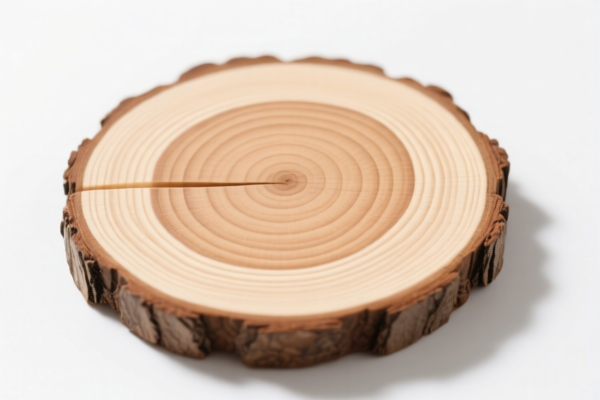


AI分析
🪵 Wood Slices (Rough Timber & Sawn Wood)
🌐 HS Code Reference & Customs Clearance Guide | 2026 Tariff Structure Analysis | Professional Strategy
📌 I. Product Definition: What Exactly Are "Wood Slices"?
In international trade, "Wood Slices" (often referred to as slabs, planks, rounds, or sawn timber depending on thickness and processing) are primarily classified as semi-processed wood products. The key determinant for HS classification is the species of wood (Coniferous/Pine vs. Non-Coniferous/Tropical vs. Non-Coniferous others) and the physical form (whether it is sawn, peeled, or simply cut into round discs).
⚠️ Critical Distinction:
- If the wood is peeled or processed into thin sheets for veneer → It may fall under Chapter 44 (Wood and Wood Products) but requires specific verification of thickness and processing method.
- If the wood is sawn or merely cut into rough shapes/planks → It falls under Chapter 44.04 or 44.07.
- Key Factor: The summaries provided in the data indicate a focus on sawn, sliced, or rough cut forms, excluding fully processed furniture or plywood.
📦 II. HS Code Classification Details (2026 Latest Tariff Schedule)
Based on the provided data, the product is mapped to five potential HS Codes depending on the specific wood type and physical morphology. All listed items carry the same tax burden due to the uniform application of additional tariffs.
| HS Code | Product Description | Applicable Scenario | Key Characteristics |
|---|---|---|---|
4407.19.00.66 |
Rough Timber Materials | Wood chips, rough slabs, or unprocessed shapes | Based on "chip-like" morphology; raw material form; no material conflict. |
4407.19.00.92 |
Coniferous Wood Sliced/Sawn | Pine, Spruce, Fir slices; longitudinal sawing | Matches coniferous wood category; features longitudinal sawing or slicing characteristics. |
4404.10.00.90 |
Coniferous Wood Rounds/Disks | Circular wood slices (logs/rims) | Fits coniferous/broadleaf attributes; specific excluded shapes not applied; round/circular form. |
4407.29.02.96 |
Tropical Wood Sub-class | Tropical hardwood slices (supplementary items) | Inferred as tropical wood category supplement; no material conflict. |
4404.20.00.90 |
Non-Coniferous Wood Chips | Other hardwood slices; non-pine wood products | Woody raw material; fits non-coniferous wood chip features; broadleaf origin. |
🔍 Key Insight:
- Despite different HS codes based on wood species (Coniferous vs. Tropical vs. Other) and shape (Slice vs. Round vs. Chip), all entries share the same tariff structure.
- This simplifies cost forecasting: Tax Rate is uniform at 35% regardless of the specific sub-category chosen.
💰 III. 2026 Tariff Rate Detailed Breakdown (Including Surcharge & Policy Surcharges)
✅ Applicable Country: United States (US)
✅ Origin: China (CN)
✅ Effective Date: From November 10, 2025 onwards (including subsequent imports)
✅ Total Tax Rate: 35.0% for ALL listed HS Codes
🎯 1. General Tariff Structure for Wood Slices (All Codes: 4407.x.x.x, 4404.x.x.x)
| Item | Content |
|---|---|
| Base Duty Rate | 0.0% (ad valorem) |
| Section 301 Surcharge | +25.0% (Added tariff under USITC Footnote/Section 301) |
| Section 122 Tariff | +10.0% (Specific tariff under Section 122 provisions) |
| Total Effective Rate | 35.0% |
| Tax Calculation | CIF Value × 35% |
| De Minimis Exemption | ❌ Not Applicable (High-value industrial/agricultural goods typically excluded; requires full declaration) |
| Legal Basis Path | USITC:4407/4404 → Section 301: +25% → Section 122: +10% |
📌 Explanation:
- "Base Tariff 0%": Wood products often enjoy low base MFN tariffs from the US.
- "+25% (Section 301)": This is the primary punitive tariff against Chinese manufactured goods, including wood products.
- "+10% (Section 122)": This additional tariff is specifically highlighted in the data, likely related to recent executive orders or specific trade remedies targeting Chinese imports.
- Total 35%: This is a significant cost factor. Importers must calculate landed costs carefully, as this 35% is applied on top of the CIF value.
🛠️ IV. Customs Clearance Practical Advice (Operational Pitfall Guide)
✅ 1. Required Documentation Checklist (Mandatory)
| Document | Mandatory? | Notes |
|---|---|---|
| ✅ Product Specification Sheet | ✔️ | Must specify: Wood species (Coniferous/Tropical/Other), dimensions, moisture content, and treatment (heat-treated/fumigated). |
| ✅ ISPM 15 Phytosanitary Certificate | ✔️ | Critical for wood. Proof of pest-free treatment is mandatory to avoid rejection. |
| ✅ Commercial Invoice | ✔️ | Must clearly state "Wood Slices" and specify the HS Code (e.g., 4407.19.00.92). |
| ✅ Packing List | ✔️ | Detail weight, volume, and number of pieces. Ensure consistency with Invoice. |
| ✅ Certificate of Origin (CO) | ✔️ | Confirm Chinese origin. If applicable, check for any potential FTA benefits (though unlikely with 35% surcharge). |
| ✅ Freight Invoice | ✔️ | For CIF calculation basis. |
✅ 2. Declaration Tips (Key Mnemonic)
🔥 "Species Matters, Shape Defines, Treat for Pests, 35% is Real!"
| Scenario | Correct Declaration Strategy | Incorrect Practice |
|---|---|---|
| Coniferous Slices (Pine/Spruce) | Use 4407.19.00.92 or 4404.10.00.90 |
Misdeclare as "Tropical Wood" to guess lower tax (Tax is same anyway, but compliance risk!) |
| Tropical Hardwood Slices | Use 4407.29.02.96 |
Misdeclare as "Coniferous" → Audit Risk |
| Rough Slabs/Chips | Use 4407.19.00.66 |
Declare as "Furniture Parts" → Major Misclassification Penalty |
| Circular Logs/Disks | Use 4404.10.00.90 |
Declare as "Lumber" if shape is round → Customs Query |
✅ 3. Special Handling & Risk Mitigation
| Situation | Handling Advice |
|---|---|
| Pest Control | Ensure wood is heat-treated (HT) or fumigated. Provide ISPM 15 mark. Failure = Rejection/Quarantine. |
| Moisture Content | Declare moisture content if required by specific sub-clause. High moisture can affect weight/tax base. |
| Value Declaration | Ensure CIF value is accurate. Under-declaration to mitigate 35% tax is high-risk for audit. |
| Mixed Shipments | If shipment contains both Coniferous and Tropical wood, split HS codes on the same entry or separate entries to avoid classification errors. |
🌍 V. Global Market Comparison (2026 Latest)
| Country/Region | Recommended HS Code | Tariff (China Origin) | Certification Requirements | Notes |
|---|---|---|---|---|
| 🇺🇸 USA | 4407.19.00.92 etc. |
35% (0% Base + 25% Sec 301 + 10% Sec 122) | ISPM 15 + CBP Form 7501 | High cost. No de minimis. Strict phytosanitary rules. |
| 🇨🇳 China | 4407 or 4404 |
0-5% (Import duties) | Phytosanitary Certificate | Low entry barrier, but focus is usually on export. |
| 🇪🇺 EU | 4407 or 4404 |
0-6% (Usually 0% for raw wood) | Fumigation + Timber Regulation (EUTR) | Strict EU Timber Regulation due to deforestation concerns. |
| 🇬🇧 UK | 4407 or 4404 |
0-6% | Fumigation | Post-Brexit rules apply; check UK Global Tariff. |
| 🇯🇵 Japan | 4407 or 4404 |
0-6% | ISPM 15 | Strict wood pest inspections. |
📌 Conclusion:
- USA is the most expensive market for Chinese wood slices due to the 35% total tariff.
- EU/UK/Japan have much lower base tariffs but strict environmental and pest regulations.
- Profit Margins: Importers must account for the 35% tariff in their landed cost calculation.
📌 VI. Common Errors & Pitfall Guide (Lessons Learned)
❌ Error 1: Failing to provide ISPM 15 Phytosanitary Certificate
👉 Consequence: Cargo quarantined or destroyed by USDA/APHIS.
👉 Fix: Ensure wood is treated and stamped before shipment.
❌ Error 2: Misdeclaring Wood Species (e.g., calling Tropical wood "Coniferous")
👉 Consequence: Although tax rate is the same in this dataset, it triggers customs audits for potential illegal logging or incorrect classification.
👉 Fix: Provide scientific names (Genus/Species) in the invoice.
❌ Error 3: Ignoring Section 122 Tariff
👉 Consequence: Underestimating landed cost by 10%.
👉 Fix: Include 10% in all financial models.
❌ Error 4: Declaring "Wood Chips" when they are "Sawn Planks"
👉 Consequence: HS code mismatch. 4407 (Sawn) vs. 4404 (Rounds/Disks) vs. 4401 (Chips).
👉 Fix: Accurately describe physical form: "Sliced," "Sawn," "Rounded," or "Chipped."
✅ Correct Declaration Example:
"Wood Slices, Coniferous (Pine), Sliced Lengthwise, Heat-Treated, ISPM 15 Certified, Model WS-100, Origin: China"
🎯 VII. Conclusion: Professional Declaration for Cost Control
🎯 Remember the Mnemonic:
🔹 "Species Defines Code, Shape Defines Sub-code, 35% Tax is Fixed, ISPM 15 is Vital!"
🔹 "No Base Tax, But High Surcharge, Declare Accurately, Avoid the Cache!"
📌 Pro Tip:
Since the total tax rate is 35% across all codes, focus on compliance rather than trying to "game" the HS code for tax savings. The real risk lies in phytosanitary non-compliance (ISPM 15) and misclassification audits.
💡 Action Plan:
1. Verify wood species and treatment certificate.
2. Select the correct HS code based on shape and species.
3. Budget for 35% landed duty.
4. Use a licensed customs broker to file CBP Form 7501 accurately.
📣 Immediate Action Required:
📞 Contact your customs broker + Provide ISPM 15 Certificate + Apply for Prior Disclosure if previous errors exist.
🚀 Ensure your wood slices pass inspection smoothly, avoid delays, and minimize storage fees.
✨ Professional Clearance, Starts with Accurate Classification!
💼 Your Cost Efficiency Depends on This 35% Calculation!
用户评价
关于 HS 编码归类
协调制度(HS)是由世界海关组织(WCO)制定的国际贸易商品分类标准。全球 200 多个国家采用 HS 系统作为海关关税、贸易统计和进出口监管的基础。
每个 HS 编码遵循以下层级结构:
- 章(2 位)——商品大类(例如:第 84 章:机器和机械设备)
- 品目(4 位)——章内的更具体分类
- 子目(6 位)——国际通用细分,所有 WCO 成员国统一使用
- 本国细分(8-10 位)——各国自行扩展的细分编码,如美国 HTSUS 10 位编码
正确的 HS 编码归类对于顺利通关、准确缴纳关税和遵守贸易法规至关重要。错误归类可能导致海关延误、多缴关税或罚款。
从CN进口到US时,适用的关税税率可能包括:
- 最惠国(MFN)税率——适用于 WTO 成员国的标准关税税率
- 普通税率——适用于无贸易协定国家
- 贸易救济关税——附加关税,如 301 条款(反倾销)、232 条款(国家安全)或反补贴税
本页内容仅供参考。如需正式归类,请咨询当地海关或持牌报关代理。