wooden construction materials
CN → US| HS编码 | 关税税率 | 原产国 | 目的国 | 文档 |
|---|---|---|---|---|
| 4410190060 | 35.0% | CN | US | 官方文档 |
| 4418999195 | 38.2% | CN | US | 官方文档 |
| 4418919140 | 38.2% | CN | US | 官方文档 |
| 4412999700 | 35.0% | CN | US | 官方文档 |
| 4410900000 | 35.0% | CN | US | 官方文档 |
商品图片
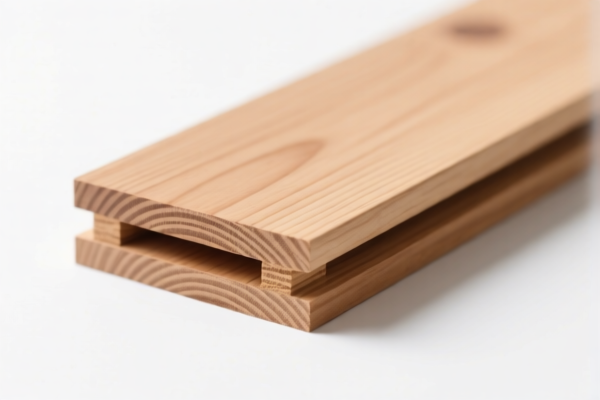
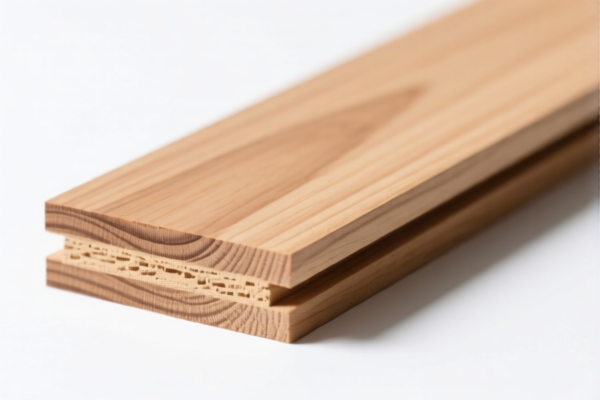
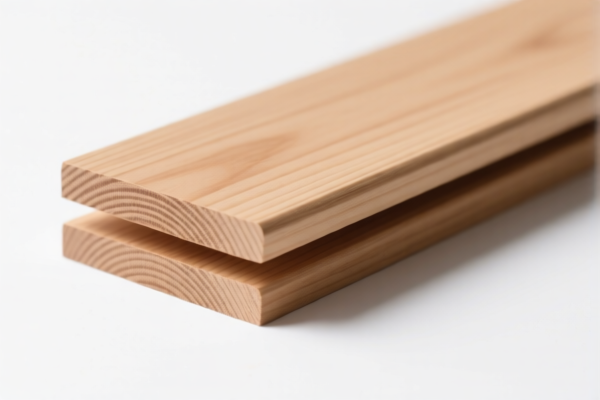

AI分析
🏗️ Wooden Construction Materials (Wood Products for Building Purposes)
🌐 HS Code Reference & Customs Clearance Guide | 2026 Latest Tariff Analysis | Professional Clearance Strategy
📌 I. Product Definition: Are You Clear on "Wooden Construction Materials"?
Wooden construction materials are not a single product but a category of wood-based products specifically designed or suitable for building applications. In international trade, they are broadly classified into two main groups based on their processing level and specific use:
Engineered Wood Panels (Plies & Layers): Such as plywood, blockboard, and veneer sheets, which serve as structural or semi-structural components. Specific Wood Building Items: Such as window frames, doors, floorings, and other architectural wood components.
⚠️ Key Distinction Point:
- If it is a panel made of multiple layers of wood veneer (plywood) or oriented strands, it typically falls under Chapter 44 (Wood and Wood Products), specifically heading 4412.
- If it is a finished or semi-finished building component (like doors, windows, or structural beams), it may fall under Chapter 44, specifically heading 4418.
- If it is a basic wood-based board (like particle board or MDF) not specifically designed as a "building item" but used for construction, it may fall under Heading 4410.
📦 II. HS Code Classification Details (2026 Latest Tariff Authority Comparison)
Based on the provided data, the following HS Codes are applicable to "Wooden Construction Materials." Note that all items below are subject to specific additional tariffs.
| HS Code | Product Description | Application Scope | Key Characteristics |
|---|---|---|---|
4410.19.00.60 |
Wooden Products for Building Purposes, Conforming to Wood Attributes and Board-Type Building Uses | General wood boards used in construction | Basic tariffs: 0%; Additional: 35% |
4418.99.91.95 |
Wooden Products for Building Purposes, Other Items in the Category of Building Wood Products | Other unfinished or semi-finished wood building items | Basic tariffs: 3.2%; Additional: 38.2% |
4418.91.91.40 |
Wooden Products for Building Purposes, Conforming to Material and Use of Wooden Structural Components | Structural wooden components for buildings | Basic tariffs: 3.2%; Additional: 38.2% |
4412.99.97.00 |
Wooden Products for Building Purposes, Under Other Categories for Building Applications | Other wood products (e.g., specialized plywood) for construction | Basic tariffs: 0%; Additional: 35% |
4410.90.00.00 |
Wooden Products for Building Purposes, Conforming to Wood Materials and Board-Type Building Products | General wood-based boards for building | Basic tariffs: 0%; Additional: 35% |
🔍 Key Reminder:
- All wood-based boards (plywood, particle board, etc.) used in construction generally fall under 4410 or 4412. - Structural components and architectural wood items (doors, windows, beams) fall under 4418. - All listed HS Codes are subject to additional tariffs totaling between 35% and 38.2% for goods originating from China.
💰 III. 2026 Latest Tariff Rate Detailed Explanation (Including Surcharges)
✅ Applicable Country: United States (US)
✅ Origin: China (CN)
✅ Effective Date: From November 10, 2025 (including subsequent imports)
🎯 1. 4410.19.00.60 & 4412.99.97.00 & 4410.90.00.00 —— Wood Boards/Plies for Building Use
| Item | Content |
|---|---|
| Basic Tariff | 0% (ad valorem) |
| Section 301 Surcharge | +25% (from USITC Footnote 9903.88.01) |
| Section 122 Surcharge | +10% (Targeting specific Chinese wood products, effective from Nov 10, 2025) |
| Total Tariff Rate | 35.0% |
| Tax Calculation | CIF Value × 35% |
| De Minimis Exemption | ❌ Not Available (deny_de_minimis) |
| Legal Basis Path | IEEPA:9903.01.25 → IEEPA:9903.01.24 → USITC:4410.19.00.60 / 4412.99.97.00 → FOOTNOTE:9903.88.01 |
📌 Explanation:
- The 25% Section 301 Tariff is applied to all Chinese-origin wood products under these headings. - The 10% Section 122 Tariff is an additional levy specifically targeting certain wood products from China. - Total 35% is a very high tariff, significantly impacting cost competitiveness.
🎯 2. 4418.99.91.95 & 4418.91.91.40 —— Wooden Structural Components & Other Building Items
| Item | Content |
|---|---|
| Basic Tariff | 3.2% (ad valorem) |
| Section 301 Surcharge | +25% (from USITC Footnote 9903.88.01) |
| Section 122 Surcharge | +10% (Targeting specific Chinese wood products, effective from Nov 10, 2025) |
| Total Tariff Rate | 38.2% |
| Tax Calculation | CIF Value × 38.2% |
| De Minimis Exemption | ❌ Not Available (deny_de_minimis) |
| Legal Basis Path | IEEPA:9901.25 → IEEPA:9903.01.24 → USITC:4418.99.91.95 / 4418.91.91.40 → FOOTNOTE:9903.88.01 |
📌 Note:
- These codes apply to finished or semi-finished wooden building components (e.g., structural beams, doors, windows). - The base tariff is higher (3.2%) compared to wood boards (0%). - Total 38.2% is the highest tariff among the listed codes.
🛠️ IV. Customs Clearance Practical Advice (Avoid Pitfalls Guide)
✅ 1. Required Documentation Checklist (All Required)
| Document | Required | Description |
|---|---|---|
| ✅ Product Specification Sheet | ✔️ | Includes dimensions, material type (plywood, solid wood, etc.), treatment status (treated/untreated) |
| ✅ Material Composition | ✔️ | Detailed breakdown of wood species, adhesive type, and layer structure |
| ✅ Product Photos (with Label) | ✔️ | Clear images showing product, packaging, and labels indicating origin and type |
| ✅ Third-Party Test Report | ✔️ | Formaldehyde emission (CARB/EPA), fire retardancy (if applicable), structural integrity |
| ✅ Commercial Invoice | ✔️ | Must clearly state "Wooden Products for Building Purposes" and precise HS Code |
| ✅ Certificate of Origin (CO) | ✔️ | Mandatory for determining origin; essential for tariff calculation |
| ✅ Packing List | ✔️ | Details gross/net weight, dimensions, and number of packages |
✅ 2. Declaration Tips (Key Mnemonics)
🔥 "Accurate Description, Correct HS, Avoid Splitting, Save Thousands!"
| Situation | Correct Declaration Method | Wrong Practice |
|---|---|---|
| Wood Boards (Plywood/MDF) | 4410.19.00.60 or 4410.90.00.00 |
Misclassified as "Furniture" or "General Wood" → Higher risk of audit |
| Structural Wood Components | 4418.91.91.40 |
Declared as raw lumber → Incorrect classification, potential penalties |
| Other Wood Building Items | 4418.99.91.95 |
Declared as "Furniture Parts" → Different tariff rate, compliance risk |
| Mixed Containers | Separate HS Codes per item | Lump-sum declaration → High risk of rejection and delays |
✅ 3. Special Situation Handling
| Situation | Handling Advice |
|---|---|
| Treated Wood Products | Provide fumigation certificates or heat treatment certificates (ISPM 15) to avoid quarantine issues |
| OEM Custom Wood Products | Provide customer order and design drawings to prove specific use and avoid being classified as "generic" |
| Wood Products for Residential Use | Ensure compliance with formaldehyde emission standards (CARB Phase 2 or EPA TSCA Title VI) |
| Wood Products for Commercial/Industrial Use | May require additional structural performance certificates |
🌍 V. Global Market Clearance Comparison (2026 Latest)
| Country/Region | Recommended HS Code | Tariff (China Origin) | Certification Requirements | Notes |
|---|---|---|---|---|
| 🇺🇸 USA | 4410.19.00.60 / 4418.91.91.40 |
35% - 38.2% | CARB/EPA Formaldehyde, ISPM 15 | High tariffs, strict formaldehyde limits |
| 🇨🇳 China | 4410.19.00.60 / 4418.91.91.40 |
0% - 5% | GB Standards | No additional tariffs for domestic trade |
| 🇪🇺 EU | 4410.19.00.60 / 4418.91.91.40 |
0% - 8% (varies) | CE Marking, REACH | No additional tariffs, but strict environmental standards |
| 🇦🇺 Australia | 4410.19.00.60 / 4418.91.91.40 |
5% - 10% | Australian Assembly Requirements | No additional tariffs, but biosecurity checks are strict |
| 🇯🇵 Japan | 4410.19.00.60 / 4418.91.91.40 |
0% - 5% | JIS Standards | No additional tariffs, but strict quality inspections |
📌 Conclusion:
- The USA imposes the highest additional tariffs on Chinese wooden construction materials. - China-origin wood products face significant cost pressure in the US market. It is recommended to evaluate supply chain adjustments or consider production relocation to avoid high tariffs. - Formaldehyde emission standards are critical in all major markets (US CARB/EPA, EU Ecolabel, Japan JIS).
📌 VI. Common Mistakes & Pitfall Guide (Lessons Learned)
❌ Mistake 1: Declaring "Wood Boards" as "Furniture Parts"
👉 Consequence: Incorrect HS Code → Potential penalties and back taxes
❌ Mistake 2: Not providing Formaldehyde Emission Certificates
👉 Consequence: Customs hold → Delayed release or return → Loss of time and money
❌ Mistake 3: Using Generic Terms like "Wood Products"
👉 Consequence: Customs cannot determine correct HS Code → Audit and additional documentation requests
❌ Mistake 4: Ignoring ISPM 15 Requirements for Packed Wood
👉 Consequence: Quarantine issues → Treatment or destruction of goods
✅ Correct Practice:
"Plywood Sheets, Birch Wood, 3-Ply, 18mm Thickness, CARB Phase 2 Compliant, for Residential Construction, Model XYZ, ISPM 15 Treated"
🎯 VII. Conclusion: Professional Declaration, Time-Saving, Cost-Reducing!
🎯 Remember the Mnemonics:
🔹 "Wood Boards: 35%, Structural: 38.2%, Formaldehyde Cert is a Must!"
🔹 "HS Code Determines Destiny, Tariff Difference is Huge, Declaration Error Costs Big!"
📌 Pro Tip:
If your wood products are originally from Vietnam, Mexico, Thailand, or Malaysia, you may apply for IEEPA Exemptions or Lower Tariffs. It is recommended to apply for Advance Rulings to avoid clearance risks.
📣 Immediate Action:
📞 Contact Professional Customs Brokers + Provide Product Photos + Apply for HS Code Advance Ruling
🚀 Let your wooden construction materials, smooth clearance, efficient export, profit doubled!
✨ Professional Clearance Starts with Accurate Classification!
💼 Every Cent of Your Cost Deserves Precise Calculation!
用户评价
关于 HS 编码归类
协调制度(HS)是由世界海关组织(WCO)制定的国际贸易商品分类标准。全球 200 多个国家采用 HS 系统作为海关关税、贸易统计和进出口监管的基础。
每个 HS 编码遵循以下层级结构:
- 章(2 位)——商品大类(例如:第 84 章:机器和机械设备)
- 品目(4 位)——章内的更具体分类
- 子目(6 位)——国际通用细分,所有 WCO 成员国统一使用
- 本国细分(8-10 位)——各国自行扩展的细分编码,如美国 HTSUS 10 位编码
正确的 HS 编码归类对于顺利通关、准确缴纳关税和遵守贸易法规至关重要。错误归类可能导致海关延误、多缴关税或罚款。
从CN进口到US时,适用的关税税率可能包括:
- 最惠国(MFN)税率——适用于 WTO 成员国的标准关税税率
- 普通税率——适用于无贸易协定国家
- 贸易救济关税——附加关税,如 301 条款(反倾销)、232 条款(国家安全)或反补贴税
本页内容仅供参考。如需正式归类,请咨询当地海关或持牌报关代理。