woven baskets other materials
CN → US商品图片
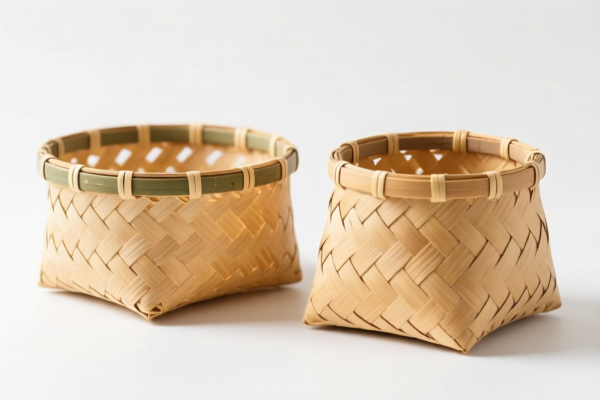
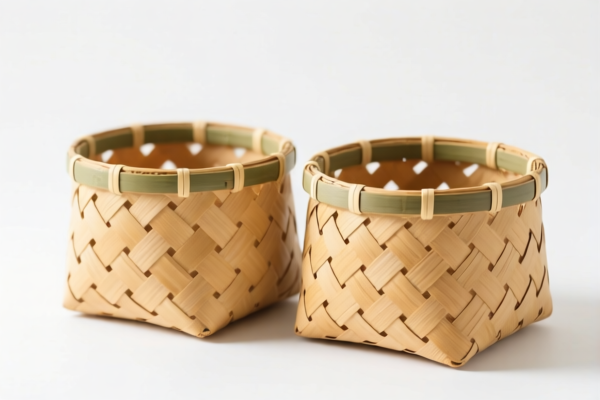
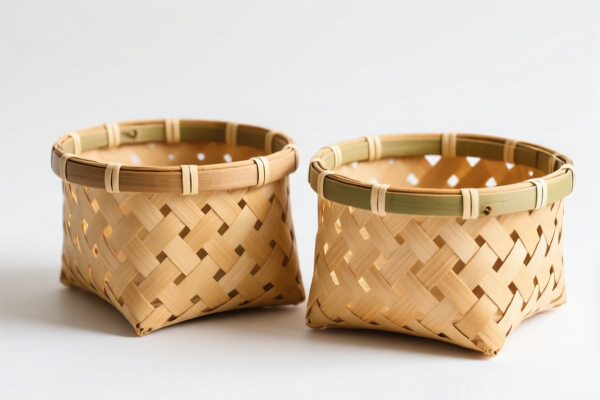
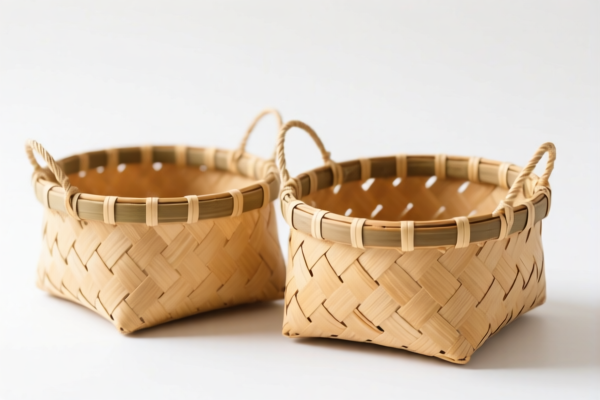
AI分析
🧺 Woven Baskets of Other Materials
🌐 HS Code Reference & Customs Clearance Guide | 2026 Latest Tariff Analysis | Professional Strategy for Global Trade
📌 I. Product Definition & Classification: Do You Truly Understand "Other Materials" Baskets?
Woven baskets, in the context of international trade (specifically Harmonized System HS Code Chapter 46 and 47), refer to containers made by weaving, plaiting, or braiding materials such as vegetable products (e.g., rattan, bamboo, straw, reed, raffia) or paper.
Crucial Distinction:
The phrase "other materials" is a regulatory trap.
- If made of metal, plastic, wood, or ceramics: They do NOT belong to Chapter 46 or 47. They fall under their respective chapters (e.g., Plastic under Chapter 39, Metal under Chapter 73, Wood under Chapter 44).
- If "Other Materials" refers to non-standard vegetable fibers or paper: They fall under Chapter 46 (Basketwork, wickerwork and other articles of plaiting materials) or Chapter 47 (Paper pulp, paper, etc.).
⚠️ Key Classification Point:
- If the basket is made of plastic (e.g., polypropylene weaving) → Chapter 39
- If the basket is made of metal (e.g., wire mesh) → Chapter 73
- If the basket is made of wood (e.g., wicker-like but wood strips) → Chapter 44
- If the basket is made of natural vegetable fibers (rattan, bamboo, straw) → Chapter 46
- If the basket is made of paper or paperboard → Chapter 46 or 48🚫 Common Mistake: Many importers incorrectly label "plastic woven baskets" as "woven baskets" (Chapter 46). This leads to misclassification and penalties.
📦 II. HS Code Classification Details (2026 Latest Tariff Authority Comparison)
| HS Code | Product Description | Applicable Scenario | Material Basis |
|---|---|---|---|
4601.21.00.00 |
Plaiting materials prepared, plaited, woven, flattened, or made into mats, etc., of bamboo | Bamboo baskets, mats, woven panels | ✅ Natural Vegetable (Bamboo) |
4601.93.00.00 |
Other plaiting materials, baskets, and other articles of plaiting materials | Baskets made of rattan, reed, straw, other fibers | ✅ Natural Vegetable (Other) |
4602.12.00.00 |
Worked vegetable materials (other than plant materials of heading 1404) woven, or made directly to shape by plaiting | Finished baskets of rattan, wicker, etc. | ✅ Natural Vegetable |
4602.19.00.00 |
Other worked vegetable materials | Baskets made of less common natural fibers | ✅ Natural Vegetable |
3923.21.00.00 |
Sacks and bags (including cones), of plastics | Plastic woven sacks/baskets | ❌ Plastic (NOT Chapter 46) |
7323.93.00.00 |
Table, kitchen or other household articles, and parts thereof, of stainless steel | Metal wire baskets | ❌ Metal |
🔍 Critical Reminder:
- "Woven Baskets" in Customs Terminology primarily refers to Chapter 46 products made from vegetable materials or paper.
- If your product is made of plastic, metal, or wood, it is NOT a "woven basket" under HS Code4602. It must be classified under its material-specific chapter.
- Example: A "plastic rattan-look basket" is classified as3923.21.00.00(Plastic sacks/bags) or3924.10.00.00(Plastic household articles), NOT4602.
💰 III. 2026 Latest Tariff Rate Breakdown (Including Additional Taxes & Policy Surcharges)
✅ Applicable Country: United States (US)
✅ Country of Origin: China (CN)
✅ Effective Date: From November 10, 2025 (including subsequent imports)
🎯 1. 4602.12.00.00 / 4602.19.00.00 —— Natural Vegetable Fiber Baskets (Rattan, Bamboo, etc.)
| Item | Content |
|---|---|
| Base Tariff Rate | 0% (ad valorem) for most natural basketry |
| USITC Additional Tariff | +25% (from USITC Footnote 9903.88.01, Section 301) |
| IEEPA Additional Tariff | +10% (for China/Hong Kong products, from Nov 10, 2025) |
| Total Tariff Rate | 35% |
| Tax Calculation | CIF Value × 35% |
| De Minimis Eligibility | ❌ No (deny_de_minimis) |
| Legal Basis Path | IEEPA:9903.01.25 → IEEPA:9903.01.24 → USITC:4602.12.00.00 → FOOTNOTE:9903.88.01 |
📌 Explanation:
- Although the base rate for natural baskets is often 0%, Section 301 tariffs (25%) and IEEPA surcharges (10%) apply to Chinese-origin goods.
- Total 35% is a significant cost factor.
- These tariffs cannot be avoided via de minimis (under $800) if the total value of the shipment exceeds the threshold or if specific exclusions do not apply.
🎯 2. 3923.21.00.00 —— Plastic "Woven-Look" Baskets
| Item | Content |
|---|---|
| Base Tariff Rate | 3.4% (ad valorem) |
| USITC Additional Tariff | +25% (Section 301) |
| IEEPA Additional Tariff | +10% (China/HK) |
| Total Tariff Rate | 38.4% |
| Tax Calculation | CIF Value × 38.4% |
| De Minimis Eligibility | ❌ No |
| Legal Basis Path | IEEPA:9901.25 → IEEPA:9903.01.24 → USITC:3923.21.00.00 |
📌 Note:
- Plastic baskets are more expensive in tariffs than natural fiber baskets due to the higher base rate (3.4% vs 0%).
- Misclassifying plastic baskets as natural fiber baskets (4602) to save 1.4% is a high-risk audit target.
🛠️ IV. Customs Clearance Practical Advice (Avoid Pitfalls Guide)
✅ 1. Required Documentation Checklist (Missing Items Will Cause Delays)
| Document | Required? | Description |
|---|---|---|
| ✅ Product Specification Sheet | ✔️ | Material composition (e.g., "100% Natural Rattan" vs "PP Plastic") |
| ✅ Material Composition Certificate | ✔️ | Critical for distinguishing between Chapter 46 (Natural) and Chapter 39 (Plastic) |
| ✅ Product Photos (Clear) | ✔️ | Show weave texture, closure, and any metal/plastic components |
| ✅ Commercial Invoice | ✔️ | Must state "Woven Basket of [Material]" |
| ✅ Packing List | ✔️ | Detail items, weights, and dimensions |
| ✅ FCC/CE/RoHS (if applicable) | ✔️ | For plastic baskets, RoHS may be required |
| ✅ Fumigation Certificate (for wood/plants) | ✔️ | Required if natural materials show signs of pests |
✅ 2. Declaration Tips (Key Rules)
🔥 "Material First, Shape Second; Plastic is Not Natural, Metal is Not Woven!"
| Scenario | Correct HS Code | Incorrect Action |
|---|---|---|
| Rattan Basket | 4602.12.00.00 |
Declare as "Plastic Basket" → Lower base rate but wrong classification |
| Plastic Rattan-Look Basket | 3923.21.00.00 or 3924.10.00.00 |
Declare as "Woven Basket (Chapter 46)" → Audit Risk + Penalty |
| Metal Wire Basket | 7323.93.00.00 |
Declare as "Woven Basket" → Misclassification |
| Wooden Crate/Basket | 4421.99.90.00 |
Declare as "Woven Basket" → Wrong Chapter |
| Paper Basket | 4602.10.00.00 |
Declare as "Cardboard Box" → Wrong Classification |
✅ 3. Special Cases Handling
| Case | Handling Advice |
|---|---|
| Mixed Materials (e.g., Rattan Handle + Plastic Body) | Classified based on the principal material. If plastic body > 50% by weight, likely Chapter 39. |
| Baskets with Liners (e.g., Plastic Insert) | If the liner is integral, the basket may still be classified as plastic (3923.21.00.00) if the plastic is the essential character. |
| Bamboo vs. Wood | Bamboo is treated as a vegetable product (Chapter 46). Solid wood is Chapter 44. Do not confuse. |
| Customs Origin | If assembled in Vietnam/Malaysia using Chinese raw materials, apply for Form E (ASEAN) or Form AK (AANZFTA) to reduce/eliminate tariffs. |
🌍 V. Global Market Customs Comparison (2026 Latest)
| Country/Region | Recommended HS Code | Tariff (China Origin) | Certification Requirements | Notes |
|---|---|---|---|---|
| 🇺🇸 USA | 4602.19.00.00 |
35% (Natural) / 38.4% (Plastic) | No special certs | High tariffs due to Section 301 |
| 🇨🇳 China | 4602.19.00.00 |
0-10% | No special certs | Low tariffs for imports |
| 🇪🇺 EU | 4602.19.00.00 |
0% (if GSP/EBA) | CE (if plastic), Phytosanitary (if natural) | Duty-free for many natural baskets |
| 🇬🇧 UK | 4602.19.00.00 |
0-12% | No special certs | Post-Brexit tariffs vary |
| 🇯🇵 Japan | 4602.19.00.00 |
0-6% | No special certs | Low tariffs, strict phytosanitary |
📌 Conclusion:
- USA imposes the highest barriers (35-38.4%) due to trade tensions.
- EU and Japan are more favorable for natural fiber baskets.
- Plastic baskets face higher base rates globally than natural ones.
📌 VI. Common Mistakes & Pitfalls (Lessons Learned)
❌ Mistake 1: Classifying Plastic "Rattan" Baskets as Natural Rattan Baskets (4602)
👉 Consequence: If audited, you will face back taxes + penalties. The duty difference is small, but the legal risk is high. Customs labs can easily identify plastic through FTIR analysis.
❌ Mistake 2: Ignoring Fumigation Requirements for Natural Baskets
👉 Consequence: If the basket contains untreated wood or plant materials, it may be rejected or destroyed at the US border due to pest control regulations.
❌ Mistake 3: Misclassifying Metal Wire Baskets as "Woven"
👉 Consequence: Wrong HS Code leads to incorrect duty assessment and potential CBP (Customs and Border Protection) fines.
❌ Mistake 4: Using "Woven Basket" as a Generic Description
👉 Consequence: Ambiguity. Always specify: "Woven Basket of Natural Rattan, 12-inch, Brown, Handle Included".
✅ Correct Practice:
"Natural Rattan Woven Basket, Household Use, 100% Vegetable Fiber, Handmade, Model XYZ, Fumigated"
🎯 VII. Conclusion: Professional Declaration Saves Money & Time
🎯 Remember the Mantra:
🔹 "Material Dictates Chapter; Plastic is Not Natural; Metal is Not Woven!"
🔹 "Chapter 46 is for Plants & Paper; Chapter 39 is for Plastic; Chapter 73 is for Metal."
📌 Pro Tip:
If your baskets are made from recycled plastic, they may qualify for different duties or incentives in the EU (Green Deal).
For the US, consider origin shifting to Vietnam, Thailand, or Malaysia to avoid Section 301 tariffs, but ensure substantial transformation occurs.
📣 Immediate Action:
📞 Contact a Licensed Customs Broker + Provide Material Samples + Apply for USITC Advance Ruling
🚀 Ensure your baskets, compliant, duty-efficient, and smoothly cleared!
✨ Professional Customs Clearance Starts with Accurate Classification!
💼 Your Cost Efficiency Depends on Precision!
用户评价
关于 HS 编码归类
协调制度(HS)是由世界海关组织(WCO)制定的国际贸易商品分类标准。全球 200 多个国家采用 HS 系统作为海关关税、贸易统计和进出口监管的基础。
每个 HS 编码遵循以下层级结构:
- 章(2 位)——商品大类(例如:第 84 章:机器和机械设备)
- 品目(4 位)——章内的更具体分类
- 子目(6 位)——国际通用细分,所有 WCO 成员国统一使用
- 本国细分(8-10 位)——各国自行扩展的细分编码,如美国 HTSUS 10 位编码
正确的 HS 编码归类对于顺利通关、准确缴纳关税和遵守贸易法规至关重要。错误归类可能导致海关延误、多缴关税或罚款。
从CN进口到US时,适用的关税税率可能包括:
- 最惠国(MFN)税率——适用于 WTO 成员国的标准关税税率
- 普通税率——适用于无贸易协定国家
- 贸易救济关税——附加关税,如 301 条款(反倾销)、232 条款(国家安全)或反补贴税
本页内容仅供参考。如需正式归类,请咨询当地海关或持牌报关代理。