woven handbag for students
CN → US| HS编码 | 关税税率 | 原产国 | 目的国 | 文档 |
|---|---|---|---|---|
| 4602112100 | 41.2% | CN | US | 官方文档 |
| 4202224020 | 42.4% | CN | US | 官方文档 |
| 4202228980 | 52.6% | CN | US | 官方文档 |
| 4602192920 | 40.3% | CN | US | 官方文档 |
| 6307909891 | 24.5% | CN | US | 官方文档 |
商品图片
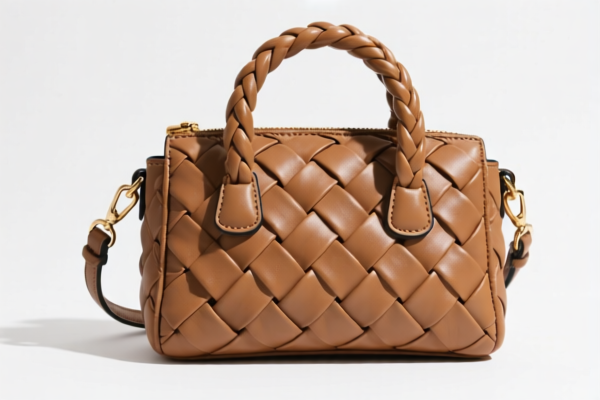
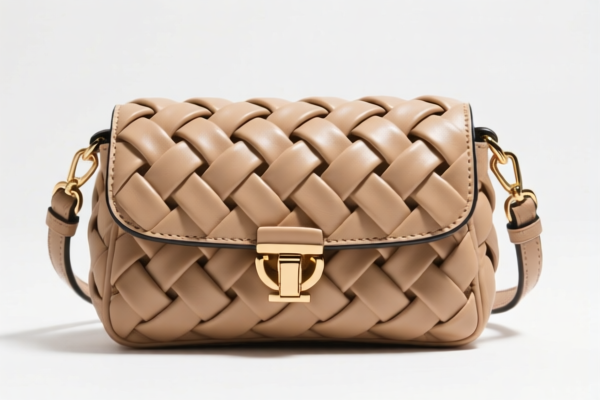
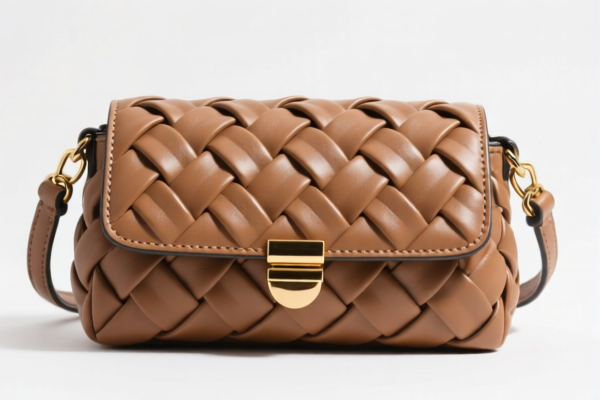
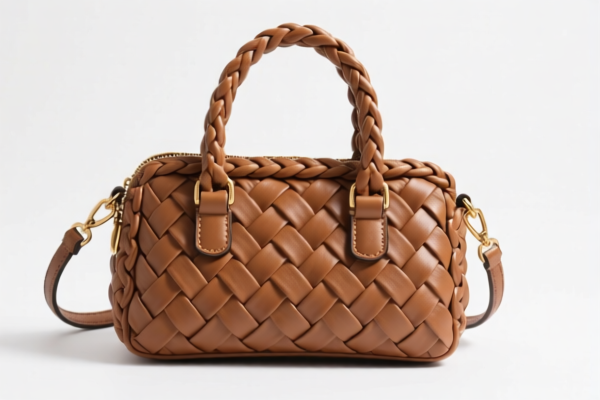
AI分析
🎒 Woven Handbag for Students (Back to School Essential)
🌐 HS Code Reference & Customs Clearance Guide | 2026 Latest Tariff Analysis | Strategic Clearance Strategy
📌 I. Product Definition & Classification: Are You Sure You Know "Woven Handbag"?
A "woven handbag for students" is not a single standardized product in international trade. Its classification depends strictly on the raw material composition and structural features (e.g., presence of internal compartments). In the HS Code system, materials like bamboo, rattan, and textiles fall under different chapters, leading to drastically different tax liabilities.
⚠️ Critical Distinction Points:
- Natural Plant Materials (Bamboo, Rattan, Straw) → Generally fall under Chapter 46 (Plaiting materials; basketware and other plaited goods).
- Woven Textiles/Plastics → Generally fall under Chapter 42 (Articles of leather; saddle harness; handbags).
- Other Made-Up Articles (e.g., specific lined fabrics not classified as handbags elsewhere) → May fall under Chapter 63 (Other made-up textile articles).
📦 II. HS Code Classification Details (2026 Latest Tariff Authority Comparison)
Based on the provided data, here are the four possible classifications for a "Woven Handbag for Students," depending on material and structure:
| HS Code | Product Description | Applicable Scenario | Material Type |
|---|---|---|---|
4602.11.21.00 |
Woven handbag, material: Bamboo, Rattan, or similar plant materials | Classic eco-friendly student totes made from natural stalks | ✅ Plant Material |
4602.19.29.20 |
Woven handbag, material: Other plant material woven products | Mixed plant fibers or less common natural weaving materials | ✅ Plant Material |
4202.22.40.20 |
Woven handbag, material: Woven materials (General) | Common synthetic woven plastic bags or generic "woven" texture bags | ✅ Woven Material |
4202.22.89.80 |
Woven handbag, material: Other textile materials | Handbags made from woven cotton, jute, or complex textile blends | ✅ Textile Material |
6307.90.98.91 |
Woven handbag, with internal compartments, classified as other made-up articles | Highly Specific: If the bag has complex internal lining/sections that disqualify it from standard handbag chapters | ✅ Other Made-Up |
🔍 Key Reminder:
- Bamboo/Rattan bags are safest under 4602, but ensure they are primarily plaited.
- Textile-based woven bags (like jute or synthetic weave) usually go under 4202, but the base textile determines the sub-code.
- If it has rigid internal dividers/structures that change its primary character, it might be pushed to 6307, which has a significantly lower tax rate in this dataset.
💰 III. 2026 Latest Tariff Rate Breakdown (Including Additional Taxes & Policy Surcharges)
✅ Applicable Country: United States (US)
✅ Country of Origin: China (CN)
✅ Effective Date: Current rates including Section 301 and IEEPA surcharges.
🎯 1. 4602.11.21.00 —— Bamboo/Rattan Woven Handbag (Natural Plant)
| Item | Content |
|---|---|
| Base Tariff | 6.2% (Ad Valorem) |
| Section 301 Surcharge | +25.0% |
| IEEPA Surcharge (Section 122) | +10.0% |
| Total Effective Tax Rate | 41.2% |
| Tax Calculation | CIF Value × 41.2% |
| De Minimis Exemption | ❌ Not Applicable (High tariff items excluded) |
| Legal Basis Path | USITC:4602.11.21.00 → Section 301: Footnote 9903.88.01 → IEEPA:9903.01.24 |
📌 Explanation:
- Bamboo products are often targeted in trade disputes.
- The 25% Section 301 tariff is the major burden here.
- Even though it’s a "natural" product, it is not exempt from China-specific surcharges.
🎯 2. 4602.19.29.20 —— Other Plant Material Woven Handbag
| Item | Content |
|---|---|
| Base Tariff | 5.3% (Ad Valorem) |
| Section 301 Surcharge | +25.0% |
| IEEPA Surcharge (Section 122) | +10.0% |
| Total Effective Tax Rate | 40.3% |
| Tax Calculation | CIF Value × 40.3% |
| De Minimis Exemption | ❌ Not Applicable |
| Legal Basis Path | USITC:4602.19.29.20 → Section 301: Footnote 9903.88.01 → IEEPA:9903.01.24 |
📌 Note:
- Slightly cheaper base rate than bamboo-specific codes (5.3% vs 6.2%), but the total rate (40.3%) is still very high.
- Use this code only if the material is plant-based but not strictly bamboo or rattan.
🎯 3. 4202.22.40.20 —— Woven Material Handbag (General Woven)
| Item | Content |
|---|---|
| Base Tariff | 7.4% (Ad Valorem) |
| Section 301 Surcharge | +25.0% |
| IEEPA Surcharge (Section 122) | +10.0% |
| Total Effective Tax Rate | 42.4% |
| Tax Calculation | CIF Value × 42.4% |
| De Minimis Exemption | ❌ Not Applicable |
| Legal Basis Path | USITC:4202.22.40.20 → Section 301: Footnote 9903.88.01 → IEEPA:9903.01.24 |
📌 Caution:
- This is a "catch-all" for woven handbags that don’t fit other specific textile categories.
- If your bag is made of synthetic woven plastic (like PP rope), it likely falls here or under 4202.22.89.80.
🎯 4. 4202.22.89.80 —— Other Textile Material Woven Handbag
| Item | Content |
|---|---|
| Base Tariff | 17.6% (Ad Valorem) |
| Section 301 Surcharge | +25.0% |
| IEEPA Surcharge (Section 122) | +10.0% |
| Total Effective Tax Rate | 52.6% |
| Tax Calculation | CIF Value × 52.6% |
| De Minimis Exemption | ❌ Not Applicable |
| Legal Basis Path | USITC:4202.22.89.80 → Section 301: Footnote 9903.88.01 → IEEPA:9903.01.24 |
📌 Warning:
- Highest Tax Rate in the List!
- This applies to complex textile weaves (e.g., jute, hemp, or mixed fabric weaves) that are not covered by simpler codes.
- Avoid this code if possible unless the material strictly requires it, as it adds ~10% more tax than bamboo options.
🎯 5. 6307.90.98.91 —— Woven Handbag with Internal Compartments (Other Made-Up Article)
| Item | Content |
|---|---|
| Base Tariff | 7.0% (Ad Valorem) |
| Section 301 Surcharge | +7.5% |
| IEEPA Surcharge (Section 122) | +10.0% |
| Total Effective Tax Rate | 24.5% |
| Tax Calculation | CIF Value × 24.5% |
| De Minimis Exemption | ❌ Not Applicable (But significantly lower base) |
| Legal Basis Path | USITC:6307.90.98.91 → Section 301: Footnote 9903.88.01 (Lower rate applied) → IEEPA:9903.01.24 |
📌 Opportunity Alert:
- Lowest Tax Rate (24.5%) in the dataset!
- Condition: The bag must be classified as an "other made-up article" rather than a standard handbag. This usually requires specific internal structures, linings, or features that remove it from Chapter 42 (Handbags).
- Risk: Customs may challenge this classification if it looks like a standard handbag. Requires strong product design justification.
🛠️ IV. Customs Clearance Practical Advice (Avoid Pitfalls)
✅ 1. Preparation Checklist (Mandatory)
| Document | Required | Purpose |
|---|---|---|
| ✅ Product Specification Sheet | ✔️ | Must list exact material composition (e.g., "100% Bamboo Strips," "PP Woven Plastic"). |
| ✅ High-Resolution Photos | ✔️ | Show exterior weave pattern, interior lining, and any internal compartments. |
| ✅ Bill of Materials (BOM) | ✔️ | Break down materials: Outer shell, lining, hardware, handles. |
| ✅ Commercial Invoice | ✔️ | Clearly state "Woven Handbag" and specify material. |
| ✅ Packing List | ✔️ | Match invoice exactly. |
✅ 2. Classification Strategy (Key Takeaways)
🔥 “Material First, Structure Second: Choose the Right Chapter to Save Tax!”
| Scenario | Recommended HS Code | Why? |
|---|---|---|
| Bamboo/Rattan Bag | 4602.11.21.00 |
Standard for natural plant weaving. Total Tax: 41.2%. |
| Jute/Fabric Woven Bag | 4202.22.89.80 |
Standard for textile weaves. High Tax (52.6%). Try to find a better classification if possible. |
| Bag with Complex Internal Lining/Compartments | 6307.90.98.91 |
Lowest Tax (24.5%). Must prove it’s not a standard handbag under Ch 42. |
| Synthetic Woven Plastic Bag | 4202.22.40.20 |
Generic woven material. Total Tax: 42.4%. |
✅ 3. Special Considerations for "Student Bags"
| Issue | Advice |
|---|---|
| "Student" Label | The term "Student" is not a customs classification term. Do not rely on it. Customs looks at material and design. |
| Internal Compartments | If the bag has multiple zippered sections, laptop sleeves, etc., argue for 6307.90.98.91 to save ~18% in tax vs. Ch 42 codes. |
| Material Verification | If you claim "Plant Material" for 4602, provide lab tests proving it is bamboo/rattan, not synthetic imitation. |
| Origin Marking | Ensure "Made in China" is clearly marked on the product/packaging to avoid country-of-origin disputes. |
🌍 V. Global Market Comparison (2026 Overview)
| Region | Likely HS Code | Est. Tax Rate | Notes |
|---|---|---|---|
| 🇺🇸 USA | 4602.11.21.00 or 4202.22.89.80 |
41.2% – 52.6% | High surcharges (35-45%). |
| 🇪🇺 EU | 4602.11 or 4202.22 |
0% - 4% | No Section 301 tariffs. Much cheaper. |
| 🇨🇳 China | 4602.11 or 4202.22 |
5% - 10% | Lower base rates, no anti-dumping surcharges. |
📌 Conclusion:
- USA is the most expensive market for woven handbags due to Section 301 and IEEPA tariffs.
- EU and other markets are significantly more favorable for these goods.
- If targeting the US, consider designing with internal structures to qualify for6307.90.98.91(24.5% tax) as a cost-saving measure, provided the design justifies it.
📌 VI. Common Mistakes & Pitfalls (Lessons Learned)
❌ Mistake 1: Calling a "Bamboo Bag" a "Textile Bag"
👉 Consequence: Misclassification → Delays + Fines. If it’s bamboo, use 4602.
❌ Mistake 2: Ignoring Internal Compartments
👉 Consequence: Missed savings. If your bag has complex lining, argue for 6307.90.98.91 (24.5%) instead of 4202 (42-52%).
❌ Mistake 3: Vague Description "Woven Bag"
👉 Consequence: Customs will assign the highest possible duty rate or request more info, causing demurrage fees.
👉 Fix: Specify "Bamboo," "Jute," or "PP Woven."
✅ Correct Declaration Example:
"Woven Handbag, Made of 100% Natural Bamboo Strips, with Cotton Lining and Zipper Closure, for Student Use, Model XYZ"
🎯 VII. Conclusion: Smart Classification Saves Money!
🎯 Remember This:
🔹 "Bamboo is 41%, Textile is 52%, but Complex Structure is 24%!"
🔹 "Don't just say 'Woven'—say what it's made of!"
🔹 "If it has internal structure, argue for Chapter 63 to cut tax in half!"
📌 Pro Tip:
If your woven handbag can be designed with specific internal dividers or non-standard linings, work with your designer to ensure it fits the description of 6307.90.98.91. This single change can save you ~18-28% in total taxes on the US market.
📣 Immediate Action:
📞 Contact a Customs Broker: Provide photos and material samples.
📄 Request a Pre-Ruling: For large volumes, ask US CBP for a binding ruling on6307.90.98.91eligibility.
🚀 Optimize Design: Slightly modify the interior to justify the lower-taxed classification.
✨ Precision in Classification is Key to Profitability!
💼 Every percentage point matters in cross-border trade.
用户评价
关于 HS 编码归类
协调制度(HS)是由世界海关组织(WCO)制定的国际贸易商品分类标准。全球 200 多个国家采用 HS 系统作为海关关税、贸易统计和进出口监管的基础。
每个 HS 编码遵循以下层级结构:
- 章(2 位)——商品大类(例如:第 84 章:机器和机械设备)
- 品目(4 位)——章内的更具体分类
- 子目(6 位)——国际通用细分,所有 WCO 成员国统一使用
- 本国细分(8-10 位)——各国自行扩展的细分编码,如美国 HTSUS 10 位编码
正确的 HS 编码归类对于顺利通关、准确缴纳关税和遵守贸易法规至关重要。错误归类可能导致海关延误、多缴关税或罚款。
从CN进口到US时,适用的关税税率可能包括:
- 最惠国(MFN)税率——适用于 WTO 成员国的标准关税税率
- 普通税率——适用于无贸易协定国家
- 贸易救济关税——附加关税,如 301 条款(反倾销)、232 条款(国家安全)或反补贴税
本页内容仅供参考。如需正式归类,请咨询当地海关或持牌报关代理。