woven handbag waterproof
CN → US| HS编码 | 关税税率 | 原产国 | 目的国 | 文档 |
|---|---|---|---|---|
| 4602112100 | 41.2% | CN | US | 官方文档 |
| 4602192920 | 40.3% | CN | US | 官方文档 |
| 4202224020 | 42.4% | CN | US | 官方文档 |
| 4202228980 | 52.6% | CN | US | 官方文档 |
| 6307909891 | 24.5% | CN | US | 官方文档 |
商品图片

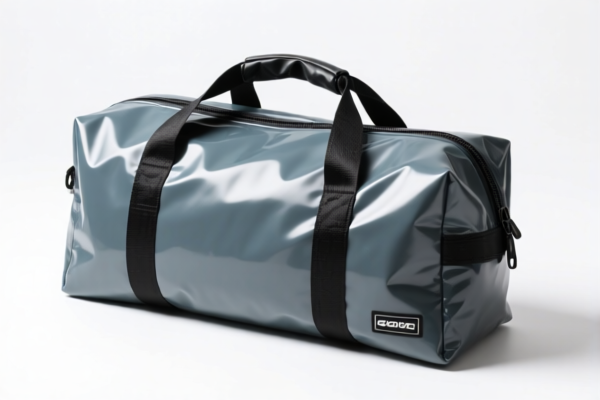
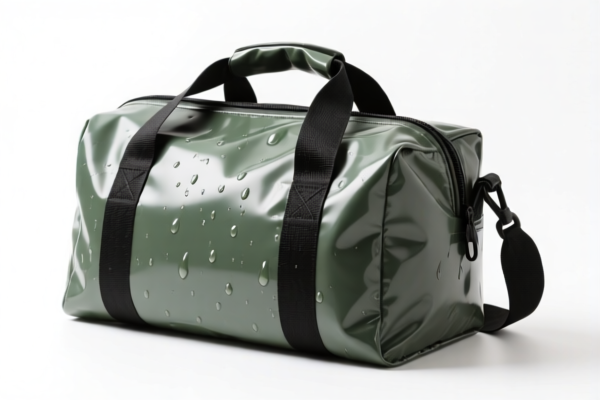
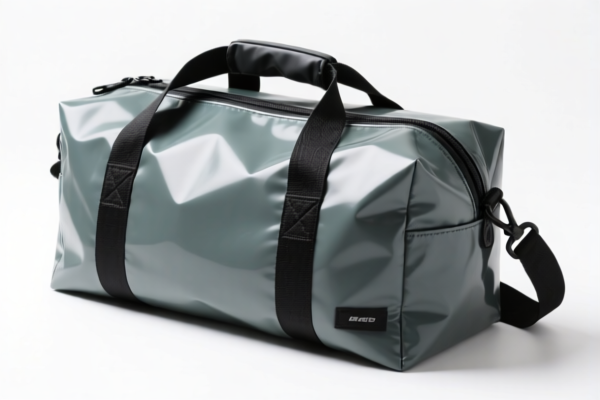
AI分析
👜 Woven Handbag (Waterproof)
🌐 HS Code Reference & Clearance Guide | 2026 Latest Tariff Analysis | Professional Customs Strategy
📌 I. Product Definition & Classification: Do You Truly Understand "Waterproof Woven Handbag"?
A Woven Handbag is an accessory primarily used for carrying personal items, characterized by its woven structure. In international trade, classification depends heavily on the raw material and manufacturing method. The term "waterproof" can refer to a functional coating (e.g., PVC, PU, or wax) or the inherent nature of the material (e.g., synthetic fiber).
Key Distinctions: * Vegetable Material Weaving: If made from bamboo, rattan, or similar plant materials, it falls under Chapter 46. * Textile/Fiber Weaving: If made from straw, esparto grass, or synthetic fibers woven into fabric, it likely falls under Chapter 42 (Articles of leather or substitute materials). * Other Textile Articles: If the bag has specific lining/compartment structures that don't fit standard handbag definitions in Ch 42, it might fall under Chapter 63 (Other made-up textile articles).
⚠️ Critical Classification Point:
- Waterproofing Coating: A waterproof coating on a woven bag does not automatically change the HS code to Chapter 39 (Plastics). It is usually still classified by the base woven material, unless the coating constitutes the essential character (e.g., a plastic sheet formed into a bag). - Structure: Bags with internal compartments often lean towards 4202 (Handbags) rather than generic woven articles (4602 or 6307), provided they meet the specific description of handbags.
📦 II. HS Code Classification Details (2026 Latest Tariff Authoritative Comparison)
Based on the provided data, here are the five possible HS Codes for a Waterproof Woven Handbag, sorted by potential application and material logic.
| HS Code | Product Description | Material Logic | Why This Code? |
|---|---|---|---|
4602.11.21.00 |
Woven handbag, material: bamboo, rattan, or similar vegetable materials | Vegetable | Matches "Woven handbags, of bamboo, rattan, or similar vegetable materials." The "waterproof" aspect is likely a treatment on the natural fiber. |
4602.19.29.20 |
Woven handbag, material: other vegetable materials | Vegetable | For woven handbags made from vegetable materials not specified in the previous code (e.g., straw, esparto). Fits the "woven" and "vegetable" criteria. |
4202.22.40.20 |
Woven handbag, material: woven materials | Woven/Composite | Falls under "Handbags... with outer surface of woven materials." This is a broad category for woven handbags that don't strictly fit the "vegetable only" strict definition of Ch 46 or are considered composite textiles. |
4202.22.89.80 |
Woven handbag, material: textile materials (other than cotton/paper) | Textile | For handbags with an outer surface of textile materials (non-cotton, non-paper). If the "weave" is a synthetic textile weave (e.g., polyester rope weave), this applies. |
6307.90.98.91 |
Woven handbag, with inner compartments, other made-up articles | Textile/Other | If the bag has a complex internal structure (pockets, dividers) and is classified as an "other made-up textile article" rather than a standard handbag under Ch 42. |
🔍 Key Insight:
- Ch 46 (4602.11/19): Strictly for vegetable materials (bamboo, rattan, straw). If your bag is bamboo, use this.
- Ch 42 (4202.22): For handbags made of woven textiles or composite materials. If it has a lining, zippers, and a structured "handbag" shape, this is the most common classification for non-vegetable woven bags.
- Ch 63 (6307): A fallback for "other made-up articles." Used if the bag doesn't fit the specific "handbag" definition of Ch 42 due to its unique structure or material mix.
💰 III. 2026 Latest Tariff Rate Breakdown (Including Surcharges & Policy Add-ons)
✅ Applicable Country: United States (US)
✅ Origin: China (CN)
✅ Effective Time: 2025/2026 (Including subsequent imports)
🎯 1. 4602.11.21.00 —— Woven Handbag (Bamboo/Rattan/Vegetable)
| Item | Content |
|---|---|
| Base Duty | 6.2% |
| Section 301 Surcharge | +25.0% |
| IEEPA Surcharge | +10.0% (Targeting China/HK) |
| Total Rate | 41.2% |
| Tax Calculation | CIF Value × 41.2% |
| De Minimis Exemption? | ❌ No (deny_de_minimis) |
| Legal Basis Path | USITC:4602.11.21.00 → Section 301: 8803.01.10 → IEEPA:9903.01.25 |
📌 Explanation:
- Base 6.2%: Standard MFN rate for woven vegetable materials.
- 301 Surcharge 25%: Applied to goods of Chinese origin under Section 301.
- IEEPA 10%: Additional surcharge under International Emergency Economic Powers Act.
- Total 41.2%: High cost. Ensure your FOB price can absorb this.
🎯 2. 4602.19.29.20 —— Woven Handbag (Other Vegetable Materials)
| Item | Content |
|---|---|
| Base Duty | 5.3% |
| Section 301 Surcharge | +25.0% |
| IEEPA Surcharge | +10.0% |
| Total Rate | 40.3% |
| Tax Calculation | CIF Value × 40.3% |
| De Minimis Exemption? | ❌ No |
| Legal Basis Path | USITC:4602.19.29.20 → Section 301 → IEEPA:9903.01.24 |
📌 Note:
- Slightly lower base rate than bamboo-specific codes (5.3% vs 6.2%).
- Applies to other vegetable fibers (e.g., straw, esparto).
- Still subject to full 35% in total surcharges.
🎯 3. 4202.22.40.20 —— Woven Handbag (Woven Materials)
| Item | Content |
|---|---|
| Base Duty | 7.4% |
| Section 301 Surcharge | +25.0% |
| IEEPA Surcharge | +10.0% |
| Total Rate | 42.4% |
| Tax Calculation | CIF Value × 42.4% |
| De Minimis Exemption? | ❌ No |
| Legal Basis Path | USITC:4202.22.40.20 → Section 301 → IEEPA:9903.01.25 |
📌 Analysis:
- This is a common classification for "woven handbags" that are not strictly "vegetable" (e.g., synthetic rope woven into a handbag shape).
- Base rate is higher (7.4%) than vegetable codes.
- Total 42.4% is the highest among the "woven handbag" categories in Ch 42/46.
🎯 4. 4202.22.89.80 —— Woven Handbag (Textile Materials)
| Item | Content |
|---|---|
| Base Duty | 17.6% |
| Section 301 Surcharge | +25.0% |
| IEEPA Surcharge | +10.0% |
| Total Rate | 52.6% |
| Tax Calculation | CIF Value × 52.6% |
| De Minimis Exemption? | ❌ No |
| Legal Basis Path | USITC:4202.22.89.80 → Section 301 → IEEPA:9903.01.25 |
📌 Warning:
- Highest Total Rate (52.6%).
- Applies if the bag is classified as a general "textile handbag" (e.g., woven polyester fabric) rather than a structured "woven handbag" (Ch 42.22.40).
- Avoid this classification if possible; try to justify a more specific material description (like4202.22.40.20) to save 10% in duties.
🎯 5. 6307.90.98.91 —— Woven Handbag (Other Made-up Textile Articles)
| Item | Content |
|---|---|
| Base Duty | 7.0% |
| Section 301 Surcharge | +7.5% |
| IEEPA Surcharge | +10.0% |
| Total Rate | 24.5% |
| Tax Calculation | CIF Value × 24.5% |
| De Minimis Exemption? | ❌ No |
| Legal Basis Path | USITC:6307.90.98.91 → Section 301: 8803.01.10 (or specific footnote) → IEEPA:9903.01.24 |
📌 Opportunity:
- Lowest Total Rate (24.5%).
- This code has a significantly lower 301 surcharge (7.5%) compared to the 25% surcharge on Ch 46 and Ch 42 handbags.
- Condition: Must be classified as an "other made-up textile article" rather than a "handbag" under Ch 42. This requires that the bag does not meet the strict definition of a handbag in Chapter 42 (e.g., lacks a handle, or is primarily a storage pouch with complex lining).
- Strategy: If the bag is simple, has no rigid structure, and is made of textile, argue for 6307 to save ~18% in taxes.
🛠️ IV. Clearance Practical Advice (Pitfall Avoidance Guide)
✅ 1. Documentation Checklist (Non-negotiable)
| Document | Required | Description |
|---|---|---|
| ✅ Product Specifications | ✔️ | Detail the weaving material (bamboo, straw, synthetic rope, textile fabric). |
| ✅ Material Composition | ✔️ | Specify if "waterproof" is due to material (synthetic) or coating (PVC/PU). If coating, provide % by weight. |
| ✅ Photos (Clear & Detailed) | ✔️ | Show the weave pattern, lining, handles, zippers, and waterproofing proof (e.g., water droplets on surface). |
| ✅ Commercial Invoice | ✔️ | Clearly state "Woven Handbag" and specify material. Avoid vague terms like "Bag". |
| ✅ Packing List | ✔️ | Include weight and dimensions. |
| ✅ COO (Certificate of Origin) | ✔️ | Crucial for determining Section 301 and IEEPA applicability. |
| ✅ Third-Party Test Report | ✔️ | If claiming "waterproof," provide a test report (e.g., AATCC 22) to justify material description. |
✅ 2. Declaration Strategies (Key Mnemonics)
🔥 "Material First, Structure Second, Code Choice Saves Thousands!"
| Scenario | Correct Declaration | Incorrect Practice |
|---|---|---|
| Bamboo/Rattan Bag | 4602.11.21.00 |
Misdeclare as textile → Risk of penalty for wrong classification. |
| Synthetic Rope Woven Bag | 4202.22.40.20 (if structured handbag) |
Declare as 6307 without justification → Audit risk. |
| Simple Woven Pouch with Pockets | 6307.90.98.91 |
Declare as 4202 → Pay 10% more duty unnecessarily. |
| Textile Fabric Woven Bag | 4202.22.89.80 (if standard handbag) |
Use 4202.22.40.20 if material doesn't match "woven materials" definition → Classification error. |
📌 Key Tip:
- To use6307.90.98.91(24.5% tax), argue that the product is an "Other Made-up Textile Article" (e.g., a laundry bag, a market tote without rigid handles, or a complex-lined pouch) rather than a "Handbag" under Ch 42.
- If the bag has rigid handles, zippers, and a handbag shape, CBP will likely push it to Ch 42. Be prepared to justify6307carefully.
✅ 3. Special Case Handling
| Situation | Recommendation |
|---|---|
| Waterproof Coating > 50% by Weight? | If the PVC/PU coating is the essential character, consider Chapter 39 (Plastics). However, woven structure usually keeps it in Ch 46 or 42. Consult a customs broker. |
| Bamboo vs. Plastic "Look-alike" | If it's plastic woven to look like bamboo, it must be declared as plastic/textile, not 4602. Misclassification leads to severe penalties. |
| Gift Sets (Handbag + Cover) | Declare as a set. The handbag determines the classification. Do not split if sold together. |
| Sample vs. Production | Ensure the sample submitted for pre-ruling matches the mass production material exactly. |
🌍 V. Global Market Clearance Comparison (2026 Latest)
| Country/Region | Recommended HS Code | Tariff (China Origin) | Certification Req. | Note |
|---|---|---|---|---|
| 🇺🇸 USA | 6307.90.98.91 (Best for savings) |
24.5% | None specific | Lowest total rate due to low 301 surcharge. |
| 🇪🇺 EU | 4602.11 or 4202.22 |
0% - 12% | CE (if applicable), REACH | No Section 301. Standard MFN applies. |
| 🇨🇳 China | 4602.11 or 4202.22 |
0% - 10% | None | Import duties are low; check for anti-dumping if applicable. |
| 🇬🇧 UK | 4602.11 or 4202.22 |
0% - 12% | UKCA | Post-Brexit rules apply. |
📌 Conclusion:
- USA is the most complex market due to 301 and IEEPA surcharges.
- Strategic Classification in the US can save 15-18% in duties (comparing4202/4602at ~42% vs6307at 24.5%).
- Europe/UK have no punitive surcharges, so classification is less critical for cost but still important for accurate statistics.
📌 VI. Common Errors & Pitfall Guide (Lessons Learned)
❌ Error 1: Declaring a plastic woven bag as 4602 (Vegetable).
👉 Consequence: Customs will classify as plastic/textile, apply 25%+10% surcharge, and penalize for misdeclaration.
❌ Error 2: Declaring a structured handbag as 6307 to avoid 25% surcharge without proper justification.
👉 Consequence: Audit risk. If CBP determines it's a "handbag" under Ch 42, they will reassess at 42.4% + penalties.
❌ Error 3: Ignoring the "Waterproof" aspect in material description.
👉 Consequence: If the coating changes the essential character (e.g., a plastic sheet), it may fall under Chapter 39. Incorrect classification leads to delays.
❌ Error 4: Using vague terms like "Bag" or "Container".
👉 Consequence: CBP may assign a generic code with higher duties or reject the entry for lack of detail.
✅ Correct Approach:
"Handbag, Woven, Made of Synthetic Rope, With PU Waterproof Coating, Lined, With Zipper Closure"
→ Justify4202.22.40.20(if structured) or6307.90.98.91(if pouch-like).
🎯 VII. Conclusion: Precise Classification, Maximize Profit!
🎯 Remember the Mnemonic:
🔹 "Vegetable is 46, Textile is 42, Pouch is 63."
🔹 "USA Tax is High, So Structure Matters. Use 6307 if you can, Save 18% instantly!"
🔹 "Waterproof is Coating, Not Material Change. Don't fall into Ch 39 Trap."
📌 Pro Tip:
If your product is structurally simple (no rigid handles, just a woven pouch with pockets), strongly consider arguing for 6307.90.98.91 in the US market to reduce total duty from ~42% to 24.5%.
For Bamboo/Rattan, stick to 4602. Do not try to switch to Ch 42.
📣 Immediate Action:
📞 Contact your customs broker with photos and material specs.
📄 Request a Pre-Ruling (Binding Ruling) from CBP if you want certainty on6307vs4202.
🚀 Optimize your supply chain: High tariffs mean your FOB price must be competitive. Consider sourcing from non-China origins if volume is high.
✨ Professional clearance starts with accurate classification!
💼 Every percentage point saved is pure profit!
用户评价
关于 HS 编码归类
协调制度(HS)是由世界海关组织(WCO)制定的国际贸易商品分类标准。全球 200 多个国家采用 HS 系统作为海关关税、贸易统计和进出口监管的基础。
每个 HS 编码遵循以下层级结构:
- 章(2 位)——商品大类(例如:第 84 章:机器和机械设备)
- 品目(4 位)——章内的更具体分类
- 子目(6 位)——国际通用细分,所有 WCO 成员国统一使用
- 本国细分(8-10 位)——各国自行扩展的细分编码,如美国 HTSUS 10 位编码
正确的 HS 编码归类对于顺利通关、准确缴纳关税和遵守贸易法规至关重要。错误归类可能导致海关延误、多缴关税或罚款。
从CN进口到US时,适用的关税税率可能包括:
- 最惠国(MFN)税率——适用于 WTO 成员国的标准关税税率
- 普通税率——适用于无贸易协定国家
- 贸易救济关税——附加关税,如 301 条款(反倾销)、232 条款(国家安全)或反补贴税
本页内容仅供参考。如需正式归类,请咨询当地海关或持牌报关代理。