woven storage basket
CN → US| HS编码 | 关税税率 | 原产国 | 目的国 | 文档 |
|---|---|---|---|---|
| 4602110700 | 35.0% | CN | US | 官方文档 |
| 4602110900 | 45.0% | CN | US | 官方文档 |
| 4601920500 | 37.7% | CN | US | 官方文档 |
| 3926909989 | 22.8% | CN | US | 官方文档 |
| 4602110700 | 35.0% | CN | US | 官方文档 |
商品图片
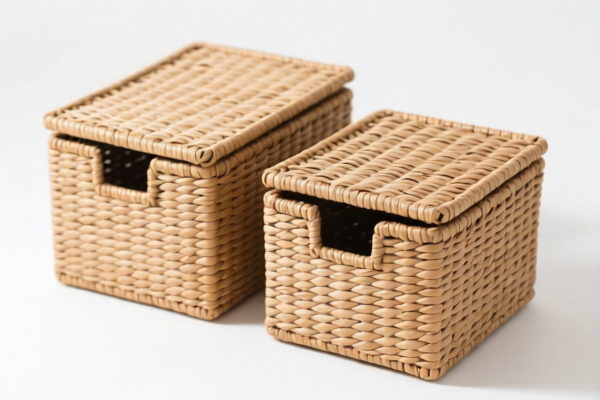
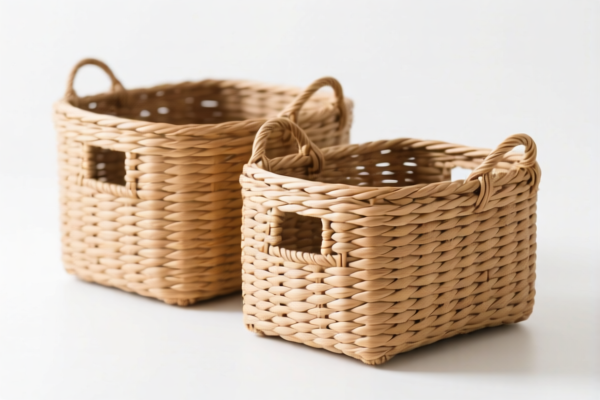
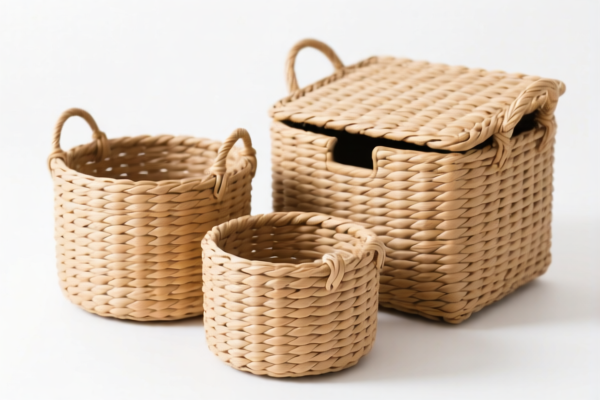
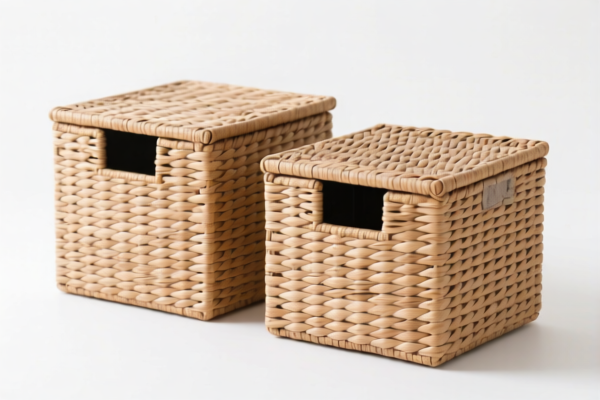
AI分析
🧺 Woven Storage Basket (Plant Fiber & Plastic Variants)
🌐 HS Code Reference & Customs Clearance Guide | 2026 Latest Tariff Analysis | Professional Entry Strategies for US Imports
📌 I. Product Definition & Classification: Do You Really Know Your "Basket"?
A "Woven Storage Basket" is a deceptively simple item in international trade, but its classification hinges entirely on material composition and manufacturing technique. Misclassification can lead to massive tariff discrepancies (from 22.8% to 45%) and customs delays.
In the context of US imports from China, these baskets are generally categorized into two main material groups: 1. Plant Fiber Baskets (Bamboo, Willow, Rattan): Traditional, natural materials. Usually fall under Chapter 46 (Made up of plaiting materials). 2. Synthetic/Plastic Baskets: Often mistaken for plant fibers due to appearance, but made from polypropylene (PP) or PVC. Falls under Chapter 39 (Articles of plastics).
⚠️ Critical Distinction:
- If the basket is made of natural plant strips (bamboo, reed, willow) → Look at HS 4602 or 4601.
- If the basket is made of plastic strips (even if it looks like bamboo) → Look at HS 3926.
- Do not assume "woven" equals "plant material." Plastic weaving is common in modern storage solutions!
📦 II. HS Code Classification Details (2026 Latest Tariff Authority)
Based on the provided data, here are the four potential HS Codes for Woven Storage Baskets, ranked by material inference.
| HS Code | Product Description | Inferred Material | Key Identification Feature |
|---|---|---|---|
4602.11.07.00 |
Baskets and other articles of plaiting materials (Bamboo/Willow) | Bamboo / Willow | Traditional woven structure, natural plant fiber texture. |
4602.11.09.00 |
Baskets of plaiting materials (Other plant materials like Rattan/Reed) | Rattan / Reed / Other | Woven basket form, plant-based material. |
4601.92.05.00 |
Woven mats and matting of plaiting materials & similar products | Woven Mats / Bamboo Mats | May be classified as matting or similar woven products if not strictly "baskets." |
3926.90.99.89 |
Other articles of plastics | Plastic / Synthetic | Trick Appearance: Looks woven but is actually plastic fiber/synthetic material. |
🔍 Key Insight:
-4602.11.07.00is the most common for traditional bamboo baskets.
-3926.90.99.89is the high-risk trap. If your supplier sends you "bamboo-look" baskets that are actually plastic, declaring them as bamboo (46xx) is customs fraud. The duty rate difference is significant.
💰 III. 2026 Latest Tariff Rate Breakdown (Including Add-ons & Policy Surcharge)
✅ Applicable Country: United States (US)
✅ Origin: China (CN)
✅ Effective Time: 2025/2026 (Current Trade War Context)
🎯 1. 4602.11.07.00 —— Bamboo/Willow Baskets (Traditional Plant Fiber)
| Item | Content |
|---|---|
| Base Duty Rate | 0.0% (Preferential for some plant products, but see below) |
| Section 301 Surcharge | +25.0% (USITC Footnote 9903.88.01) |
| Section 122 Tariff | +10.0% (Specific provision for Chinese goods) |
| Total Effective Rate | 35.0% |
| Tax Calculation | CIF Value × 35% |
| De Minimis Exemption | ❌ Not Applicable (High value items usually exceed $800 threshold; Section 301 applies) |
| Legal Basis Path | USITC:4602.11.07.00 → FOOTNOTE:9903.88.01 (301) + 122 Clause |
📌 Explanation:
- While the base tariff for bamboo baskets is 0%, the Section 301 tariff (25%) and Section 122 tariff (10%) are fully applicable.
- Total Cost Impact: You pay 35% on top of the product cost.
🎯 2. 4602.11.09.00 —— Other Plant Material Baskets (Rattan, etc.)
| Item | Content |
|---|---|
| Base Duty Rate | 10.0% |
| Section 301 Surcharge | +25.0% |
| Section 122 Tariff | +10.0% |
| Total Effective Rate | 45.0% |
| Tax Calculation | CIF Value × 45% |
| De Minimis Exemption | ❌ Not Applicable |
| Legal Basis Path | USITC:4602.11.09.00 → FOOTNOTE:9903.88.01 (301) + 122 Clause |
📌 Explanation:
- This code applies to baskets made from rattan, reed, or other plant fibers not specifically listed as bamboo.
- Highest Risk: This is the most expensive category at 45%. Many importers mistakenly use this for bamboo products.
🎯 3. 4601.92.05.00 —— Woven Mats / Similar Products (Bamboo)
| Item | Content |
|---|---|
| Base Duty Rate | 2.7% |
| Section 301 Surcharge | +25.0% |
| Section 122 Tariff | +10.0% |
| Total Effective Rate | 37.7% |
| Tax Calculation | CIF Value × 37.7% |
| De Minimis Exemption | ❌ Not Applicable |
| Legal Basis Path | USITC:4601.92.05.00 → FOOTNOTE:9903.88.01 (301) + 122 Clause |
📌 Explanation:
- If the item is considered a "woven mat" or "matting" rather than a "basket" (e.g., a flat bamboo mat with handles), it might fall here.
- Slightly Cheaper: 37.7% vs 35% or 45%. Ensure the product structure truly matches "matting" definition.
🎯 4. 3926.90.99.89 —— Plastic/Synthetic Woven Baskets (The "Trap")
| Item | Content |
|---|---|
| Base Duty Rate | 5.3% |
| Section 301 Surcharge | +7.5% (Note: Lower 301 rate for some plastic articles) |
| Section 122 Tariff | +10.0% |
| Total Effective Rate | 22.8% |
| Tax Calculation | CIF Value × 22.8% |
| De Minimis Exemption | ❌ Not Applicable (High value items usually exceed $800 threshold; Section 301 applies) |
| Legal Basis Path | USITC:3926.90.99.89 → FOOTNOTE:9903.88.01 (301) + 122 Clause |
📌 Explanation:
- Biggest Savings Potential: If your basket is plastic, this code offers the lowest total duty at 22.8%.
- CRITICAL WARNING: You MUST prove it is plastic. If it is bamboo but declared as plastic, you risk customs seizure, fines, and back taxes.
- Why the difference? Plastic articles often have different 301 surcharge calculations compared to plant fiber articles.
🛠️ IV. Customs Clearance Practical Advice (Battle-Tested Pitfall Guide)
✅ 1. Essential Documentation Checklist
| Document | Must Provide | Notes |
|---|---|---|
| ✅ Product Material Analysis | ✔️ | Lab test report proving Plant Fiber vs. Plastic. This is the #1 reason for classification disputes. |
| ✅ High-Res Photos | ✔️ | Show texture, weave pattern, and edges. Plastic often has molded seams; plant fiber has natural irregularities. |
| ✅ Commercial Invoice | ✔️ | Clearly state: "Woven Basket made of [Bamboo/Rattan/Plastic]." Do NOT just write "Basket." |
| ✅ Packing List | ✔️ | Include dimensions and weight. |
| ✅ Supplier Declaration | ✔️ | Written confirmation from manufacturer on material composition. |
✅ 2. Classification Strategy (Key Mantra)
🔥 "Look, Touch, Burn, and Declare!"
| Scenario | Correct HS Code | Why? |
|---|---|---|
| Natural Bamboo/Willow | 4602.11.07.00 |
Traditional plant fiber. 35% Duty. |
| Rattan/Reed/Seagrass | 4602.11.09.00 |
Other plant fibers. 45% Duty. |
| Plastic PP/PVC "Bamboo-Look" | 3926.90.99.89 |
Synthetic material. 22.8% Duty. Cheapest if honest! |
| Mixed Materials (Handle=Plastic, Body=Bamboo) | Complex | Usually classified by essential character (the body). Likely 4602. |
📌 Pro Tip:
- If you are importing plastic baskets that look like bamboo, declare them as Plastic (3926). It saves 12-22% in duties compared to plant fiber codes.
- If you are importing true bamboo, you have no choice but to pay 35%. Do not try to misdeclare as plastic.
✅ 3. Special Case Handling
| Situation | Handling Advice |
|---|---|
| "Bamboo" is actually Plastic | Declare as Plastic (3926). Provide material test report. If caught misdeclaring bamboo as plastic, penalties are severe. |
| Bamboo with Plastic Handles | The essential character is the bamboo body. Declare as Bamboo (4602). |
| Set of Baskets | If sold as a set, classify by the principal component (usually the largest basket). |
| Customs Audit Trigger | If customs questions the material, provide a cross-section photo or lab report immediately. |
🌍 V. Global Market Comparison (2026 Update)
| Country/Region | Recommended HS Code | Duty Rate (China Origin) | Certification | Notes |
|---|---|---|---|---|
| 🇺🇸 USA | 4602.11.07.00 (Bamboo) |
35.0% | N/A | High tariff due to 301 + 122. |
| 🇺🇸 USA | 3926.90.99.89 (Plastic) |
22.8% | N/A | Lower tariff if plastic. |
| 🇨🇳 China | 4602.11.00 |
5-10% | N/A | Export from China has lower duties. |
| 🇪🇺 EU | 4602.11.00 |
4.5% | N/A | No Section 301/122 equivalent. Much cheaper in EU. |
| 🇬🇧 UK | 4602.11.00 |
4.5% | N/A | Similar to EU post-Brexit. |
📌 Conclusion:
- The US market is the most expensive for Chinese woven baskets due to Section 301 (25%) and Section 122 (10%) tariffs.
- Plastic baskets offer a cost advantage in the US market (22.8% vs 35%) if you can ethically classify them as synthetic.
- Consider supply chain diversification (e.g., Vietnam or India) if tariffs on bamboo baskets become prohibitive, as some countries may have different 301 exemptions.
📌 VI. Common Mistakes & Pitfall Guide (Lessons Learned)
❌ Mistake 1: Declaring Plastic Baskets as Bamboo to avoid "Plastic" scrutiny
👉 Consequence: Customs requires lab test. If proven false, fine + back taxes + potential fraud charges.
✅ Fix: Use 3926.90.99.89 for plastic. It’s cheaper (22.8%) than bamboo (35%) anyway!
❌ Mistake 2: Declaring Bamboo Baskets as Plastic to save money
👉 Consequence: Customs detects natural fiber under microscope. Seizure of goods + 30% penalty.
✅ Fix: Be honest. Bamboo is 35%. There is no legal way to lower this without changing material.
❌ Mistake 3: Ignoring Section 122 Tariff (10%)
👉 Consequence: Budget calculation is wrong. You planned for 25% (301 only), but pay 35% total.
✅ Fix: Always add +10% for Section 122 on Chinese imports.
❌ Mistake 4: Using De Minimis ($800) for large shipments
👉 Consequence: Section 301 and Section 122 tariffs often apply even to small packages if the HS code is on the exclusion list or if value is high.
✅ Fix: Assume Tariff Applies for all B2B shipments.
🎯 VII. Conclusion: Smart Classification, Profit Protection
🎯 Remember the Mantra:
🔹 "Plastic is 22.8%, Bamboo is 35%, Rattan is 45%.
If it’s plastic, declare plastic! If it’s bamboo, accept the 35%.
Never fake the material, or Customs will take it all!"
📌 Pro Tip:
If you are a large importer, consider applying for a Customs Binding Ruling from CBP before your first shipment. This provides legal certainty on whether your specific basket is 4602 or 3926.
📣 Immediate Action Plan:
1. Inspect your inventory: Is it Plant or Plastic?
2. Test: If unsure, send a sample for lab analysis.
3. Declare: Use 3926.90.99.89 for plastic, 4602.11.07.00 for bamboo.
4. Calculate: Budget for 35% (Bamboo) or 22.8% (Plastic) total duty.
5. Document: Keep material certificates ready for customs inspection.
✨ Professional Clearance Starts with Accurate Classification!
💼 Every 1% of Duty Saved is 1% of Your Profit Increased!
用户评价
关于 HS 编码归类
协调制度(HS)是由世界海关组织(WCO)制定的国际贸易商品分类标准。全球 200 多个国家采用 HS 系统作为海关关税、贸易统计和进出口监管的基础。
每个 HS 编码遵循以下层级结构:
- 章(2 位)——商品大类(例如:第 84 章:机器和机械设备)
- 品目(4 位)——章内的更具体分类
- 子目(6 位)——国际通用细分,所有 WCO 成员国统一使用
- 本国细分(8-10 位)——各国自行扩展的细分编码,如美国 HTSUS 10 位编码
正确的 HS 编码归类对于顺利通关、准确缴纳关税和遵守贸易法规至关重要。错误归类可能导致海关延误、多缴关税或罚款。
从CN进口到US时,适用的关税税率可能包括:
- 最惠国(MFN)税率——适用于 WTO 成员国的标准关税税率
- 普通税率——适用于无贸易协定国家
- 贸易救济关税——附加关税,如 301 条款(反倾销)、232 条款(国家安全)或反补贴税
本页内容仅供参考。如需正式归类,请咨询当地海关或持牌报关代理。