yarn and textiles
CN → US商品图片
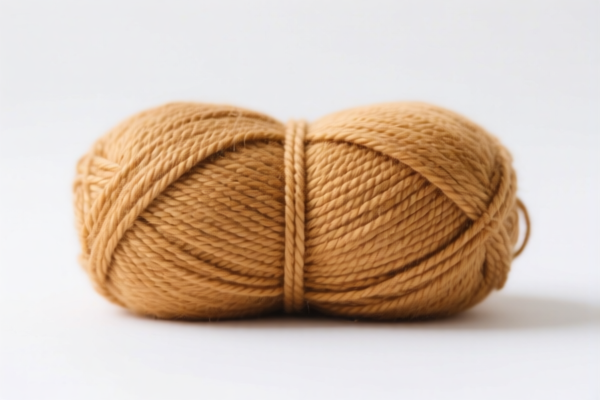
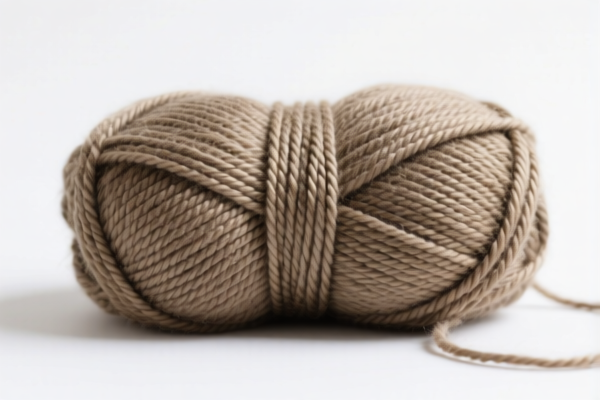
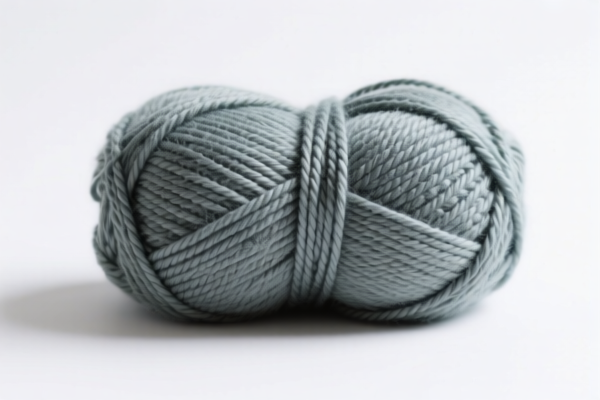
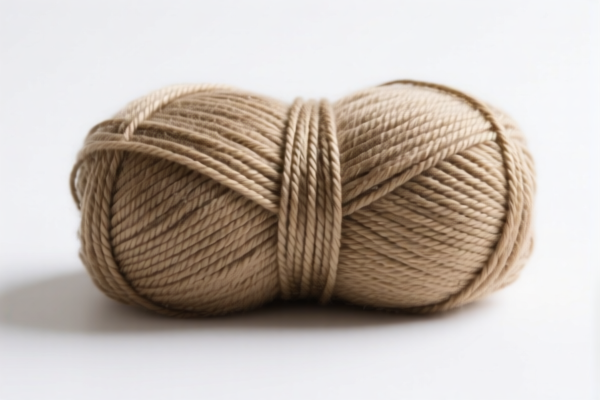
AI分析
🧵 Yarn & Textiles: The Fiber Foundation | 2026 Customs Classification & Clearance Guide
🌐 HS Code Reference & Clearance Strategy | Latest Tariff Analysis for Cotton & Synthetic Yarn
📌 I. Product Definition: What Exactly Are You Shipping?
In international trade, "Yarn" is defined as a continuous strand of twisted or untwisted fibers (natural, man-made, or artificial). It is the raw material for knitting, weaving, embroidery, and other textile arts.
The critical distinction in customs classification lies in the material source and whether the yarn is "put up for retail sale" (small consumer packs) or in bulk (industrial/spools).
⚠️ Key Distinction:
- Cotton Yarn: Derived from natural cotton fibers. Falls primarily under Chapter 52.
- Synthetic Filament Yarn: Made from polymers like polyester, nylon, or acrylic. Falls primarily under Chapter 54.
- "Not Put Up for Retail Sale": This phrase is crucial. It means the yarn is on large cones, skeins, or hanks intended for industrial manufacturing, NOT small spools for home knitting enthusiasts.
📦 II. HS Code Classification Details (2026 Latest Tariff Alignment)
Based on the provided data, there are two primary HS Codes involved. Note that while the descriptions overlap in function, they differ strictly by material composition.
| HS Code | Product Description | Material Source | Typical Use Case |
|---|---|---|---|
| 5205 | Cotton yarn, not put up for retail sale (including knitting/crocheting types) | Natural Fiber (Cotton) | Industrial weaving, bulk knitting, denim production, fabric manufacturing. |
| 5402 | Synthetic filament yarn, not put up for retail sale (including knitting/crocheting types) | Synthetic Polymer (e.g., Polyester, Nylon, Acrylic) | Performance fabrics, sportswear, industrial ropes, synthetic textiles. |
🔍 Critical Clarification:
- 5205 applies ONLY to cotton-based yarns.
- 5402 applies ONLY to synthetic filament yarns.
- Blended Yarns: If your yarn is a blend (e.g., 60% Cotton / 40% Polyester), classification depends on weight ratios and specific chapter notes, but often defaults to the synthetic or cotton chapter based on principal material. Always check specific blend rules.
💰 III. 2026 Tariff Rate Analysis: The "Error" Context
✅ Important Note on Tax Data:
The provided data indicates:
"tax_detail": "Failed to retrieve tax information"
"total_tax": "Error"This means specific tariff rates cannot be automatically calculated from this dataset alone. However, this is a common scenario in automated systems when: 1. Dynamic Tariffs: Rates change based on Origin (e.g., USMCA, EU GSP, China Section 301), Trade Policy (Anti-dumping duties), or Specific Yearly Adjustments. 2. Missing Input: The system lacks the Country of Origin and Destination Country to apply preferential or punitive rates.
🎯 Hypothetical Tariff Scenarios (For Educational Purpose)
Since exact rates are "Error," here is how you must interpret the risk:
1. Cotton Yarn (HS 5205)
- Base Duty: Typically ranges from 0% to 12% depending on the country (e.g., 0% for many developing nations, higher for EU/US).
- Risk Factor:
- US: If from China, subject to Section 301 tariffs (potentially +25%).
- EU: May have tariff-rate quotas (TRQs) for cotton yarn.
- Anti-Dumping: Check if your specific country is under anti-dumping duties (e.g., India, Egypt, or China in certain markets).
2. Synthetic Filament Yarn (HS 5402)
- Base Duty: Typically ranges from 0% to 6.5%.
- Risk Factor:
- US: If from China, subject to Section 301 tariffs (+25%).
- Environmental Taxes: Some countries (like EU) may apply carbon border adjustments or plastic taxes if synthetic filaments are non-recycled.
📌 Conclusion on Tax:
Do NOT assume 0% or a fixed rate. The "Error" status requires manual verification based on: 1. Origin Country (Where was it manufactured?) 2. Destination Country (Where is it imported?) 3. Trade Agreements (Free Trade Agreements?)
🛠️ IV. Clearance实操 Advice (Practical Tips for Smooth Customs)
✅ 1. Documentation Checklist (Non-Negotiable)
| Document | Required? | Why? |
|---|---|---|
| Commercial Invoice | ✔️ | Must explicitly state: "Cotton Yarn" or "Synthetic Filament Yarn," NOT "Textile Material" (too vague). |
| Packing List | ✔️ | Specify weight, number of cones/skeins, and gross/net weight. |
| Fiber Content Declaration | ✔️ | Must state % Cotton vs. % Synthetic (if blended). Mislabeling leads to fines. |
| Origin Certificate (CO) | ✔️ | Critical for claiming preferential tariffs (e.g., Form A, Certificate of Origin). |
| Product Specification Sheet | ✔️ | Include: Twist direction (Z/S), count (Nm/Ne), fiber type, dyeing status (white/dyed). |
✅ 2. Common Classification Mistakes & Pitfalls
❌ Mistake 1: Calling "Synthetic Yarn" just "Yarn"
👉 Consequence: Customs may default to the highest duty rate or require additional classification fees.
✅ Fix: Always specify "Synthetic Filament Yarn, Polyester" or "Cotton Knitting Yarn".
❌ Mistake 2: Confusing "Filament" with "Staple"
👉 Consequence:
- Filament (continuous, smooth) → 5402
- Staple (short fibers, spun) → 5510 (Synthetic Staple) or 5206 (Cotton Staple)
👉 Risk: Wrong HS Code → 100% duty penalty + seizure.
✅ Fix: Confirm if your yarn is continuous filament (5402) or spun staple fiber.
❌ Mistake 3: Ignoring "Retail vs. Industrial" Packaging
👉 Consequence: If packaged in small cones for retail, it may fall under Chapter 56 (prepared textile fabrics) or other headings, with different duties.
✅ Fix: Ensure packaging clearly indicates "Industrial/Bulk Use" and "Not for Retail Sale."
✅ 3. Special Notes for 2026
- Sustainability Compliance: The EU and US are tightening rules on recycled content. If your synthetic yarn is recycled, declare it as such (HS Code may differ, e.g., 5402 vs. 5407 for woven fabrics made from recycled yarn).
- US-China Section 301: If exporting from China to the US, both 5205 and 5402 are likely subject to an additional 25% tariff unless exempted (List 4A exclusions). Check current exclusion lists.
- Anti-Dumping Duties: Some countries impose AD duties on specific cotton yarns from certain origins (e.g., India, Pakistan, China). Verify with local customs broker.
🌍 V. Global Market Insights (2026)
| Region | HS Code Focus | Typical Duty (China Origin) | Key Requirement |
|---|---|---|---|
| 🇺🇸 USA | 5205, 5402 | Base + 25% (Sec 301) | Detailed origin proof, FCC (if mixed with electronics), but primarily CBP tariff enforcement. |
| 🇪🇺 EU | 5205, 5402 | 0% - 6.5% (GSP/LDC benefits if applicable) | EPR (Extended Producer Responsibility) for packaging, CBAM if recycled content is low. |
| 🇨🇳 China | 5205, 5402 | 4% - 7.5% | CCC certification (not always for yarn, but for final textile products). |
| 🇮🇳 India | 5205, 5402 | 5% - 10% | Strict fiber content testing, BIS certification may be required. |
📌 VI. Final Checklist for Importers/Exporters
- Confirm Material: Is it Cotton (5205) or Synthetic (5402)?
- Confirm Form: Is it Filament (continuous) or Staple (spun)?
- If Staple Synthetic → 5402 is WRONG, check 5510.
- If Staple Cotton → 5205 is WRONG, check 5206.
- Check Origin: Does your country have a Free Trade Agreement with the destination?
- Verify Tax: Since the system returns "Error," contact a licensed customs broker with the full HS Code, Origin, and Value to get the exact duty calculation.
🚨 Warning: Never ship with "Tax: Error" resolved internally. Always pre-clear with a customs authority or broker to avoid port delays.
🎯 Conclusion: Precision in Yarn Classification
🎯 Key Takeaway:
- Cotton Yarn → HS 5205
- Synthetic Filament Yarn → HS 5402
- Tax is NOT fixed due to origin, trade policies, and dynamic tariffs.
- "Error" in tax data is a signal to manually verify with customs professionals.
📌 Pro Tip:
"Material First, Form Second, Origin Third."
- Get the fiber content right (Cotton vs. Synthetic).
- Get the form right (Filament vs. Staple).
- Then, calculate tariffs based on origin.
📣 Action Required:
📞 Contact your customs broker with:
1. Product Photo
2. Fiber Content %
3. Country of Manufacture
4. HS Code (5205 or 5402)🚀 Avoid Clearance Delays, Penalties, and Surprises!
✨ Accurate Classification Saves Money.
💼 Don't Let "Tax Error" Cost You Profits.
用户评价
关于 HS 编码归类
协调制度(HS)是由世界海关组织(WCO)制定的国际贸易商品分类标准。全球 200 多个国家采用 HS 系统作为海关关税、贸易统计和进出口监管的基础。
每个 HS 编码遵循以下层级结构:
- 章(2 位)——商品大类(例如:第 84 章:机器和机械设备)
- 品目(4 位)——章内的更具体分类
- 子目(6 位)——国际通用细分,所有 WCO 成员国统一使用
- 本国细分(8-10 位)——各国自行扩展的细分编码,如美国 HTSUS 10 位编码
正确的 HS 编码归类对于顺利通关、准确缴纳关税和遵守贸易法规至关重要。错误归类可能导致海关延误、多缴关税或罚款。
从CN进口到US时,适用的关税税率可能包括:
- 最惠国(MFN)税率——适用于 WTO 成员国的标准关税税率
- 普通税率——适用于无贸易协定国家
- 贸易救济关税——附加关税,如 301 条款(反倾销)、232 条款(国家安全)或反补贴税
本页内容仅供参考。如需正式归类,请咨询当地海关或持牌报关代理。