废制药中间体残渣
CN → US| HS编码 | 关税税率 | 原产国 | 目的国 | 文档 |
|---|---|---|---|---|
| 3825610000 | 35.0% | CN | US | 官方文档 |
| 2942003500 | 41.5% | CN | US | 官方文档 |
| 2942000500 | 41.5% | CN | US | 官方文档 |
商品图片

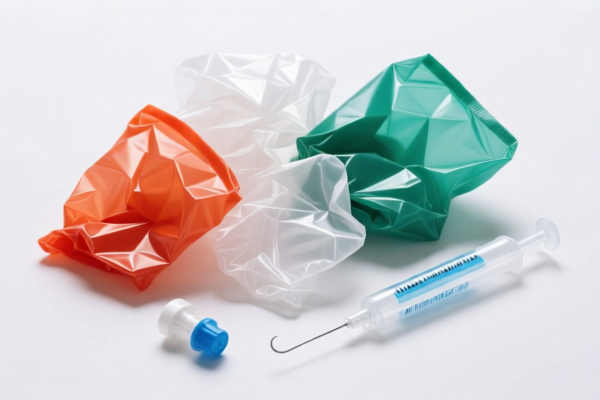
AI分析
💊 "Waste Pharmaceutical Intermediate Residues" (Pharmaceutical Waste)
🌐 HS Code Reference & Customs Clearance Guide | 2026 Latest Tariff Analysis | Professional Strategy
📌 I. Product Definition & Classification: Are You Sure About "Pharma Waste"?
Waste Pharmaceutical Intermediate Residues refer to the leftover materials generated during the synthesis of active pharmaceutical ingredients (APIs). These are chemically complex mixtures containing organic compounds, solvents, catalysts, and reaction byproducts. They are not final drugs, but chemical waste requiring hazardous or special waste handling.
In international trade, these residues fall into two primary classification paths: 1. Waste Category (3825): Viewed strictly as "waste/residue" from chemical industries. 2. Organic Chemical Category (2942): Viewed as "other organic compounds" that are residual in nature but not explicitly classified as waste in the 38xx series.
⚠️ Key Distinction Point:
- If the primary intent is disposal and it is formally designated as "waste/residue" → Likely 3825.
- If the material is reclaimed or classified by its chemical structure as an organic compound → Likely 2942.
- Critical Risk: Misclassification can lead to Hazardous Waste penalties, seizure, or massive tariff discrepancies (35% vs 41.5%).
📦 II. HS Code Classification Details (2026 Tariff Authority)
Based on the provided data, here are the specific HS Code matches for "Waste Pharmaceutical Intermediate Residues":
| HS Code | Product Description | Classification Logic (Match Basis) | Estimated Total Tax |
|---|---|---|---|
| 3825.61.00.00 | Waste Pharmaceutical Intermediates | Focus on "Residue/Waste": The name explicitly contains "Residue" (残渣), fitting the definition of "waste/residue products" from the chemical industry. | 35.0% |
| 2942.00.35.00 | Other Organic Compounds (Waste) | Focus on "Organic Compound": Classified as organic residues without a specific conflict. Fits the "Other Organic Compounds" catch-all category. | 41.5% |
| 2942.00.05.00 | Other Organic Compounds | Focus on "Pharma" + "Residue": "Pharmaceutical" indicates organic nature; "Intermediate Residue" fits the catch-all "Other Organic Compounds" logic. | 41.5% |
🔍 Critical Insight:
- 3825.61.00.00 is the most logical fit for disposal waste, offering a slightly lower total tax rate (35%).
- 2942.00.xx.xx codes are used if the goods are treated as recyclable organic chemicals, but carry a higher tax burden (41.5%).
- All three codes are subject to heavy US Additional Tariffs due to the "China +1" trade policies.
💰 III. 2026 Tariff Rate Breakdown (Detailed Policy Analysis)
✅ Applicable Country: United States (US)
✅ Origin: China (CN)
✅ Status: Active for 2026 (Includes Section 301 & 122 Tariffs)
🎯 Scenario A: Classification under 3825.61.00.00 (The "Waste" Path)
Best for: Genuine hazardous waste disposal.
| Item | Content |
|---|---|
| Base Duty | 0.0% |
| Section 301 (Additional) | +25.0% (Standard USITC surcharge) |
| Section 122 Tariff | +10.0% (New对华 specific tariff) |
| Total Tax Rate | 35.0% |
| Tax Calculation | CIF Value × 35% |
| De Minimis Exemption | ❌ Not Applicable |
| Legal Basis | Section 301 + Section 122 (10%) |
📌 Explanation:
This classification treats the goods strictly as waste. The 35% total includes a 10% "Section 122" tariff specifically targeting Chinese chemical waste/intermediates.
🎯 Scenario B: Classification under 2942.00.35.00 or 2942.00.05.00 (The "Chemical" Path)
Best for: Recyclable intermediates or specific organic residues.
| Item | Content |
|---|---|
| Base Duty | 6.5% |
| Section 301 (Additional) | +25.0% |
| Section 122 Tariff | +10.0% |
| Total Tax Rate | 41.5% |
| Tax Calculation | CIF Value × 41.5% |
| De Minimis Exemption | ❌ Not Applicable |
| Legal Basis | Section 301 + Section 122 (10%) |
📌 Explanation:
Even though the goods are "waste," if the HS code is shifted to Chapter 29 (Organic Chemicals), the Base Duty (6.5%) applies. Combined with the 301 (25%) and 122 (10%) surcharges, the total hits 41.5%. This is 6.5% higher than the "Waste" classification.
🛠️ IV. Customs Clearance Practical Advice (Avoiding Pitfalls)
✅ 1. Preparation Checklist (Essential for "Pharma Waste")
| Document | Requirement | Reason |
|---|---|---|
| MSDS (Safety Data Sheet) | ✔️ Mandatory | Must clearly label "Hazardous Waste" or "Residue." |
| Waste Certificates | ✔️ Mandatory | Proof of origin as "intermediate residue" (not finished product). |
| Chemical Composition Report | ✔️ Mandatory | To distinguish between "Waste" (3825) and "Organic Compound" (2942). |
| Commercial Invoice | ✔️ Mandatory | Must use the phrase "Waste Pharmaceutical Intermediate Residues" explicitly. |
| Environmental Compliance | ✔️ Mandatory | EPA/EPCRA documentation for chemical waste import. |
✅ 2. Declaration Strategy (The "Naming" Game)
🔥 Golden Rule: "Name defines HS Code, HS Code defines Tax!"
| Scenario | Recommended Declaration | Risk if Incorrect |
|---|---|---|
| Genuine Waste (Disposal) | "Waste Pharmaceutical Intermediate Residues" | ⚠️ If declared as "Chemical Intermediate" → 41.5% Tax (vs 35%) |
| Recyclable Material | "Organic Compound Residue (Pharma)" | ⚠️ If declared as "Waste" → 35% Tax (vs 41.5% + potential environmental ban) |
| Finished API (Fake Waste) | ❌ NEVER | 🚨 Seizure Risk: Classified as "Drug" or "Contraband" → 100%+ Penalty |
✅ 3. Special Handling for "Section 122" & "301"
| Issue | Strategy |
|---|---|
| Section 122 Tariff (10%) | This is a new specific tariff for Chinese chemical waste. It applies to ALL 3825 and 2942 codes listed above. Cannot be avoided. |
| Section 301 Tariff (25%) | Standard 301 surcharge. Cannot be avoided unless you qualify for an exclusion (rare for waste). |
| Hazardous Waste Ban | Crucial: US Customs (CBP) often rejects waste imports without specific EPA permits. Ensure you have an RCRA (Resource Conservation and Recovery Act) permit. |
🌍 V. Global Market Comparison (2026 Status)
| Market | Recommended HS Code | Estimated Tax | Notes |
|---|---|---|---|
| 🇺🇸 USA | 3825.61.00.00 |
35% (Waste) or 41.5% (Chemical) | High Risk: Strict EPA checks + Section 122 tariff. |
| 🇨🇳 China | 3825.61.00.00 |
0% (Export Duty) | Export Friendly: Often no export tax for waste, but strict internal disposal rules. |
| 🇪🇺 EU | 3825.61.00.00 |
Varies (0-10%) | Strict: Requires "Waste Shipment" documentation; "Organic Residue" may be banned. |
| 🇯🇵 Japan | 2942.00.05.00 |
Varies | Strict: Japan has very low acceptance for foreign pharma waste; often reclassified. |
📌 Conclusion:
- USA is the most expensive market due to the Section 122 (10%) + Section 301 (25%) combo.
- 3825.61.00.00 is the safest and cheapest route (35%) if you can prove it is "Waste."
- 2942.00.xx is more expensive (41.5%) and carries higher scrutiny for "recyclable" claims.
📌 VI. Common Mistakes & Avoidance Guide
❌ Mistake 1: Declaring "Pharma Waste" as "Chemical Raw Materials"
👉 Result: Tax jumps from 35% to 41.5% + Potential Environmental Fines.
❌ Mistake 2: Missing the "Section 122" Tariff in Calculation
👉 Result: Budget shortfall of 10% of CIF value. Must add this explicitly.
❌ Mistake 3: Not having an EPA/Environmental Permit
👉 Result: Seizure & Destruction at US Port. No refund.
❌ Mistake 4: Mixing "Finished API" with "Residue"
👉 Result: Drug Smuggling accusation. Extreme Legal Risk.
✅ Correct Strategy:
"Clearly declare as 'Waste Pharmaceutical Intermediate Residues' under HS 3825.61.00.00.
Ensure MSDS and Environmental Permit are attached.
Budget for 35% Total Duty (0% Base + 25% 301 + 10% 122)."
🎯 VII. Conclusion: Professional Clearance, Zero Risk!
🎯 Remember the Formula:
🔹 "Waste = 3825 (35% Total)"
🔹 "Organic = 2942 (41.5% Total)"
🔹 "Section 122 = Always +10%"
🔹 "Section 301 = Always +25%"
📌 Pro Tip:
If your residue is recyclable (not waste), consult a customs broker to see if Exclusion Requests for Section 301/122 are possible (highly unlikely for waste).
Best Practice: Apply for a Binding Ruling from US Customs (CBP) before shipping to confirm the "Waste" vs "Chemical" classification.
📣 Immediate Action:
📞 Contact Customs Broker + Provide MSDS + Prepare EPA Documents
🚀 Ensure 35% Budget (or 41.5%) is set aside to avoid port delays!
✨ Professional Customs Clearance Starts with Precise Classification!
💼 Every Dollar Saved Starts with the Right HS Code!
用户评价
关于 HS 编码归类
协调制度(HS)是由世界海关组织(WCO)制定的国际贸易商品分类标准。全球 200 多个国家采用 HS 系统作为海关关税、贸易统计和进出口监管的基础。
每个 HS 编码遵循以下层级结构:
- 章(2 位)——商品大类(例如:第 84 章:机器和机械设备)
- 品目(4 位)——章内的更具体分类
- 子目(6 位)——国际通用细分,所有 WCO 成员国统一使用
- 本国细分(8-10 位)——各国自行扩展的细分编码,如美国 HTSUS 10 位编码
正确的 HS 编码归类对于顺利通关、准确缴纳关税和遵守贸易法规至关重要。错误归类可能导致海关延误、多缴关税或罚款。
从CN进口到US时,适用的关税税率可能包括:
- 最惠国(MFN)税率——适用于 WTO 成员国的标准关税税率
- 普通税率——适用于无贸易协定国家
- 贸易救济关税——附加关税,如 301 条款(反倾销)、232 条款(国家安全)或反补贴税
本页内容仅供参考。如需正式归类,请咨询当地海关或持牌报关代理。