文件扣袋
CN → US| HS编码 | 关税税率 | 原产国 | 目的国 | 文档 |
|---|---|---|---|---|
| 3926909989 | 22.8% | CN | US | 官方文档 |
| 4820900000 | 35.0% | CN | US | 官方文档 |
| 4820300040 | 35.0% | CN | US | 官方文档 |
| 3926908700 | 40.3% | CN | US | 官方文档 |
| 4202329300 | 52.6% | CN | US | 官方文档 |
| 4202329900 | 52.6% | CN | US | 官方文档 |
商品图片


AI分析
📂 File Pockets & Organizers (Document Folders)
🌐 HS Code Reference & Customs Clearance Guide | 2026 Tariff Breakdown | Strategic Clearance Strategy
📌 1. Product Definition & Classification: Do You Know Your "File Pockets"?
File Pockets (often called File Folders, Document Sleeves, or File Covers) are essential stationery items used to organize, protect, and transport paper documents, receipts, and contracts. In international trade, they are broadly categorized into two distinct material classes, which drastically affect their HS Code and Tariff structure:
- Paper/Cardboard-Based (Stationery): Made primarily of paper, cardboard, or pulp. These are typically rigid folders, manila folders, or paper file covers.
- Plastic-Based (Stationery/Storage): Made primarily of plastics (PVC, PP, PET). These are typically clear plastic document holders, plastic ring binders, or plastic file pockets.
⚠️ Critical Distinction for Classification:
- If the item is paper/cardboard and acts as a simple folder/cover → It usually falls under Chapter 48.
- If the item is plastic and used for filing or storage → It usually falls under Chapter 39 (as "Other Plastics Articles").
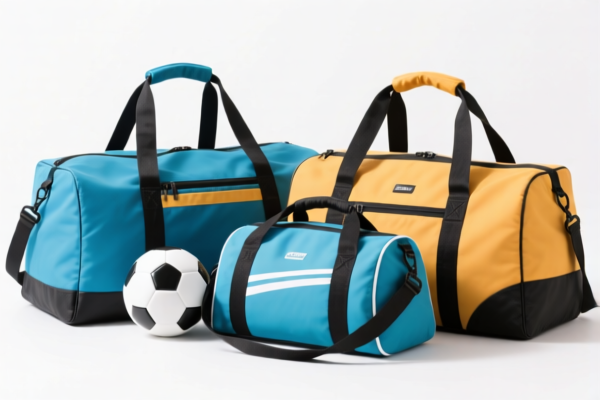
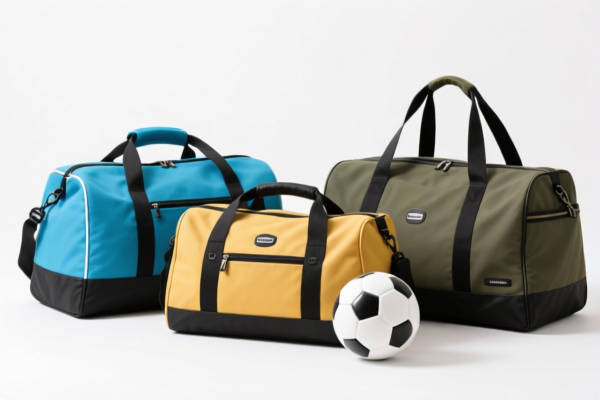
- If it is a complex container with zippers, handles, or multiple compartments resembling a briefcase → It might fall under Chapter 42 (Luggage/Containers).
📦 2. HS Code Classification Details (2026 Latest Tariff Reference)
Based on the provided data, here is the authoritative breakdown for File Pockets:
| HS Code | Product Description | Material/Category | Key Features |
|---|---|---|---|
4820.90.00.00 |
Paper/Cardboard File Folders & Covers | Paper/Cardboard | Standard stationery file folders, manila files, paper covers. |
4820.30.00.40 |
Other Paper File Folders/Covers | Paper/Cardboard | Other specific paper-based filing products not in 4820.10/30. |
3926.90.99.89 |
Other Plastic Articles (Unspecified) | Plastic | Plastic document pockets, clear sleeves, unclassified plastic stationery. |
3926.90.87.00 |
Plastic Stationery & Storage (Flat) | Plastic | Specific plastic filing/clamping items, flat plastic organizers. |
4202.32.93.00 |
Cases, Bags, Similar Containers | Plastic/Textile | Complex file cases, briefcase-style document carriers, zippered plastic folders. |
🔍 Key Takeaway:
- Paper items (4820.xx) generally face 0% Base Tariff but high "Additional" tariffs.
- Simple Plastic items (3926.xx) face 5.3% Base Tariff but varying Additional tariffs.
- Complex Plastic Cases (4202.xx) face the highest Base Tariff (17.6%) due to being classified as "Luggage/Containers."
💰 3. 2026 Tariff Rate Breakdown (US Market - China Origin)
✅ Target Market: United States (US)
✅ Origin: China (CN)
✅ Effective Date: Includes 122-Section Tariffs & Additional Tariffs
🎯 1. Paper-Based File Folders (Stationery)
Applies to: 4820.90.00.00 and 4820.30.00.40
| Item | Content |
|---|---|
| Base Tariff | 0.0% (Free entry for basic stationery) |
| Additional Tariff (Section 301) | +25.0% (Trade Act 301 Section "Additional") |
| "122" Section Tariff | +10.0% (Special Section 122 surcharge on Chinese goods) |
| Total Tariff Rate | 35.0% |
| Tax Calculation | CIF Value × 35% |
| De Minimis Exemption | ❌ No (High value threshold for Section 301) |
| Legal Path | Section 301 (25%) + Section 122 (10%) |
📌 Explanation:
While the base tariff for paper stationery is zero, the 25% Section 301 tariff (targeted at Chinese manufacturing) combined with the 10% Section 122 tariff creates a 35% total burden. This is critical for margin planning on paper products.
🎯 2. Simple Plastic File Pockets (Standard Stationery)
Applies to: 3926.90.99.89 (Unspecified Plastic)
| Item | Content |
|---|---|
| Base Tariff | 5.3% (Standard plastics tariff) |
| Additional Tariff (Section 301) | +7.5% (Lower tier Section 301 for specific plastic items) |
| "122" Section Tariff | +10.0% |
| Total Tariff Rate | 22.8% |
| Tax Calculation | CIF Value × 22.8% |
| De Minimis Exemption | ❌ No |
| Legal Path | Section 301 (7.5%) + Section 122 (10%) |
📌 Explanation:
This is the lowest cost option for plastic file pockets. The "7.5%" additional tariff is lower than the 25% for other plastics, making this classification highly attractive if the product fits the "unspecified other" category.
🎯 3. Specific Plastic Stationery/Clips (Flat Items)
Applies to: 3926.90.87.00
| Item | Content |
|---|---|
| Base Tariff | 5.3% |
| Additional Tariff (Section 301) | +25.0% (Full Section 301 tier) |
| "122" Section Tariff | +10.0% |
| Total Tariff Rate | 40.3% |
| Tax Calculation | CIF Value × 40.3% |
| De Minimis Exemption | ❌ No |
| Legal Path | Section 301 (25%) + Section 122 (10%) |
📌 Warning:
If the product is classified specifically as "Other Stationery" under3926.87, it hits the full 25% Section 301 tariff, making it 40.3% total. This is significantly more expensive than the "unspecified" plastic category.
🎯 4. Complex Plastic Cases/Containers (Briefcase Style)
Applies to: 4202.32.93.00
| Item | Content |
|---|---|
| Base Tariff | 17.6% (High base for luggage/containers) |
| Additional Tariff (Section 301) | +25.0% |
| "122" Section Tariff | +10.0% |
| Total Tariff Rate | 52.6% |
| Tax Calculation | CIF Value × 52.6% |
| De Minimis Exemption | ❌ No |
| Legal Path | Section 301 (25%) + Section 122 (10%) |
📌 Critical Warning:
If your "file pocket" has zippers, handles, or looks like a briefcase/case, it is misclassified as Luggage (4202). This incurs the highest possible tariff of 52.6% (17.6% + 25% + 10%). Avoid this classification for simple folders!
🛠️ 4. Customs Clearance Practical Advice (Avoid the Pitfalls)
✅ 1. Preparation Checklist (Must-Haves)
| Document | Requirement | Why? |
|---|---|---|
| Product Spec Sheet | ✔️ | Must clearly state Material Composition (e.g., "100% Plastic" vs. "Paper") to distinguish between 3926 and 4820. |
| Detailed Photos | ✔️ | Show the product open, closed, and in use. Must prove it is NOT a "case/bag" (no zippers, no handles) to avoid 4202. |
| Bill of Materials (BOM) | ✔️ | Essential for proving if it's "Plastic" (for 3926) or "Paper" (for 4820). |
| Commercial Invoice | ✔️ | Must use precise terms: "Plastic File Pocket" or "Paper File Folder", NOT generic "Office Supplies". |
| Origin Certificate | ✔️ | Confirms China origin to apply the correct 25% + 10% tariffs (and avoid misdeclaration penalties). |
✅ 2. Declaration Strategy (The "Golden Rule")
🔥 Motto: "Material First, Shape Second, No Zippers!"
| Scenario | Correct Declaration | Risk if Wrong |
|---|---|---|
| Clear Plastic Folder (No zipper) | 3926.90.99.89 |
22.8% Total |
| Manila Paper Folder | 4820.90.00.00 |
35.0% Total |
| Plastic Folder WITH Zipper | 4202.32.93.00 |
52.6% Total (Highest!) |
| Specific Plastic Binder/Clamp | 3926.90.87.00 |
40.3% Total |
Actionable Tip:
If your product is a simple flat plastic sheet folded over, do not describe it as a "Case" or "Container." Describe it strictly as a "Plastic Document Pocket" or "Plastic File Sleeve" to target the 22.8% rate (3926.90.99.89).
✅ 3. Special Case Handling
| Situation | Strategy |
|---|---|
| Mixed Material (Paper + Plastic) | Declare based on essential character. If plastic lining dominates, use 3926. If paper dominates, use 4820. |
| Product with Metal Fasteners | Does not change classification from 3926 or 4820 unless it becomes a "Metal Fastener" product (rare). |
| "Gift Set" with Folders | If packed with other items, the folder rate may be diluted. If sold separately, declare the folder rate only. |
🌍 5. Market Comparison (2026 Tariff Landscape)
| Market | Recommended HS Code | Total Tariff (China Origin) | Key Constraint |
|---|---|---|---|
| 🇺🇸 USA | 3926.90.99.89 (Plastic) or 4820.90.00.00 (Paper) |
22.8% or 35.0% | High Section 301 + 122 tariffs apply. |
| 🇨🇳 China | Same | Low (0-10%) | No Section 301/122. |
| 🇪🇺 EU | Similar | 0% - 2% | No Section 301, but requires CE/RoHS. |
| 🇨🇦 Canada | Similar | 0% - 5% | CUSMA (if applicable) may reduce tariffs. |
📌 Conclusion:
The US market is the most expensive for these items due to the Section 301 (25%) and Section 122 (10%)叠加 (stacking). - Paper (4820): 35% is the floor. - Simple Plastic (3926.99.89): 22.8% is the cheapest and safest classification. - Complex Cases (4202): 52.6% must be avoided at all costs.
📌 6. Common Mistakes & How to Avoid Them
❌ Mistake 1: Calling a plastic folder a "Case" or "Bag".
👉 Result: 4202 classification → 52.6% Tariff.
👉 Fix: Use "Pouch," "Sleeve," "Pocket," or "Folder" in the description.
❌ Mistake 2: Assuming "Stationery" means 0% tariff.
👉 Result: Ignoring Section 301/122.
👉 Fix: Remember: Base 0% + 35% Add-ons = 35%.
❌ Mistake 3: Failing to separate Paper vs. Plastic in the BOM.
👉 Result: Customs audit, reclassification, and penalties.
👉 Fix: Provide a Material Breakdown in the invoice.
🎯 7. Final Verdict: Smart Clearance Strategy
🎯 The Strategy:
1. Prioritize
3926.90.99.89(Plastic, Unspecified) if possible (22.8% vs 35%).
2. Avoid4202.32.93.00unless the product is truly a briefcase (52.6% is fatal).
3. Verify "Paper" products (4820) have a 35% cost built-in.🚀 Action Plan:
1. Redesign simple plastic pockets to ensure no zippers/handles (Avoid4202).
2. Clarify Material in all commercial docs ("100% PP Plastic").
3. Calculate Landed Cost using 22.8% (Plastic) or 35.0% (Paper) as your baseline.
✨ Professional Clearance Starts with Precision!
💼 Every percentage point counts. Let's maximize your profit margin!
用户评价
关于 HS 编码归类
协调制度(HS)是由世界海关组织(WCO)制定的国际贸易商品分类标准。全球 200 多个国家采用 HS 系统作为海关关税、贸易统计和进出口监管的基础。
每个 HS 编码遵循以下层级结构:
- 章(2 位)——商品大类(例如:第 84 章:机器和机械设备)
- 品目(4 位)——章内的更具体分类
- 子目(6 位)——国际通用细分,所有 WCO 成员国统一使用
- 本国细分(8-10 位)——各国自行扩展的细分编码,如美国 HTSUS 10 位编码
正确的 HS 编码归类对于顺利通关、准确缴纳关税和遵守贸易法规至关重要。错误归类可能导致海关延误、多缴关税或罚款。
从CN进口到US时,适用的关税税率可能包括:
- 最惠国(MFN)税率——适用于 WTO 成员国的标准关税税率
- 普通税率——适用于无贸易协定国家
- 贸易救济关税——附加关税,如 301 条款(反倾销)、232 条款(国家安全)或反补贴税
本页内容仅供参考。如需正式归类,请咨询当地海关或持牌报关代理。