植物生长调节剂可溶性粉剂
CN → US| HS编码 | 关税税率 | 原产国 | 目的国 | 文档 |
|---|---|---|---|---|
| 3808935040 | 40.0% | CN | US | 官方文档 |
| 2933992200 | 16.5% | CN | US | 官方文档 |
| 3808931500 | 41.5% | CN | US | 官方文档 |
| 2933392700 | 16.5% | CN | US | 官方文档 |
| 2933992200 | 16.5% | CN | US | 官方文档 |
商品图片
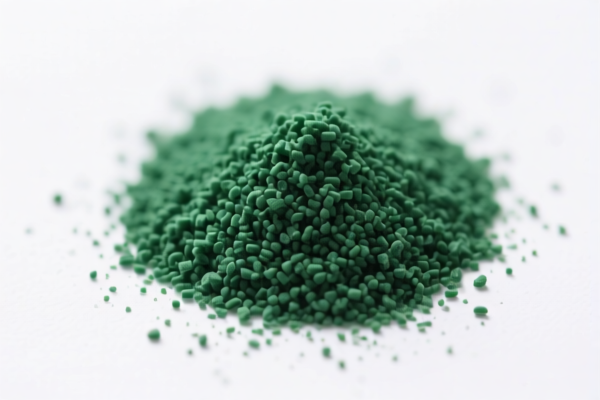
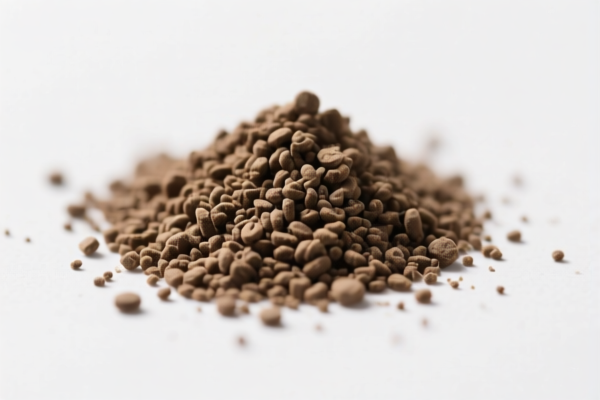
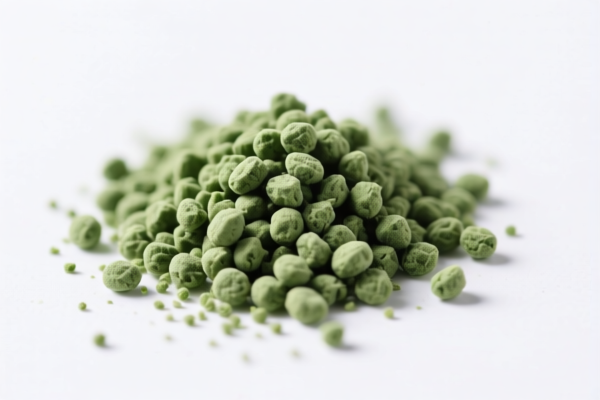
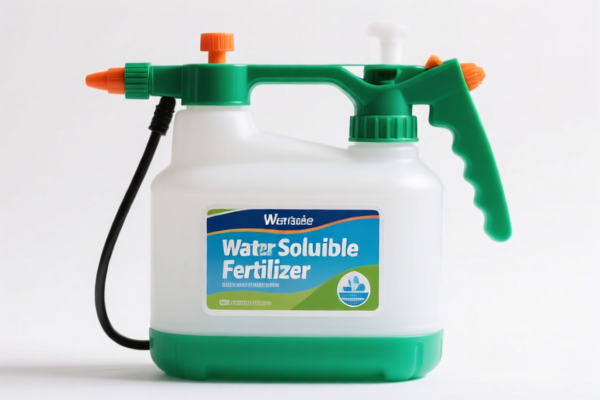
AI分析
🌿 Soluble Powder Plant Growth Regulators: HS Code Classification & 2026 Tax Strategy
🌐 Global HS Code Guide & Customs Clearance Strategy | 2026 Tariff Breakdown
Product Focus: Plant Growth Regulators (Soluble Powder / SG)
Target Markets: USA (with 122 Clause), China (Base Tariff)
Status: Professional Compliance Guide for Agrochemical Imports⚠️ Critical Warning: Plant Growth Regulators sit on a classification cliff. Depending on their chemical composition (organic nitrogen heterocycles vs. general formulations) and physical state, the tariff can swing from 16.5% to 41.5% (or higher with US 122 clause). Misclassification leads to massive back-taxes.
📦 I. HS Code Classification Matrix (2026 Edition)
Based on the product description "Plant Growth Regulator Soluble Powder", the following HS Codes apply depending on specific chemical composition and formulation details:
| HS Code | Chemical Basis | Formulation Type | Primary Description |
|---|---|---|---|
2933.99.22.00 |
Organic Nitrogen Heterocycles | Powder (Soluble) | Pure active ingredient or derivative (Pesticide class). |
2933.39.27.00 |
Organic Nitrogen Heterocycles | Powder (Soluble) | Specific organic nitrogen heterocyclic compound (Pesticide class). |
3808.93.50.40 |
General Formulation | Wettable Powder (WP) | Formulated pesticide (mixture of active + adjuvants). |
3808.93.15.00 |
General Formulation | Powder (W/P) | Formulated pesticide (mixture of active + adjuvants). |
🔍 The "Soluble Powder" Dilemma: * If your product is a pure chemical substance (e.g., just the active nitrogen compound) dissolved or processed into powder: Look at
2933series. * If your product is a finished mixture (Active ingredient + dispersants, wetting agents, fillers) sold as "Soluble Powder": Look at3808series (Pesticide Formulations). * Note: The data provided lists3808.93.50.40as "Wettable Powder" and3808.93.15.00as "Powder". If your product is strictly "Soluble" (SG), it often falls under3808.93.15.00(Powder) or is treated as a wettable powder variant depending on local interpretation of solubility vs. suspension.
💰 II. 2026 Tariff Rate Analysis (USA + China Context)
Assuming Origin: China and Destination: USA, the following rates apply. The 122 Clause (Section 122 of US Tariff Act) adds a significant surcharge.
🎯 Category A: Pure Chemical Compounds (2933 Series)
Best for: High-purity active ingredients.
| HS Code | Description | Base Tariff | US "Add-on" (301) | 122 Clause | Total Effective Tax |
|---|---|---|---|---|---|
2933.99.22.00 |
Nitrogen Heterocycle (Pesticide) | 6.5% | 0% | +10% | 16.5% |
2933.39.27.00 |
Organic Nitrogen Heterocycle | 6.5% | 0% | +10% | 16.5% |
📌 Calculation Logic: * Base: 6.5% (General Rate) * 301 Clause: $0% (Exempt from the 25% Section 301 tariff) * 122 Clause: +10% (Specific to certain Chinese chemical imports) * Result: 16.5% (Lowest Risk Category)
🎯 Category B: Formulated Pesticides (3808 Series)
Best for: Finished consumer-ready products.
| HS Code | Description | Base Tariff | US "Add-on" (301) | 122 Clause | Total Effective Tax |
|---|---|---|---|---|---|
3808.93.50.40 |
Formulation (Wettable Powder) | 6.5% | 25% | +10% | 41.5% |
3808.93.15.00 |
Formulation (Powder) | 6.5% | 25% | +10% | 41.5% |
📌 Calculation Logic: * Base: 6.5% (General Rate) * 301 Clause: +25% (Section 301 "Add-on" tariff applies heavily to formulated agrochemicals) * 122 Clause: +10% (Additional surcharge) * Result: 41.5% (High Risk Category)
🧐 Why the Huge Difference? (16.5% vs. 41.5%)
- Chemical Purity: Pure chemicals (
2933) are often treated as raw materials and may be exempt from the 25% Section 301 punitive tariff, whereas Formulations (3808) are viewed as finished commercial goods subject to full tariffs. - 122 Clause: Both categories attract the +10% surcharge, making the total burden even heavier for formulations.
- Strategic Impact: A $10,000 shipment of Formulated Regulator (
3808) incurs $4,150 in duty. The same value of Pure Chemical (2933) incurs only $1,650.
🛠️ III. Customs Clearance Practical Advice (Action Plan)
✅ 1. Documentation Checklist (Must-Have)
| Document | Purpose | Critical Detail |
|---|---|---|
| MSDS (Safety Data Sheet) | Chemical Identity | Must explicitly state "Active Ingredient" % and "Formulation" type. |
| Chemical Structure Diagram | Classification Proof | Proves if it belongs to 2933 (Heterocycle) or 3808 (Mixture). |
| Label & Packaging Photos | Physical Form | Confirm "Soluble Powder" (SG) vs. "Wettable Powder" (WP). |
| Certificate of Analysis (COA) | Purity Verification | If claiming 2933 HS Code, purity must be >95% (usually). |
| Pesticide Registration (EPA) | US Compliance | Mandatory for entry. Without EPA #, goods will be seized. |
✅ 2. Declaration Strategy (The "Golden Rule")
🔥 Keyword Strategy: * For
2933(Lower Tax): Declare as "Pure [Chemical Name] for synthesis/use", "Technical Grade", "95% Purity". DO NOT mention "Formulation" or "Adjuvant". * For3808(Higher Tax): Declare as "Plant Growth Regulator Formulation", "Ready-to-Use", "Contains Dispersants".⚠️ Warning: Do not claim
2933if your product contains >5% additives (surfactants, fillers). US Customs will audit the COA, find the additives, and reclassify to3808+ Penalty.
✅ 3. Avoiding "Double Taxation" Traps
- The "Wettable" vs. "Soluble" Trap:
- If your product dissolves completely in water, it is Soluble Powder (SG).
- If it requires agitation to suspend particles, it is Wettable Powder (WP).
- In the provided data,
3808.93.50.40is listed as "Wettable". If your product is truly Soluble, ensure it is classified under3808.93.15.00(Powder) or argue for2933if the solvent system is minimal.
- 122 Clause Defense:
- Check if your specific chemical active ingredient is eligible for Section 301 Exclusions. If yes, you might save the 25% tax, reducing the total from 41.5% to ~16.5% even for formulations (though
3808usually retains the tax).
- Check if your specific chemical active ingredient is eligible for Section 301 Exclusions. If yes, you might save the 25% tax, reducing the total from 41.5% to ~16.5% even for formulations (though
🌍 IV. Global Market Comparison (2026)
| Region | Recommended HS Code | Est. Total Duty | Key Requirement |
|---|---|---|---|
| 🇺🇸 USA | 2933.99.22.00 (if pure) or 3808.93.15.00 |
16.5% (Pure) / 41.5% (Form) | EPA Registration + SDS |
| 🇨🇳 China | 2933 or 3808 |
5.0% - 6.5% (Base) | Chemical Safety Review |
| 🇪🇺 EU | 3808 (Formulation) |
6.5% (Base) + VAT | EFSA Approval |
| 🇯🇵 Japan | 3808 (Formulation) |
6.0% (Base) | Ministry of Agriculture Regs |
📌 Conclusion: * USA is the most aggressive market with the 122 Clause and Section 301叠加 (stacking). * Strategy: If you are exporting pure active ingredients, push for
2933to save ~25%. * Strategy: If you are exporting formulated products, accept the 41.5% cost or look into Exclusion Requests for Section 301 if applicable.
🚨 V. Common Pitfalls & Solutions
| ❌ Mistake | 🚫 Consequence | ✅ Solution |
|---|---|---|
| Calling "Soluble" "Wettable" | Customs may classify as 3808.93.50.40 (WP) or reject if specs don't match. |
Check Solubility: If it dissolves, use SG in declaration. |
| Mixing Active + Solvent without Label | Automatically classified as "Formulation" (3808) -> 41.5% Tax. |
Separate Declaration: If possible, export Active Ingredient and Solvent separately. |
| Missing EPA Number | Seizure of goods at port. | Pre-Registration: Ensure EPA Registration Number is on the commercial invoice. |
| Ignoring 122 Clause | Unexpected tax hike of +10%. | Budgeting: Always add 10% buffer to CIF value for "122 Clause" risk. |
🎯 Final Verdict: 2026 Action Plan
- Analyze Chemical Composition: Is it >95% pure active ingredient?
- Yes → Go for
2933.99.22.00(Total Tax: 16.5%). - No → Must go for
3808.93.15.00(Total Tax: 41.5%).
- Yes → Go for
- Verify EPA Registration: Ensure your US importer has a valid EPA number.
- Prepare Technical File: Have MSDS and COA ready to prove "Purity" if claiming
2933. - Calculate Landed Cost: Add 41.5% (or 16.5%) to your FOB price immediately. Do not guess!
💡 Pro Tip: If your product is "Soluble Powder", verify if it can be reclassified as a "Salt" or "Ester" under
2933. Sometimes, changing the chemical form allows a move from Formulation (3808) to Chemical (2933), saving thousands in duties.
✨ Smart Customs, Higher Profits! ✨
Ready to ship? Contact a licensed broker to verify your specific CAS number against the latest 2026 exclusion lists!
用户评价
关于 HS 编码归类
协调制度(HS)是由世界海关组织(WCO)制定的国际贸易商品分类标准。全球 200 多个国家采用 HS 系统作为海关关税、贸易统计和进出口监管的基础。
每个 HS 编码遵循以下层级结构:
- 章(2 位)——商品大类(例如:第 84 章:机器和机械设备)
- 品目(4 位)——章内的更具体分类
- 子目(6 位)——国际通用细分,所有 WCO 成员国统一使用
- 本国细分(8-10 位)——各国自行扩展的细分编码,如美国 HTSUS 10 位编码
正确的 HS 编码归类对于顺利通关、准确缴纳关税和遵守贸易法规至关重要。错误归类可能导致海关延误、多缴关税或罚款。
从CN进口到US时,适用的关税税率可能包括:
- 最惠国(MFN)税率——适用于 WTO 成员国的标准关税税率
- 普通税率——适用于无贸易协定国家
- 贸易救济关税——附加关税,如 301 条款(反倾销)、232 条款(国家安全)或反补贴税
本页内容仅供参考。如需正式归类,请咨询当地海关或持牌报关代理。