
What Is HTS Chapter 99?
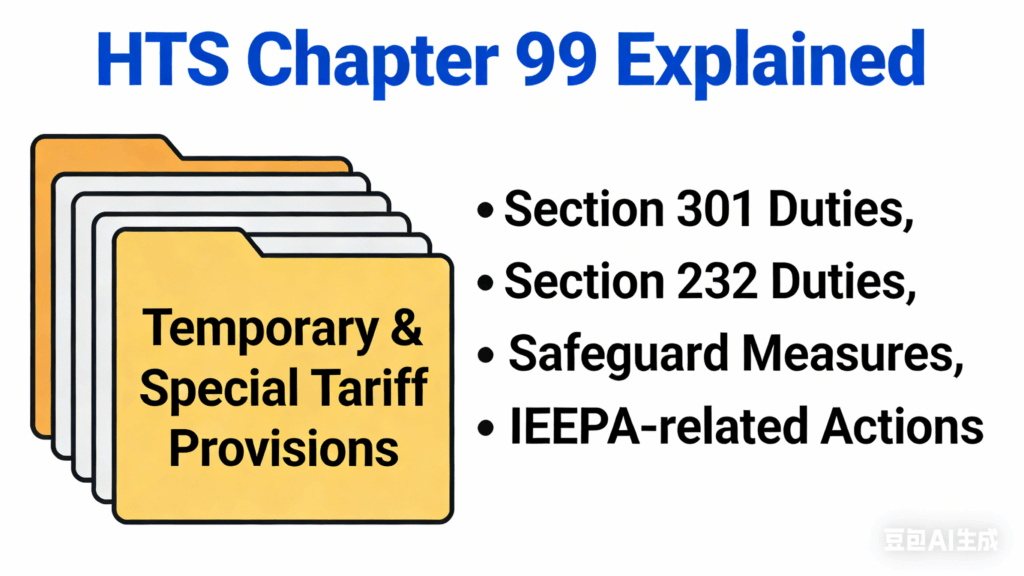
HTS Chapter 99 contains temporary and special tariff provisions that apply on top of standard HS classifications.
These include:
- Section 301 duties
- Section 232 duties
- Safeguard measures
- IEEPA-related actions
If your duty rate seems unusually high, Chapter 99 is almost always the reason.
Why Chapter 99 Codes Matter
Chapter 99 codes:
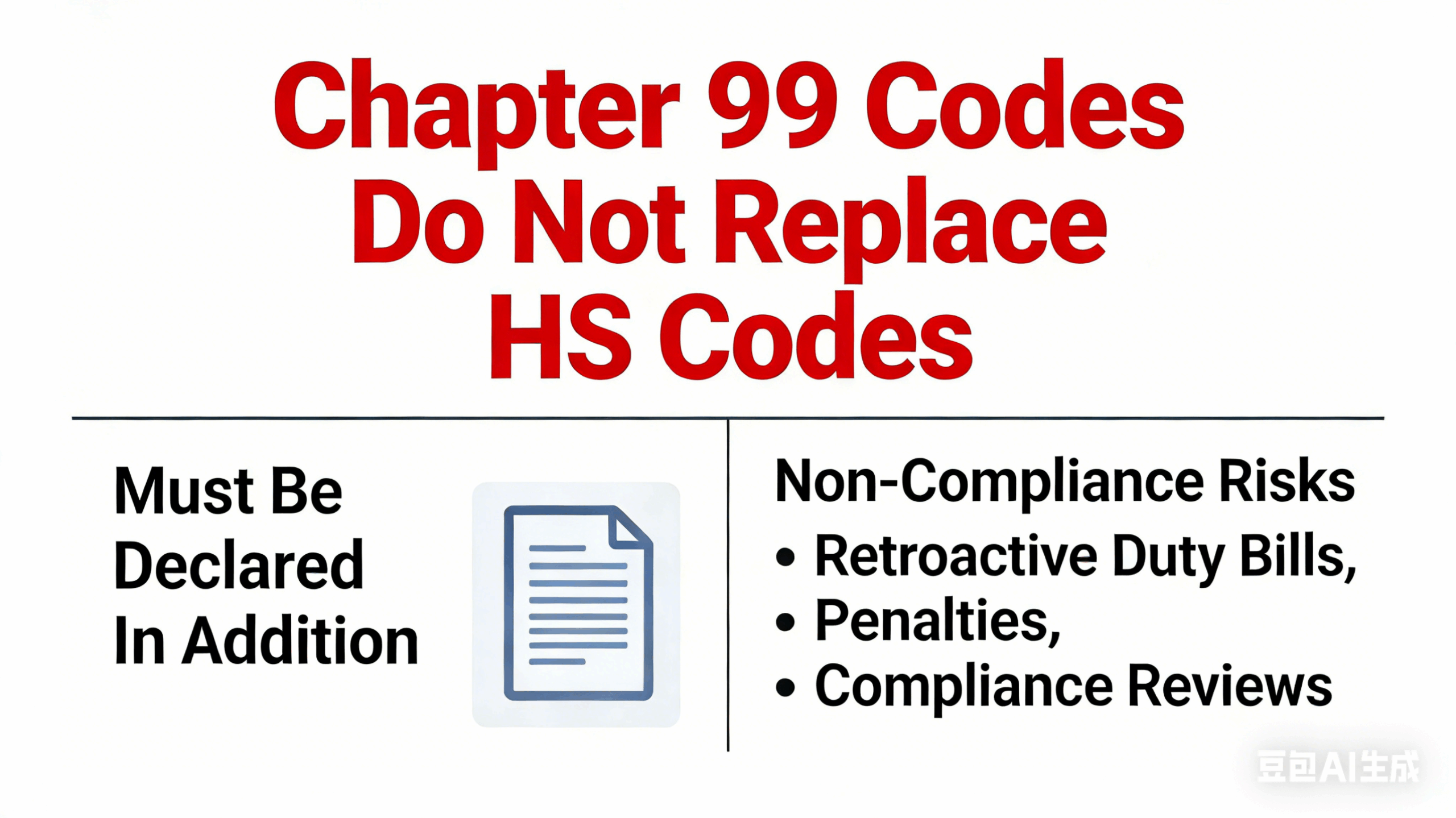
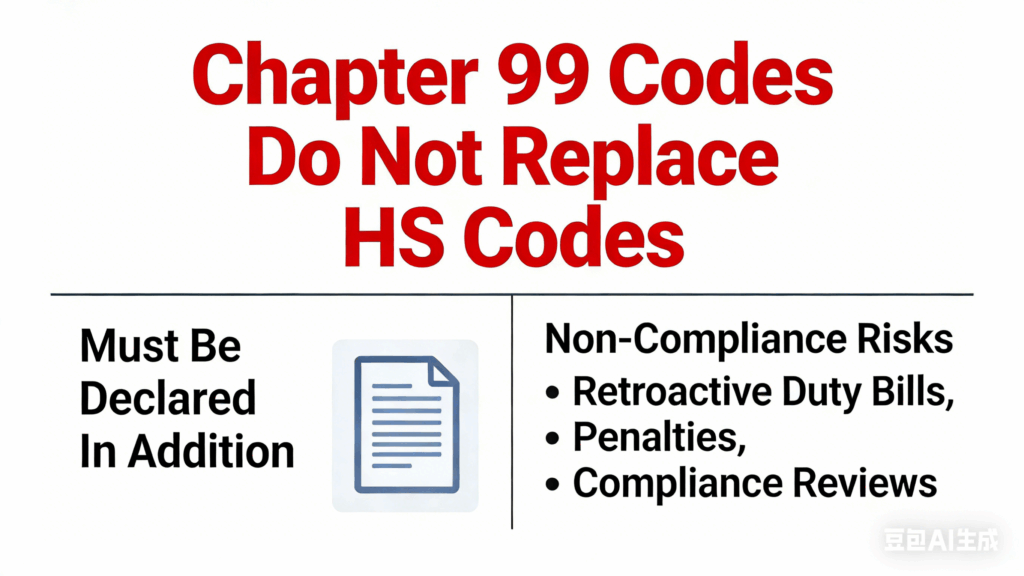
- Do not replace your HS code
- Must be declared in addition to it
- Are legally binding
Failure to declare them correctly may lead to:
- Retroactive duty bills
- Penalties
- Compliance reviews
How Chapter 99 Codes Are Applied
A correct entry typically requires:
- Base HTS code (e.g. 7407.29.16.10)
- One or more Chapter 99 codes
- Proper sequencing on customs filings
- Correct duty stacking logic
This complexity makes manual calculation error-prone.
Example: Why Two Importers Pay Different Duties
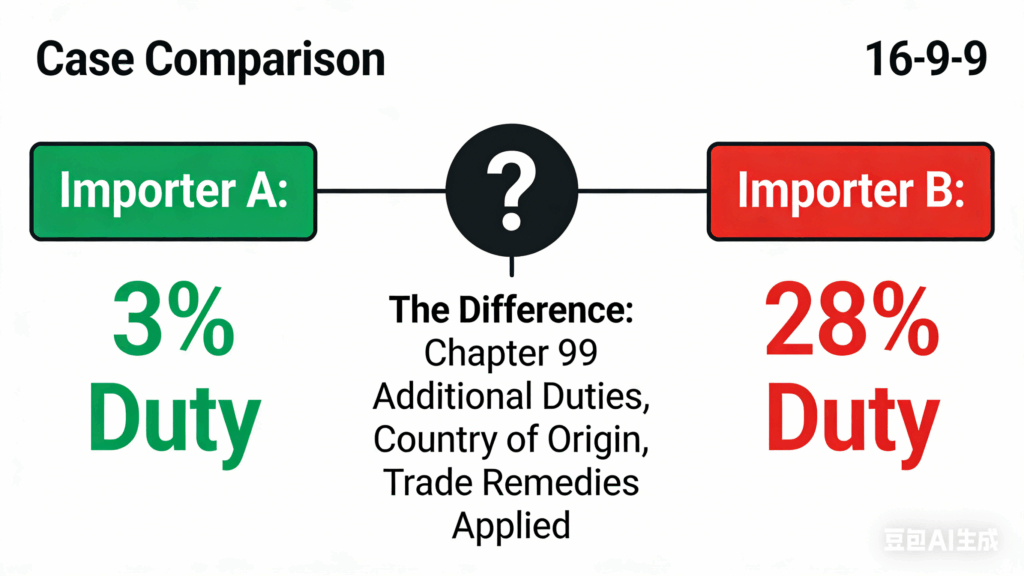
Two companies import the same HS code.
One pays 3% duty.
The other pays 28% duty.
The difference?
- Chapter 99 additional duties
- Country of origin
- Trade remedies applied
Automating Chapter 99 Resolution
Fiowind’s Customs Duty Rate Tool automatically:
- Resolves all applicable Chapter 99 provisions
- Explains why each one applies
- Calculates the final effective duty rate
- Generates a dedicated SEO-friendly duty page
🔗 Understand your real duty rate:
https://www.fiowind.com/customs-duty-rates