
What Is Section 232?
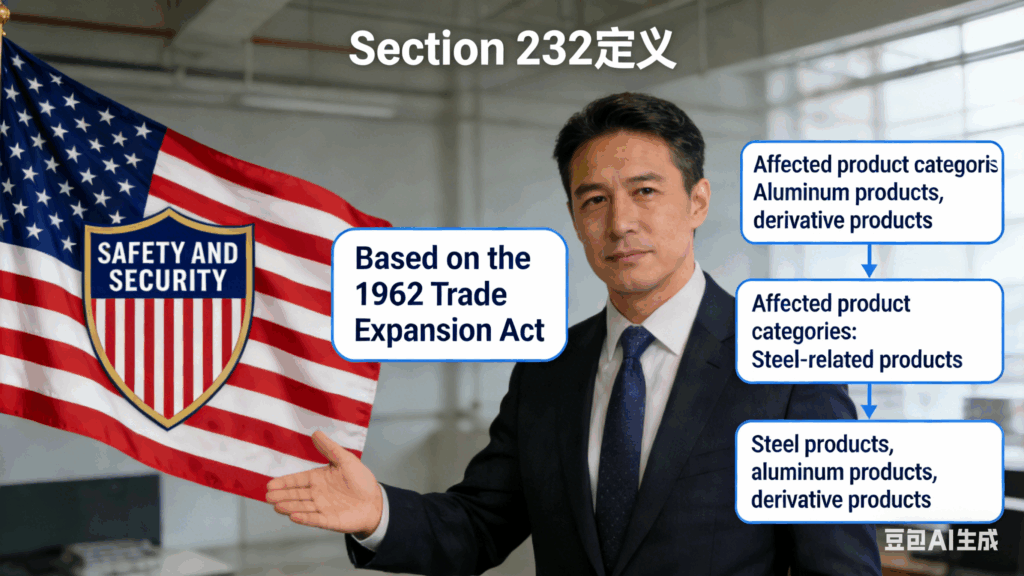
Section 232 of the Trade Expansion Act of 1962 allows the United States to impose tariffs on imports that threaten national security.
Today, Section 232 primarily affects:
- Steel products
- Aluminum products
- Certain derivative articles
These duties apply in addition to regular customs duties and are enforced through HTS Chapter 99.
Section 232 Duty Rates Explained
Common Section 232 duty rates include:
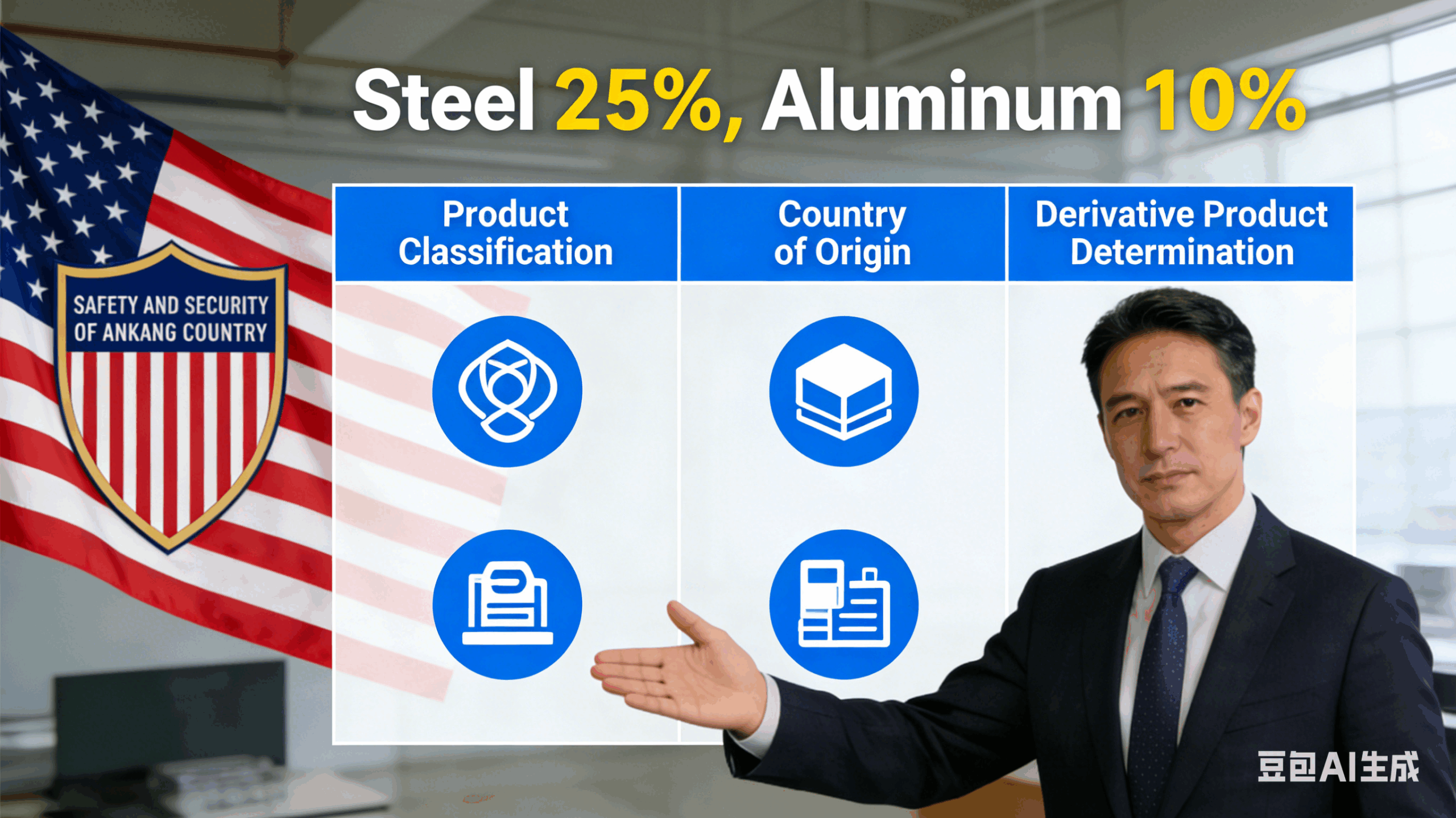
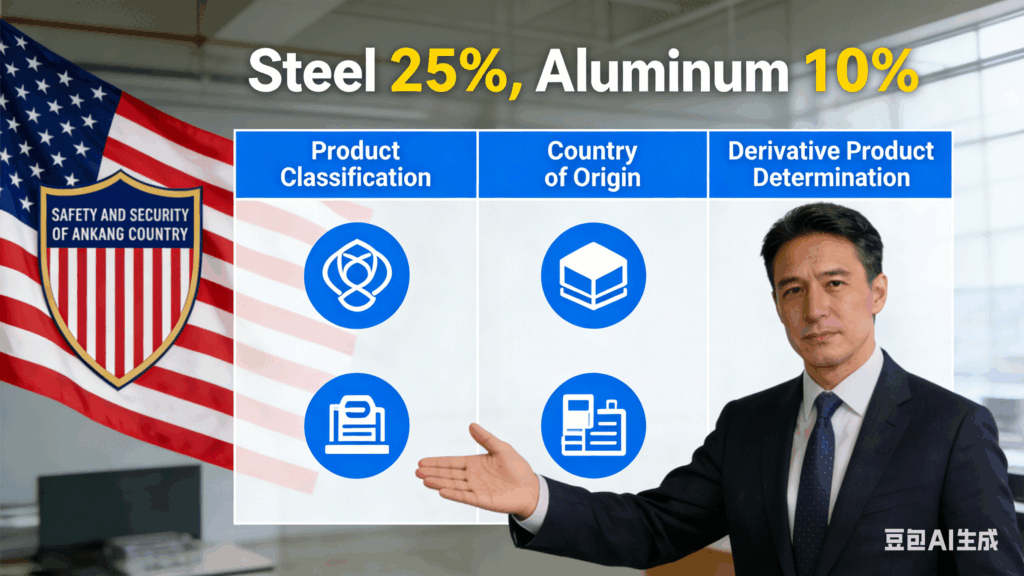
- 25% on steel products
- 10% on aluminum products
However, applicability depends on:
- Product classification
- Country of origin
- Whether the product is a derivative article
- Existing country exemptions or quotas
Derivative Products: The Hidden Risk
Many importers believe Section 232 applies only to raw steel or aluminum.
In reality, derivative products — such as fabricated parts, profiles, or semi-finished goods — may also trigger Section 232 duties.
These determinations are often buried in:
- HTS Chapter notes
- Footnotes
- Presidential Proclamations
Example: Aluminum Products Under Section 232
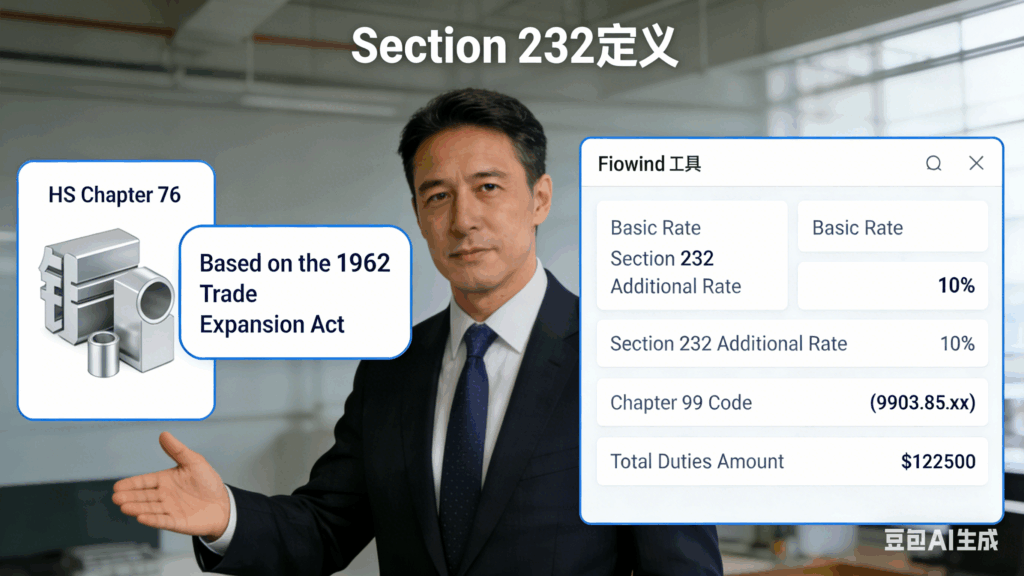
An aluminum product classified under Chapter 76 may require:
- Base duty
- Section 232 duty
- Declaration of a 9903.85.xx HTS code
Failing to declare the Chapter 99 code correctly can invalidate entry filings.
How Fiowind Simplifies Section 232 Calculations
Fiowind’s Customs Duty Rate Tool:
- Identifies Section 232 applicability
- Resolves derivative product rules
- Applies the correct Chapter 99 HTS code
- Displays total landed duty clearly
🔗 Calculate Section 232 duties instantly:
https://www.fiowind.com/customs-duty-rates